
Registering to vote feels like it should be automatic in a constitutional democracy. In some countries, it is. In the United States, it usually is not.
That is not an accident of paperwork. It is built into how American elections are administered: states run the day-to-day machinery, and the rules vary widely. The Constitution limits certain kinds of discrimination in voting through the 15th, 19th, 24th, and 26th Amendments, but it does not hand states a single, uniform registration playbook. Federal rules also shape the process, especially for federal elections, through the Elections Clause and statutes like the National Voter Registration Act (NVRA) and the Help America Vote Act (HAVA). So the right to vote and the ability to vote are related, but not identical.
This guide walks you through the practical steps: who can register, how to register online versus by mail or in person, how same-day or late registration works where available, common ID rules, key deadlines, and how to confirm your status before Election Day.

The constitutional basics
The U.S. Constitution does not contain one clean sentence that says, “Every adult citizen has the right to vote.” Instead, it builds voting rights through a set of guardrails.
- 15th Amendment (1870): States cannot deny or abridge the right to vote “on account of race, color, or previous condition of servitude.”
- 19th Amendment (1920): States cannot deny or abridge the right to vote on account of sex.
- 24th Amendment (1964): No poll tax in federal elections.
- 26th Amendment (1971): If you are 18 or older, a state cannot deny or abridge your right to vote on account of age.
Those amendments are powerful, but they are not an instruction manual for registration. States still set most of the day-to-day rules: deadlines, acceptable ID, where you register, and what happens if your registration is challenged. Federal law overlays that system in important ways, especially in federal elections. That is why “how do I register?” has 50 different answers.
Basic eligibility
Eligibility rules vary by state, but the core requirements are consistent nationwide.
In general, you can register if you:
- Are a U.S. citizen
- Meet your state’s residency requirement (often simply living at an address in the state)
- Will be 18 years old by Election Day (many states let you register at 16 or 17 so you are ready when you turn 18)
- Are not currently disqualified under your state’s rules (most commonly due to certain felony convictions or a court finding of incapacity)
Common points of confusion
- College students: You typically choose to register either at your campus address or your home address, depending on your intent and state rules. You cannot be registered to vote in two places for the same election.
- Moving: Moving across state lines almost always means re-registering. Moving within the same county might only require an address update, but do not assume. Check your registration record.
- Name changes: Many states treat a name change like an update, but some require a new form. Do it early.
- Former felony convictions: Rules differ sharply by state. Some restore voting rights after incarceration, some after parole or probation, and a few require additional steps. Always check your state election website for the current rule and any required documentation.
How to register
Most states offer at least two methods. Many offer all three. Your state’s election office website is the best source for the correct form and deadline, but the workflow is usually one of these.
1) Online registration
Online registration is typically available if your state can verify you through a state-issued ID record.
- What you usually need: A driver’s license or state ID number, and often the last four digits of your Social Security number.
- What happens next: You submit digitally and receive a confirmation screen or email. Save it or screenshot it.
- Best for: Voters registering close to the deadline, and voters who want quick confirmation.
2) Registering by mail
You can register by mail using the National Mail Voter Registration Form or a state-specific form.
- What you usually need: A printed form, signature, and sometimes a copy of identification (depending on state rules and whether you are a first-time registrant in that jurisdiction).
- Mailing tip: The deadline may be based on receipt or postmark, depending on state law. Do not guess. Mail early and keep a copy.
- Best for: Voters without state ID, or voters who prefer paper documentation.
3) Registering in person
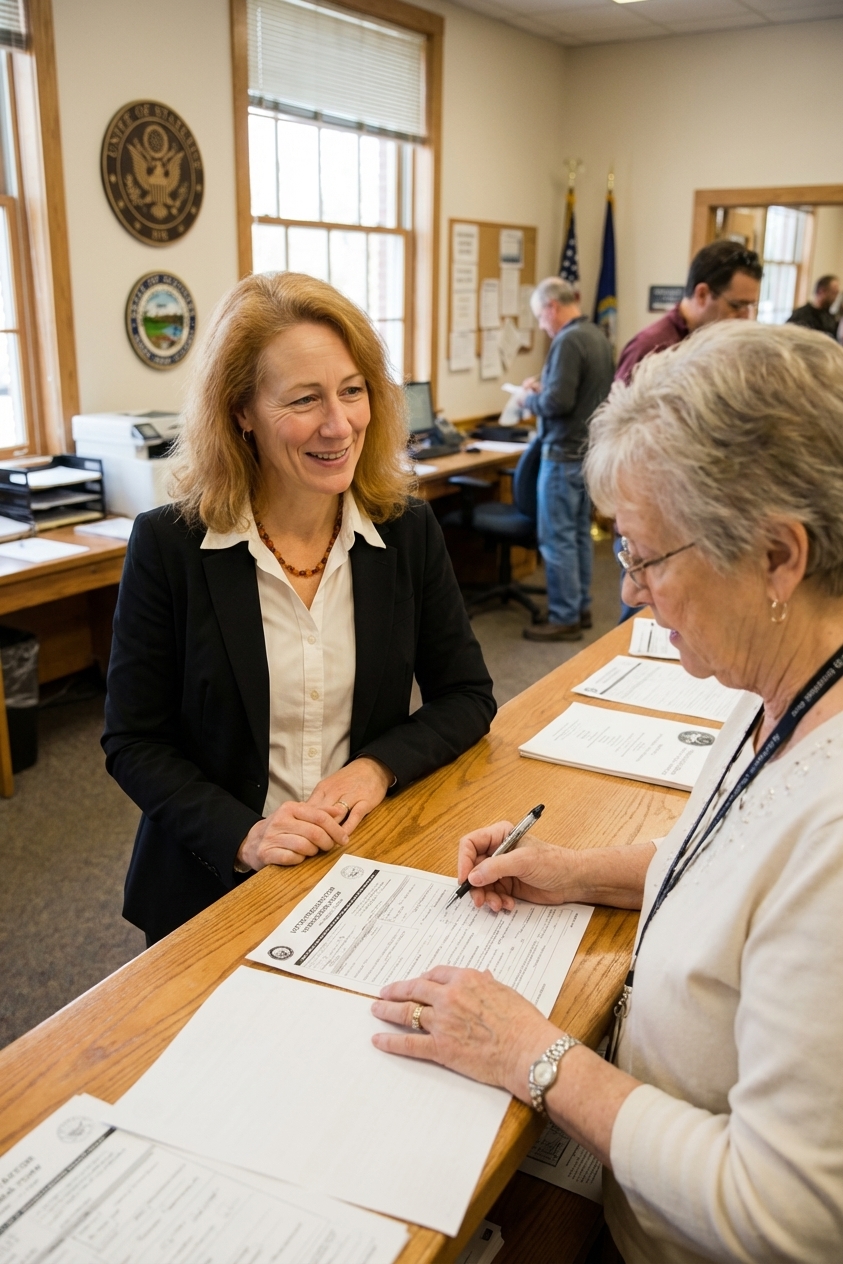
In-person registration is often available at election offices, DMVs, and other government locations. Under the NVRA, many states also offer registration at public assistance agencies.
- What you usually need: Depending on your state, ID may be requested. Bring a driver’s license, state ID, or documents showing your name and current address if you have them.
- Best for: Voters with a complex situation (recent move, name change, missing ID) or anyone who wants face-to-face confirmation.
Automatic voter registration
Some states use automatic voter registration (AVR), usually through the DMV or other agencies. It is often opt-out, which means eligible voters may be registered or have their registration updated unless they decline.
- Two important cautions: AVR is not universal, and it does not eliminate the need to check your status. Typos, old addresses, or missing party preference can still cause problems.
- What to do: Even if you think AVR covered you, confirm your record on your state election website before any election.
Same-day and late registration
Some states allow same-day registration, meaning you can register (or update) and vote in one trip, either on Election Day or during early voting. Others allow late registration with a different process, such as registering close to Election Day but voting provisionally or at a specific location.
Because these rules change and the details matter (where you can do it, what ID is required, whether your ballot is conditional or provisional), the safest approach is to verify your state’s current rule right before you rely on it.
How it often works
- California: Uses Conditional Voter Registration (CVR) for eligible voters after the standard deadline, typically at county elections offices and vote centers. Your ballot is counted after eligibility is verified.
- Washington: Primarily vote-by-mail, with registration available up to and on Election Day in person at election offices or vote centers. Online and mail cutoffs are earlier.
- New Mexico: Offers same-day registration during early voting (statewide), with location rules that can vary by county.
- Utah: Does not have broad Election Day registration like some states. Utah has late registration options with specific cutoffs and procedures that can include provisional voting. Check the current state rule and deadlines before you go.
Where to confirm your state’s rule
- Vote.gov: Follow links to your official state election site.
- Your state or county election office website: Look for “same-day registration,” “Election Day registration,” “late registration,” or “Conditional Voter Registration.”
Last updated: March 29, 2026. Same-day and late registration rules can change. Always confirm using your official state election website.
What to bring
Many states require proof of residence for same-day or late registration, such as a state ID with current address, a utility bill, a lease, a bank statement, or a government document. Some accept electronic versions. Some do not. Check before you go.
Deadlines
Most states set a voter registration cutoff ahead of Election Day. A common range is roughly 30 to 7 days before Election Day, with exceptions for same-day or late-registration states and for different registration methods.
Deadline rules to watch
- Online deadline: Sometimes later than mail, but not always. In some states it matches the standard deadline.
- Mail deadline: May be “received by” or “postmarked by.” That difference is everything.
- In-person deadline: Can be later than mail, especially at election offices.
- Primary deadlines: In closed primary states, the deadline to register with a party can be earlier than the general election deadline.
Practical rule
If you want to avoid surprises, aim to register or update your registration at least one month before any major election. That gives you time to fix errors and confirm your polling place or vote center.
Voter ID rules
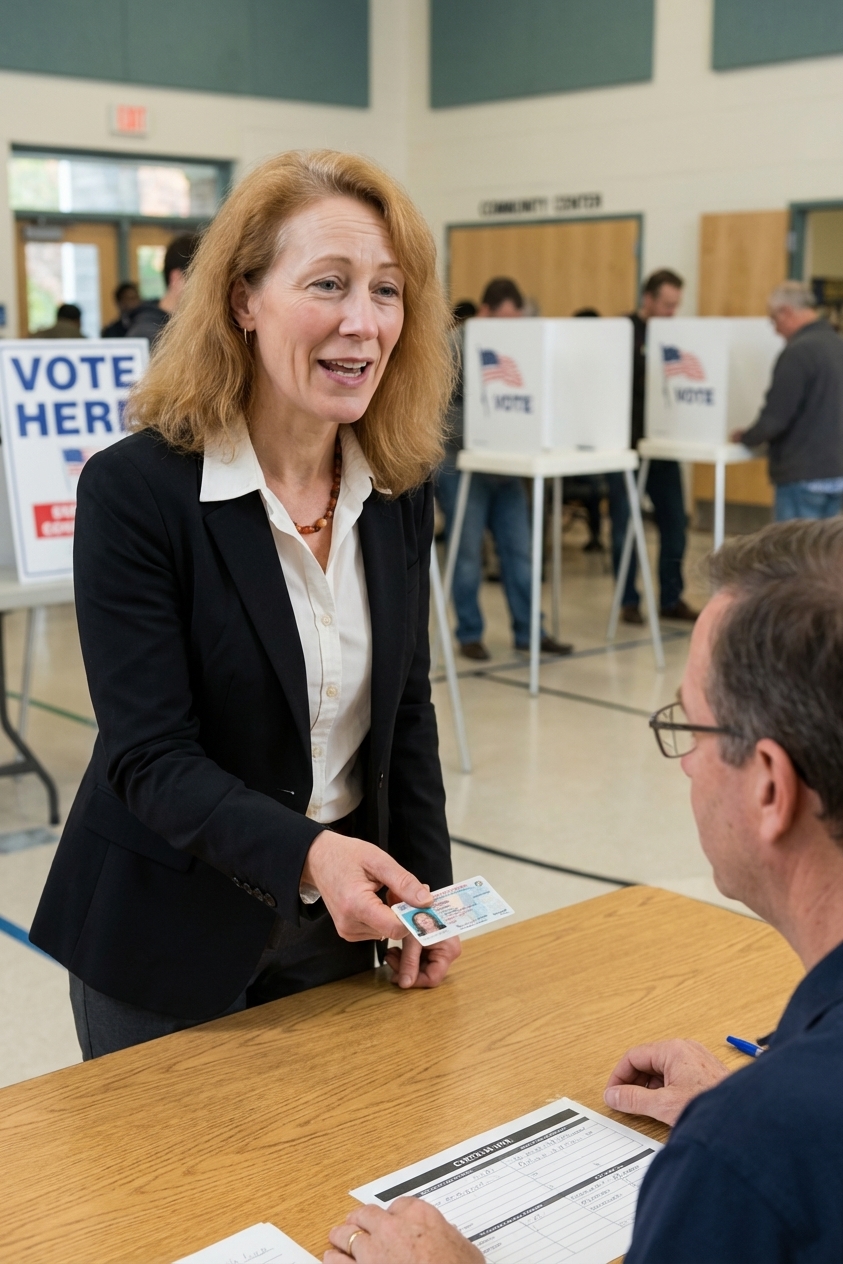
Voter ID rules are not uniform. They range from strict photo ID requirements to states that ask for no ID at the polls for most voters. Many states fall into a middle category: they may request ID, but allow alternatives, such as signing an affidavit, using a non-photo document, or casting a provisional ballot.
Three broad categories
- Strict photo ID: If you do not present an approved photo ID, you may have to vote provisionally and take follow-up steps for it to count.
- Non-strict ID: ID may be requested, but voters without it can usually still vote after confirming identity in another way.
- No ID for most voters: Identity is confirmed through registration records, signatures, or other procedures.
First-time voters and ID
Under federal law (including HAVA), some first-time voters who registered by mail may need to show identification if their identity was not already verified when they registered. The easiest way to avoid surprises is to check your registration record early and read any election mail you receive.
Check your status
Do not wait until Election Day to learn your registration is inactive, your address is outdated, or your name is misspelled. This takes two minutes and can save your vote.
Where to check
- Your state election office website: Look for “voter registration lookup” or “check my registration.”
- Vote.gov: The federal portal that links you to your state’s official registration and lookup tools.
What to verify
- Your name is correct (including suffixes and hyphens)
- Your address is current
- Your status is active
- Your polling place or vote center location
- Any mail ballot request status, if applicable
If you are missing or inactive
States use different procedures for maintaining voter rolls. If your record is missing, register again if your state allows it. If you are marked inactive, you may be able to reactivate by confirming your address, updating your registration, or voting, depending on state law. If you are unsure on Election Day, ask for a provisional ballot and follow your state’s instructions to make sure it is counted.
Find your state’s path
Because requirements vary, the most useful “state-by-state” tool is the official one.
Fastest way
- Go to Vote.gov
- Select your state or territory
- Follow the link to your official election website for online registration, forms, and deadlines
What to look for
- Registration methods: online, mail, in person
- Deadline calendar for primaries and general elections
- ID and proof-of-residence rules
- Same-day or late registration rules, if available
- Where to register in person (elections office, DMV, or approved locations)

Special situations
Military and overseas voters
If you are in the military or living abroad, you can typically register and request an absentee ballot using the Federal Post Card Application (FPCA). Many states allow electronic delivery of ballots, but return rules vary. Start early.
Voting while in college
If you register at school, your local elections may affect issues like housing policy, transit, and local tax measures. If you keep registration at home, you will vote on that community’s local issues instead. Both choices are common. What matters is that you pick one residence for voting and follow that state’s rules.
If you have no fixed address
Many states permit voters experiencing homelessness to register using a description of a location where they stay or receive mail, such as a shelter or outreach center. Procedures vary, but in many places it is possible. Contact your local election office for the exact method that will be accepted.
If your registration is challenged
Some states allow challenges to a voter’s eligibility. If you are challenged, you may still be able to vote provisionally and then provide documentation. The best defense is preparation: confirm your status early and bring proof of residence if your state’s rules call for it.
Language and accessibility help
If you need language assistance or an accessible voting option, your local election office can tell you what is available where you vote. Many jurisdictions provide translated materials, interpreter support, and ADA-accessible voting equipment. If you need an accommodation, ask ahead of time if you can, and ask at the polling place or vote center if you cannot.
If you moved
- 1) Check your current record: Look up your registration status and address on your state site.
- 2) Update or re-register: Update your address if you stayed in-state, or register again if you moved to a new state.
- 3) Confirm where to vote: Verify your polling place or vote center, and any ID or proof-of-residence rules.
A checklist
- Check your registration status on your state election site.
- Confirm your name and address are correct.
- Learn your state’s registration deadline for the next election.
- If you need to register or update: choose online, mail, or in-person based on what your state offers.
- If your state has voter ID rules: confirm what counts as acceptable ID.
- If you plan to vote by mail: learn the request deadline and the ballot return deadline.
- Save confirmation emails, screenshots, or copies of forms.
Voting rights in the Constitution are often framed as prohibitions: states may not deny the vote for certain reasons. Registration is where those principles meet real life. The system only works when ordinary citizens can navigate it. One of the simplest, most impactful things you can do with this page is simple: check your status, then help someone else check theirs.