
The Supreme Court does not work like television. There is no surprise witness. No dramatic cross-examination. No jury. Most of what matters happens in writing, largely out of public view, and on a schedule that looks more like an academic calendar than a criminal trial.
And yet the Court’s decisions can change the rules for everyone, everywhere, sometimes with a single line in an opinion that lower courts treat as controlling.
This is the full lifecycle of a Supreme Court case, from the first petition to the final opinion, including what “certiorari” actually is, what the Rule of Four does, why amicus briefs matter, and how a decision becomes binding precedent.
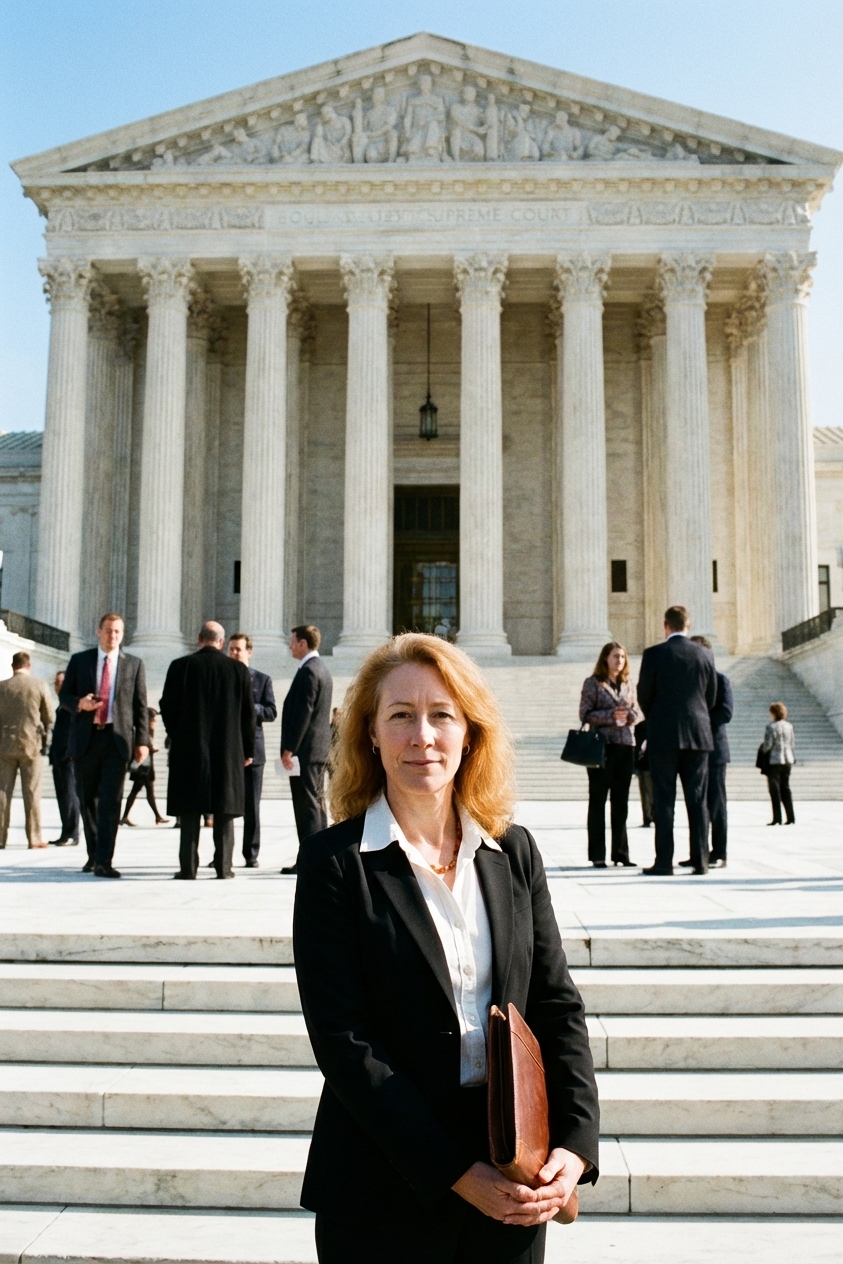
The Court’s workload in plain numbers
Each Supreme Court “term” begins on the first Monday in October. The Court typically issues most signed opinions by late June and sometimes into early July, even though the term technically runs until the day before the next term begins.
- Petitions filed: in recent terms, roughly 7,000 to 8,000 per term.
- Cases the Court agrees to hear: often around 60 to 80 cases with full briefing and oral argument, though the number varies by term.
- Decisions without full argument: the Court also issues many short orders and summary decisions, but those are not the marquee cases most people think of.
So if you are wondering why the Court does not “just take” every major controversy, this is why. The Court is designed to be selective.
Step 1: Getting to the Supreme Court
Most cases arrive after losing below
The Supreme Court is primarily an appellate court. That means it usually reviews decisions from:
- U.S. Courts of Appeals (the federal circuit courts)
- State supreme courts (when a federal constitutional or federal statutory issue is involved)
A tiny set of disputes can begin in the Supreme Court under its “original jurisdiction,” such as certain cases between states. Those are rare.
The vehicle is usually a petition for certiorari
To ask the Supreme Court to review a lower court decision, a party files a petition for a writ of certiorari, often shortened to cert. Think of it as a request that the Court choose to review the case. If the Court grants cert, it is agreeing to hear it.
The petition is not a full merits brief. It is more like a pitch: here is the question presented, here is why the Court should care, and here is why this case is a good vehicle to answer it.
Step 2: What happens at the cert stage
The Supreme Court is not a general “error correction” court. It does not exist to fix every mistaken ruling. The justices tend to grant cert when a case lets them resolve something bigger.
Before the Court decides whether to take the case, the other side usually files a brief in opposition, arguing the Court should deny review. The petitioner may then file a short reply.
What the Court looks for
Common reasons the Court takes a case include:
- A circuit split: different federal appellate courts are answering the same legal question differently.
- A major constitutional question: especially involving rights, federalism, or separation of powers.
- A conflict between a state court and federal law: for example, a state court interprets a federal statute in a way that clashes with other courts.
- National importance and recurring disputes: an issue that will keep coming back unless the Court settles it.
The Court’s internal screening is also shaped by what lawyers call “vehicle problems.” A case can be important and still get denied if the facts are messy, the record is incomplete, the issue was not properly preserved below, or the legal question is poorly presented.
How petitions get screened
Much of the first-pass review happens through the justices’ chambers and their law clerks. By custom, most justices participate in the cert pool, where a single clerk writes a memo summarizing each petition and recommending grant or denial. Justices who are not in the pool review petitions independently. However it is done, the end product is similar: a stack of memos that helps the justices decide what is worth the Court’s limited time.
Orders lists
Most cert decisions appear in short public documents called orders lists. The usual result is simply “cert denied,” with no explanation.
Step 3: The Rule of Four
Granting cert does not require a majority. Under the Rule of Four, cert is granted if four justices vote to hear the case.
Why four? Because if the Court required five votes just to take a case, a bare majority could block review of issues the minority believes are urgent. The Rule of Four is a structural compromise: it makes the agenda easier to open than to control.
What happens to most petitions? They are denied without explanation. A denial of cert does not mean the Court agrees with the lower court. It means only that the Court chose not to review it.
Step 4: Briefing on the merits
Once cert is granted, the case shifts into a more formal phase called merits briefing.
- The party that lost below becomes the petitioner and files the first major brief.
- The party that won below is the respondent and files an answering brief.
- The petitioner can file a reply.
These briefs are where the heavy lifting happens: statutory text, constitutional history, precedent, policy consequences, and the practical realities of how a rule will work in real life.
Amicus briefs: the Court’s outside inbox
Amicus curiae means “friend of the court.” Amicus briefs come from people and organizations who are not parties to the case but want to influence the Court’s decision.
Amicus briefs can be filed by:
- States and the federal government
- Advocacy groups across the ideological spectrum
- Industry associations and unions
- Law professors and historians
- Former judges, officials, or specialized experts
In high-profile cases, there can be dozens, sometimes well over a hundred, amicus briefs. The best ones do not repeat what the parties already said. They add something the justices might actually use: historical context, technical facts, real-world impact, or an argument that reframes the stakes.
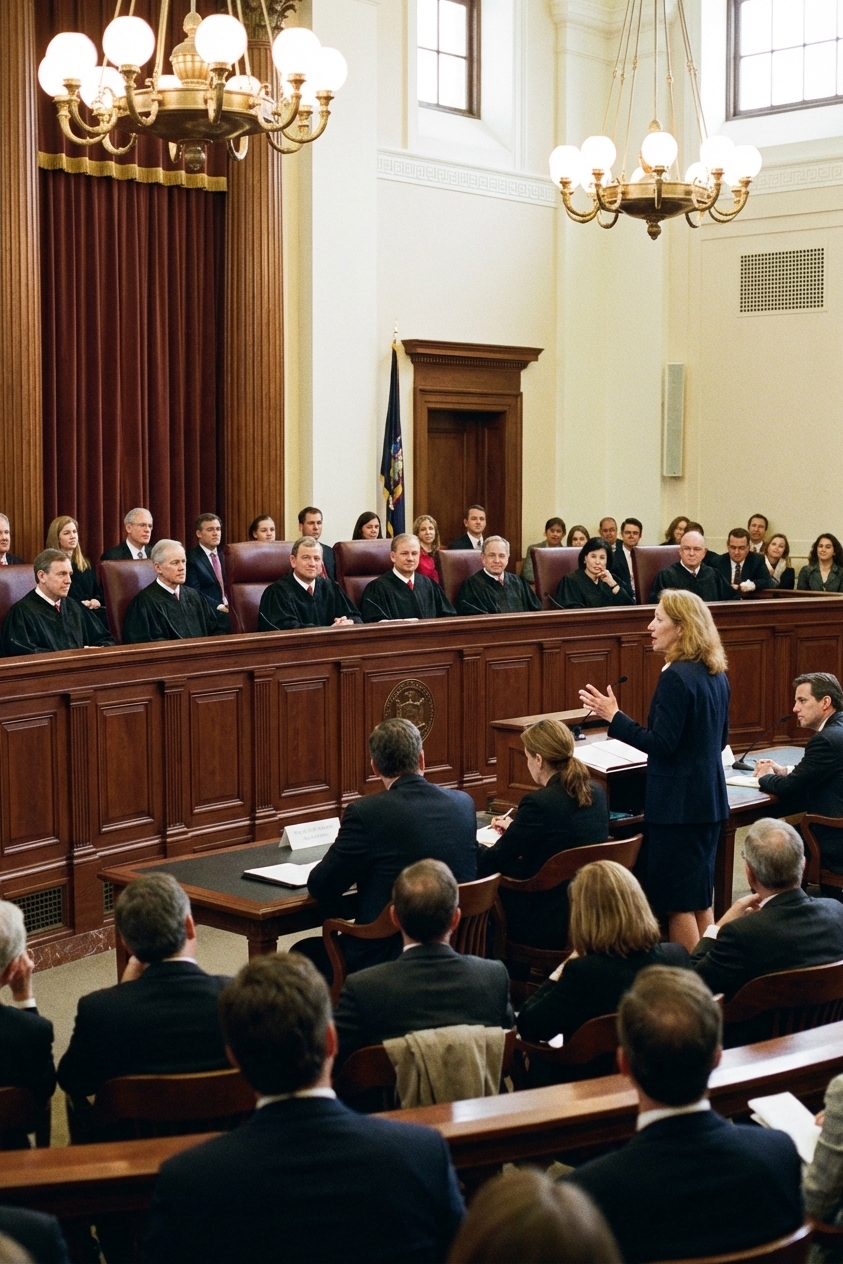
Step 5: Oral argument
After briefs are filed, the Court holds oral argument, usually for about one hour total. The format is structured, but the experience is not a speech. It is an intense question-and-answer session.
Each side generally gets about 30 minutes. The justices interrupt frequently. The goal is less “persuasion by performance” and more stress testing: what is your rule, what are its limits, and what happens in the hard cases your rule creates?
Oral argument matters, but usually as a diagnostic tool. The justices use it to probe weak spots, spot unintended consequences, and see whether a narrower decision is possible.
Step 6: Conference and the first vote
After oral argument, the justices meet in a private meeting called the conference. By longstanding practice, only the nine justices attend. No clerks. No staff. No public audio recording.
They discuss each argued case and take a preliminary vote. The Chief Justice speaks first, then the other justices in order of seniority.
This first vote is not always final, but it sets the direction. If the initial vote produces a majority, the Court assigns someone in that majority to write the majority opinion.
Who assigns the majority opinion?
- If the Chief Justice is in the majority, the Chief assigns the opinion.
- If the Chief is in dissent, the most senior justice in the majority assigns it.
This assignment power matters. It can shape the doctrine’s scope. A majority opinion can be written narrowly to decide just this case, or broadly to reshape an entire area of law.
Step 7: Drafting and negotiation
The public often imagines Supreme Court decisions as nine isolated thinkers announcing conclusions. In reality, many cases are decided through a months-long drafting and bargaining process.
The justice writing the majority circulates drafts. Other chambers respond. Language changes. Footnotes appear and disappear. A justice who was tentatively in the majority might switch sides if the reasoning goes too far.
At the same time, justices may write separate opinions:
- Concurring opinions agree with the result but for different reasons, or they want to add an additional rationale.
- Dissenting opinions disagree with the result and explain why the majority is wrong.
Concurring and dissenting opinions do not make law by themselves, but they can become the seed of future majorities. Today’s dissent is sometimes tomorrow’s doctrine.

Step 8: Decision day
When the Court is ready, it releases its decision. The outcome includes:
- The Court’s judgment: affirmed, reversed, vacated, or remanded, among other possibilities.
- The majority opinion: the controlling reasoning if it has majority support.
- Any concurrences and dissents
Sometimes the Court issues a single clear majority opinion. Other times it produces a fractured set of writings, with no single rationale commanding five votes.
Pluralities and “narrowest grounds”
When no opinion gets five votes, the decision can be a plurality. Lower courts then have to figure out what rule, if any, controls. Often they apply a principle associated with the Marks approach: the controlling rule is the position taken by those who concurred in the judgment on the narrowest common rationale.
In practice, this can be difficult. The approach works best when one opinion’s reasoning is a logical subset of another, and sometimes the rationales do not nest cleanly. That is one reason Supreme Court doctrine can feel uncertain even after a case is decided.
How decisions become precedent
The Supreme Court’s interpretations of the Constitution and federal law are binding on all lower federal courts. They also bind state courts on questions of federal law.
But “binding precedent” does not mean every sentence in an opinion is equally powerful. The parts that bind are the holding, meaning the legal rule necessary to decide the case’s outcome. Other commentary, background, or hypotheticals are often considered dicta. Dicta can be influential, but it is not supposed to be controlling.
Stare decisis, and why precedent can change
The Court follows a tradition called stare decisis, Latin for “to stand by things decided.” Precedent creates stability and predictability.
But precedent is not a constitutional lock. The Court can overrule past decisions, and it sometimes does, especially when a prior rule is viewed as unworkable, poorly reasoned, or inconsistent with later doctrine.
That tension is the engine of constitutional law. The Court is simultaneously a stabilizing force and a place where the meaning of old text gets fought over in new circumstances.
What happens after the opinion
A Supreme Court decision does not enforce itself. Implementation usually happens through:
- Lower courts, applying the new rule to new cases
- Government actors, changing policies and procedures
- Legislatures, rewriting statutes to fit the new legal boundaries
Often the Court sends a case back to a lower court with instructions. That is a remand, and it is how the Court’s rule gets applied to the specific facts in the record.
After the decision, the Court also issues a formal mandate, which is the official notice that returns jurisdiction to the lower court and makes the judgment effective there.
Many of the most important consequences unfold in the months and years after the headline fades, when courts and agencies translate doctrine into daily governance.
The emergency docket
Not everything the Supreme Court does follows the full lifecycle above. The Court also handles emergency applications, like requests to pause a lower court order while litigation continues. These fast-moving decisions, often issued on short timelines and sometimes without full briefing or oral argument, are part of what many people now call the emergency docket or shadow docket.
Some emergency orders are routine. Others effectively decide high-stakes disputes in the short run, which is why they get so much attention.
A quick glossary you can keep in your pocket
- Certiorari: the process of asking the Supreme Court to review a lower court decision.
- Brief in opposition: the respondent’s filing arguing cert should be denied.
- Cert pool: a shared clerk memo system many chambers use to screen petitions.
- Rule of Four: four justices can vote to grant cert and take a case.
- Merits brief: the main briefing on the actual legal question after cert is granted.
- Amicus brief: a filing by a non-party trying to inform or influence the Court.
- Conference: the justices’ private meeting to discuss and vote.
- Holding: the binding rule necessary to decide the case.
- Dicta: non-binding commentary in an opinion.
- Mandate: the Court’s formal instruction returning the case to the lower court.
Why the process changes the news
Most Supreme Court coverage focuses on outcomes, who “won,” who “lost,” and which justice wrote what line.
But the real story is often procedural. Which cases the Court chooses to hear. How it frames the question presented. Whether it writes narrowly or broadly. Whether the majority is stable or held together by a sentence that keeps a fifth vote on board.
If you want to read the Constitution as a living structure, you have to watch the Court’s machinery, not just its headlines. The petition stage is where issues compete for attention. The conference is where coalitions form. The opinion is where the rule is written, and where future fights are quietly scheduled.