
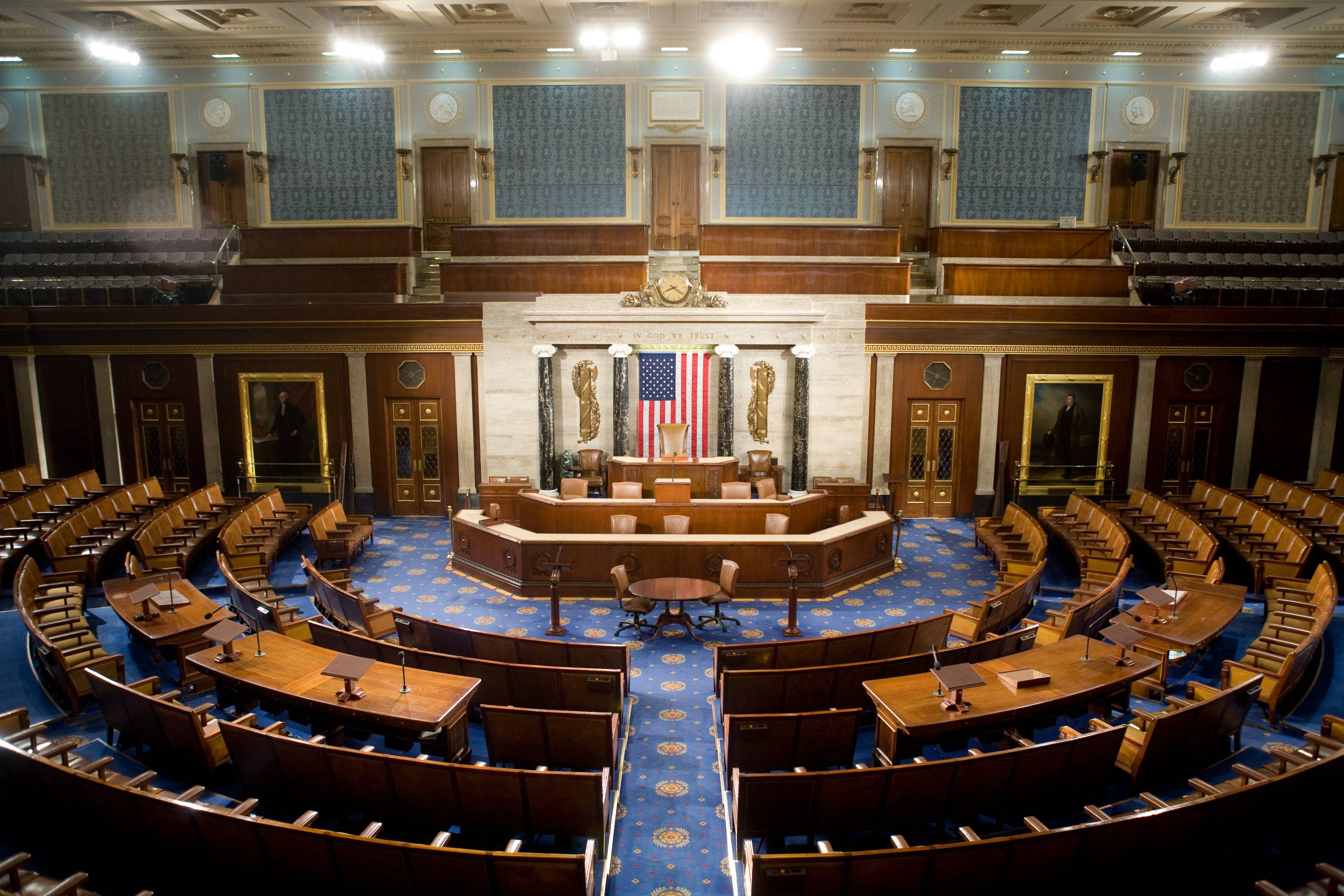
The Speaker of the House is one of those offices Americans hear about most often during a crisis: a shutdown fight, a leadership revolt, a razor-thin majority, a sudden vacancy. But the Speaker is not a cable news invention. It is a constitutional officer chosen by the House, governed by a mix of constitutional text, House rules, and a thick layer of tradition that has hardened into habit.
If you want to understand why Speaker elections can drag on, why the Speaker can shape what the House votes on, and why succession headlines are often slightly off, you have to separate two things that get blurred together: what the Constitution requires and what the House has decided to do with that freedom.
Join the Discussion
The constitutional root
The Constitution does not spend many words on the Speaker. It spends exactly one sentence, and that sentence does all the heavy lifting:
Article I, Section 2, Clause 5: “The House of Representatives shall chuse [choose] their Speaker and other Officers; and shall have the sole Power of Impeachment.”
That is the foundation. It tells you three important things immediately:
- The Speaker is chosen by the House. Not by the President. Not by party leaders. Not by a national election. The House chooses.
- The Constitution does not define the method. It does not say “majority of all members,” “majority of those present,” or “plurality wins.” That silence leaves room for House rules and precedents to control the mechanics.
- The Speaker appears in the same clause as impeachment. That juxtaposition is structural, not an explicit instruction about how impeachment must work. Still, it underlines a basic fact: the House is a self-governing chamber with exclusive constitutional powers.
When the Speaker is elected
The Speaker is elected at the start of each new Congress, after the House convenes and members-elect are present. Procedurally, the chamber organizes first: the Clerk calls the House to order, the House elects a Speaker, and then the Speaker administers the oath to members.
The House also elects a Speaker when the office becomes vacant mid-Congress, whether from resignation, removal, death, or any situation in which the Speaker is no longer able to serve.
How the floor election works
Nominations and party choices
On the House floor, members nominate candidates for Speaker, usually one nominated by the majority party and one by the minority party. Those floor nominations are the public tip of an internal process. Parties typically pick their preferred nominee through conference or caucus meetings before the House ever votes.
But “usually” is not “always.” Members can nominate and vote for someone outside the party’s preferred choice. That is why Speaker races can become unpredictable when a party has a narrow majority or an internal faction refuses to fall in line.
The roll call
The vote is conducted by roll call. The Clerk calls each member’s name, and each member responds out loud with the name of their chosen candidate. Members can vote for:
- a declared candidate,
- a different member of the House,
- or, technically, someone who is not a House member at all.
That last point surprises people, but the Constitution does not explicitly require the Speaker to be a representative. At the same time, no non-member has ever been elected Speaker, and the idea is legally untested. Even if the text leaves the door unlocked, the practical and constitutional questions it would raise are the reason the House has treated that door as purely theoretical.
What counts as winning
In modern practice, a candidate must win a majority of the votes cast for a named person. That is not a free-floating constitutional rule. It is the way the House has applied its authority through rules and precedent.
- If some members vote “present,” those votes typically do not count toward the total needed for a majority.
- If the House has vacancies, the number of members is lower, but the key number is still tied to the votes actually cast for candidates.
That is why you sometimes see math that looks odd to casual observers: the threshold can shift depending on how many members vote for an actual person versus choosing “present.”
If no one gets a majority
The Constitution does not give the House a timeout. If no candidate reaches the required majority under House practice, the House repeats the process: another roll call, another tally, until someone wins.
This is not a defect in the system. It is the system. The House is being forced to form a governing majority before it can reliably do governing things.
Why the House can stall
Until a Speaker is elected, the House is not fully organized. The Clerk presides for limited purposes, and the House can typically do only basic, necessary actions like calling the roll, entertaining certain privileged motions, and adjourning. But it cannot operate in its normal posture, because so much of its daily machinery depends on an elected Speaker and an adopted set of rules.
That is why a prolonged Speaker fight is not just symbolic drama. It is a procedural logjam with real consequences.
Vacancies and no Speaker
Removal
The House can remove its Speaker through a process governed by House rules and a motion commonly known as a motion to vacate the chair. The Constitution does not describe removal mechanics, but it gives the House broad authority to run its own proceedings.
Resignation or inability
Most vacancy scenarios are not dramatic. Resignations happen. Health events happen. The office can become vacant for reasons that have nothing to do with a floor fight.
Speaker pro tempore
In modern House practice, the Speaker can provide a list of members who may be designated to preside temporarily if the Speaker is absent. This is often discussed as a continuity measure, and it matters. But it is not the same thing as having an elected Speaker.
A Speaker pro tempore is a temporary presiding officer whose authority depends on House rules and, in unusual moments, on what the House specifically authorizes by resolution. Recent controversies have made this clearer to the public: the House can empower an acting presiding officer to perform limited functions for a defined period, but the full institutional mandate of the Speaker comes from election by the House.
The Speaker’s powers
The Speaker is powerful for a simple reason: the House has designed its rules to make the office a command center. Some powers are tied to constitutional structure. Many are products of House rules, party organization, and precedent.
1) Presiding and enforcing rules
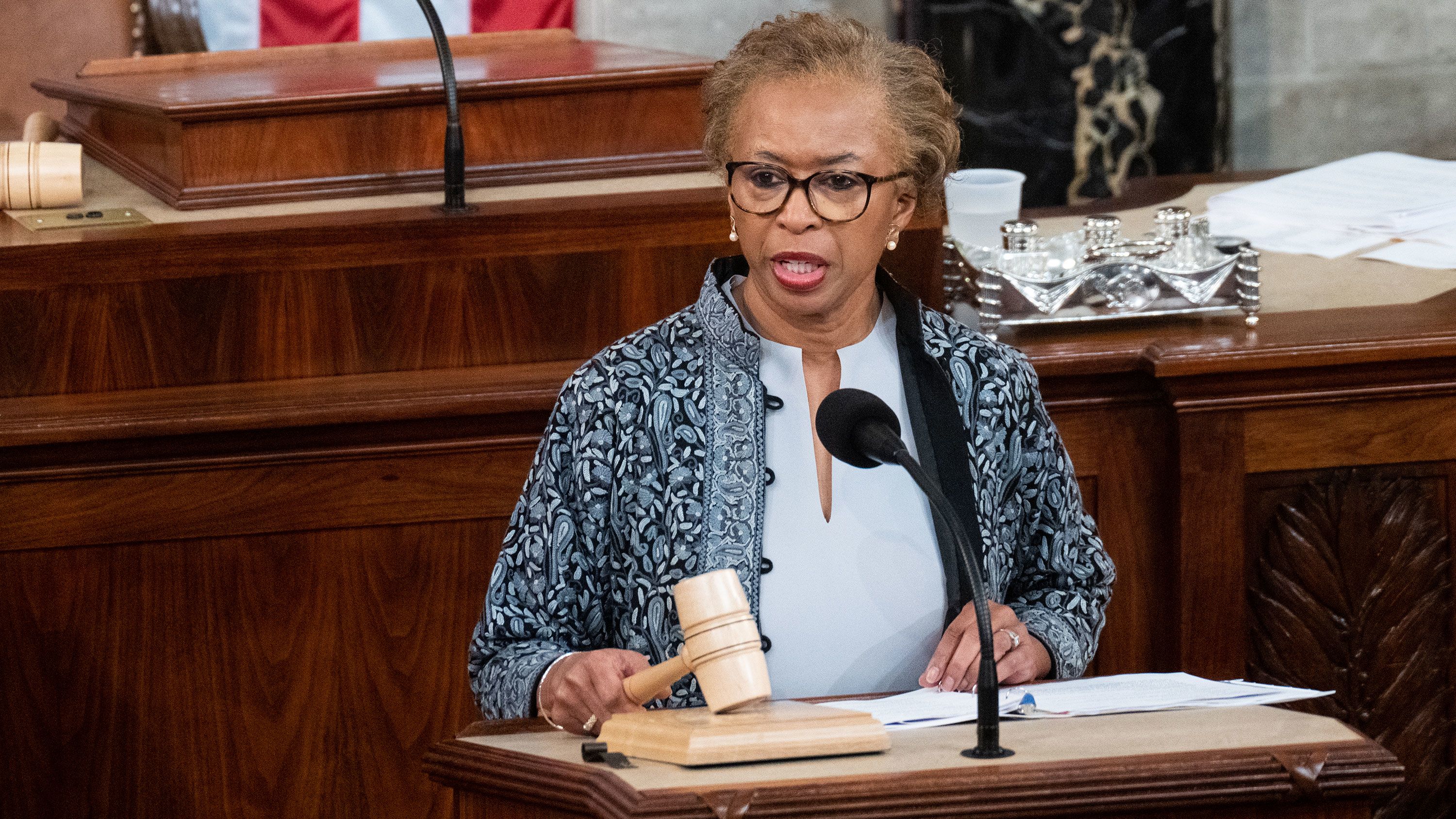
The Speaker presides over House sessions, recognizes members to speak, and rules on points of order. That sounds ceremonial until you realize recognition is power. If you control who gets recognized and when, you influence what gets offered, what gets debated, and what gets delayed.
2) Scheduling legislation
Most of the day-to-day “what comes to the floor” control is not spelled out in the Constitution. It is procedural power, built through House rules and leadership practice.
In practical terms, the Speaker, along with the majority leadership and the Rules Committee, helps determine:
- which bills reach the floor,
- when they reach the floor,
- how long they are debated,
- and what amendments are allowed.
A concrete way to think about this: a bill can have the votes in theory and still never get the chance to become votes in reality if it never receives a rule, never gets scheduled, or gets boxed in by a tightly structured debate.
3) Committees and assignments
Committees are where Congress does most of its actual work: hearings, markups, negotiations, oversight. The Speaker’s formal role in committee assignments varies through party rules and House practices, but the Speaker is routinely central to:
- shaping the committee landscape,
- appointing certain members to select committees,
- and exerting influence through leadership-aligned recommendations.
Committee power is not a constitutional command. It is an internal architecture the House built, and the Speaker helps decide how that architecture is staffed.
4) Administration and institution
The Speaker is also an institutional manager. The office influences House operations, coordination with the Senate, and the public face of the chamber. Some of this is official. Some of it is simply what happens when one person becomes the central node for an institution with 435 members.
5) Impeachment
Article I ties the Speaker clause to impeachment, but it does not grant the Speaker special impeachment powers. Impeachment is a House power exercised by the House. The Speaker can influence the process the same way the Speaker influences anything else: through recognition, scheduling, committee referrals, and the floor’s procedural pathways.
Succession and headlines
The Speaker is second in the presidential line of succession after the Vice President, under federal statute, not the Constitution’s original text. This is one of the most frequently misunderstood parts of the job because people treat it as a daily constitutional reality rather than a contingency plan.
Constitution and statute
The Constitution creates the presidency and vice presidency and contemplates succession, but Congress sets much of the operational line through legislation. Today, the Speaker appears high in that statutory line.
Nuances that matter
- Being “in line” is not the same as being “next.” The Vice President is first. The Speaker is relevant only in the circumstance where both the President and Vice President offices are vacant (or otherwise unable to discharge the powers and duties).
- Eligibility still applies. The Speaker would have to meet the Constitution’s requirements for the presidency.
- Vacancies change the story. If there is no Speaker, there is no Speaker to succeed.
- Resignation may be required. Under the succession statute’s framework, a Speaker who succeeds would not remain Speaker and would be expected to resign from the House and the Speakership to assume the acting presidency.
This is a good example of how an office can be simultaneously constitutional in origin and statutory in consequence.
Rules vs myths
Speaker fights tend to generate three recurring misconceptions:
- Myth: The Constitution sets a neat, fixed vote threshold. Reality: the Constitution does not specify the method. House practice and rules determine how the majority is calculated.
- Myth: The Speaker is basically a prime minister. Reality: the Speaker is powerful inside the House, but cannot dissolve Congress, command executive agencies, or govern without majorities and bicameral agreement.
- Myth: A temporary presiding officer is the same as a Speaker. Reality: temporary presiding authority is not the same as being elected Speaker with the full institutional mandate.
The stable truth beneath the drama is that the House has intentionally built an office capable of creating order out of 435 competing incentives. When that order collapses, you can watch the Constitution do what it often does best: force political actors to bargain in public until an institution can function again.
Why it matters
The Speaker is not just a partisan megaphone. It is the House’s answer to a structural problem: a large democratic body needs a way to decide what it will do next.
That is why the Constitution gives the House the power to choose its Speaker and then largely steps back. The Founders created a chamber that could design its own operating system. Over time, especially as party leadership centralized in the late 19th and early 20th centuries, the Speaker became one of the most powerful user accounts in that system.
If you want to be an informed citizen, you do not need to memorize every procedural rule. You just need to recognize the Speaker’s core leverage points: control of recognition, control of time, and influence over committees. Those three things determine what becomes law, what becomes theater, and what never becomes anything at all.