
Supreme Court justices are not “hired” the way most powerful decision-makers are. They are appointed through a constitutional handshake between two elected branches, with the President choosing a nominee and the Senate deciding whether that choice becomes a justice with life tenure (absent retirement, resignation, or removal through impeachment and conviction).
In theory, it is a clean civics flowchart. In practice, it is one of the most contested processes in American politics because one confirmed justice can shape constitutional law for a generation.
The constitutional basis: Article II, Section 2
The appointment process starts with a single sentence in the Constitution. Article II, Section 2 gives the President the power to nominate, and it gives the Senate the power to confirm:
“[The President] shall nominate, and by and with the Advice and Consent of the Senate, shall appoint … Judges of the Supreme Court …”
(That is a partial quote. The clause also covers ambassadors and “all other Officers of the United States.”)
That phrase “advice and consent” does two important things at once:
- It creates shared ownership. The President cannot seat a justice alone.
- It creates shared veto power. The Senate can refuse to confirm, and the President can respond by nominating someone else.
What the Constitution does not do is just as important. It does not require a particular kind of hearing. It does not set a timeline. It does not define what “advice” must look like. That silence is why norms matter, and why the fights get so intense when norms break.
Step 1: A vacancy opens
A Supreme Court seat becomes vacant in only a few ways:
- Death in office
- Retirement (often timed strategically)
- Resignation (rare)
- Elevation (rare historically, for example, a sitting justice becoming Chief Justice)
When a vacancy opens, the Court can still decide cases. There is no constitutional requirement that the Court pause. But a Court split 4 to 4 cannot create a binding national precedent. A tie simply affirms the lower court’s judgment without an opinion that settles the issue nationwide.

Step 2: The President picks a nominee
The Constitution gives the President the nomination power, but it does not describe how presidents should choose. Modern presidents typically rely on a mix of:
- Legal credentials (often appellate judges, sometimes academics, occasionally practicing lawyers or elected officials)
- Ideology and judicial philosophy (how a nominee approaches the Constitution and precedent)
- Political considerations (Senate math, timing, interest group pressure)
- Demographic and representational goals (life experience, geographic region, race, gender, religion)
Presidents also pre-vet nominees heavily. By the time a name is announced, the White House usually knows the nominee’s writings, speeches, key cases, and potential vulnerabilities in exhausting detail. The goal is to avoid surprises because the Senate confirmation process is built to surface them.
Step 3: The Judiciary Committee
Once the President sends a nomination to the Senate, the center of gravity shifts to the Senate Judiciary Committee. This is where the public usually starts paying attention, because this is where a nominee’s record becomes a national event.
Paperwork and background checks
Before the televised questioning, there is a quieter phase that can be just as consequential:
- FBI background investigation (focused on personal history and potential issues, not simply legal views)
- Financial disclosures
- Review of writings and opinions (judicial opinions, academic work, speeches, emails and memos when available)
- American Bar Association evaluation (the ABA often rates nominees as “Well Qualified,” “Qualified,” or “Not Qualified”; this is influential but not an official government requirement)
The hearings
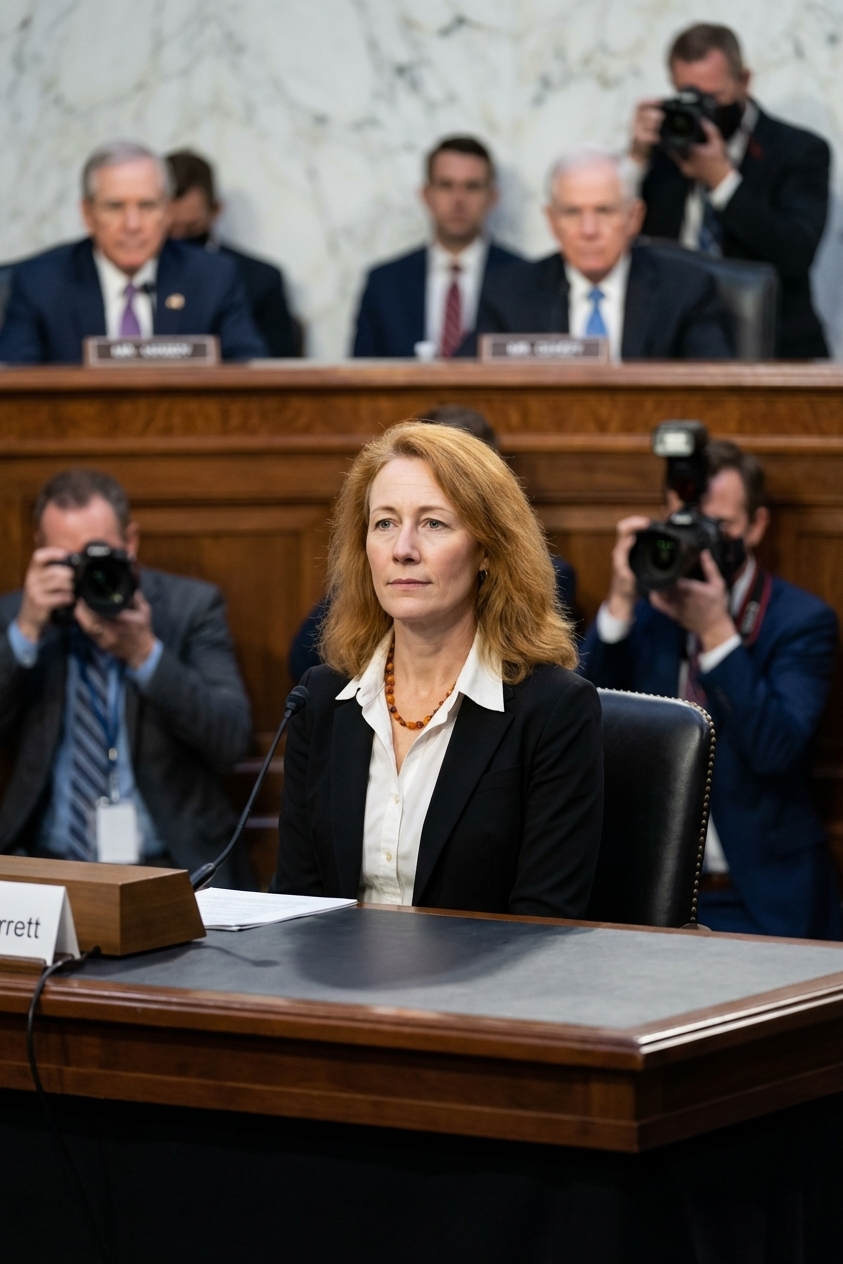
Judiciary Committee hearings are the nominee’s highest-visibility moment. Senators question nominees about their background, temperament, and judicial method. Nominees usually avoid answering how they would rule on hot-button issues, and for a simple reason: promising outcomes in future cases is inconsistent with the judicial role.
That creates a familiar tension. Senators want clarity. Nominees want to avoid prejudging. The result is a lot of careful language about precedent, open-mindedness, and deciding cases based on briefs and arguments.

The committee vote
After hearings, the committee votes to report the nomination to the full Senate. The committee can:
- Report favorably
- Report unfavorably
- Report without recommendation
- Take no action (which can stall a nomination)
A committee vote is not the final word, but it can signal whether the nominee has a viable path in the full Senate.
Step 4: The full Senate
After the Judiciary Committee stage, the nomination goes to the Senate floor, but it does not move there automatically. Senate leadership, especially the Majority Leader, controls scheduling, which means nominations can be accelerated, slowed, or left waiting even after the committee acts.
Floor action and scheduling
Once reported, a nomination is placed on the Senate’s Executive Calendar. From there, getting to a final vote often depends on negotiations over time and procedure. Sometimes the Senate moves by unanimous consent. When it does not, the majority can still force the issue, but it takes floor time.
Debate, cloture, and the “nuclear option”
Cloture is the Senate’s tool for ending debate and moving to a vote.
For much of modern Senate history, opponents could block a confirmation by forcing a 60-vote cloture threshold to end debate. That made some Supreme Court nominations effectively require a supermajority.
That is no longer the case. In 2013, the Senate used the “nuclear option” to eliminate the 60-vote threshold for most executive branch and lower-court nominations. In 2017, it extended that change to Supreme Court nominations. The Senate now confirms Supreme Court justices by a simple majority vote. In other words, 51 votes can confirm, and 50 votes plus the Vice President can break a tie.
The confirmation vote
The final step is a recorded vote by the full Senate. If the nominee receives a majority of votes cast (assuming a quorum), the Senate has given “consent.” (Abstentions or “present” votes can effectively lower the number needed.)
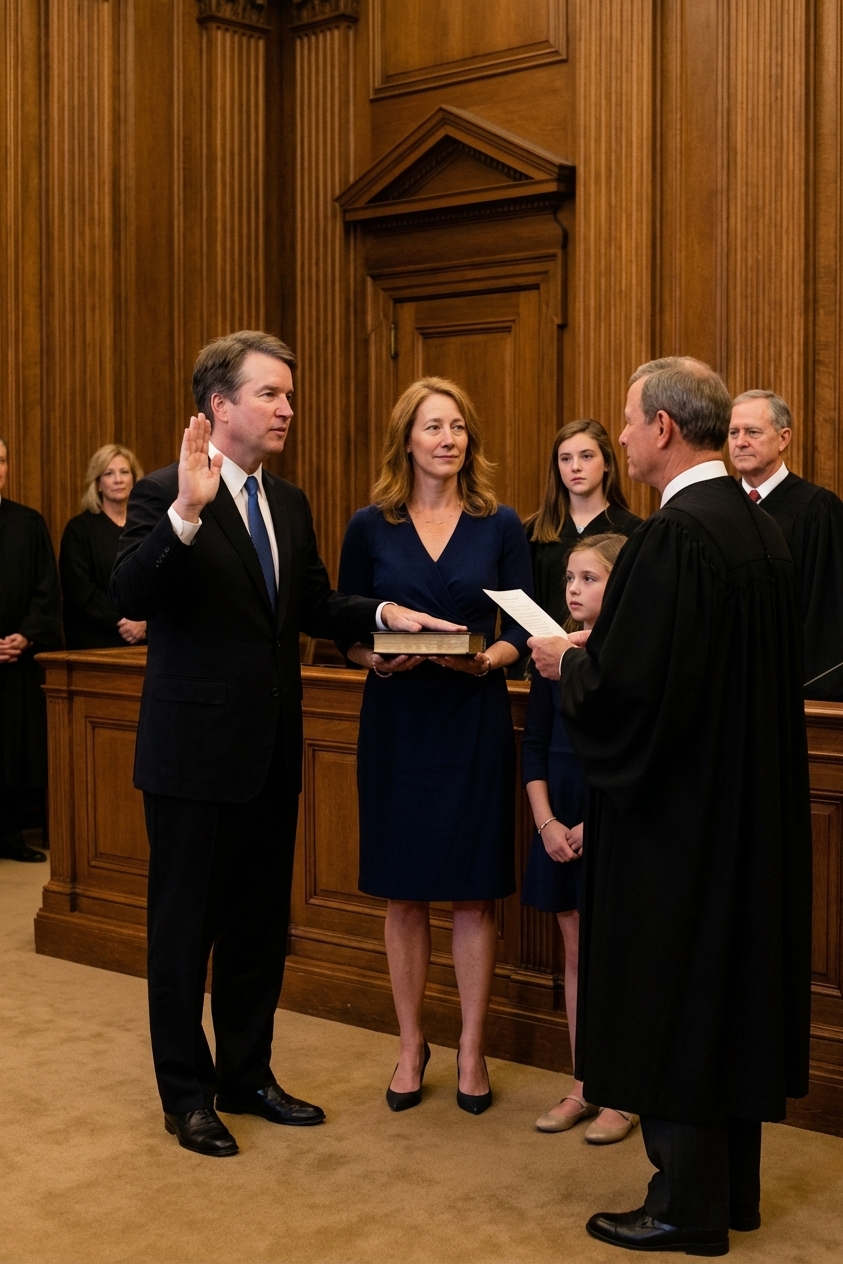
Then the President completes the appointment. The nominee takes two oaths: a constitutional oath and a judicial oath, often administered by the Chief Justice (or sometimes another justice). Only after that does the nominee become Justice.
What “advice and consent” means
Civics textbooks sometimes treat “advice and consent” like a polite formality. Historically, it has never been purely polite. The Senate’s role is designed to be independent, and the Constitution does not require the Senate to vote at all.
That last part is not a loophole. It is a feature of the structure. The Framers assumed ambition would counteract ambition. The President wants to fill the seat. Senators want influence over who fills it. The friction is the point.
The modern question is not whether the Senate can resist. It is how, and on what timeline.
Contentious confirmations
Americans often talk about Supreme Court confirmations as if they used to be calmer, and then suddenly became political. In reality, confirmations have always reflected the political stakes of constitutional interpretation. What has changed is how openly those stakes are discussed, and how nationalized the process has become.
Some flashpoints that shaped the modern era include:
- Robert Bork (1987): The Senate rejected Bork after a high-profile ideological fight that permanently changed the tone of confirmations.
- Clarence Thomas (1991): The hearings expanded into allegations of sexual harassment, turning confirmation into a cultural and media event.
- Recent decades: Confirmation battles increasingly track partisan control, election timing, and the Court’s role in issues like abortion, guns, administrative power, and voting rules.
The deeper truth is simple: when the Court is expected to decide the country’s hardest moral and political questions, the process of choosing justices will mirror that expectation.
When the Senate does nothing
A nomination can fail in more ways than a “no” vote. It can expire, be withdrawn, or be stalled until the political moment passes.
That reality became impossible to ignore in 2016.
The Garland vacancy
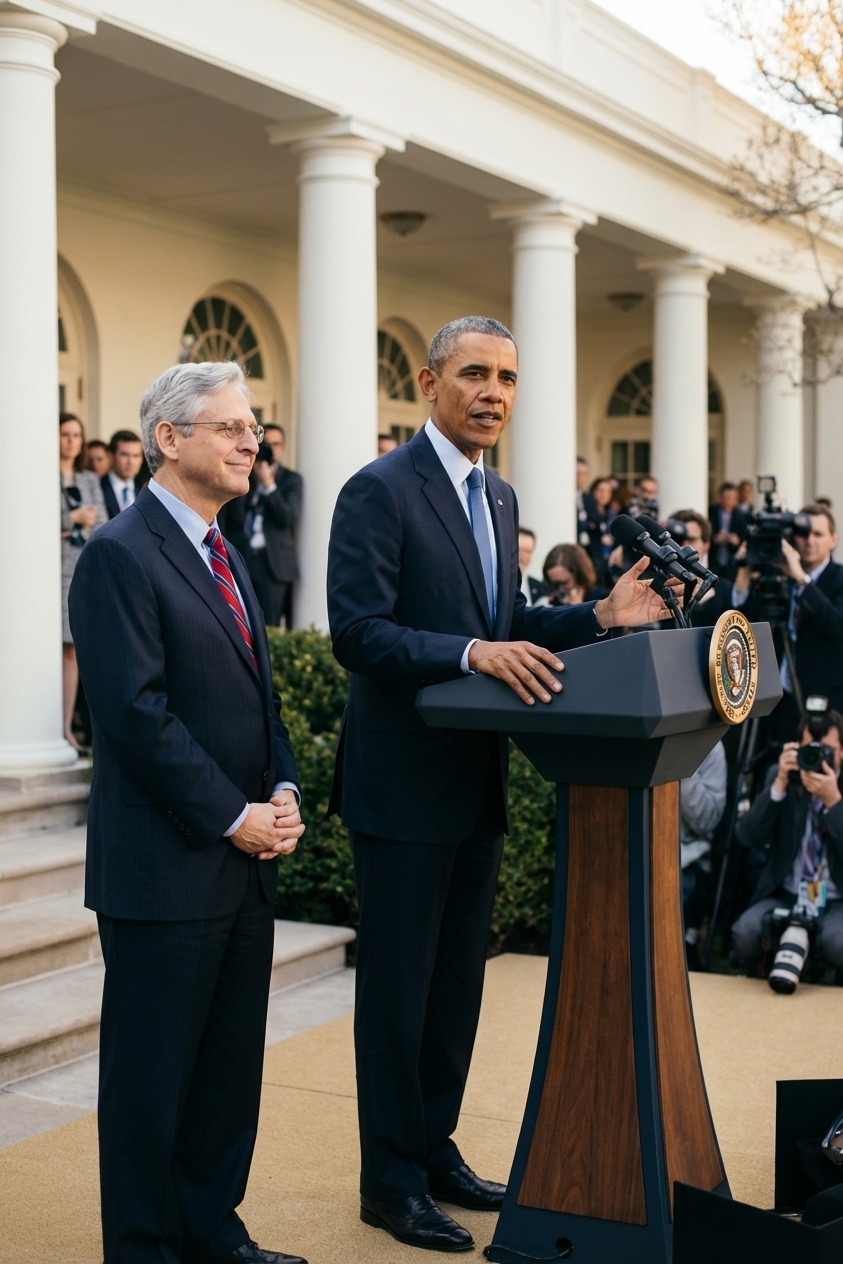
After Justice Antonin Scalia died in February 2016, President Barack Obama nominated Judge Merrick Garland. The Senate, led by the majority party, declined to hold hearings or a vote, arguing that a Supreme Court vacancy arising in an election year should be filled by the next president.
The result was a vacancy lasting more than a year. The Court operated with eight justices, and several major disputes risked deadlocking 4 to 4.
The Barrett timeline
In September 2020, Justice Ruth Bader Ginsburg died, also in an election year, and very close to Election Day. President Donald Trump nominated Judge Amy Coney Barrett. This time, the Senate moved quickly. Hearings and a confirmation vote occurred within weeks, and Barrett was confirmed before the election.
Those two timelines, 2016 and 2020, are now inseparable in the public mind. Together they illustrate something the Constitution leaves unanswered: whether “advice and consent” includes an expectation of consistent timing norms. The text does not say. Politics supplies the answer, for better or worse.
Timing and legitimacy
When a seat is vacant, there are two parallel consequences:
- Practical: an eight-member Court can deadlock, leaving national legal questions unresolved.
- Institutional: drawn-out vacancies and rushed confirmations can erode public trust, even when each step is technically constitutional.
This is why confirmation fights are rarely just about one nominee. They are also about what kind of Court the country is going to have, and whether the public believes the Court is playing the same constitutional game as everyone else.
Common questions
Do justices serve for life?
Justices hold office during “good Behaviour” under Article III, which is generally understood as life tenure unless a justice resigns, retires, or is removed through impeachment and conviction. Impeachment is extremely rare for judges, and no Supreme Court justice has ever been removed that way (Justice Samuel Chase was impeached in 1804 and acquitted by the Senate).
Can a President appoint without the Senate?
Normally, no. The President nominates, but the Senate must give consent before someone can take a seat as a confirmed justice.
There is one important historical caveat: under the Constitution’s Recess Appointments Clause, presidents have sometimes made temporary appointments while the Senate was in recess (for example, Earl Warren and William Brennan). Those appointments were time-limited and still depended on later Senate confirmation to last. In modern practice, recess appointments to the Supreme Court are exceedingly unlikely and legally constrained.
How many votes does it take to confirm?
A simple majority of the Senate is enough for confirmation under current Senate rules.
What is the Judiciary Committee’s role?
The committee shapes the record. It is where most evidence, questioning, and narrative framing happens. Even when the final vote is close, the committee phase often determines which facts and controversies dominate public attention.
Why this process matters
Supreme Court confirmations can feel like inside baseball until you realize what the Court actually does. The Court decides what the Constitution permits and forbids. That means the appointment process is not just a personnel decision. It is how constitutional meaning is translated into real rules for real lives.
Article II, Section 2 gives us the skeleton: nominate, advise, consent, appoint. Everything else, the hearings, the floor schedule, the timelines, the norms, the intensity, is the country negotiating what that skeleton is allowed to carry.