
Small claims court is the legal system’s fast lane: less formal, cheaper to file, and built for ordinary people who need a judge to settle a money dispute without turning it into a full-blown lawsuit.
But “simple” does not mean “automatic.” The court does not investigate your story. The judge decides based on what you can show in a short hearing, usually with paperwork, photos, and plain testimony. Feelings are real, but they do not substitute for evidence.
Join the Discussion
What small claims court is for
Small claims court exists for straightforward disputes where the amount of money at stake is limited by state law. Procedures are streamlined, and the rules of evidence are often applied more informally than in higher courts, though judges still expect reliable proof.
Common case types
- Unpaid debts (personal loans, IOUs, unpaid invoices)
- Property damage (car damage not fully covered by insurance, damaged belongings)
- Security deposits and minor landlord-tenant money disputes
- Contract disputes (unfinished work, poor workmanship, broken agreements)
- Refunds and consumer disputes (defective goods, services not provided)
Common case types that often do not fit
- Requests for non-money orders (like forcing someone to return a child, change a record, or stop doing something). Some states allow limited “return of property,” but many small claims courts focus on money only.
- Defamation and other claims that hinge on complex proof.
- Cases that require extensive discovery (lots of subpoenas, expert testimony, technical records).
- Federal claims or claims controlled by specialized courts, depending on your state.
If what you want is an order to do or stop doing something, or a ruling on a complicated legal issue, small claims may be the wrong tool. It is designed to answer one core question: who owes whom money, and how much?
Dollar limits by state
Every state caps the amount you can sue for in small claims court. The cap can depend on who is suing (an individual versus a business), and sometimes on the type of claim.
Because limits change, the most reliable source is your state judiciary or local court website. Search for your county plus “small claims limit,” or look up the small claims section under your state’s court self-help portal.
Typical ranges
- Low caps: some states are around a few thousand dollars.
- Mid-range caps: many states fall in the $5,000 to $10,000 range.
- Higher caps: in some jurisdictions, individuals may be able to file in the $15,000 range, and in a smaller number of places it can be higher.
If your damages exceed the cap, you often have three choices: (1) file in regular civil court, (2) reduce the amount you seek and waive the rest, or (3) sometimes split claims only if they are truly separate disputes (courts dislike “claim splitting” to dodge limits).
Do you need a lawyer?
Many small claims courts are built around self-representation. Some states allow lawyers; some restrict them. A few have special rules that differ depending on who is suing (for example, certain business plaintiffs). Check your court’s rules before you assume either side can bring counsel.
When a lawyer can still help
- You are close to the filing deadline and unsure how to preserve the claim.
- You need help identifying the correct legal entity to sue (for example, a contractor’s LLC versus the individual).
- Your proof depends on technical rules (business records, expert opinions, or multiple witnesses).
- You are being sued and may have counterclaims or defenses you do not fully understand.
Even a brief consultation can help you avoid the most common self-represented mistake: suing the wrong party in the wrong court for the wrong amount.
Deadlines to file
Small claims cases still have a clock: the statute of limitations. If you file too late, the court can dismiss the case even if you are right about the facts.
- Deadlines vary by state and by claim type (contract, property damage, fraud, and more).
- The timeline often starts when the harm happened, or when you reasonably discovered it.
If you are anywhere near the deadline, do not guess. Look up your state’s statute of limitations for your claim type or get a quick legal consult.
Step by step: filing a small claims case
The details vary by state, but the basic path is remarkably consistent.
1) Confirm you are in the right court
- Proper venue: usually where the defendant lives, where the business is located, or where the dispute happened.
- Subject matter: your type of claim must be allowed in small claims.
- Dollar limit: your requested damages must fit the cap.
2) Identify the correct defendant
This is not just a spelling issue. If you win against “Mike’s Plumbing” but the real legal entity is “Mike’s Plumbing LLC,” collecting can become harder.
- If it is a person, use their legal name.
- If it is a business, use the exact entity name and, if required, the registered agent for service.
- If it is a landlord, confirm whether you leased from an individual, a property management company, or an LLC.
3) Send a demand letter (often smart, sometimes required)
A demand letter is a written request for payment before you file. Some states require it for certain cases; even when not required, it strengthens your credibility.
- State the facts in plain language.
- State the amount you want and how you calculated it.
- Give a deadline (often 10 to 14 days).
- Say you will file in small claims court if the issue is not resolved.
4) Complete the court forms
You typically file a “Statement of Claim” or “Complaint.” You will include:
- Names and addresses of parties
- The amount sought
- A short explanation of why the defendant owes you money
- Any required attachments (contracts, invoices, demand letter)
5) Pay the filing fee (or request a fee waiver)
Fees vary. Many courts offer fee waivers for low-income litigants. Ask the clerk or check the court website for the waiver application.
6) Serve the defendant
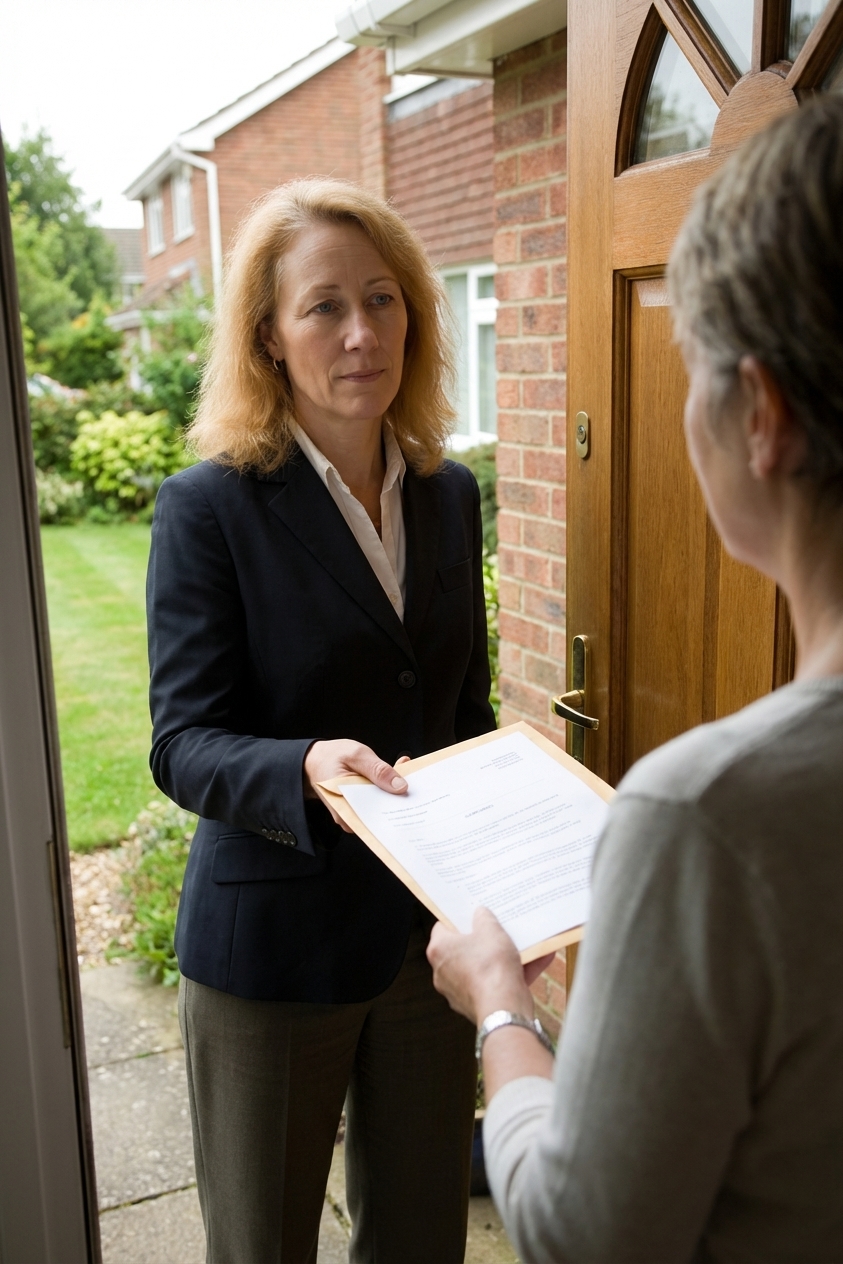
Filing is not enough. The defendant must be formally served. Methods vary by state, but common options include:
- Sheriff or marshal service
- Licensed process server
- Certified mail by the court (in some jurisdictions)
Service rules are strict for a reason: due process. If service is done incorrectly, your case may be delayed, dismissed without prejudice, or you may be unable to obtain (or keep) a default judgment.
Mediation and counterclaims
Do not be surprised if the court tries to settle your case before a judge hears it. Many courts encourage, and some require, mediation or a settlement conference.
- If you settle, get the terms in writing and make sure it covers payment timing and what happens if someone does not pay.
- If you cannot settle, the mediation session can still help you identify what the judge will care about.
Also, the defendant may file a counterclaim, basically their own claim against you in the same case. Read anything you are served carefully and bring evidence that addresses both sides of the dispute.
What to bring to court
Small claims hearings move quickly. Judges often have a stack of cases and only a few minutes for each. Your goal is to make it easy for the judge to understand the timeline and the math.
Your evidence checklist
- Contracts, receipts, invoices, and written estimates
- Photos and videos (printed photos help; do not rely on a phone battery)
- Text messages and emails that show agreement, promises, or admissions
- Proof of payment (bank statements, canceled checks, payment app records)
- Repair bills and itemized quotes for damages
- Your demand letter and proof it was sent
- Witnesses who saw the event or heard the agreement, when allowed
Organize your exhibits
- Label documents in a simple way (for example: Exhibit 1, Exhibit 2).
- Put them in chronological order.
- Be ready to explain what each item is and how you got it. Judges still care about basics like relevance and authenticity, even in informal hearings.
- If you use screenshots, include the name/number, date, and full thread when possible, not a cropped line that could be taken out of context.
Bring copies
A good rule is three copies of everything: one for you, one for the defendant, one for the judge. Some courts want more, so check local rules if you can.
Build a one-page case summary
Write one page with:
- Key dates (what happened and when)
- The legal relationship (tenant, customer, buyer, borrower)
- The amount you seek and a line-by-line breakdown
- What documents prove each point
Some courts will let you hand a summary to the judge; others will not. Either way, writing it forces clarity. Clarity is persuasive.
A quick mini-example
Say a contractor took a $1,200 deposit and never started. Your clean proof might look like this: a signed estimate showing the price and start date, a payment record showing the $1,200 deposit cleared, and texts where the contractor admits delays and then stops responding. That bundle tells a simple story and proves your number.
What happens at the hearing
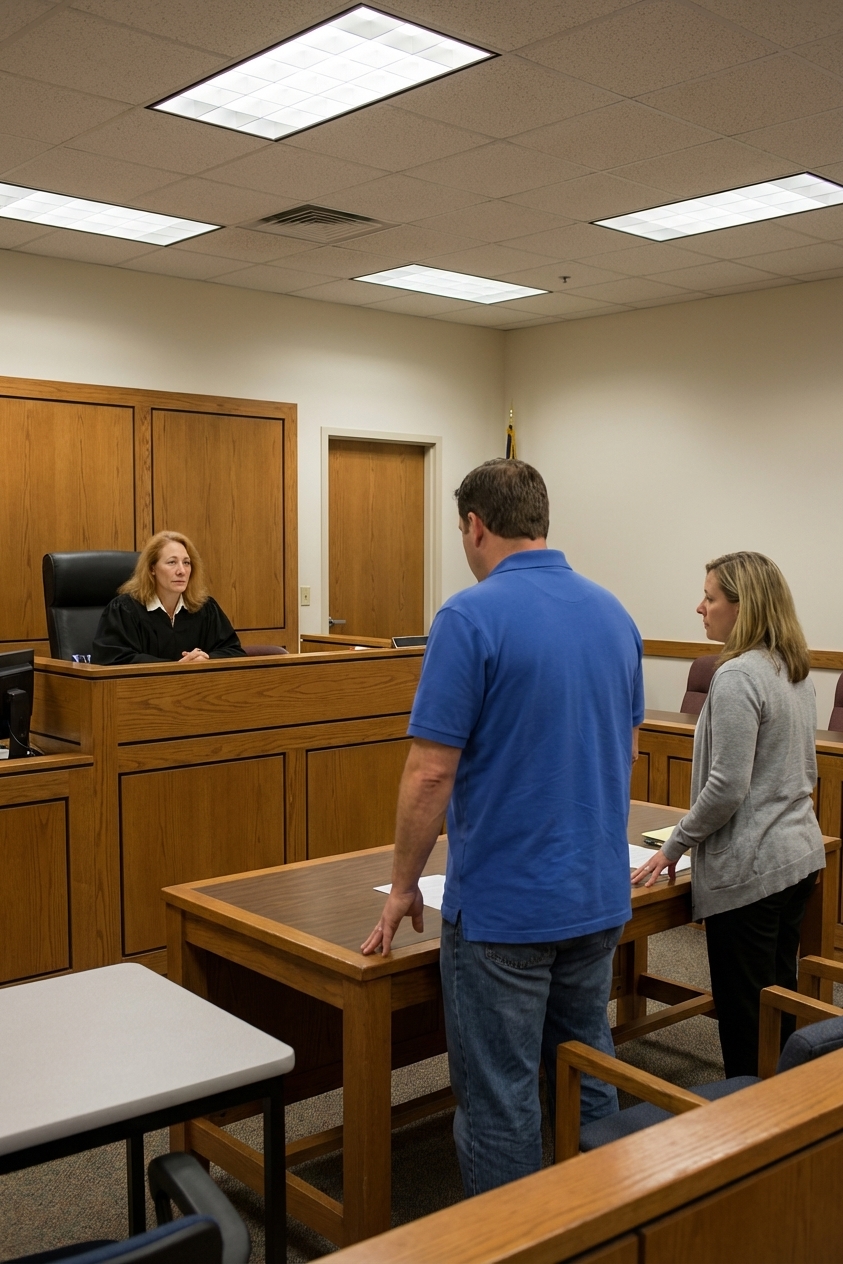
Small claims hearings are typically bench trials, meaning a judge decides the case and there is usually no jury. A few jurisdictions have special procedures that can involve a jury or a transfer to another court, but most cases are decided by the judge in a short hearing.
The basic flow
- The plaintiff presents: a short explanation, then evidence, then witnesses.
- The defendant responds: their version, defenses, and evidence.
- Questions from the judge: often the most important part.
- Decision: sometimes immediately, sometimes mailed later.
How to talk to the judge
- Be brief and chronological.
- Use ordinary language and avoid legal jargon you do not understand.
- Do not interrupt. If the defendant says something wrong, write it down and address it when it is your turn.
- When you mention a fact, point to the exhibit that proves it.
What the judge is deciding
- Did an agreement exist, and what were its terms?
- Did someone fail to do what they promised?
- Did that failure cause measurable damages?
- Is the amount requested supported and reasonable?
Small claims court is not built to validate your frustration. It is built to calculate responsibility.
Practical tips that win cases
- Tell a simple story. Start with the relationship and the promise, then the breach, then the damages.
- Prove your number. Judges often agree someone is at fault, then deny or reduce damages because the math is guesswork.
- Use timestamps. Emails, receipts, and dated photos beat vague memory.
- Do not overclaim. Inflated requests can make you look less credible and can backfire.
- Anticipate defenses. If you know what they will say, bring the document that disproves it.
- Be early and observe. Watching a few cases before yours teaches you the court’s rhythm.
- Dress like you respect the process. You do not need a suit, but you should look serious.
- Stay calm. The person who stays factual usually sounds more truthful.
What you can recover
In many courts, you can ask for more than just the underlying loss, but it depends on state law and the type of case.
- Often recoverable: filing fees, service costs, and sometimes pre-judgment interest.
- Often limited or unavailable: attorney’s fees (unless a statute or contract allows them), punitive damages, and speculative amounts that are not tied to proof.
Read your court’s instructions closely so you request the right categories of damages and can document each one.
If you win: collecting the judgment
Winning a judgment is not the same as collecting it. Small claims court gives you a legal decision. Collection is a separate phase, and it can take time.
Common enforcement tools
- Payment plans or voluntary payment: many defendants pay once there is a judgment.
- Wage garnishment: if allowed and you follow your state procedure, part of wages can be withheld.
- Bank levy: in some cases, you can freeze and seize funds from a bank account.
- Liens: you may be able to place a lien on real estate or certain property, depending on state law.
- Judgment debtor examination: a court-ordered proceeding where the debtor answers questions about assets and income.
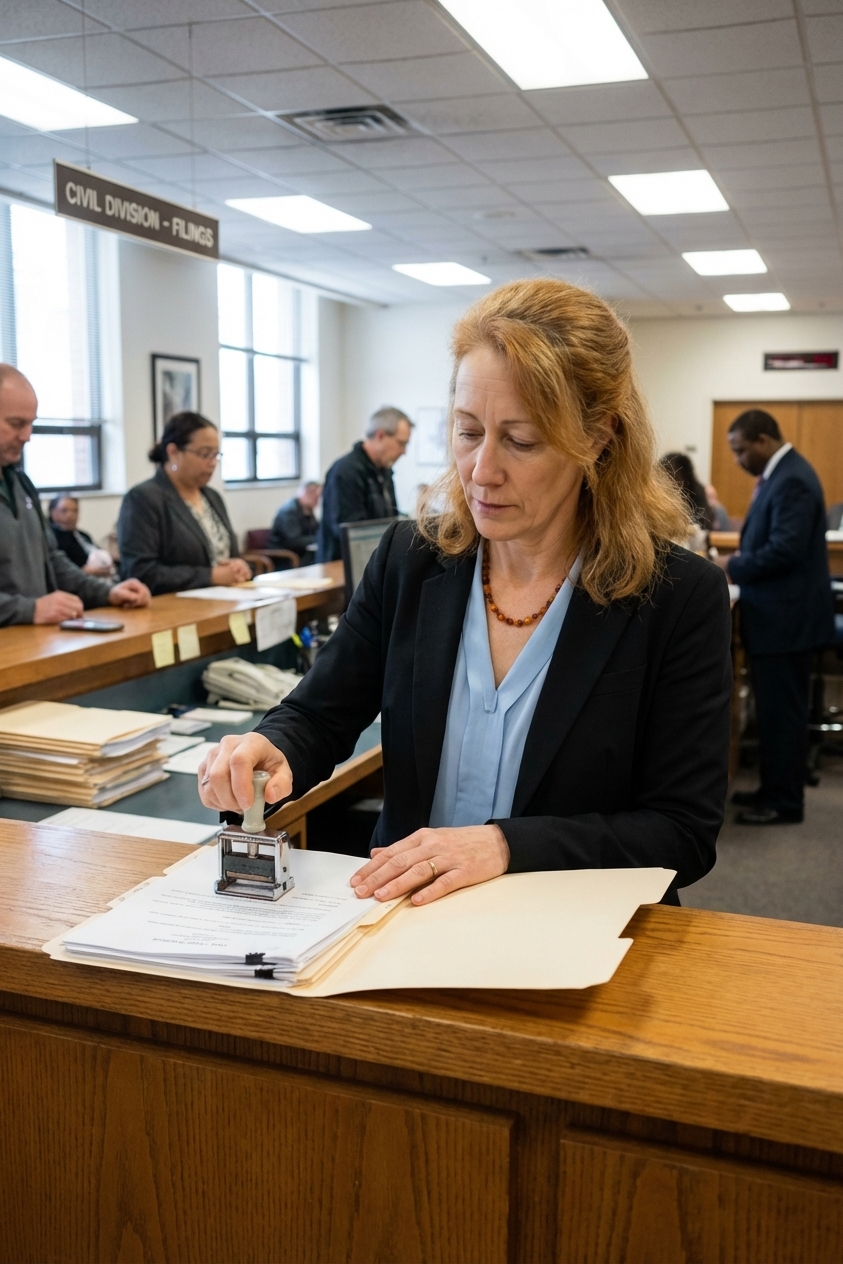
Enforcement procedures vary. Some places handle collection through separate forms, a different division of the court, or additional filings after judgment. States also limit what can be taken to satisfy a judgment, and certain income and property are exempt. Enforcement often works best when you have accurate information: where the person works, where they bank, whether they own property, and whether they have collectible assets.
If you lose: appeals
Appeals are possible in many states, but the rules differ sharply. Some states allow a new trial (a “trial de novo”) in a higher court. Others limit appeals to legal errors, not factual disagreements.
Key realities
- Deadlines are short. You may have only days or weeks to file a notice of appeal.
- Fees and complexity increase. An appeal can cost more than the original case.
- Winning on appeal is not easy. If the trial judge believed the other person, higher courts often defer to that credibility call.
If you are considering an appeal, consult your court’s self-help materials immediately, and consider a brief attorney consultation. The fastest way to lose an appeal is to miss the deadline.
Small claims and due process
Small claims court feels informal, but it rests on the same constitutional foundation as every courtroom in America: due process. The government cannot take your money or impose a judgment against you without notice and a meaningful chance to be heard.
That is why the system cares so much about proper service, deadlines, and the chance for each side to present evidence, even when the dispute is only a few hundred dollars. The amounts are small. The principle is not.
Before you file
- Is small claims court the right place for this dispute and this amount?
- Are you within the statute of limitations for your claim?
- Do you have the correct legal name and address for the defendant?
- Do you have documents or photos that prove each key fact?
- Can you explain your damages in a simple, itemized way?
- Did you send a demand letter (and keep proof)?
- Are you ready for mediation or a counterclaim?
- Do you understand how you will collect if you win?
If you can answer “yes” to most of those, you are ready for small claims court. And if you cannot, that is not a reason to give up. It is a reason to gather what the judge will actually need to rule in your favor.