
Every four years during presidential cycles, Americans watch “the primary” unfold as if it were an official constitutional rite, like the Electoral College or the State of the Union. It is not.
The Constitution never created primary elections. It never mentions political parties. It does not lay out a calendar where Iowa goes first, New Hampshire goes second, and everyone else scrambles for relevance. And yet, the primary process now does what the Founders assumed would happen somewhere else: it decides who gets presented to the country as a plausible president.
That tension explains almost everything confusing about primaries and caucuses. They are a hybrid creature. In many states, primaries are run by state and local election officials, funded wholly or partly with public money, and regulated by election law. But they exist to serve private associations, the political parties, which have their own rules and their own constitutional rights. The result is a system that feels public, acts private, and regularly ends up in court.
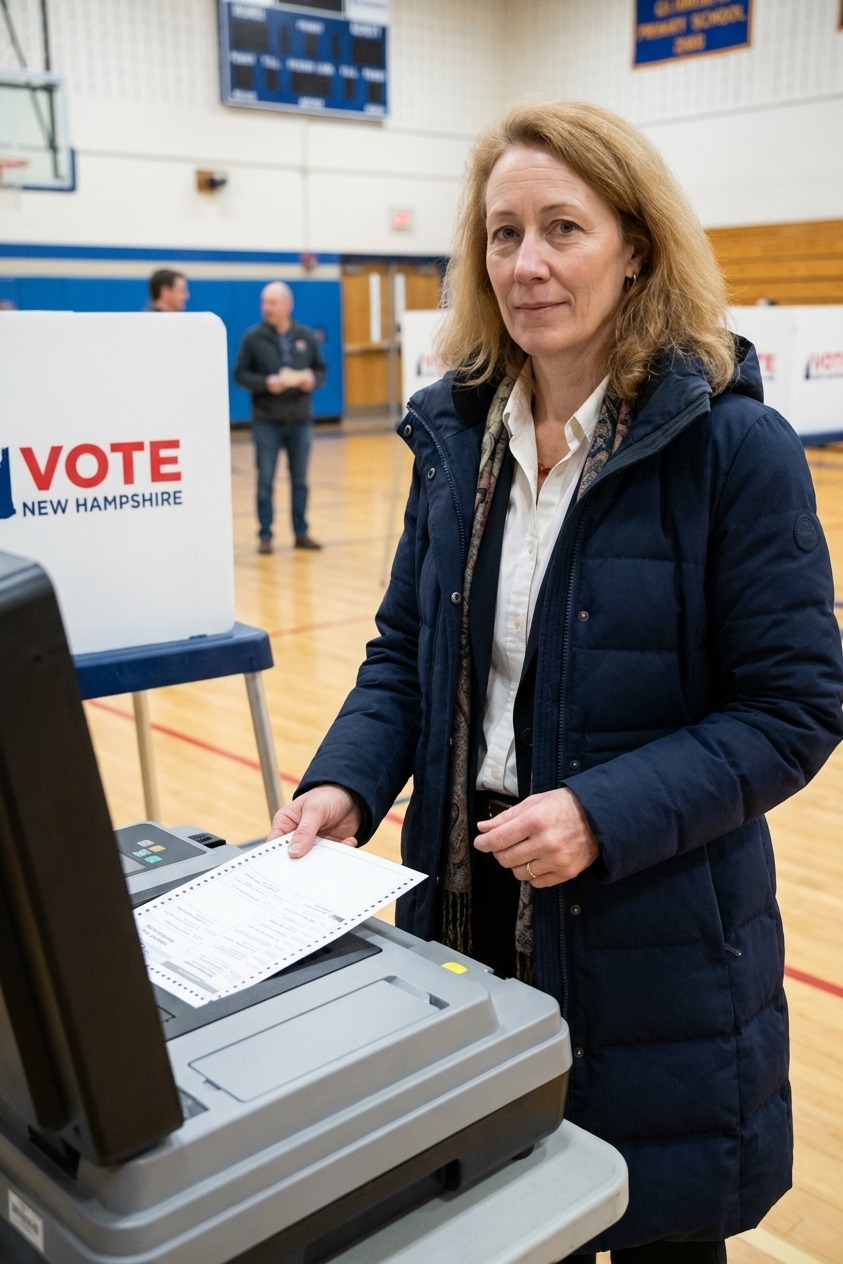
Primaries vs. caucuses
Both primaries and caucuses are ways for a party to choose delegates, and those delegates ultimately vote at the party’s national convention to nominate a presidential candidate. The difference is how the party collects voter preferences.
Primary elections
A primary is an election. You show up (or vote by mail), you cast a secret ballot, votes get counted, and the results are translated into delegates under party rules.
- Administered by: State and local election officials (in most states)
- Costs: Often paid in whole or part by the state
- Access: Determined by state law (open, closed, or in-between), sometimes with party input
- Format: Secret ballot, like a general election
Caucuses
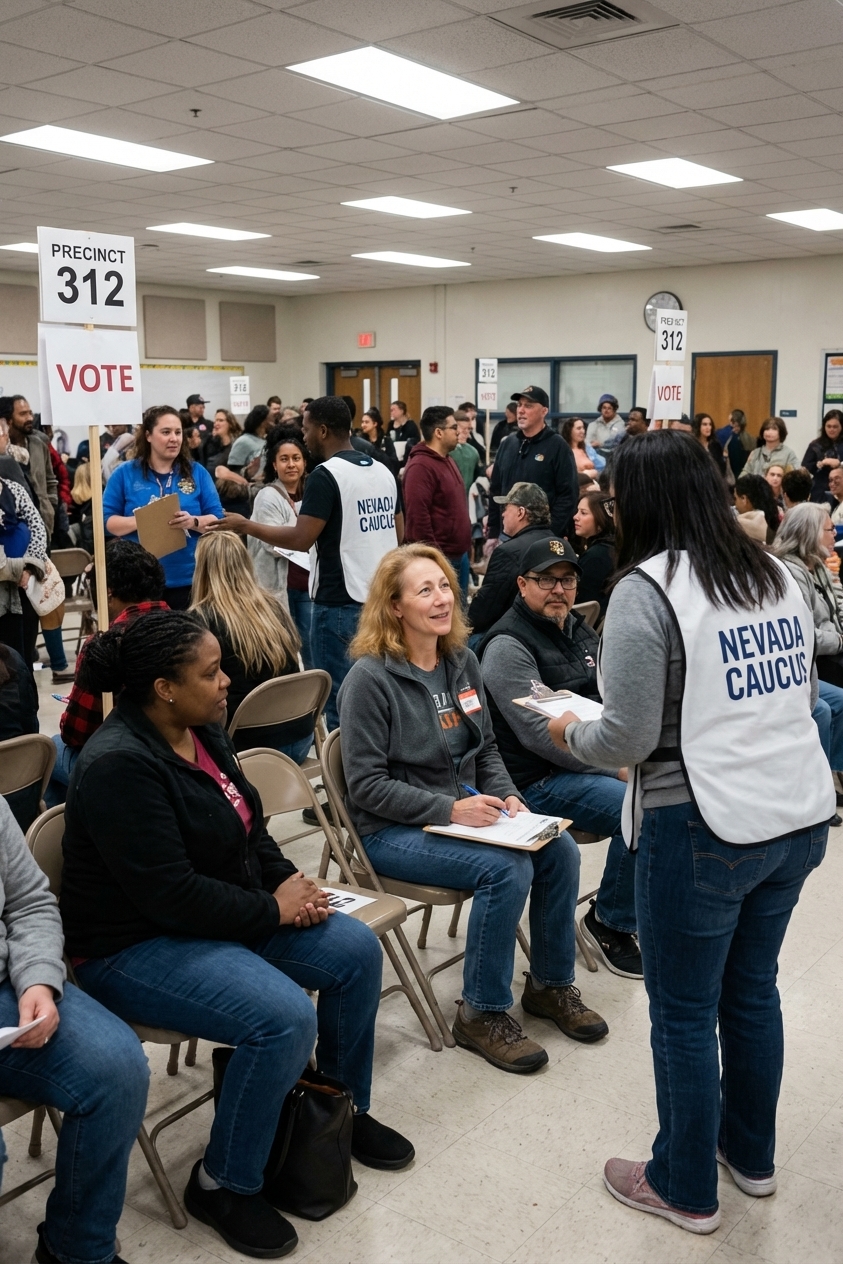
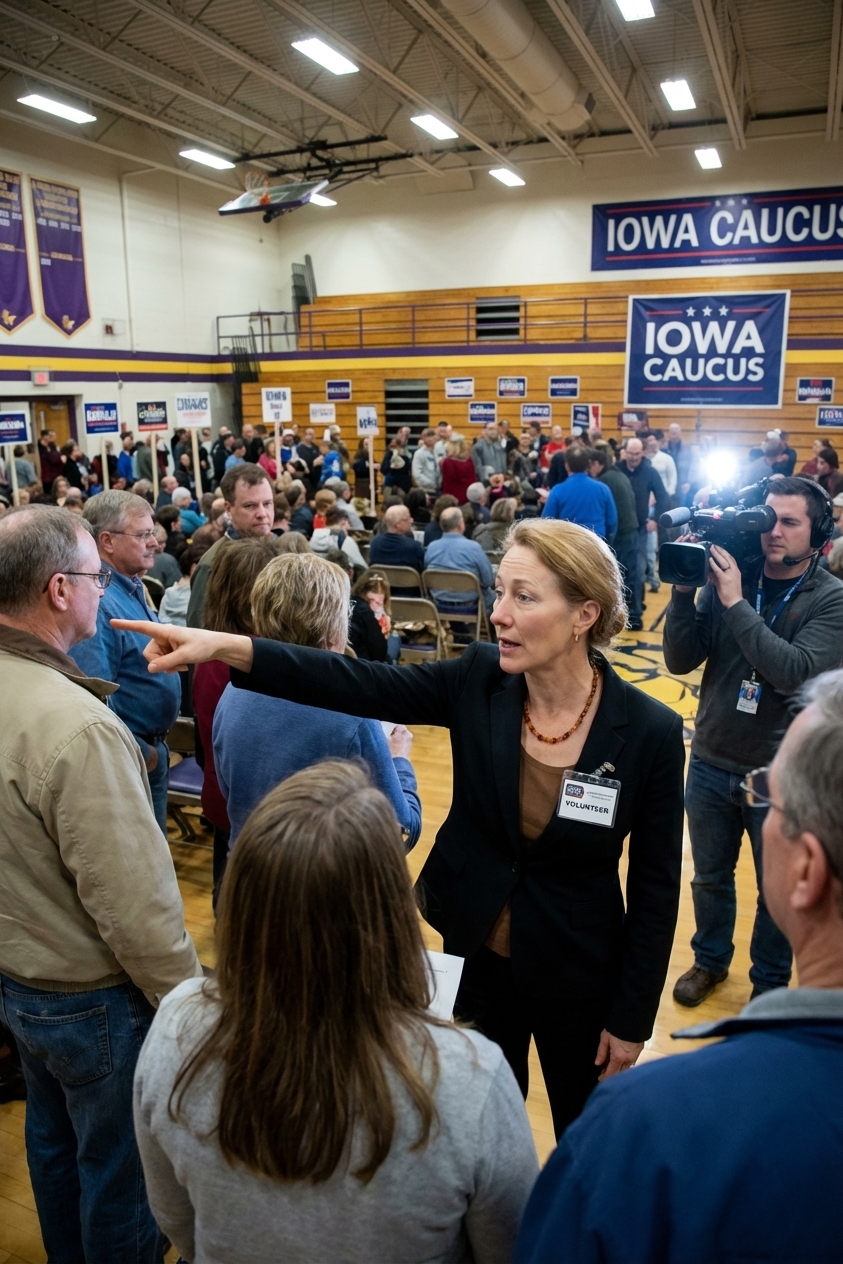
A caucus is a party meeting, not an election run by the state in the same way. Voters gather at a set time and express preferences through a public process that varies by state and party. Some caucuses include speeches, persuasion, and realignment. Others look more like a structured preference count with rules and math, not a long town hall discussion. Caucuses used to be common. Today, many states have moved away from them because they take longer, require in-person attendance, and tend to produce lower turnout.
- Administered by: The party, often with volunteer leadership
- Costs: Generally borne by the party and participants (though public spaces or local support may be involved)
- Access: Set by party rules (with some state-law constraints)
- Format: Public meeting, sometimes with multiple rounds or realignment
In both systems, the key output is the same: delegates. The popular vote is not the nomination. The delegate math is.
What delegates are and why they matter
A delegate is a representative chosen to attend a party’s national convention. At the convention, delegates vote for the party’s nominee for president. The vice-presidential nomination is also handled at the convention, but in modern practice it usually functions as a ratification of the presidential nominee’s choice.
In most modern cycles, the convention is the formal seal on a decision already made by the primary calendar. But the convention still matters because it is where the party’s rules are applied, disputes are resolved, and the nomination becomes official.
Delegates can be bound by results (at least on the first ballot) or unbound, depending on party and state rules. The binding rules can be surprisingly technical. They might depend on statewide results, congressional district results, minimum thresholds, or how a candidate performs in certain regions.
How delegate allocation works
People talk about primaries as if they are all the same contest with the same rules. They are not. Each party sets its own allocation rules, and those rules change over time in response to incentives, losses, internal reforms, and court decisions.
Proportional vs. winner-take-all
The simplest way to think about allocation is this: does the winner collect delegates in proportion to their support, or do they sweep delegates by winning a state?
- Proportional allocation: Delegates are divided among candidates based on vote share, usually with a minimum threshold. This tends to keep multiple candidates viable longer, because second place can still earn delegates.
- Winner-take-all (or winner-take-most): A candidate who wins a state, or wins a district, gets all or most of the delegates from that unit. This can accelerate the race and produce a clear frontrunner quickly.
Democratic Party basics
The Democratic Party uses proportional allocation in presidential primaries and caucuses, with a viability threshold (commonly 15 percent) applied statewide and often at the congressional district level. In practice, this means that even a candidate who is clearly losing can still accumulate delegates if they clear the threshold.
Republican Party basics
The Republican Party allows more variation. Many cycles begin with proportional or hybrid rules early on, then permit more winner-take-all allocations later. National party rules also set guardrails, including timing constraints on when full winner-take-all plans are allowed, which pushes states toward hybrids and trigger rules in the early window.
Why thresholds and districts matter
A candidate can win the statewide popular vote and still underperform in delegates if their support is inefficiently distributed. Conversely, a candidate can lose a state overall but rack up delegates by winning districts. The delegate race is not always a mirror of the headline popular vote.
For example, imagine a state where most delegates are awarded by congressional district. Candidate A wins the state 51 to 49 by running up margins in a few metro areas, but Candidate B narrowly wins more districts across the map. The statewide headline says A “won,” but the delegate ledger can come out closer, or even tilt toward B, depending on the rules.
Open, closed, and semi-closed primaries
One of the most basic questions in American democracy has an oddly private answer: who gets to help a party choose its nominee?
States generally control primary access rules, but parties also claim an associational right to decide who participates in their candidate selection. The result is a patchwork.
Closed primaries
Only registered party members can vote in that party’s primary. If you are unaffiliated, you must register with a party ahead of time, subject to state deadlines.
Open primaries
Voters do not need to be registered with a party to participate. Some states let voters choose which party primary to vote in on Election Day, but not both.
Semi-closed and semi-open primaries
Many states split the difference. For example, independents may be allowed to choose a party primary, while registered party members are restricted to their own party’s ballot. Other states allow parties to opt in or opt out of opening their primaries.
Why the rules are contested
An open primary can invite “crossover” voting, sometimes strategic, sometimes sincere. A closed primary can exclude independents, who now make up a large portion of the electorate in many states. Each choice reflects a theory of what a party is: a private group protecting its identity, or a public institution selecting leaders for everyone.
Superdelegates and what they do
“Superdelegate” is one of those words that sounds like a conspiracy and behaves like a rulebook footnote. It refers to unpledged (automatic) delegates in the Democratic Party: party leaders and elected officials who become delegates by virtue of their position rather than by winning a delegate contest.
The purpose was partly pragmatic and partly philosophical. Party elites wanted a say, especially after reforms in the 1970s shifted power toward voters. Critics argued superdelegates diluted popular influence and could be used to tip a close race.
After controversy in 2016, Democrats changed how superdelegates function. Under current rules, unpledged delegates generally do not vote on the first ballot unless a candidate has already secured a majority of pledged delegates. In practice, that means they are unlikely to decide a normal nomination race. Their real influence is informal: endorsements, fundraising networks, and signals to donors and activists.
Republicans do not use an equivalent category on the same scale, although both parties have automatic delegates in some form and both have rule-based ways for party officials to participate.
Why Iowa and New Hampshire go first
Iowa and New Hampshire do not go first because the Constitution says so. They go first because they built traditions into state law and party practice, then defended those traditions aggressively. In recent cycles, however, national parties have pushed harder to reshape the early calendar, and the “first” tradition has been contested more openly than it used to be.
Iowa
Iowa’s first-in-the-nation status grew out of party scheduling decisions in the 1970s. The caucus format required multiple layers of meetings, which forced an early start date. Once the media discovered that “first” creates momentum, Iowa’s position became politically valuable, and Iowa worked to protect it.
New Hampshire
New Hampshire backs its status with a law requiring the secretary of state to set the primary date so it is held before any “similar election.” New Hampshire has repeatedly moved its primary earlier to stay first, even when other states threaten to leapfrog.
Why the parties tolerate it
The national parties have periodically tried to reshape the early calendar to better reflect the country. They can reward or punish states through delegate bonuses or penalties. But a state that is willing to break party rules can still hold an early contest, and the media and candidates might still treat it as meaningful.
The 2024 cycle offered a clean example. Democrats elevated South Carolina to the front of their calendar. New Hampshire, citing its state law and tradition, held an earlier primary anyway, despite not being sanctioned under the national party’s preferred schedule. That is the central truth of the early states: their power is only partly legal. It is also cultural, strategic, and media-driven.
From the first contest to the nomination
The presidential nomination is a long funnel. Early contests shape perception. Perception shapes fundraising and endorsements. Fundraising and endorsements shape staffing, advertising, and turnout. That loop is why a small state can have an outsized impact.
Momentum is real
A candidate who beats expectations in an early contest can suddenly look “viable,” which attracts donors and media attention. A candidate who underperforms can see money dry up overnight. The primary system is not just a vote count. It is a viability test repeated state by state.
Delegates add up
As contests proceed, candidates either rack up enough delegates to plausibly reach a majority, or they do not. Most candidates drop out when they can no longer see a path, even if they still have supporters. That is how a crowded field typically becomes a two-person race, and then a one-person race, long before the convention.
The convention makes it official
At the national convention, delegates vote under party rules. Usually this is ceremonial because the winner is known. But the convention is also where the party adopts a platform, showcases leadership, and begins the general election sprint.
The constitutional and legal framework
The primary process sits in a legal gray zone because it is not a federal constitutional institution. It is the product of state election administration and party governance, layered on top of each other.
The Constitution and parties
The Constitution does not mention political parties. The Founders worried about factions, but they did not design a party nomination system. That absence is why the primary process is not uniform nationwide. It developed through state reforms, party rules, and political necessity.
State power over elections
States have broad authority to regulate the “times, places and manner” of elections for federal office, subject to Congress’s ability to alter those rules for congressional elections and subject to constitutional protections for voters. Primaries, however, are not exactly the same thing as the general election. They are a gateway created by parties and administered through election law.
Party rights and the First Amendment
Political parties are associations. The Supreme Court has treated party decisions about who can participate and how candidates are chosen as implicating the First Amendment right of association. That is why parties sometimes win lawsuits against state rules that, in the party’s view, force unwanted participants into the selection process or restrict the party’s internal choices.
Federal law and party rules
Federal campaign finance law regulates how money is raised and spent during primaries, and federal voting rights law can shape how states run election procedures. But the delegate selection mechanics are largely set by the national parties, then implemented by state parties and state election systems. The result is two overlapping rulebooks: election law and party rules.
Why courts get involved
Litigation often arises when a rule affects access. Who is on the ballot. Who can vote. How delegates are counted. Whether a state can change its primary date. Whether a party can enforce loyalty oaths or binding rules for delegates. The courts are asked, again and again, to decide where the public system ends and the private association begins.

What to watch in any election year
If you want to follow a primary season without getting lost in the noise, track these five things.
- Delegate rules: Is the contest proportional, winner-take-all, or hybrid?
- Thresholds: Is there a minimum percentage to earn delegates?
- Calendar fights: Are states being penalized or reshuffled for jumping the line?
- Voter eligibility: Is the primary open or closed, and can you change party registration in time?
- Convention math: How close is any candidate to a delegate majority?
The nomination process looks messy because it is. It is not a single national election. It is dozens of state, district, and party-run systems, including Washington, D.C. and the territories, filtered through two private-party rulebooks, interpreted by courts when conflicts erupt, and narrated by a media ecosystem that treats “momentum” as a kind of constitutional office.
But it is also one of the most important civic rituals we have. It is how voters, parties, and states collectively decide who gets the first and most valuable label in American politics: nominee.