
Gas prices do not rise because the president wakes up and chooses chaos. They rise because oil is a globally priced commodity, refined into gasoline, then pushed through a supply chain that is allergic to uncertainty.
Right now, uncertainty has a name: a shooting war with Iran and a chokepoint that the world’s energy system still cannot route around. The nationwide average for regular gasoline hit $3.98 per gallon on March 26, up about 33% from a month earlier, according to AAA. That is not a normal seasonal bump. That is geopolitics, translated into the number on a pump.
Join the Discussion
And it lands at the worst possible moment politically: tax refund season. As of March 13, the average individual refund was $3,623, about $350 higher than a year earlier, according to IRS data. Trump has said this will be the “largest tax refund season of all time,” driven by 2025 changes enacted via his “big beautiful bill.” The catch is simple: higher gas can eat that windfall quietly, a few dollars at a time.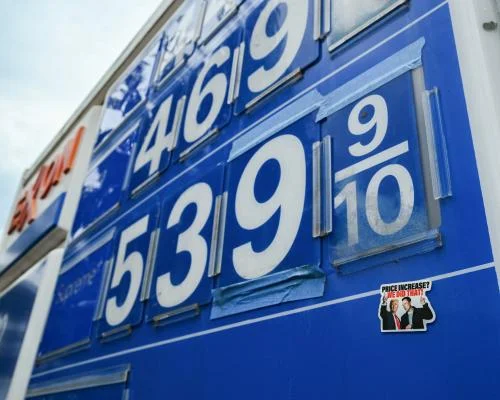
Why prices jumped
Gasoline follows oil, and oil follows fear. From Feb. 20 to March 20, Brent crude surged from about $71 per barrel to about $110, after briefly touching roughly $119, according to Yahoo’s summary of market moves. As oil moved, U.S. regular gasoline followed: the average regular gallon climbed from $2.93 to $3.98, per AAA.
The central driver is the Strait of Hormuz, the narrow passage that connects the Persian Gulf to the broader world. About one-fifth of global oil flows through it under normal conditions. When traffic slows or stops, the world does not just lose barrels. It loses confidence. Traders build in a risk premium, refiners scramble, and consumers feel the result as a sudden jump at the pump.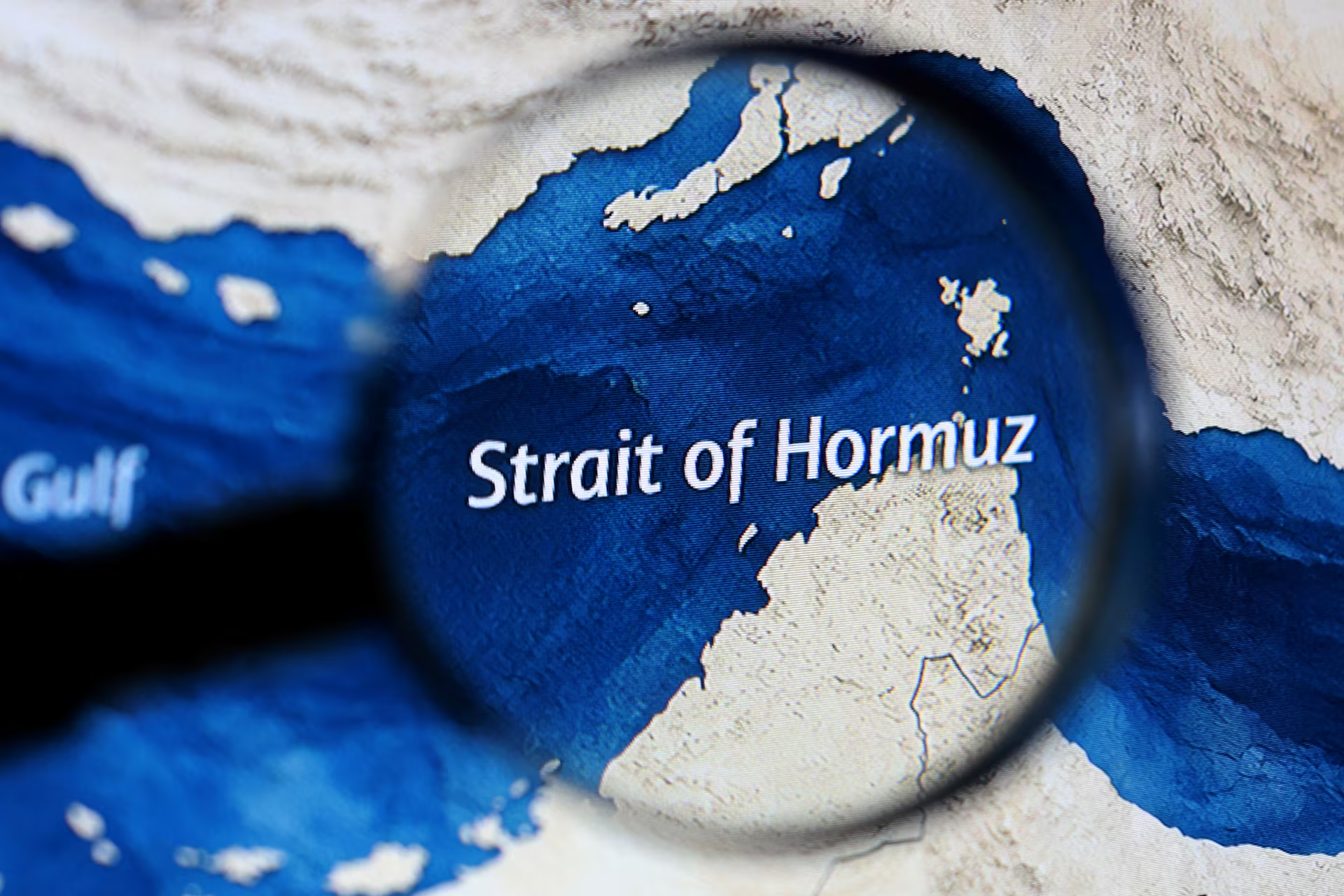
Why refunds may not feel bigger
CNBC’s bottom line is not complicated: you can get a larger refund and still feel poorer if one essential price spikes hard enough.
A March 18 analysis from economists at the Stanford Institute for Economic Policy Research sketched a rough version of that math: if the Strait of Hormuz were closed for three weeks and crude oil jumped to $110 per barrel in March, retail gasoline prices could peak at $4.36 per gallon in May. Under that scenario, higher gasoline prices could be “wiping out most or all of the larger tax refunds on average,” the authors wrote.
That same analysis projected the average U.S. household could pay about $740 more for gas through year-end, without changes to demand. Separately, Oxford Economics estimated that if gas averages $3.60 per gallon in 2026, higher fuel spending could be “almost exactly offsetting the boost from refunds.”
And the refund figure itself is not likely to swing wildly between now and April 15. While the average refund size could still shift, it is increasingly “less likely we’re going to see a major change” before the tax deadline, William McBride, chief economist at the Tax Foundation, told CNBC.
As Alex Jacquez, chief of policy and advocacy at Groundwork Collaborative, put it: “The energy shock is going to hit those who have the least cushion ... and it doesn’t look like those tax refunds are going to be here to save them.”
What Trump is trying to do
The administration’s strategy is a mix of domestic supply moves and foreign-policy pressure. Some of these tools can shave pennies. Some aim to cut the risk premium that is currently inflating everything.
1) Loosen some oil constraints
As Yahoo reports, one lever is lifting sanctions on some Russian and Venezuelan oil to increase supply. The logic is straightforward: if global supply expands, prices should ease.
The limitation is also straightforward: additional barrels help, but they do not automatically reopen a blocked chokepoint. If Hormuz remains effectively stalled, the market still prices in danger.
2) Release oil from the Strategic Petroleum Reserve
Another lever is moving to release oil from America’s Strategic Petroleum Reserve, as Yahoo reports. That can increase near-term supply and signal to markets that the U.S. is willing to counter a shock.
But reserves are a bridge, not a new river. They can buy time. They do not solve a prolonged disruption by themselves.
3) Push domestic production
Yahoo reports that Trump has sought to boost oil production off the coast of California and that the White House has signaled it could ask U.S. oil companies for more supply.
Yet drilling is not a light switch. Even when policy accelerates activity, new production takes time to come online. Markets move in days. Wells move on schedules measured in months and years.
4) Waive the Jones Act
Yahoo also reports that the administration has temporarily waived the Jones Act, which normally requires goods shipped between U.S. ports to travel on American-built and American-crewed vessels. A waiver can make it easier to move fuel around domestically, easing regional shortages and smoothing price spikes in specific areas.
It is a logistics fix, not a global oil fix. It can reduce friction inside the U.S. system, but it cannot force global crude prices down if the world is bracing for a longer Middle East shock.
5) Target the chokepoint
As Yahoo reports, the administration’s focus has increasingly shifted to the Strait of Hormuz and possible military solutions to the blockade. Yahoo says U.S. forces struck Iran’s 30 mine-laying ships and that warplanes and attack helicopters began ramping up assaults on Iranian drones and naval vessels in the area. Yahoo also reports that Trump has repeatedly called on U.S. allies to send warships to escort merchant vessels through the strait.
There is a reason this is treated as the centerpiece. If oil can reliably move again, the risk premium can collapse quickly. If it cannot, every other measure competes against a global bottleneck.
Will it work?
It depends on what you mean by “work.” If the goal is to prevent localized shortages and signal action, some steps can help. If the goal is to drag the nationwide average down quickly while a war threatens a critical shipping lane, the ceiling is low.
- Reserve releases and domestic logistics tweaks can soften spikes, especially regionally, but they are not powerful enough to cancel out a global supply shock.
- More production is meaningful over time, but time is what drivers do not have when prices jump a dollar in a month.
- De-escalation that restores shipping through Hormuz is the one change that can reset the global price conversation quickly. It is also the most dangerous lever, because escalation can push prices higher before they ever fall.
Goldman Sachs captured the best-case release valve in one line: “the U.S. could end military action at any point, which would likely reduce the risk premium in global crude and refined product prices.”
The power presidents do not have
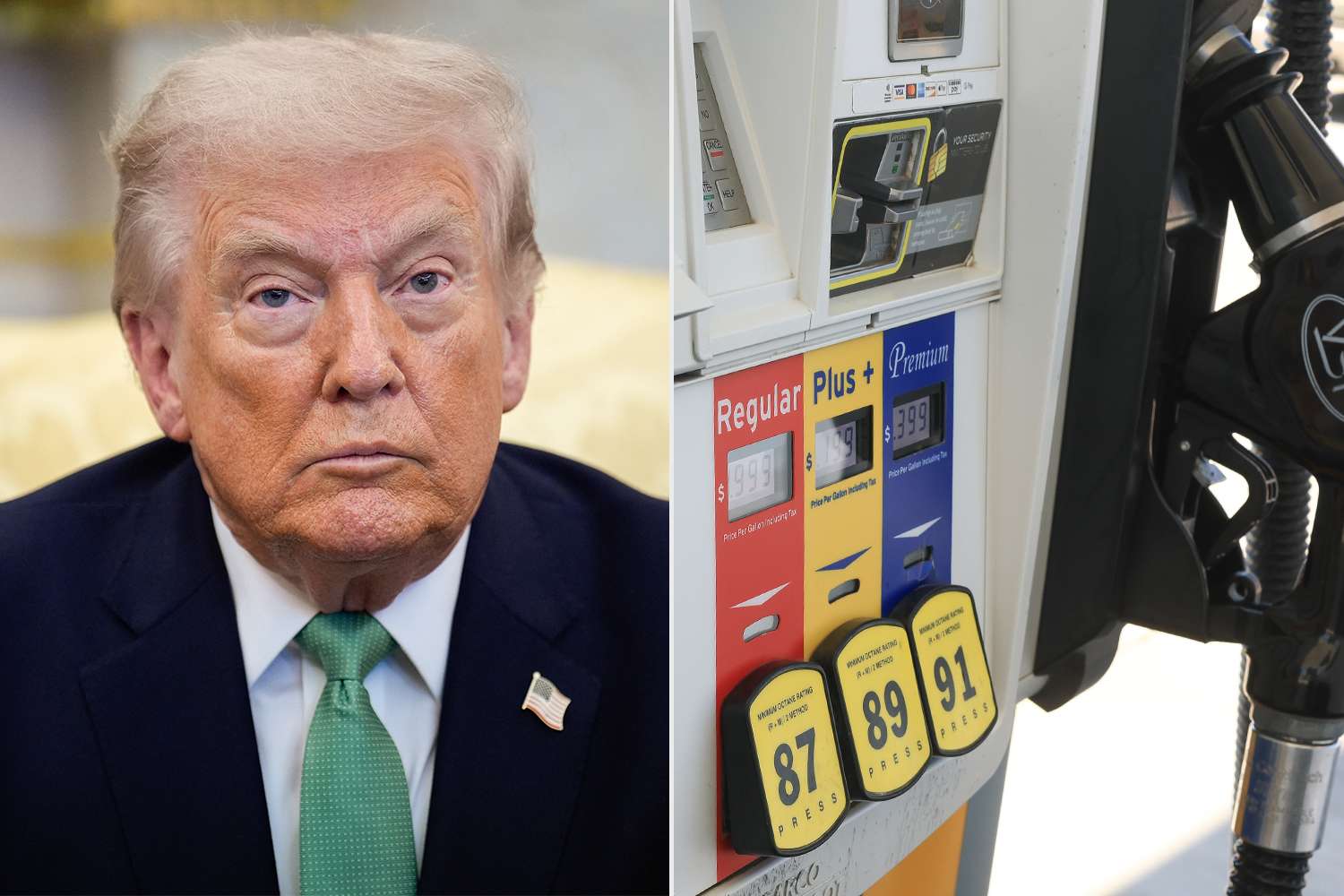
Presidents campaign like they control gas prices because voters reward that story. The reality is narrower and messier: executive tools can nudge supply, ease domestic bottlenecks, and signal resolve. But prices are still set in a global market that is pricing war risk in real time.
That is why the refunds story matters. Even if the check is bigger, it can be functionally smaller once a household starts paying war-prices for essentials. So if you are asking whether Trump is trying to lower gas costs, the answer is yes. If you are asking whether he can do it reliably while the world is pricing a conflict and a stalled Strait of Hormuz, the honest answer is: only if the war stops being the headline that traders are buying.