
A “government shutdown” sounds like the United States simply turns the lights off. That is not how the Constitution designed the federal government to function, and it is not how modern budgeting actually works. A shutdown is really a legal event: at a certain moment, some parts of the federal government lose permission to spend money. When that authority lapses, agencies must stop many activities not because they want to, but because the law says they cannot keep paying people and running programs without an appropriation.
Join the Discussion
The constitutional trigger: no spending without a law
Shutdowns are the sharp edge of a basic constitutional principle: the executive branch does not get to fund itself. Congress writes the laws that authorize federal spending. If Congress does not pass spending bills, or if the president refuses to sign them, there is a gap in funding. That gap can force parts of the government to pause because agencies are not allowed to keep operating as if the money exists.
This is why shutdowns are fundamentally about separation of powers. Congress holds the power of the purse. The president runs the departments, but only with the money Congress has legally provided. When those two branches fail to agree, the bureaucracy becomes the battlefield.
Full shutdown vs. partial shutdown
Congress typically funds the government through 12 major appropriations bills each fiscal year. When some of those bills expire without replacements, you can get a partial shutdown: certain departments lose funding while others keep operating. If the funding gap is broad enough, people call it a “shutdown” as shorthand, but the practical experience depends on which specific accounts have gone unfunded.
In other words, a shutdown is not one switch. It is a patchwork of switches.
What agencies do at the moment funding lapses
Every major agency has a contingency plan for a lapse in appropriations. When a shutdown begins, agencies rapidly sort their work into categories:
- Activities that must continue because a separate law authorizes them. Some programs are funded automatically or through permanent authority rather than year-to-year appropriations.
- Activities necessary to protect life or property. This is the “public safety and welfare” category that keeps certain operations running.
- Activities needed to shut down in an orderly way. Yes, even stopping work takes work. Notices, internal controls, and minimal administrative steps often happen at the front end.
The result is a government that keeps breathing, but loses dexterity. It can respond to emergencies, but it is slower, narrower, and more transactional.
Who works, who stops, and what “excepted” really means
Shutdowns are often described as “federal workers not getting paid.” That is both true and incomplete.
In a shutdown, many employees are placed on furlough, which is a mandatory temporary unpaid leave because funding is not available for their work. Those employees are sent home and told not to work.
Other employees are classified as excepted. This does not mean “safe.” It typically means they are required to keep working even though their paychecks may be delayed until funding resumes. By law, these workers must be compensated for their shutdown work once the government reopens.
After the 2018 shutdown, Congress enacted the Government Employee Fair Treatment Act, requiring that both furloughed employees and those required to work during a funding lapse be paid for the shutdown period.
What stays open (and why)
Some functions continue because they are funded outside the annual appropriations process, or because they fall into the life-and-property category.
- Social Security benefits continue to be paid, though some administrative services can slow down.
- Medicare and Medicaid coverage continues, and reimbursements are still processed with reduced staffing.
- Military operations and federal law enforcement continue.
- Air traffic control continues, and many aviation-related roles are treated as essential.
- The U.S. Postal Service continues because it operates through its own revenue stream rather than relying on annual appropriations in the same way as many agencies.
- Passport services are often able to continue because they are supported by fee revenue, though real-world delays can depend on staffing and how long a shutdown lasts.

What slows down or stops
Shutdowns are most visible where people interact with government as a service provider rather than as a check-writing institution. When staffing collapses, the government can still be obligated to do something, but it cannot do it quickly.
Common disruptions during shutdowns have included:
- National parks and monuments closing or operating with limited services, depending on available funding and staffing.
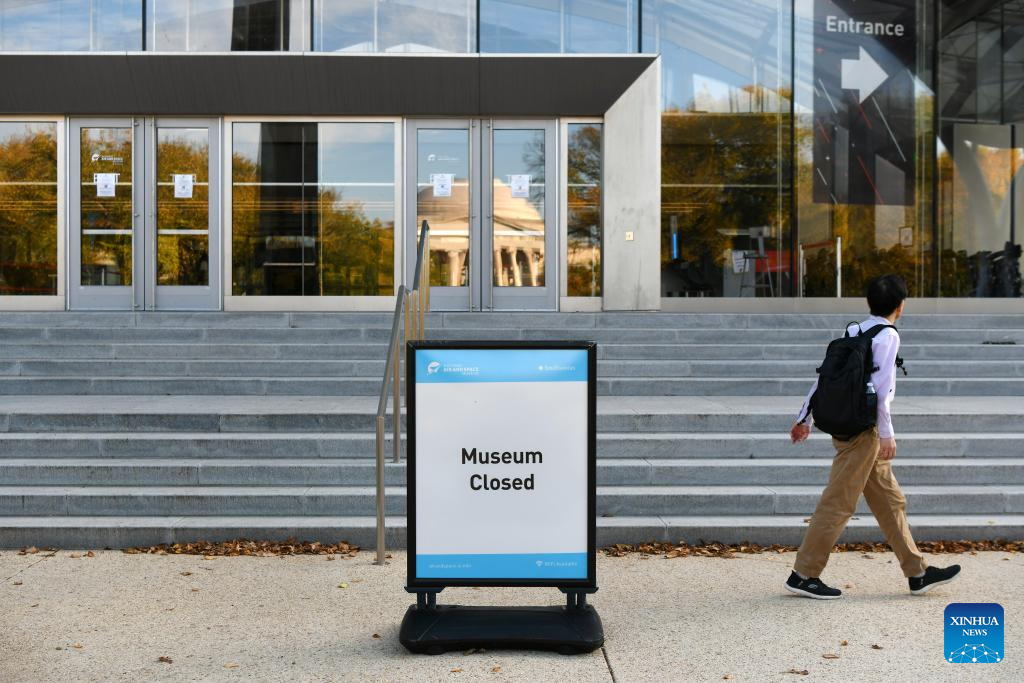
- Federal museums closing or reducing hours and programming.
- Research projects pausing, which can mean lost time that is not easily recovered.
- IRS taxpayer services shrinking, leading to delays in help lines, disputes, audits, and sometimes refunds.
- Housing and small business lending slowing when agencies cannot process new applications at normal levels.
Even when benefits continue, the connective tissue often frays first: phone lines, caseworkers, approvals, inspections, and the ordinary administrative machinery that makes “government” feel functional.
Food assistance is the shutdown pressure point
Not every program has the same insulation. Some food assistance programs can become vulnerable in a prolonged shutdown because their funding relies on annual appropriations rather than permanent authority.
SNAP is treated as essential, but if new funding is not enacted, the available funds are not infinite. WIC is particularly exposed because it does not have permanent funding authority. In an extended shutdown, that can translate into delayed, reduced, or interrupted benefits if the money runs out and states cannot bridge the gap.
Do you still have to pay taxes?
Yes. Your legal obligation to pay taxes does not depend on whether Congress has passed a new spending bill. The IRS typically continues processing returns and payments, but reduced staffing can mean slower service for taxpayers, especially for issues that require human review.
Why the president and Congress still get paid
A shutdown feels politically perverse because many federal workers face delayed pay while elected officials keep receiving theirs. That is not an accident. It is written into the structure of the Constitution.
The president continues to be paid. Article II, Section 1 bars reducing the president’s compensation during the time in office.
Members of Congress also continue to receive their salaries because their compensation is governed by constitutional and statutory rules that do not depend on the annual appropriations bills that typically lapse in a shutdown.
How shutdowns end
Shutdowns almost never end with a grand budget agreement. They usually end with something more modest: a temporary funding law that buys time.
Congress can pass a continuing resolution, often called a CR, which keeps funding flowing for a short period at existing levels while lawmakers keep negotiating. Every shutdown since 1990 has been ended with a continuing resolution.
The modern shutdown cycle is built around this pattern: lapse, pressure, short-term patch, repeat.
How often has it happened?
The current federal budget process was established in 1976. Since then, the government has experienced 21 funding gaps, resulting in 11 shutdowns of various lengths.
One more fact matters because it explains why shutdowns now feel normal: before the early 1980s, funding gaps did not reliably produce shutdown behavior. Agencies often continued operating on the expectation that Congress would soon restore funding. After 1982, the expectation hardened into a rule-like practice: no appropriation, no operations for many activities.
The 2025 shutdown and the new record
The most recent shutdown began on October 1, 2025, and ended on November 12, 2025.
That is 43 days, making it the longest shutdown in U.S. history.
The bigger civics lesson
A shutdown is not just a budgeting mishap. It is a live demonstration of constitutional design under stress. Congress can refuse to fund. The president can refuse to sign. And the executive branch, caught between those two powers, has to decide what “government” means when the permission to spend evaporates.
There is a civic temptation to treat shutdowns as theater. But the most revealing part is not the rhetoric. It is the fine print: which jobs are labeled essential, which services disappear first, and which parts of American life are quietly reliant on the steady, boring continuity of appropriations.
That is the question shutdowns always force us to confront: what do we actually expect the federal government to do, and what are we willing to risk when the power of the purse becomes a weapon?