
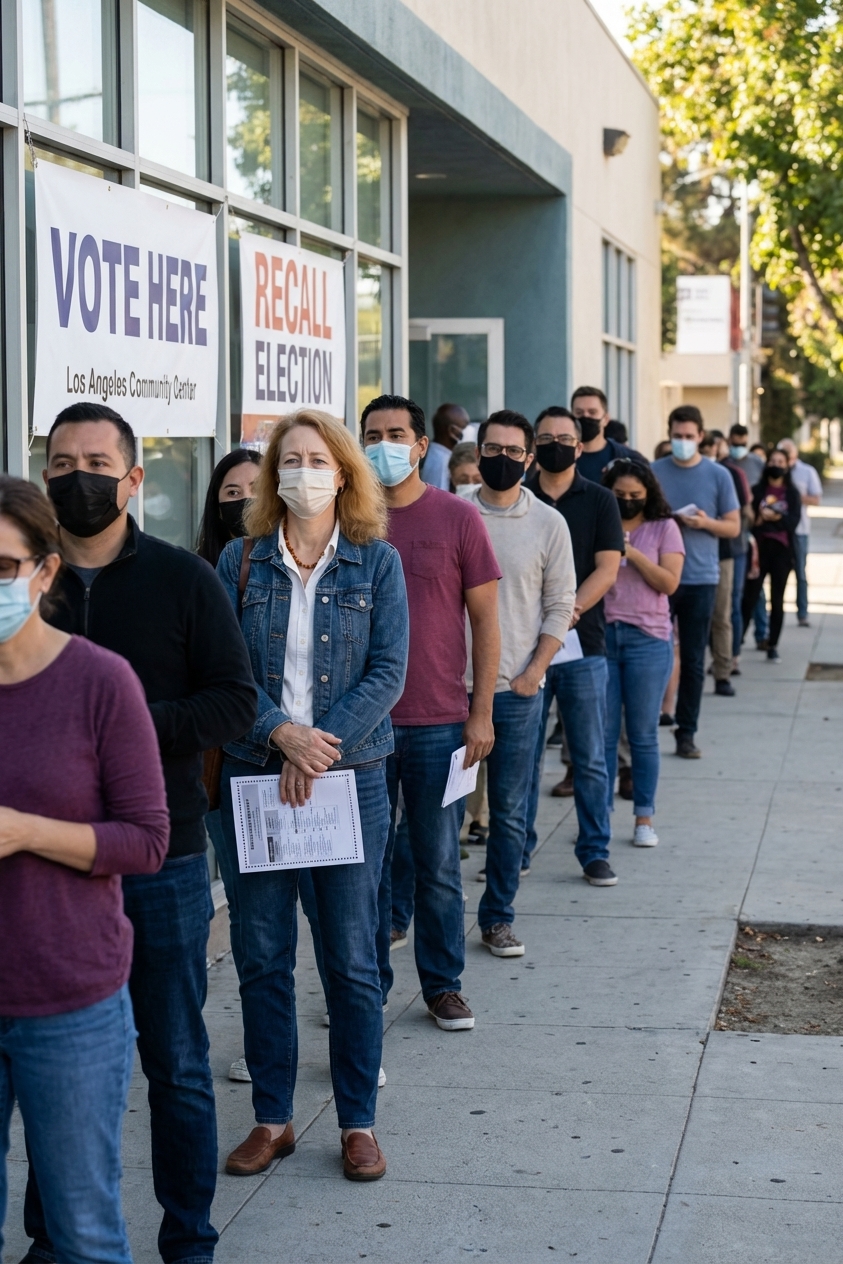
Recall elections feel like a constitutional pressure valve. A public official wins office in November, and then the public decides it cannot wait until the next November to revisit that choice.
But recall is not a federal constitutional feature. It is a state-created tool, governed primarily by state constitutions, state statutes, and local election codes. Federal law can still matter at the edges, for example through Voting Rights Act compliance and federal constitutional challenges, but the basic mechanism is built and run by states. That means there is no single national recall process, only a family of similar processes with the same basic DNA: a petition drive, a signature check, and then a yes or no vote.
Join the Discussion
Recall in one sentence
A recall election is a voter-initiated process that can remove an elected official before the end of their term, usually by collecting a required number of petition signatures and then holding a special election.
Most recalls work in two steps, with some jurisdictions adding extra gates like template approval, waiting periods, or court review of petition language:
- Step 1: Qualify the recall. Supporters file papers and collect signatures from registered voters within a fixed time window.
- Step 2: Hold the recall vote. If election officials verify enough valid signatures, voters decide whether to remove the official. Some states also choose a replacement in the same election.
Which states allow recall elections?
Recalls are common enough to feel universal, but they are not. The United States has a patchwork system where many states allow recalls in some form, while others do not allow statewide recalls at all.
Statewide officers
Slightly less than half of states, about 19, allow some form of recall for statewide officials like a governor. In the rest, the closest removal tools are impeachment, resignation, criminal conviction, or defeat in the next election.
The key point is not the exact count. It is that you must look at your state’s constitution and election code to know whether recall exists, and for whom.
Local officers
Even in states that do not allow recalling a governor, recalls may still exist for local officials like mayors, city council members, school board members, and sometimes county officials.
Local recalls can also be created or limited by city charters and home rule provisions, which adds another layer of variation.
Who can be recalled?
It depends on the state, but recall typically targets elected officials, not appointed ones. Common recall targets include:
- Governors and sometimes other statewide executive officers (like attorney general or secretary of state)
- State legislators (state senators and representatives)
- Local officials (mayors, council members, county commissioners, sheriffs)
- School board members and other local elected boards
- Judges in some states, though judicial recall rules vary and are often controversial
Two restrictions show up again and again across states:
- Timing limits. Some states bar recall during the first months of a term or close to the next regular election.
- Grounds requirements. Some states allow recall “for any reason.” Others require alleged misconduct, malfeasance, or specific statutory grounds.
How a recall starts
Recalls begin as paperwork, not outrage.
In many states, proponents must first file a notice of intent or application with an elections office. This filing often includes:
- The name of the official targeted
- The office and jurisdiction
- A short statement of reasons (even if “any reason” is allowed)
- Names of the recall committee or petition sponsors
After filing, election officials typically review the format and issue an approved petition template. In some places, there is also a public posting period, a waiting period, or a challenge window before circulation begins. Only then does signature gathering start.
How petition drives work
A recall petition drive is both political organizing and rule compliance. It is where many recall efforts fail.
Signature collection
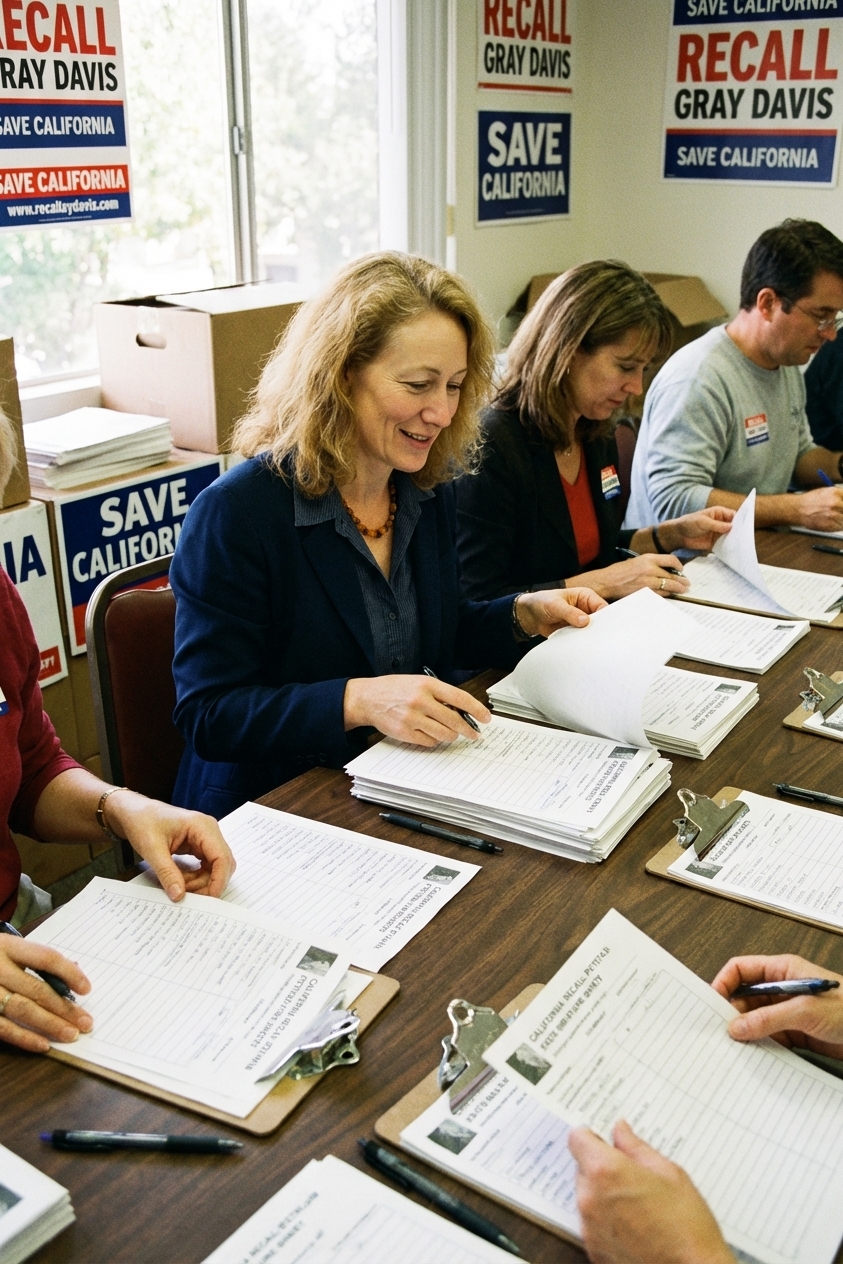
Petitions must be signed by registered voters in the relevant jurisdiction. Rules commonly govern:
- Who may circulate petitions (sometimes any adult, sometimes registered voters only)
- Whether circulators must sign affidavits
- How signatures must be dated and formatted
- Whether signers must provide address information matching voter rolls
If the petition rules are strict, campaigns usually aim far above the minimum signature count. They assume a certain percentage will be invalid due to mismatched addresses, duplicate signatures, or unregistered signers.
Signature thresholds
Signature requirements are usually set as a percentage of past turnout or a percentage of registered voters. A common model is a percentage of votes cast in the last election for that office, but states vary widely.
Two consequences flow from that design:
- Higher-turnout elections raise the signature bar. A governor elected in a high-participation year is harder to recall on paper, even if dissatisfaction rises later.
- Short time windows favor organized campaigns. A state that requires many signatures quickly is effectively screening for well-funded efforts.
Verification and why it matters
After petitions are submitted, election officials verify signatures. Some jurisdictions do a full check. Others use random sampling first and move to a complete review only if the sample suggests the petition is close to the threshold. That matters because a campaign can appear safely over the line on raw totals, then fall short after invalid signatures are removed.
Paid circulators and money rules
In practice, many major recall drives depend on paid signature gathering. Whether paid circulators are allowed, how they must be disclosed, and how campaigns report spending varies by state and can shape who can realistically qualify a recall for the ballot.
From petition to ballot
The recall timeline is a chain with several legal choke points. A simplified version looks like this:
- 1) Filing. Proponents file notice of intent and receive approved petition language.
- 2) Circulation period. Sponsors collect signatures during a set window, often measured in days.
- 3) Submission. Petitions are turned in to election officials.
- 4) Verification. Officials check signatures, sometimes by sampling first and then full verification if needed.
- 5) Election call. If enough valid signatures exist, the government schedules a recall election by statutory deadlines.
- 6) Campaign period. Ballot materials, arguments, and candidate filings (if a replacement is involved).
- 7) Recall election. Voters decide removal, and in some systems, replacement.
Delays often come from litigation. Lawsuits can challenge petition wording, signature rules, timing, or ballot structure. Courts can accelerate or freeze the process depending on the issue.
What the ballot looks like
There are two main ballot models.
Single-question recall
Voters see one central question: Should the official be removed? If “yes” wins, the replacement is chosen by a separate process, often:
- automatic succession (for example, a lieutenant governor becomes governor), or
- a later special election, or
- an appointment under state law
Two-part recall
Some states, including California’s well-known model, combine the decision into a single election with two parts:
- Question 1: Should the official be recalled?
- Question 2: If recalled, who should replace them?
This structure can produce a distinctive feature of California’s design: a governor can be recalled by a majority while the replacement wins with a plurality in a crowded field.
On the removal question itself, the usual rule is simple majority. Some local charters add extra thresholds, but they are the exception, not the norm.
Notable recall elections
Recalls happen constantly at the local level, but a few high-profile contests have shaped how Americans imagine the tool.
Where recall came from
The recall is closely associated with the Progressive Era of the early 20th century, when reformers pushed tools like the initiative, referendum, and recall as a way to weaken machine politics and give voters a direct check between elections.
One early landmark was North Dakota’s 1921 recall of Governor Lynn Frazier, often cited as the first successful recall of a U.S. governor.
California 2003: Gray Davis
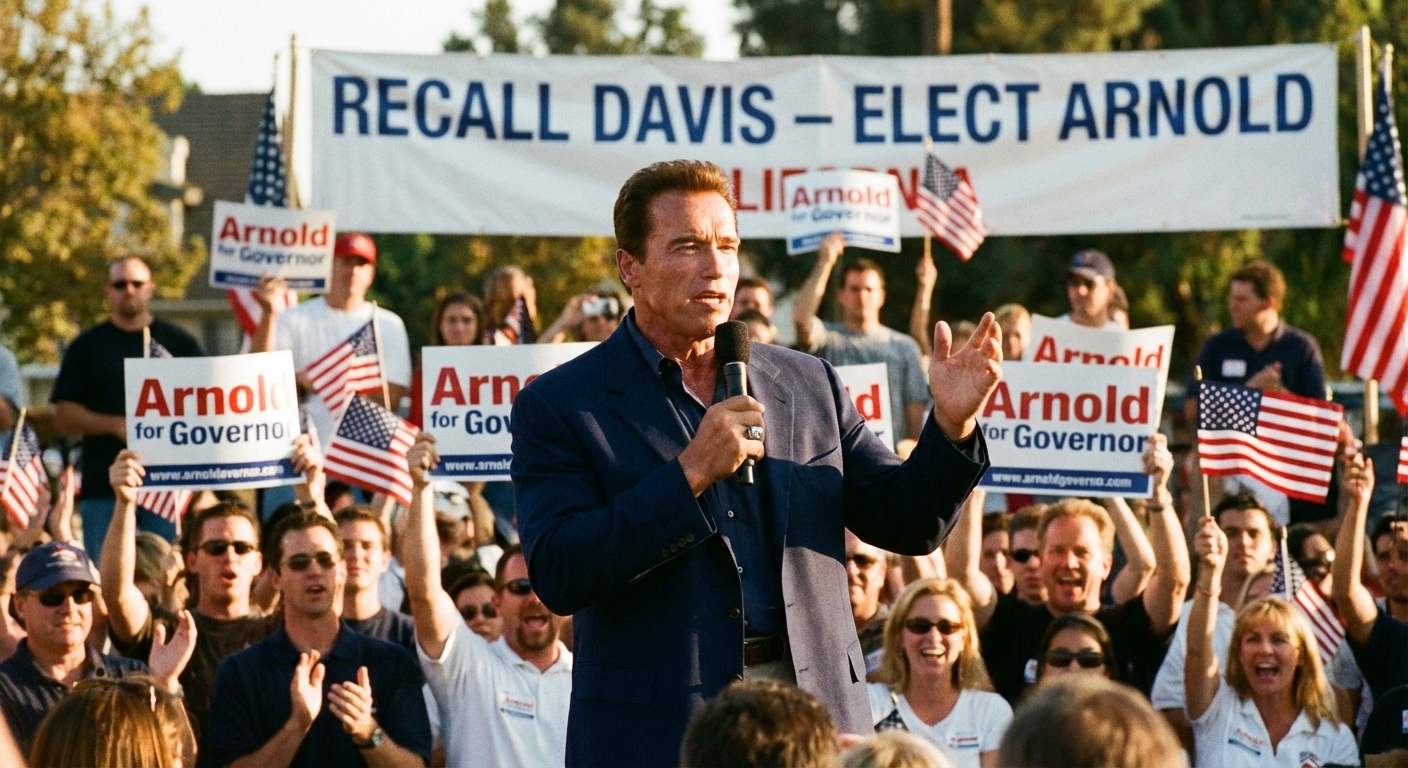
In 2003, California voters recalled Governor Gray Davis during a period dominated by budget turmoil and an electricity crisis narrative. The replacement election elevated Arnold Schwarzenegger, a celebrity candidate who won the second question with a plurality.
The deeper lesson of 2003 was procedural: California’s two-part ballot can turn a recall into a rapid, high-stakes replacement contest without a runoff.
Wisconsin 2012: Scott Walker
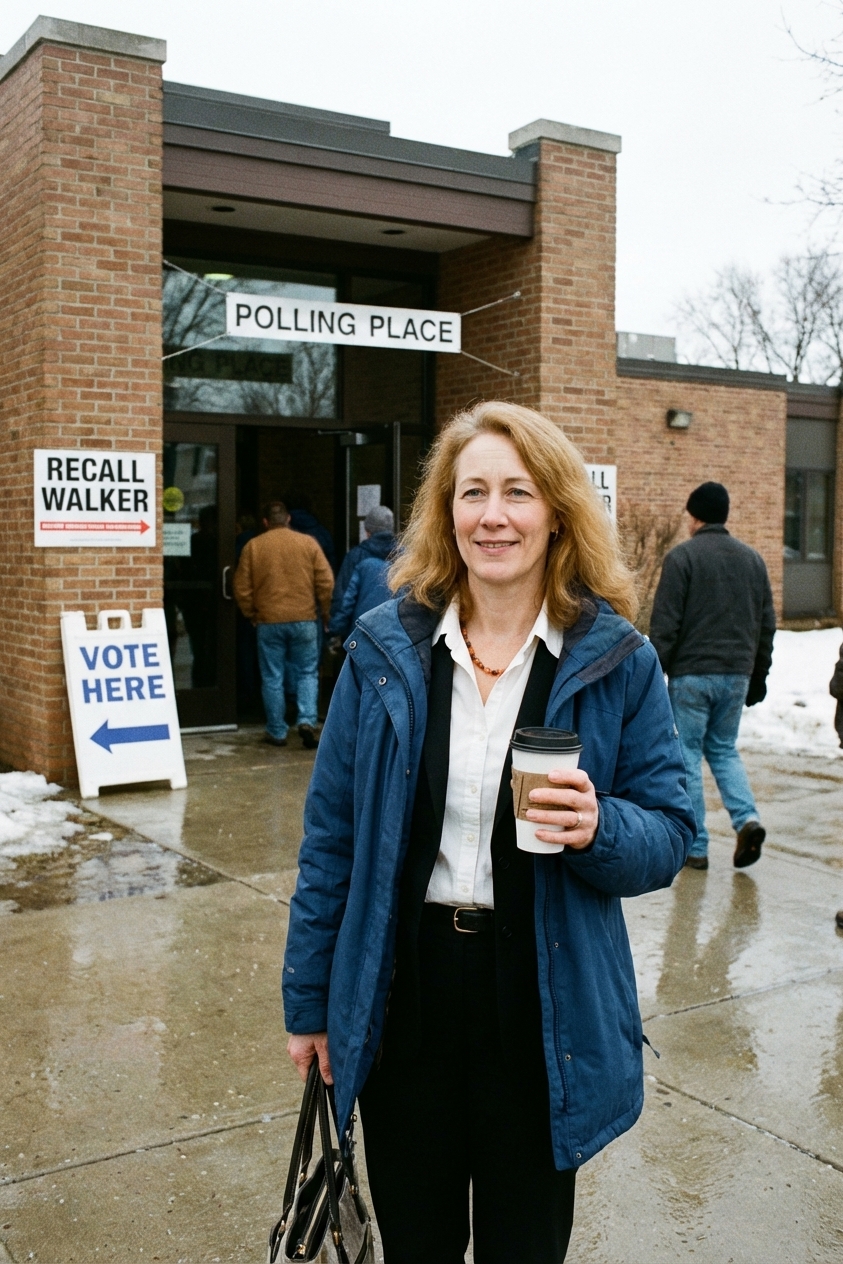
Wisconsin’s 2012 recall election targeting Governor Scott Walker became a national proxy battle over public-sector unions and state fiscal policy. Walker survived the recall, showing that qualification for the ballot is not the same as victory.
It also highlighted how recalls can function as a midterm-style referendum on policy choices, especially when the state is polarized and national groups invest heavily.
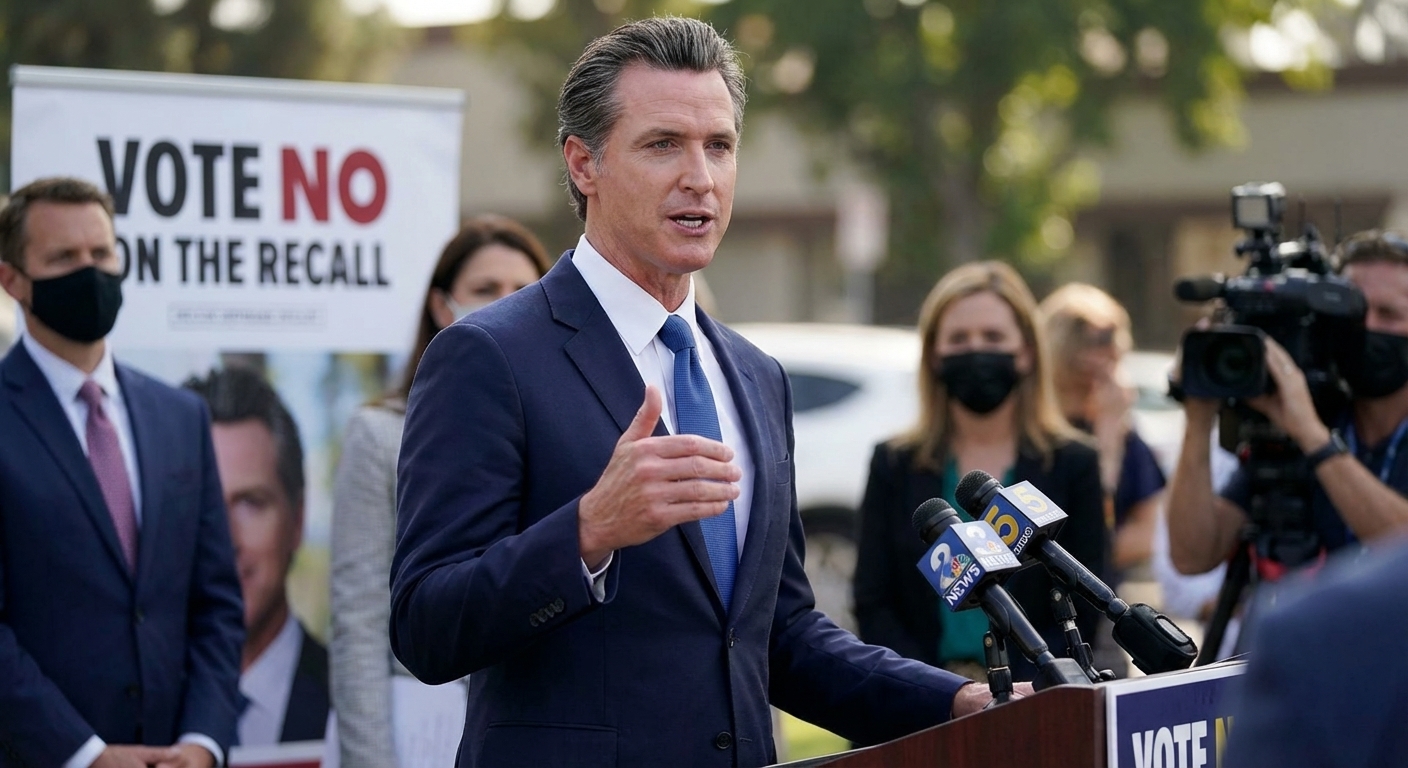
California 2021: Gavin Newsom
In 2021, California voters rejected the recall of Governor Gavin Newsom. The campaign played out in a political environment shaped by pandemic governance, rapid fundraising cycles, and nationalized messaging.
Like 2003, it reinforced a structural fact: in California, the replacement field can become a second election nested inside the first, even when the recall question itself ultimately fails.
Recall vs impeachment
Recall and impeachment both remove officials, and that is where the similarity mostly ends.
Who starts it
- Recall: Voters initiate it through petitions and a public election.
- Impeachment: Legislators initiate it, usually in a state legislature or Congress at the federal level.
What it tries to prove
- Recall: Often requires no legal “crime.” The claim can be competence, trust, policy disagreement, or misconduct depending on state rules.
- Impeachment: A quasi-legal process built around allegations of serious misconduct. At the federal level, it uses the constitutional standard of “high Crimes and Misdemeanors.”
Who decides
- Recall: Decided by voters at the ballot box.
- Impeachment: Decided by legislative votes, with a trial-like phase in many systems.
What happens next
In impeachment, succession is typically straightforward: removal triggers the legal line of succession. In recalls, replacement can be immediate, delayed, or bundled into the same election, depending on the state.
Why recall is not federal
The U.S. Constitution does not provide for recalling federal officials. You cannot recall a U.S. senator, a representative, or the president through a voter petition.
That absence was a design choice. The Constitution’s federal removal mechanisms emphasize:
- fixed terms and regular elections,
- impeachment for serious misconduct, and
- expulsion by each chamber for members of Congress.
States, by contrast, are free to adopt recall in their own constitutions and statutes for their own officers, and many have.
What to check in a recall
If a recall effort is making news where you live, the most useful civic move is not taking a side first. It is learning the rules of the game being played.
- Is recall allowed for this office? State constitution, statutes, or city charter.
- What is the signature threshold? Percentage of past turnout or registered voters.
- What is the circulation deadline? The clock is often the whole battle.
- How are signatures verified? Sampling rules and cure periods matter.
- What does the ballot look like? Single question or remove-and-replace.
- If removal succeeds, who takes over? Succession, appointment, or replacement vote.
- What finance rules apply? Paid circulators, reporting, and donor disclosures can shape the real contest.
A recall is democratic force, but it is also procedure. In American civic life, those two are inseparable. The passion gets headlines. The deadlines decide outcomes.