
Congress has two chambers that do the same job in very different ways. The House of Representatives is built for speed, population, and political responsiveness. The Senate is built for stability, smaller-state influence, and longer-term bargaining.
If you have ever wondered why a bill can sail through one chamber and die in the other, the answer is often as much about procedure and incentives as ideology. The Constitution intentionally made the House and Senate unequal partners so that lawmaking would require more than a fleeting majority.
Join the Discussion
House vs. Senate at a glance
This table is the fastest way to see the constitutional design choices that separate the chambers. The sections below explain why each difference exists and how it shapes real-world politics.
| Feature | House of Representatives | Senate |
|---|---|---|
| Constitutional basis | Article I, Section 2 | Article I, Section 3 |
| Size | 435 voting members (set by federal law) | 100 members (2 per state) |
| Representation | By population, districts within states | Equal state representation |
| Term length | 2 years | 6 years (staggered; about one-third up every 2 years) |
| Minimum age | 25 | 30 |
| Citizenship requirement | 7 years a U.S. citizen | 9 years a U.S. citizen |
| Residency | Must inhabit the state represented | Must inhabit the state represented |
| Leadership | Speaker of the House leads the chamber | Vice President is President of the Senate; President pro tempore is next in line, but daily control is by party leaders and the chamber’s rules |
| Rules of debate | Strict time limits, controlled by the Rules Committee | Traditionally open debate; unanimous consent and cloture structure most action |
| Signature procedural weapon | Special rules that structure debate and amendments | Filibuster and cloture (60 votes for many bills; some processes and most nominations are majority-vote) |
| Where revenue bills must start | Yes (Origination Clause) | No, but can amend House revenue bills |
| Impeachment role | Impeaches (brings charges) | Tries impeachments and convicts (removes) |
| Treaties | No ratification role | Approves by two-thirds of Senators present |
| Confirmations | No role | Confirms presidential nominees (judges, Cabinet, ambassadors, and more) |
| Who presides in an impeachment trial of a president | N/A | Chief Justice of the United States |
Size and representation
The House: representation by population
The House was designed to mirror the public. Seats are apportioned among the states based on population, and each representative serves a district. Because districts are smaller and elections happen every two years, House members tend to be more sensitive to short-term political winds and local concerns.
The House has 435 voting seats because Congress set the chamber’s size in the early 1900s and later adopted an apportionment framework that effectively made 435 the default. The Constitution does not require 435. It requires only that representation be based on population and that each state have at least one representative.
The Senate: equal representation for states
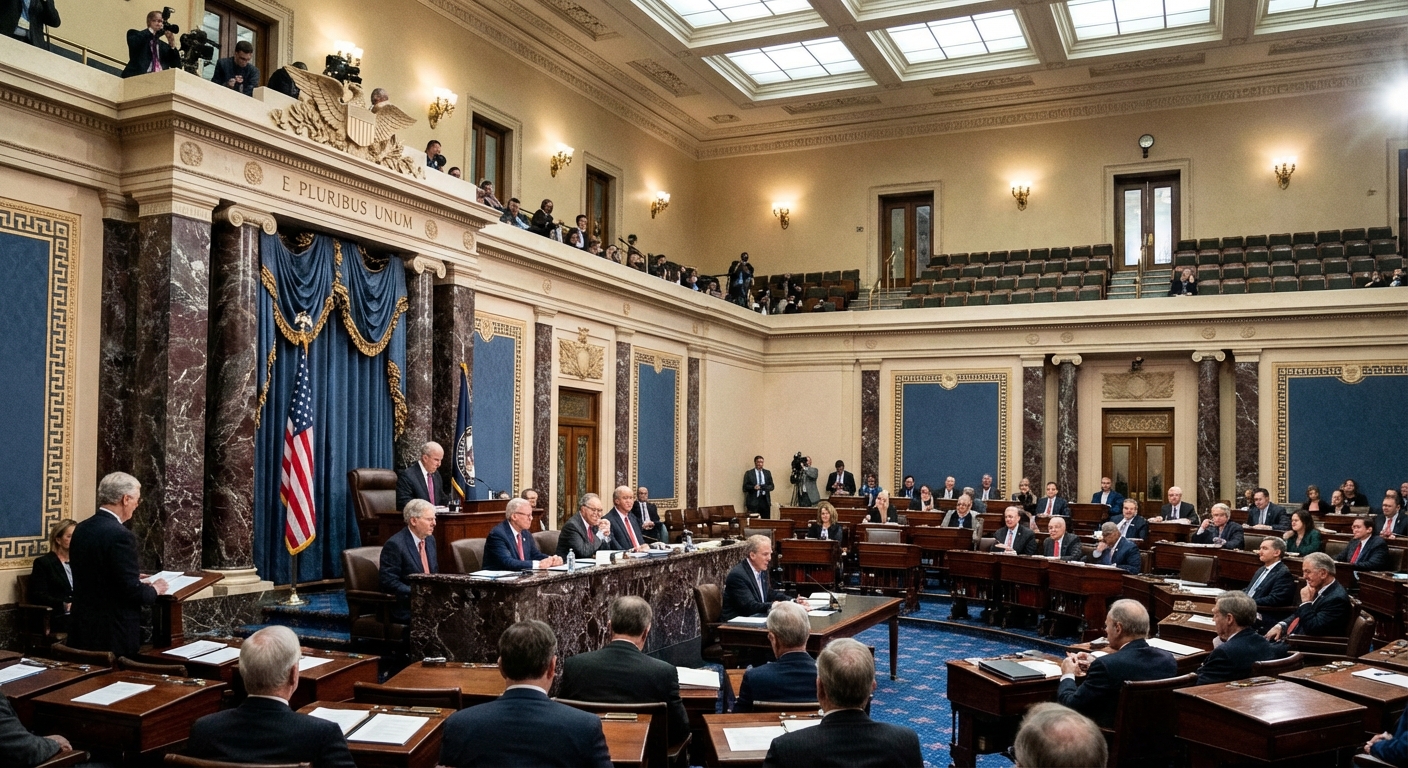
The Senate is the Constitution’s built-in compromise with federalism: states as states get equal power. Every state, regardless of size, has two senators. That is why Wyoming and California each have two votes on final passage in the Senate, even though their populations are worlds apart.
This arrangement is not just tradition. Article V effectively entrenches it by saying no state can be deprived of equal suffrage in the Senate without its consent.
Term length and incentives
House terms: two years
A two-year term makes the House the chamber of immediate accountability. It is also why the House can swing quickly after major events. A wave election can rewrite the chamber’s priorities overnight.
The founders expected this. They wanted at least one part of Congress to remain close to the people, even if that closeness produced volatility.
Senate terms: six years
Senators serve six-year terms, and elections are staggered so only about one-third of seats are contested every two years. That structure dampens political whiplash. It also gives senators more room to take longer-view positions, for better and for worse.
In practice, the different term lengths help explain why the House often moves first on big partisan agendas, while the Senate plays defense or insists on negotiation.
Leadership and committees
House: the Speaker is central
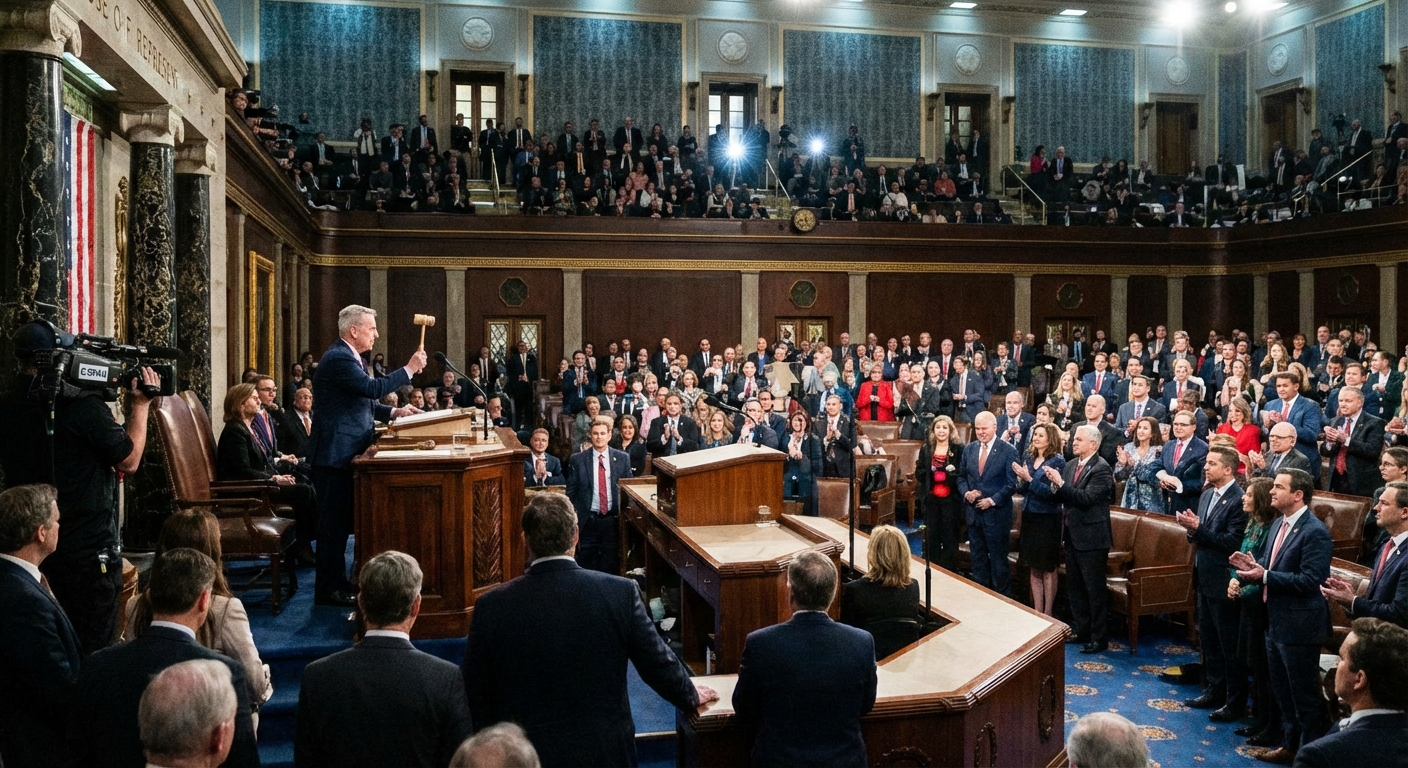
The Speaker of the House is both a presiding officer and a political power center. The Speaker influences what comes to the floor, who chairs committees, and how the chamber coordinates its agenda. Even when party margins are tight, the House is designed for majority control.
Committees matter, too. In the House, committee gatekeeping is real, but leadership and the Rules Committee can often route around it when the majority wants speed.
Senate: control is more diffuse
The Vice President is the President of the Senate and can break tie votes. Day to day, the Senate is run by party leaders and, just as importantly, by the chamber’s rules and norms. The President pro tempore is largely ceremonial, with seniority and tradition doing more work than raw command.
Committees are powerful in the Senate as well, but individual senators often have more leverage. A single senator can slow action through informal tools like holds, and the chamber’s reliance on unanimous consent means objections carry weight.
The key difference is cultural and procedural: in the House, leadership can impose structure. In the Senate, leadership usually negotiates structure.
Debate rules and stalling
House debate: limited and scheduled
The House is built for throughput. Debate time is usually limited, amendments are often restricted, and the Rules Committee sets the terms for how a bill will be debated. That is why the House can process large numbers of bills and do so quickly when the majority decides to move.
Senate debate: open by default
The Senate’s identity is tied to extended debate. In modern practice, the filibuster is less about one senator talking for days and more about the threat of requiring cloture, a vote to end debate. Cloture typically needs 60 votes for most legislation, which means a determined minority can force compromise or block action.
There are exceptions. Budget reconciliation bills can pass with a simple majority under specific rules. Some statutes create fast-track procedures that limit debate. And most nominations now move on a simple-majority threshold because of changes to Senate precedent. Still, the Senate remains the chamber where stopping something can be easier than passing it.
How a bill becomes law
Both chambers must pass the same text for a bill to go to the president. That sounds symmetrical. It is not.
- House often acts first on major party priorities because the majority can structure debate and push a bill through.
- Senate often determines the final shape of major legislation because it can slow the process, demand changes, or insist on broader vote thresholds.
When the House and Senate pass different versions, they resolve differences through amendments between the chambers or a conference committee and then vote again. In high-stakes moments, the Senate’s constraints often set the outer limits of what can clear Congress.
Money bills
The Constitution says bills for raising revenue must originate in the House. The logic is democratic: the chamber closest to the people should start taxation.
But the Senate can propose amendments to House revenue bills, and in practice those amendments can be sweeping. So the House has the first move, but not the last word.
Impeachment
Impeachment is one of the clearest examples of how the chambers split power on purpose.
House: impeaches
The House has the sole power of impeachment, meaning it votes on articles of impeachment, which function like formal charges. A simple majority is enough to impeach.
Senate: tries and convicts
The Senate has the sole power to try impeachments. Conviction requires a two-thirds vote of senators present. If the president is on trial, the Chief Justice presides. The two-thirds requirement is a constitutional brake: removal is meant to be difficult, even when the accusations are serious and politics are hot.
Treaties
The president negotiates treaties, but the Senate provides advice and consent. In practice, “advice” is often informal and political, while consent is the formal vote. Ratification requires approval by two-thirds of senators present.
The House has no formal role in treaty ratification, which often surprises students. Still, many treaty commitments require House-passed implementing legislation, appropriations, or both before they have full domestic effect. The result is a foreign-policy system where the executive can negotiate broadly, the Senate can block ratification, and the House can still matter when it comes time to fund or implement.
Confirmations
The Senate confirms many presidential appointments, including Supreme Court justices and other federal judges, Cabinet secretaries, ambassadors, and key executive branch officials. This is not a courtesy. It is one of the Senate’s major checks on the presidency.
The House does not confirm nominees. Its leverage over the executive branch is more financial and investigatory: appropriations, oversight hearings, and the ability to impeach.
War powers
On paper, war powers are shared. Congress authorizes military force through legislation, which means both chambers must act. The president is commander in chief, which gives the executive enormous day-to-day control, but major, durable authorizations still run through the House and Senate.
Why two chambers
The “House vs. Senate” split is not a quirk. It is a constitutional argument made into architecture. The framers wanted lawmaking to require both democratic immediacy and institutional resistance. They expected the House to reflect the public mood and the Senate to slow it down.
Sometimes that friction prevents rash decisions. Sometimes it blocks necessary ones. Either way, it is a feature of the design, and it is also the system asking citizens to stay engaged longer than a single news cycle.
Quick FAQs
Which is more powerful?
Neither overall. The House has unique powers over revenue origination and impeachment. The Senate has unique powers over trials, treaties, and confirmations. Each can block legislation by refusing to pass it.
Why does the Senate have 100 members?
Because each state has two senators. With 50 states, that produces 100 seats.
Why can the Senate filibuster but the House cannot?
The House uses strict scheduling and debate rules through the Rules Committee, so extended debate is usually not possible. The Senate’s rules and norms historically protected extended debate, and cloture developed as the mechanism to end it.
Can a bill become law if only one chamber passes it?
No. Both chambers must pass the same text, then the president must sign it or Congress must override a veto with two-thirds votes in each chamber.