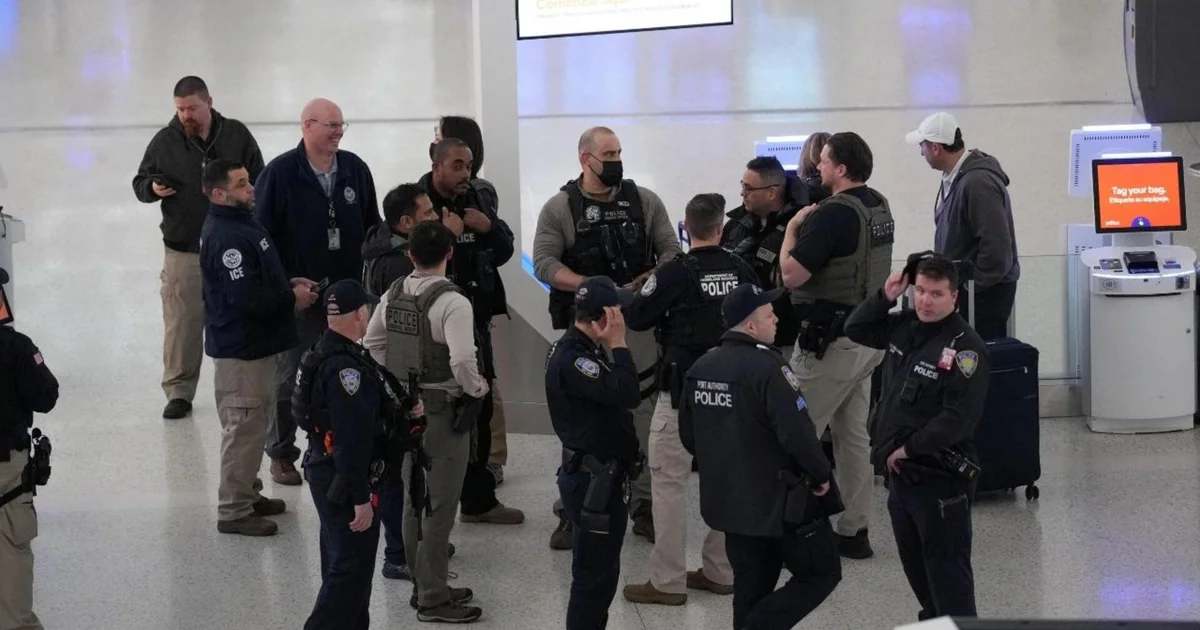
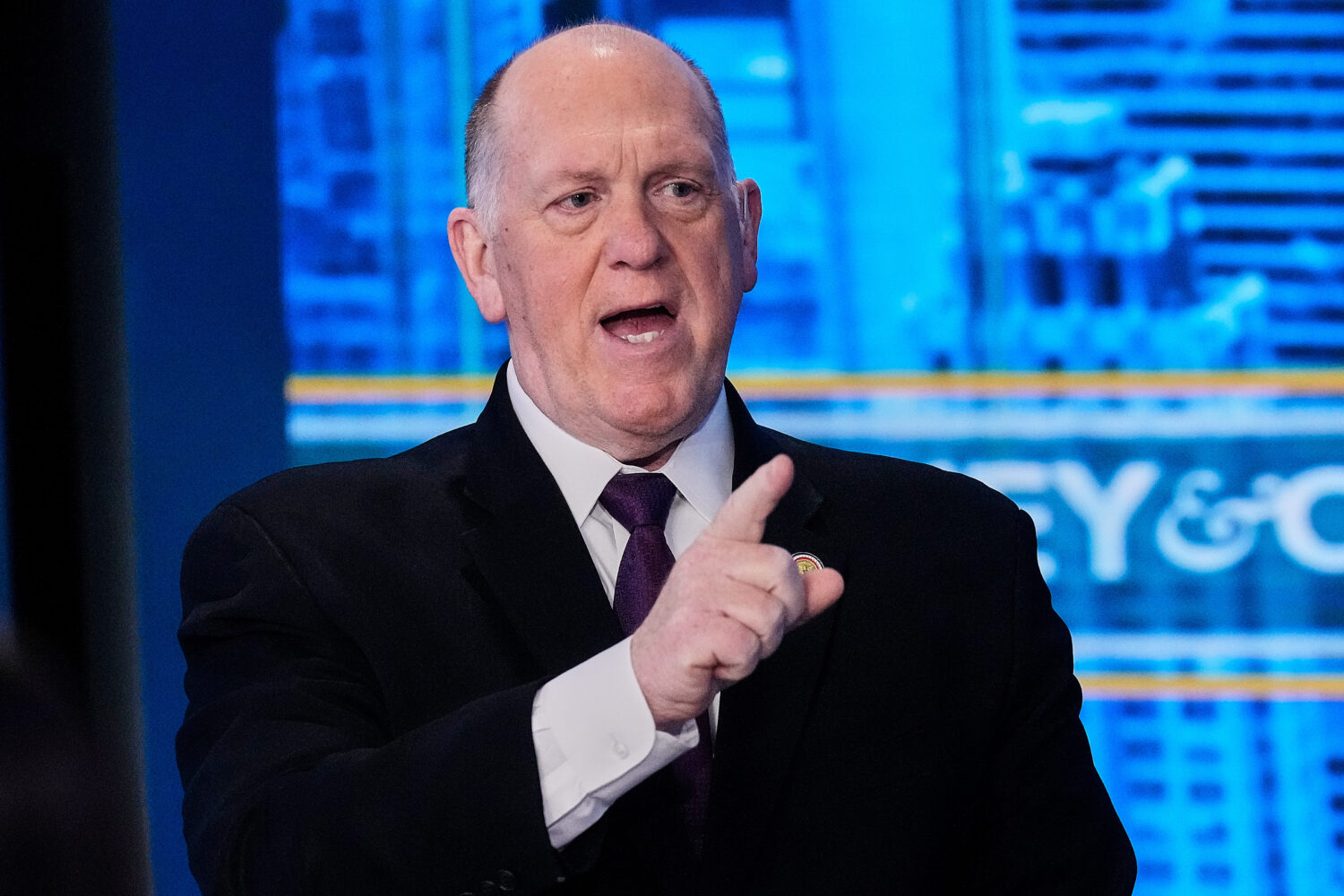
As the Department of Homeland Security funding lapse drags on, the federal government is leaning on an unusual stopgap at the nation’s airports: Immigration and Customs Enforcement agents filling in for short-staffed Transportation Security Administration checkpoints. On Sunday, White House border czar Tom Homan said that ICE will not necessarily step back the moment TSA officers begin receiving pay again.
Homan’s bottom line was simple: the ICE presence continues until airports are confident they can run “normal operations” again.
Join the Discussion
What Homan said about ICE at airports
In a Sunday interview, Homan described ICE as a temporary backstop while airports deal with staffing gaps in their security process.
“We’re going to continue an ICE presence there, and until the airports feel like they’re in 100%, you know, in a posture where they can do normal operations,” Homan said. “So if less TSA agents come back, that means we’ll keep more ICE agents there.”
When asked whether ICE would leave once TSA officers start getting paid again, Homan’s answer was not a guarantee. “We’ll see,” he said, explaining that decisions would depend on how many TSA employees return and how many have left for good.
Why TSA staffing has become the pinch point
The current strain is tied to the partial DHS shutdown, which has left TSA personnel working without paychecks. That pressure has shown up in two ways: resignations and widespread callouts that reduce the number of officers available to staff checkpoints.
- About 500 TSA workers have quit since the shutdown began, according to DHS.
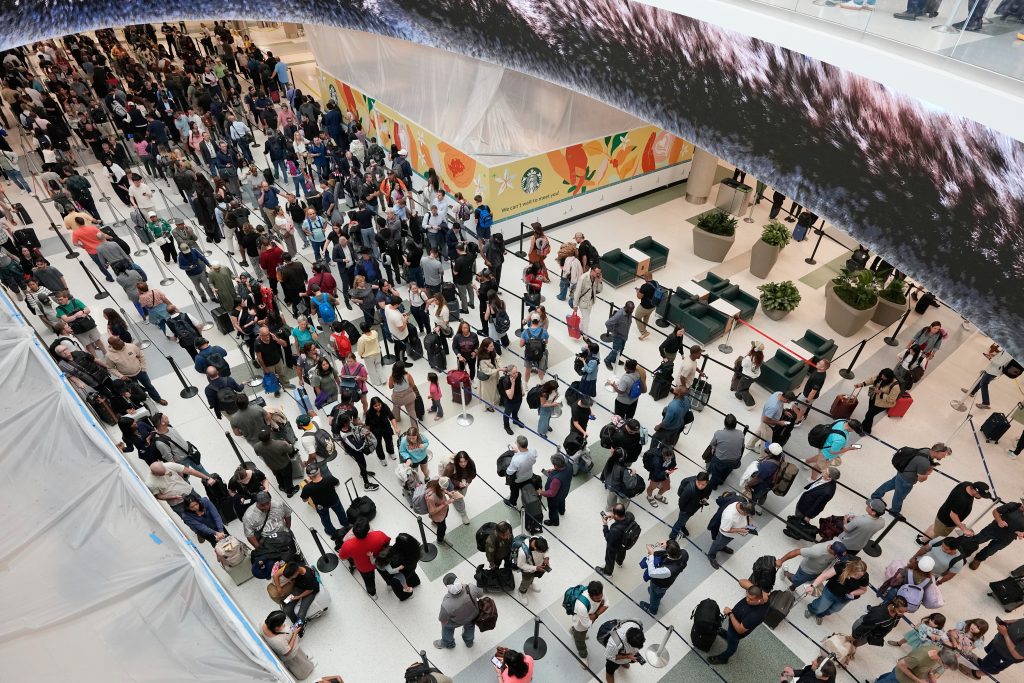
- Thousands of TSA workers have called out as the shutdown continued without pay, contributing to long security lines at airports.
For travelers, that staffing math translates into a familiar problem with a constitutional angle: when Congress cannot agree on funding, practical services that Americans rely on can degrade quickly, even when those services are not what most people think of as “politics.”
What ICE is doing in terminals
Homan praised ICE agents for stepping into roles meant to keep passenger flow and security controls intact. “God bless the men women of ICE,” he said, adding that agents were “plugging those holes.”
He pointed to tasks including:
- Assisting with identification checks
- Helping protect exit lanes so screened passengers do not mix back into unscreened areas
Even with that help, the key constraint is still staffing. Airport screening is not a job that can be fully backfilled overnight. A top TSA official told Congress last week that training transportation security officers generally takes four to six months.
Paid “soon” does not automatically mean “back to normal”
President Donald Trump directed DHS to pay TSA officers while the funding lapse continues. Homan said he hoped TSA officers would receive pay by Monday or Tuesday.
But Homan also emphasized that back pay is only one part of stabilizing operations. If a meaningful number of trained officers have quit or decide not to return, airport leadership may still face shortages that ripple into wait times and staffing decisions. In that scenario, Homan indicated ICE could remain in place longer than many travelers might expect.
The bigger civics lesson: shutdowns create “second-order” effects
Airport delays are the visible symptom, but the larger story is how a shutdown reshapes federal responsibilities in real time. When a department is partially unfunded, agencies do not simply pause. They triage, reassign, and improvise.
This is where civics becomes practical. Congress holds the power of the purse, and when funding disputes stall, executive agencies may rely on temporary workarounds that can blur ordinary lines of responsibility. A traveler stuck in a security line is experiencing, firsthand, how separation of powers and appropriations disputes can ripple into everyday life.
Where the funding standoff stands
The DHS shutdown became the longest partial government shutdown in U.S. history on Sunday, with no clear resolution in sight.
In the House, Republicans passed a short-term DHS funding bill on Friday, but it does not currently appear to have enough support in the Senate to become law. Meanwhile, House Speaker Mike Johnson rejected a Senate-passed bill that would have funded DHS broadly while excluding immigration enforcement and deportation operations.
Both chambers are scheduled to be out for the next two weeks, which makes quick legislative fixes less likely. Senate Majority Leader John Thune has continued discussions with Senate Democrats about a potential path out of the impasse, while Senate Minority Leader Chuck Schumer’s office has blamed Republicans for prolonging the shutdown by refusing to accept the Senate’s unanimously passed plan.
What to watch next
For travelers and airport workers, the immediate questions are practical:
- How quickly TSA officers receive pay, and whether that stabilizes staffing.
- Whether airports report that enough trained personnel have returned to restore “normal operations.”
- How long DHS remains unfunded, and whether Congress returns with a compromise that ends the standoff.
Homan’s message was that airports will not flip back to normal with a single paycheck. Until staffing levels recover, he is signaling that ICE’s role at airports may continue, even after pay resumes.