
You can buy marijuana legally in more states than ever, whether through adult-use programs in a growing number of states or medical programs in many more. You can also legally own or purchase firearms under state law in most of those states, subject to local rules like permits, waiting periods, and purchaser ID requirements.
Under federal law, those two facts collide head-on. If you are an “unlawful user” of a controlled substance, federal law says you cannot possess a firearm. Marijuana is still a Schedule I drug under the federal Controlled Substances Act, even if your state treats it like a regulated product. State legality is not a federal defense.
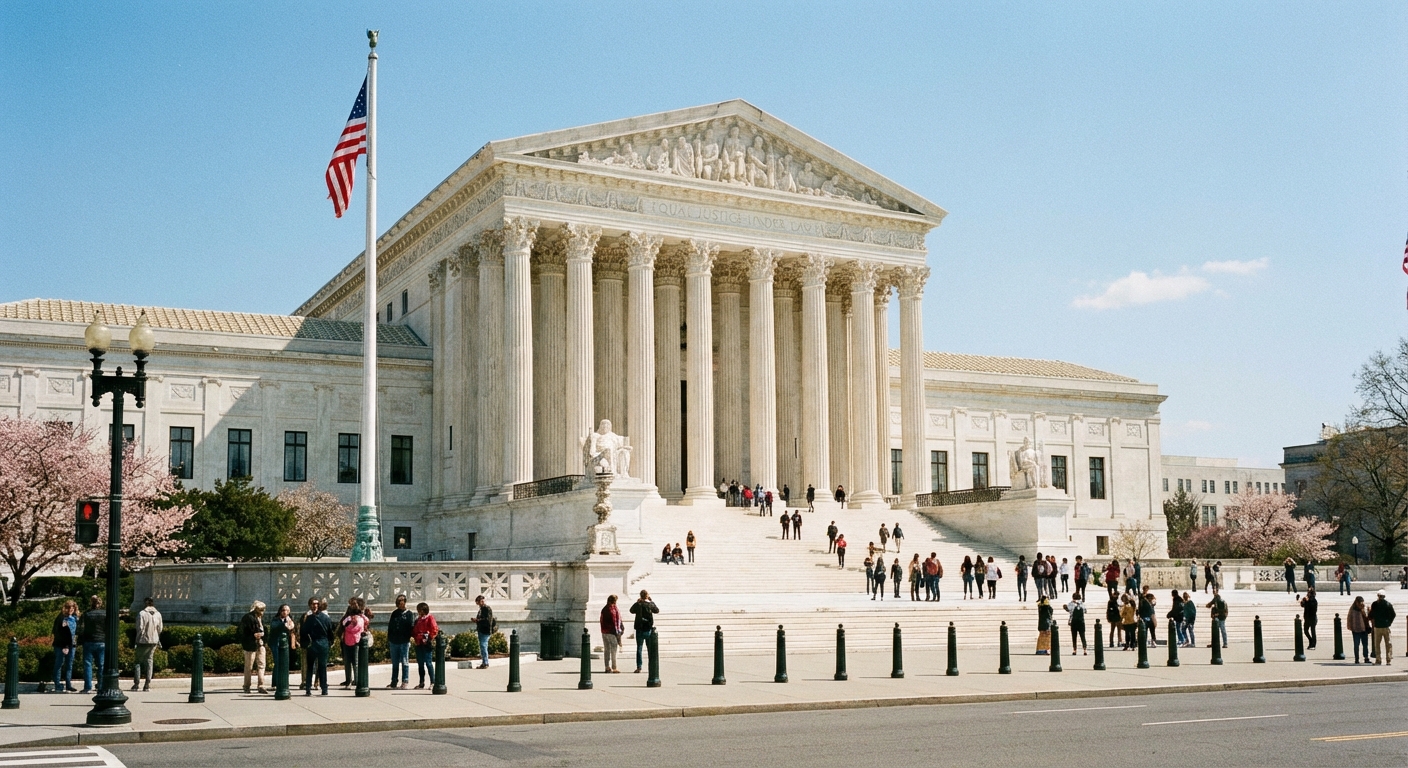
After New York State Rifle & Pistol Association v. Bruen (2022) and the Supreme Court’s later decision in United States v. Rahimi (2024), the Court has indirectly pushed lower courts to re-evaluate whether this federal ban, as applied to regular marijuana users, fits the Second Amendment’s text-and-history framework. The question is not whether weed should be legal. It is whether the federal government can disarm a broad class of people based on a federal “unlawful user” status, even when that status is common, often nonviolent, and frequently state-legal.
Join the Discussion
The law at the center
The statute is 18 U.S.C. § 922(g)(3). It makes it a federal crime for any person “who is an unlawful user of or addicted to any controlled substance” to possess firearms or ammunition.
It is a possession ban, not just a purchase rule. And in practice, it shows up in a few predictable ways:
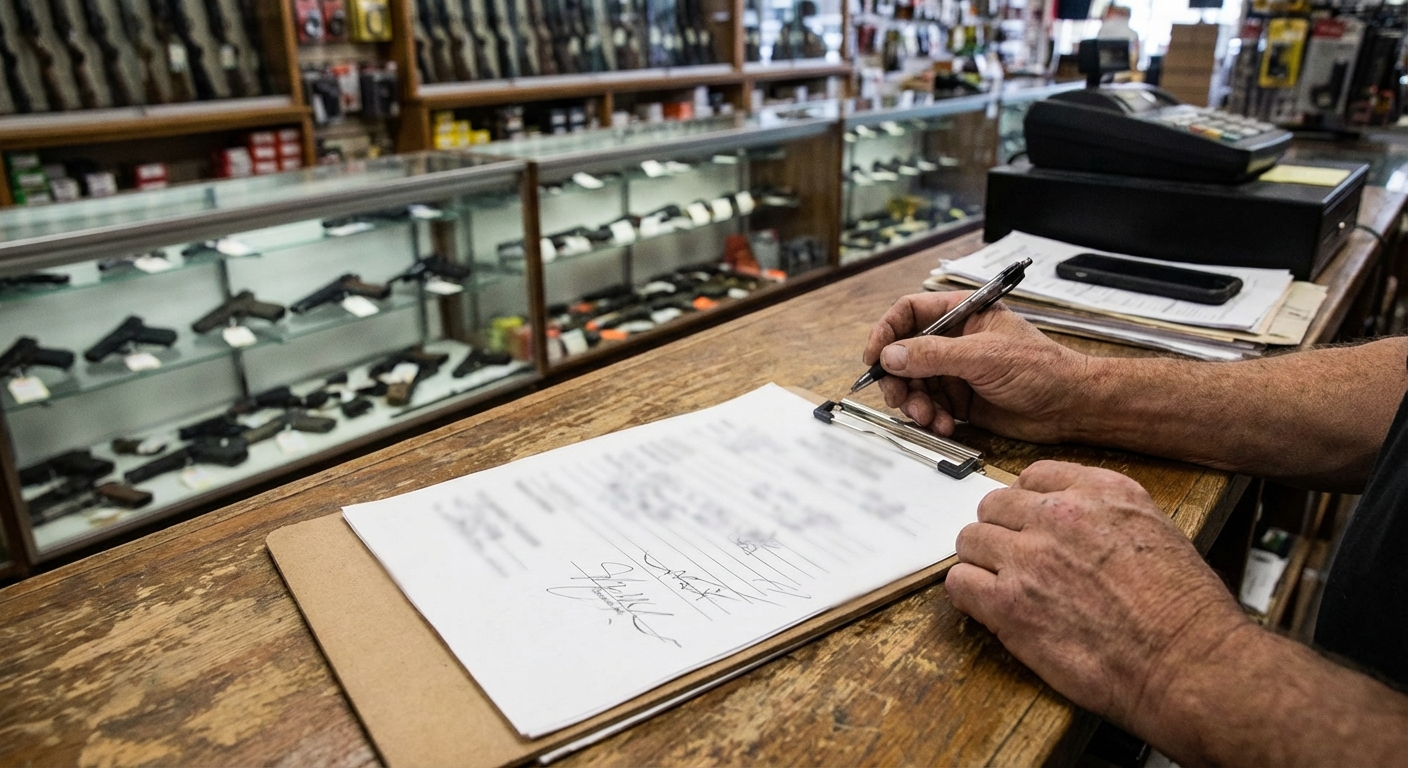
- Background check paperwork: Federal Form 4473 asks whether the buyer is an unlawful user of marijuana or other controlled substances and warns that marijuana remains illegal under federal law even if legal under state law. Answering “yes” blocks the purchase. Answering “no” while using marijuana can trigger a federal false-statement charge (often under 18 U.S.C. § 922(a)(6) or § 924(a)(1)(A)).
- Prosecutions after police contact: If firearms are found during a traffic stop, a domestic call, or another encounter and marijuana use is alleged, § 922(g)(3) can be added to the case.
- Practical spillover: Critics argue the rule deters state-legal marijuana users, including medical patients, from attempting lawful gun purchases because the federal form forces a choice between self-incrimination, a denial, or potential false-statement exposure.
Legally, this is one of the many places where federal supremacy meets state experimentation. Constitutionally, it sits inside the Court’s post-Bruen case-by-case re-evaluation of who can be disarmed and why.
Why the doctrine shifted
Before 2022, lower courts often treated many gun regulations under a balancing test: the government’s interest in safety weighed against the burden on the right. Bruen rejected that approach. The Court said the Second Amendment’s meaning must be determined by text and history, with modern gun laws needing a historical analogue from the Founding era or early Republic.
That shift matters because § 922(g)(3) is not a narrow “no guns while actively intoxicated” rule. It is a categorical prohibition for people deemed “unlawful users,” a term that can reach regular users even when they are sober and otherwise law-abiding.
The Court’s decision in United States v. Rahimi (2024) upheld a different federal gun restriction for people subject to domestic violence restraining orders. The Court emphasized historical analogues for temporarily disarming individuals found to pose a credible threat. That opinion gave both sides ammunition: it kept some prohibitions alive, but it reinforced that modern disarmament has to track historical practice, not just contemporary policy preferences.
The marijuana question is whether “regular user of a federally banned substance” is historically comparable to the categories that were disarmed in the relevant periods of American history, particularly under the Court’s modern focus on danger and responsibility.
Where things stand now
One key reason this debate feels unsettled is procedural, not rhetorical. After Rahimi, the Supreme Court sent major marijuana-gun cases back to lower courts for reconsideration under the new guidance. The most prominent example is United States v. Daniels, where the Fifth Circuit had struck down § 922(g)(3) as applied to a marijuana user. The Supreme Court later granted the government’s petition, vacated the judgment, and remanded (a GVR) for reconsideration in light of Rahimi.
That move is not the Court declaring the ban unconstitutional, and it is not the Court declaring it safe either. It is the Court telling lower courts to redo the analysis with Rahimi in mind. If the issue returns to the Supreme Court, it will likely do so only after the remanded cases are re-decided, appealed again, and re-petitioned, a process that can take years.
A quick glossary helps here. An as-applied challenge argues a law is unconstitutional in a specific person’s circumstances. A facial challenge argues the law is unconstitutional in all or most of its applications.
The government’s core argument
The federal government typically defends § 922(g)(3) by framing it as a public safety measure aimed at preventing dangerous firearm use linked to impairment and substance abuse. The argument usually runs like this:
- Second Amendment rights were never unlimited, and the historical record includes disarming people viewed as dangerous or irresponsible.
- Drug use correlates with impaired judgment, and firearms plus impairment can be lethal.
- Congress can draw lines to prevent predictable harms, especially when the law targets possession during periods of ongoing use.
In other words, the government wants courts to see marijuana users, at least those who are ongoing users, as a modern stand-in for historically regulated categories tied to heightened risk.
The challengers’ argument
The pushback is simple and, after Bruen, hard to ignore: the statute disarms people based on a label, not an individualized finding of dangerousness.
Challengers point to several features that make § 922(g)(3) feel constitutionally overbroad:
- It is not limited to being high. A person can be prohibited even when not intoxicated and not using in the moment.
- It hinges on federal illegality. Someone can be “unlawful” under federal law while acting in compliance with state law, including as a medical marijuana patient.
- “Unlawful user” can be fuzzy. Courts generally look for a pattern of recent use, not a single experiment long ago, but they vary on how recent is recent and what proof is enough.
- It flips the presumption. Instead of the government proving a person is dangerous, the law treats a large class of people as disqualified.
Under Bruen and now Rahimi, challengers argue, the government cannot justify a broad modern disarmament regime unless it can point to a sufficiently similar historical tradition, usually tied to concrete threat or misuse rather than status alone.
The history problem
This case turns into a history exam quickly. The Court’s method asks whether there were comparable restrictions in the late 1700s and 1800s.
Supporters of the ban often point to historical regulations like:
- Laws restricting carrying or firing weapons while intoxicated in some jurisdictions.
- Traditions of disarming people considered dangerous, especially through mechanisms that focused on preventing credible threats.
Opponents respond that those examples are not close enough. “No guns while drunk” is a conduct-based, time-limited rule. § 922(g)(3) is a status-based ban that can last as long as use is considered ongoing. And “dangerousness” traditions often involved some form of individualized judgment, not a blanket prohibition for millions of people who use a substance that many states regulate openly.
If courts conclude there is no meaningful historical analogue, the law is at serious risk in at least some applications. If they conclude that ongoing drug use is sufficiently tied to the kind of risk historically regulated, the law stands on firmer ground.
A federalism story
In practice, the firearm prohibition is one of the sharpest penalties attached to marijuana’s federal status. It creates a two-track citizenship:
- In your state, you may be a compliant consumer.
- In federal law, you may be an “unlawful user” who can lose gun rights and face felony prosecution.
The Constitution does not require state and federal criminal codes to match. But when the federal government uses its definitions to trigger the loss of a constitutional right, the mismatch becomes more than a policy annoyance. It becomes a constitutional pressure point.
What could happen next
Because major cases have been sent back to the lower courts after Rahimi, any Supreme Court resolution may take time. Remanded cases must be re-decided, then potentially appealed and re-petitioned. But the menu of eventual outcomes is still fairly predictable if and when the issue returns.
- Narrow ruling: The Court could say the ban is unconstitutional as applied to people who use marijuana regularly but are not shown to be dangerous and are not intoxicated at the time of possession.
- Broader ruling: The Court could invalidate § 922(g)(3) more widely if it concludes the statute’s basic structure conflicts with the Second Amendment under Bruen as refined by Rahimi.
- Uphold with limits: The Court could uphold the statute but require a tighter definition of “unlawful user,” stronger proof of ongoing use tied to risk, or a more historically grounded rationale.
The Court’s recent pattern suggests caution about sweeping results while still reshaping doctrine. And the post-Rahimi remands suggest the Court wants lower courts to do more of the work before it steps in again.
Why it matters
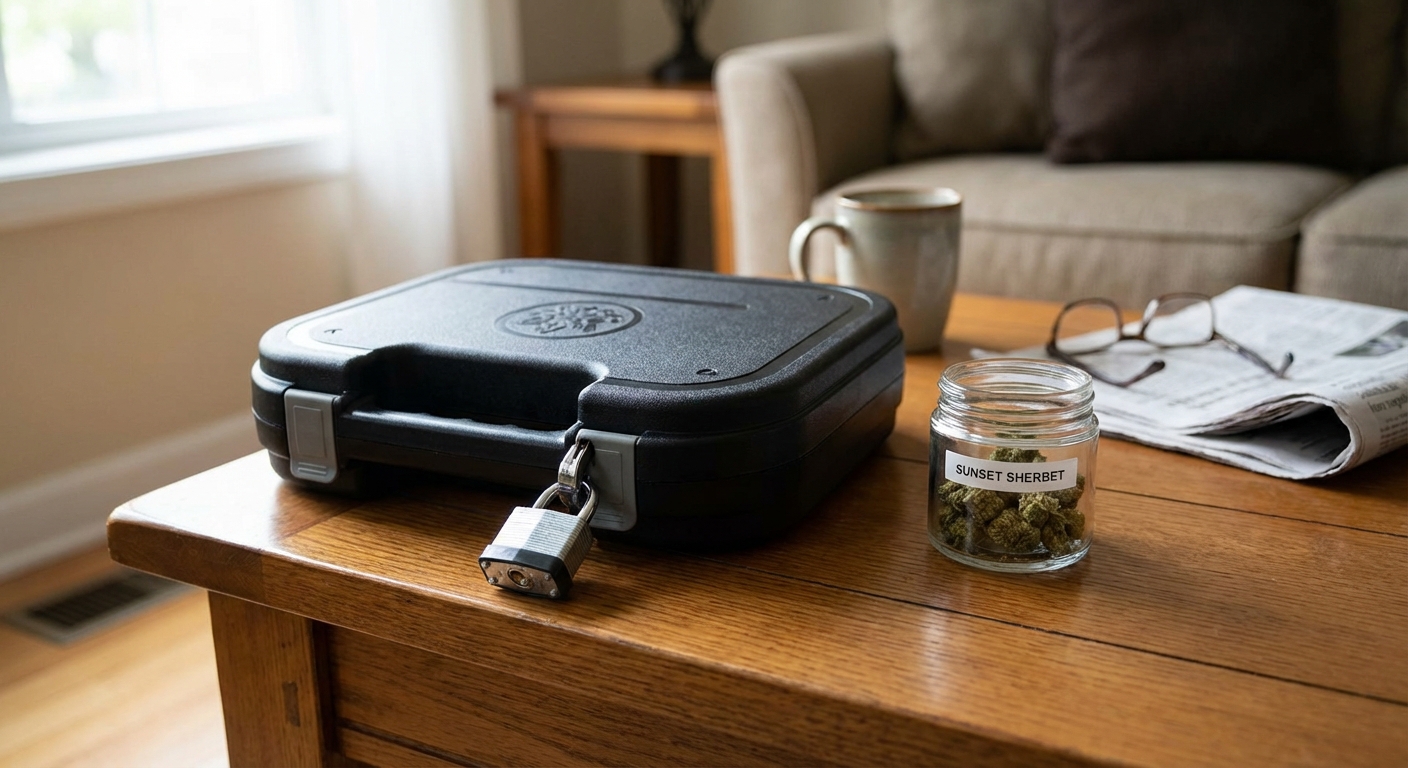
This case is not just about cannabis. It is about the government’s power to turn a regulatory category into a constitutional off switch.
If § 922(g)(3) falls, it will strengthen a principle that has been building since Bruen and sharpened in Rahimi: disarmament needs a historically recognizable justification, often tied to concrete dangerousness, not broad assumptions about a group.
If § 922(g)(3) survives, it will signal that “dangerousness” can be inferred, at least in some circumstances, from modern legislative judgments about risk, even when the underlying conduct is increasingly treated as ordinary and lawful at the state level.
Either way, the reasoning will echo into other contested areas: gun restrictions tied to nonviolent offenses, administrative classifications, and laws that remove rights based on predicted risk rather than proven misuse.
The question
The Second Amendment is now being interpreted through a lens that treats history as the guardrail. That makes modern, sprawling, one-size-fits-all prohibitions harder to defend, but not impossible to uphold.
So the constitutional question remains painfully direct: can the federal government disarm a person who is otherwise law-abiding, based largely on the fact that Congress still classifies marijuana like heroin?
If courts ultimately say no, that will not legalize marijuana. It will not necessarily protect getting high while armed. It will draw a line between punishing dangerous conduct and permanently downgrading constitutional status.
And that is the kind of line that ends up shaping daily life, one background check form at a time.