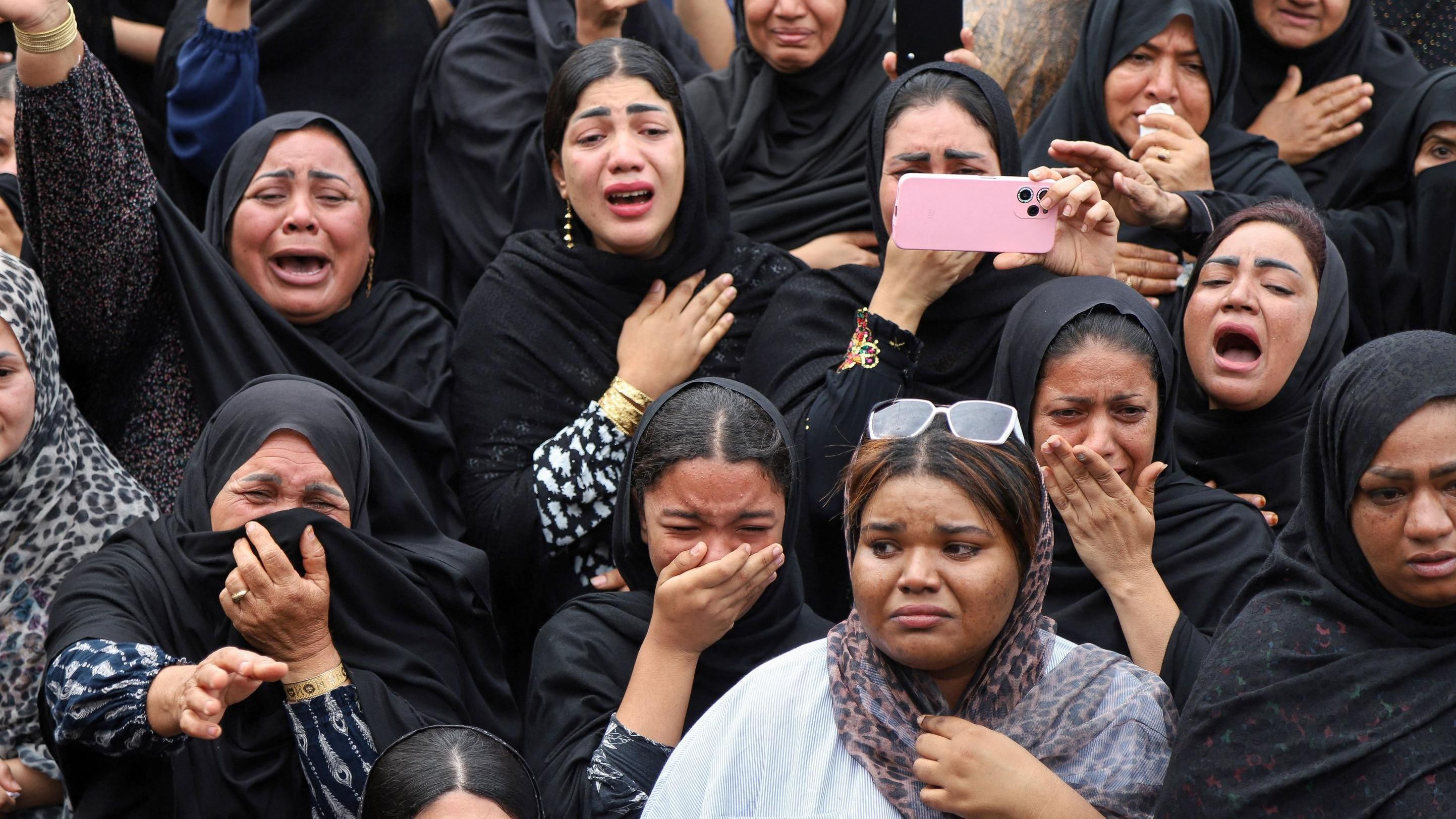
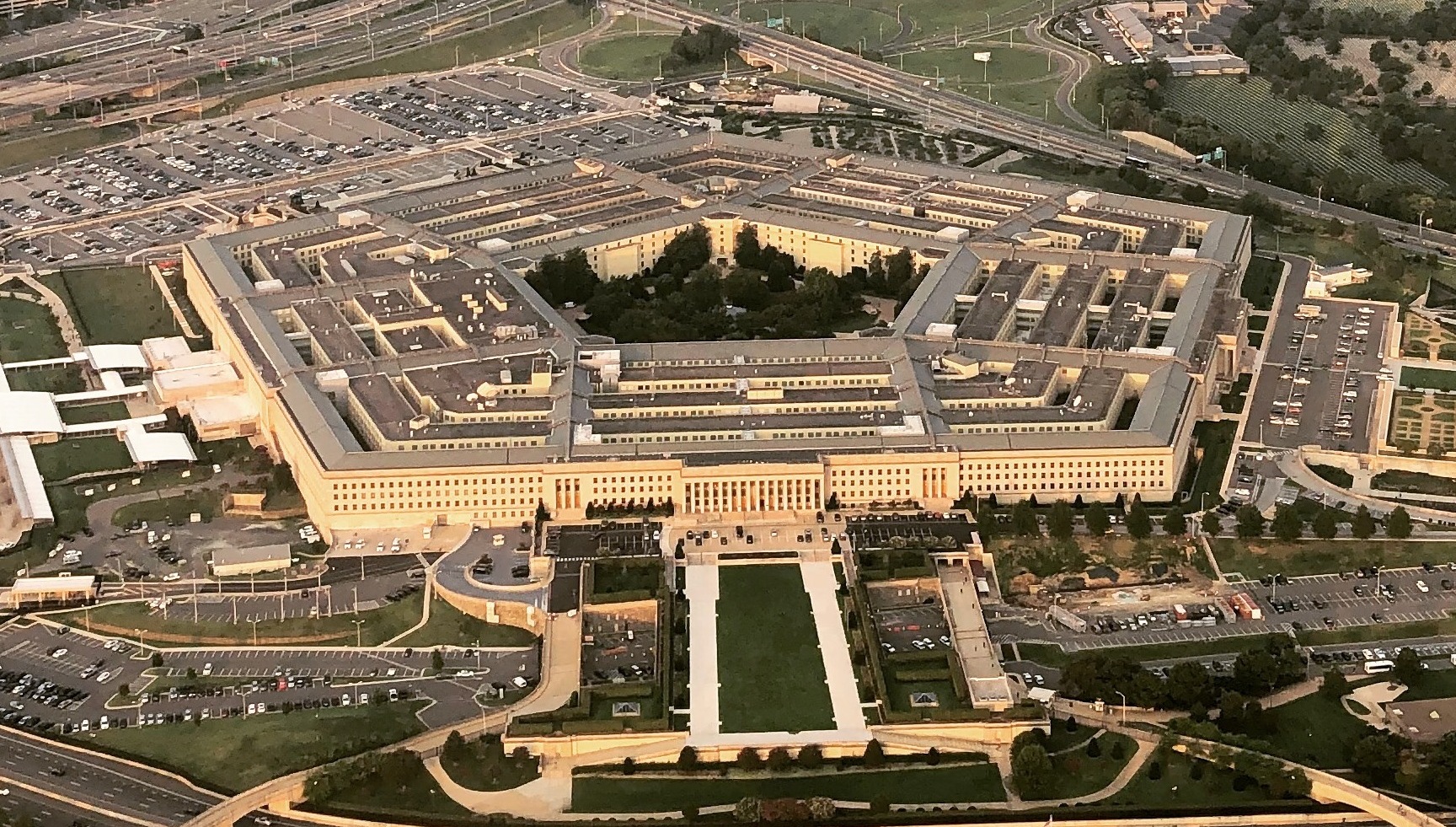
The Pentagon says it has opened a formal command investigation into a Feb. 28 strike in Minab, Iran, after Iranian regime officials alleged that a school beside a military compound was hit. Iranian officials have claimed “dozens of children” were killed and have also asserted a far higher overall death toll, saying between 168 and 180 people died, including mostly girls ages 7 to 12, as well as teachers and parents. The U.S. government has not confirmed any death toll.
Join the Discussion
What the Pentagon says it is doing
At a Pentagon briefing, Secretary of War Pete Hegseth said U.S. Central Command has appointed an investigating officer from outside the command to lead the review.
“CENTCOM has designated an investigating officer to complete a command investigation,” Hegseth said, noting that the investigator is a general officer. “The command investigation will take as long as necessary to address all the matters surrounding this incident.”
Hegseth also defended U.S. targeting procedures while emphasizing that the fact-finding process is still underway: “We will investigate. We’ll get to the truth and we’ll share it when we have it.”
The strike and the competing claims
The allegations center on a girls primary school in Minab in Iran’s Hormozgan province. Iranian regime sources have claimed between 168 and 180 fatalities, describing most of the dead as girls between ages 7 and 12, along with teachers and parents from the school. Zand told Fox News Digital there has been “no independent confirmation” of the reported casualty figures.
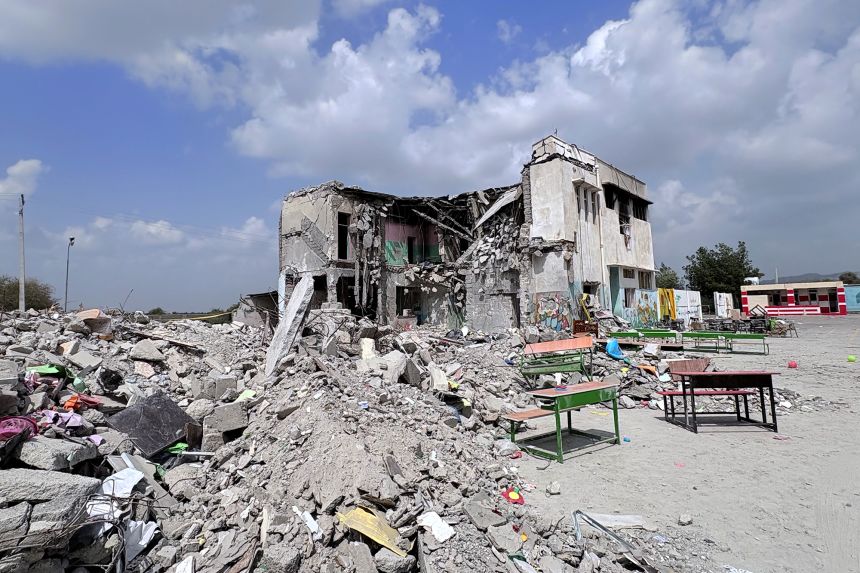
Iranian-American journalist Banafsheh Zand, who has been following reporting in Iran, said the school had been there for more than a decade and pointed to reported ties to Iran’s military.
“The school itself was for the children of the (Islamic Revolutionary Guard Corps) Navy, and it speaks volumes to where the place was and how they use civilian shields,” she said.
Zand also questioned the regime’s casualty totals, noting inconsistencies in claims circulating from the area. “There is no confirmation on the number of people, from anyone other than regime sources,” she said. “Some people in the area said it was 65 boys. Sixty-five boys? What are 65 boys doing in a girls’ school at 10:30 on a Saturday morning?”
Addressing satellite images that appear to show newly dug graves, she added: “The number of graves are not in keeping with the number of people that they claim is dead. It doesn’t match up.”
Did the United States launch the strike?
CENTCOM has declined to confirm whether American forces launched the missile, saying only that “it would be inappropriate to comment given the incident is under investigation.”
Preliminary findings from U.S. officials suggest the strike was likely carried out by American forces, The New York Times reported, though the investigation remains ongoing. In response to the Times’ reporting, Central Command reiterated to Fox News Digital that the investigation is ongoing.
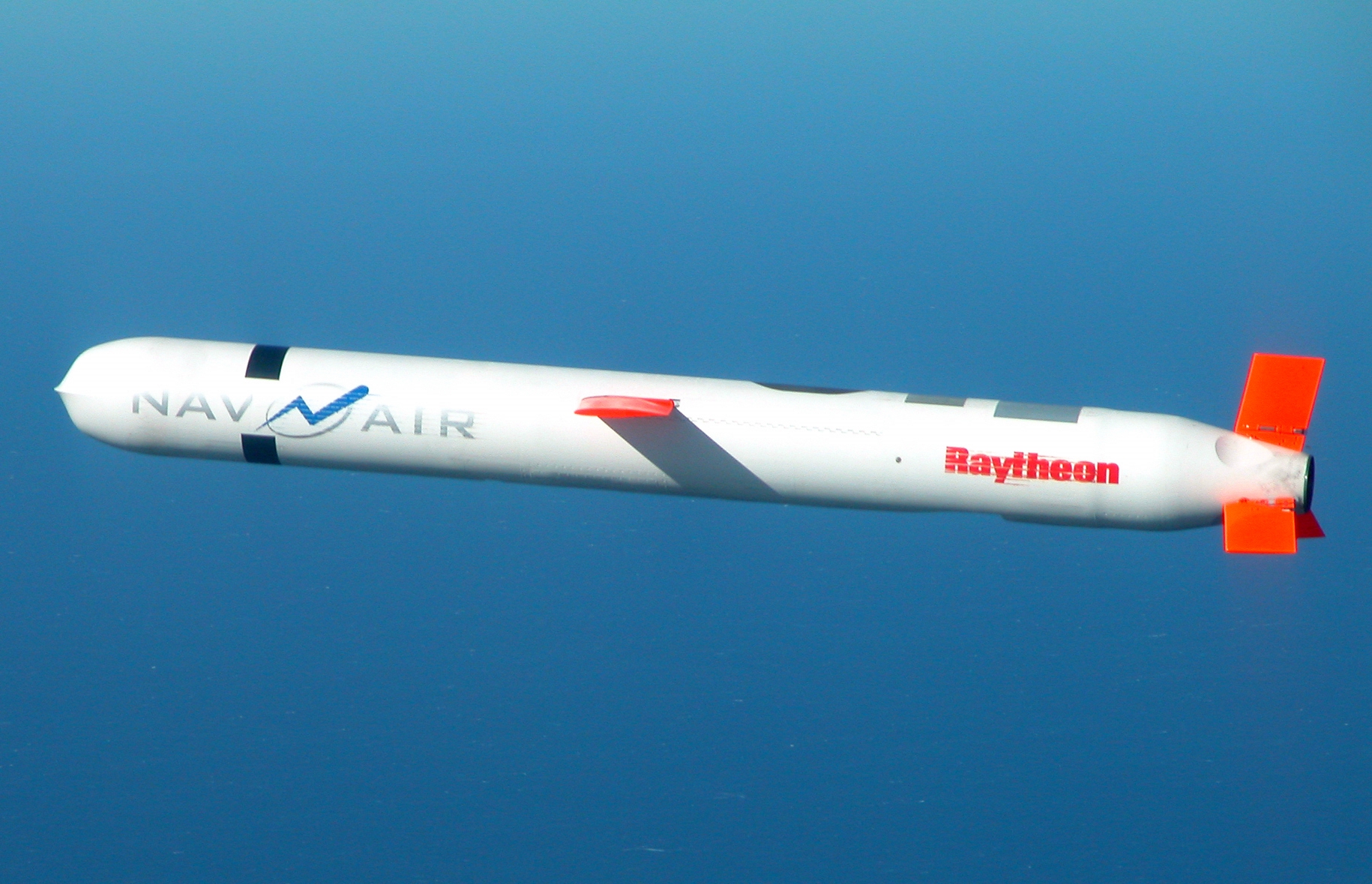
Open-source video analysis and reported missile remnants have fueled speculation that the munition resembled a Tomahawk cruise missile, which Iran does not operate. The Tomahawk is fielded by the United States and a limited number of close allies, including the United Kingdom and Australia, neither of which has been firing missiles in the conflict.
Independent open-source investigators, including Bellingcat, have examined video and satellite imagery from the area and reported that multiple strikes hit the compound within a short time window.
At the same time, commentators on social media have offered alternate theories. Podcast host and veteran Matt Tardio wrote on X that the “wing-to-body ratio” matched an Iranian Kh-55 derived land-attack cruise missile and suggested GPS jamming could have contributed.
Why the location matters
Several experts interviewed by Fox News Digital emphasized that if U.S. forces carried out the strike, it would raise questions about how civilian risk is assessed in densely populated areas and whether safeguards designed to prevent unintended casualties functioned as intended in the opening phase of a high-intensity conflict.
Retired Vice Adm. Kevin Donegan, who previously commanded U.S. Naval Forces Central Command and the U.S. 5th Fleet, urged caution ahead of the full review and said U.S. targeting doctrine is designed to prevent civilian tragedies, including legal review and collateral damage assessments before a strike is approved.
“We actually have judge advocates that sit there and help us through the process of targeting,” Donegan told Fox News Digital.
But he also warned that precision does not eliminate uncertainty. “War isn’t precise,” Donegan said. “Mistakes can be made, and they can happen anywhere in the chain of events.”
What investigators will look at
Former National Security Council official Javed Ali, now a professor at the Gerald R. Ford School of Public Policy, said the central question is the quality of intelligence that informed the strike decision.
“How solid was the intelligence picture on that facility?” Ali said. “How good was the intelligence that went into what’s called a target package?” He added: “Clearly something went wrong.”
Ali, who previously worked on targeting analysis at the Defense Intelligence Agency, said military strikes are typically built from multiple streams of intelligence, including human, technical, geospatial and open source, designed to provide high confidence a structure is a legitimate military objective.
Analysts told Fox News Digital that when civilian casualties occur during precision strikes, explanations generally fall into three categories:
- Intelligence failure, such as incorrect or outdated information that leads to misidentification
- Technical malfunction or disruption, including problems affecting a GPS-guided munition
- Human error, such as entering incorrect coordinates
Amos Yadlin, a former head of Israeli military intelligence, told Fox News Digital incorrect or outdated intelligence could lead to misidentification, while a GPS-guided munition could malfunction or be disrupted. Human error is another possibility, he said.

Wes Bryant, the Pentagon’s former chief of civilian harm assessments, told Fox News Digital: “All evidence, at this point, points to a U.S. strike.” If U.S. forces were responsible, Bryant argued a more plausible explanation would be a failure in target identification or civilian risk assessment.
“These munitions have a very small circular probable,” Bryant said. “If it missed, it would have been within a few meters.”
Satellite imagery and reporting from Iranian officials indicate the Shajareh Tayyebeh primary school sat roughly 600 meters from the adjacent Islamic Revolutionary Guard Corps naval facility, underscoring how closely civilian and military infrastructure were positioned.
Capacity to address civilian harm
Beyond this incident, the report also raises questions about whether the Pentagon has maintained enough capacity to mitigate civilian harm and investigate it.
Bryant said the Civilian Protection Center of Excellence, which was established by Congress to help the military minimize harm to civilians in conflict, was scaled back in 2025, reducing the number of personnel available to conduct investigations into civilian harm. He said reporting shows its dedicated staff were folded into broader bureaucratic units or removed as part of a departmental reorganization.
The Pentagon has not publicly detailed the current status or staffing of the office, nor confirmed whether it is involved in the ongoing Minab school investigation.
What to watch next
The command investigation is expected to address the surrounding circumstances of the strike, including questions about possible U.S. involvement and the intelligence used beforehand, as scrutiny grows over how civilian risk was assessed.
In the coming weeks, readers should watch for a few specific developments:
- Whether CENTCOM ultimately confirms or denies U.S. responsibility, once the command investigation reaches findings that can support a public statement
- Any clarification of the casualty numbers, including whether independent reporting corroborates regime claims
- Any findings of failures in targeting procedures, and whether accountability measures follow if negligence or breakdowns are identified
White House spokesperson Anna Kelly told Fox News Digital, “This investigation is ongoing. As we have said, unlike the terrorist Iranian regime, the United States does not target civilians.”
Bryant pointed to the 2015 U.S. strike on a hospital in Kunduz, Afghanistan, that killed dozens of patients and medical staff at a facility operated by Doctors Without Borders. A U.S. military investigation later concluded that airstrike was “a tragic and avoidable accident” caused primarily by human error and procedural failures, with the facility mistakenly identified as a combat target.