
There is a quiet constitutional irony at the center of America’s loudest election fights: the federal government sets baseline rules for federal elections, but the states build the machinery that decides how those rules are enforced.
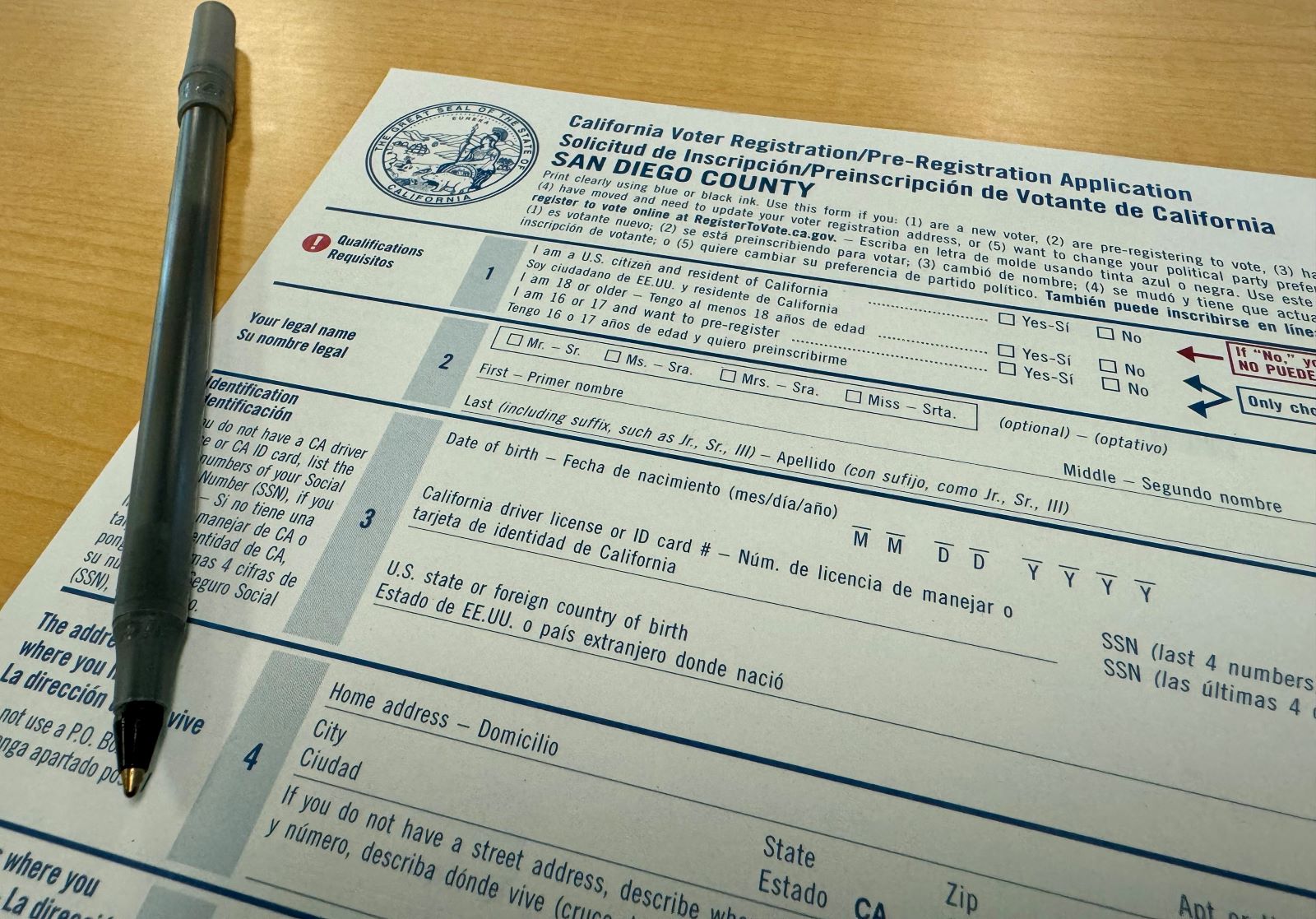
That tension is exactly what Republican governors and attorneys general are leaning into as they line up behind President Donald Trump’s demand for the Safeguard American Voter Eligibility (SAVE) Act, also known as the SAVE America Act, a bill that would require documentary proof of U.S. citizenship to register to vote in federal elections.
The support is not informal. The coordinated push is coming through letters from members of the America First Policy Institute’s (AFPI) Governors and Attorneys General Councils. The governors’ letter includes signers such as Arkansas Gov. Sarah Huckabee Sanders, Iowa Gov. Kim Reynolds and Texas Gov. Rick Perry, while the attorneys general letter includes state attorneys general from places including Iowa, Alabama and South Carolina.
The pitch is simple. Federal law already limits voting in federal elections to citizens. The problem, these state officials say, is that many voter registration systems do not require applicants to prove it. They call the current structure an “honor system,” where a would-be registrant checks a box claiming citizenship and the process moves forward with limited verification at the front end.
Join the Discussion
What the bill changes
The SAVE Act is built around one core requirement: if you want to register to vote in a federal election, you must provide “documentary proof of United States citizenship.” Supporters frame this as a basic eligibility check, similar in spirit to showing documentation for other government processes.
In the Senate, Republicans have already taken the first procedural step to move the bill forward. The chamber voted 51-48 to begin debate, but the pathway beyond that remains politically uncertain given unified Democratic opposition and the reality of Senate rules.
Who is pushing it
Trump has recently ramped up pressure on Congress to pass the measure as it moved to the Senate floor this week, calling mail-in voting “corrupt as h---.” Trump has previously said he has to sign the SAVE Act before he will sign anything else.
Trump has described the SAVE America Act as the central item on the immediate agenda, saying:
“The biggest thing coming up is the SAVE America Act in the Senate,” and adding, “Who would not have voter ID, who would not have proof of citizenship? … The only people who would want not to have that are people that want to cheat.”
The White House has echoed that framing. In a statement to Fox News Digital, White House spokeswoman Abigail Jackson called it “commonsense legislation,” adding that it is supported by “the vast majority of Americans who want to ensure our elections are secure and that only American citizens vote in American elections.” She also said: “Our elections should be treated with the utmost security and the SAVE America Act will ensure that they are.”
States’ influence argument
The most revealing part of the governors’ and attorneys general’s push is that it is not limited to ballot security. Their letters connect voter registration verification to something broader: federal power itself.
They warn that states with large populations of people in the country illegally can gain “undue influence” over national outcomes, both through federal elections and through the downstream distribution of public funds. In their words, “States with large illegal populations and little to no safeguards… unfairly hold undue influence in our Nation’s law-making process and how billions of dollars in tax revenue are distributed.”
Analysis: This is a familiar American argument, and it sits on top of constitutional design and modern funding formulas. The letters’ core claim is practical and political: if verification is weak at registration, the effects are not confined to a single ballot. The argument extends into how Washington responds to states in the aggregate, including where money flows and who has leverage.
Honor system vs proof
The attorneys general’s letter goes straight at procedure. They describe current registration as relying “largely” on self-attestation, with voters simply checking a box to claim U.S. citizenship “without requiring any documentary verification.” Their proposed solution is direct: require proof at the registration stage, not merely identification later at the polls.
This distinction matters in the governors’ telling, too. They point to gaps in current systems, noting that while many states require identification at the polls, others lack mechanisms to verify eligibility at the registration stage. They also say they are prepared to work with state election officials to implement the law in a way that protects access for eligible voters while strengthening safeguards.
Nationalization debate
In their letter, the attorneys general insist the SAVE Act “does not nationalize elections” and would preserve state control over election administration. They also argue it would not “disenfranchise American citizens.” Those assurances matter because the politics of election legislation often turn on the fear that Washington is taking the wheel.
If the bill becomes law, the fight will likely shift from slogans to implementation details. What counts as acceptable proof? How do you handle registration drives? How do you accommodate voters who are eligible but do not have easy access to documents? The line between a verification requirement and a barrier is often drawn in the fine print.
Burden and access
The governors say they are committed to implementing any new requirement so that “no eligible American citizen is unduly burdened” while preventing ineligible registrations. The attorneys general reject the idea that proof requirements inherently disenfranchise disadvantaged groups, writing: “It is an insult to suggest that minorities, women, or members of the working class are not smart enough to obtain and provide simple proofs of citizenship.”
Analysis: That line marks the pressure point. One side views documentary proof as baseline security. The other side tends to focus on how rules behave in the real world when paperwork, time, cost, and access are uneven. Even when the concept is simple, the lived experience can vary, and that is where the legal and political arguments usually concentrate.
Under the headline
America’s election debates often pretend they are just about mechanics, but they are usually about legitimacy. Who belongs in the political community? How do we prove it? How much friction is acceptable to keep the system honest?
Requiring proof of citizenship to register for federal elections is, at bottom, a decision about where to place trust. Do we trust self-attestation backed by penalties for fraud, or do we trust documents at the front door?
What the AFPI-aligned governors and attorneys general are signaling is that they want the citizen-only voting rule enforced through paperwork, not promises. If Congress accepts that framing, the next stage will not be a campaign argument. It will be a practical one, fought in election offices, in court challenges, and in the lived experience of voters trying to participate in self-government.