
With hours remaining before a midnight government shutdown, Republicans have found their messaging strategy: accuse Democrats of prioritizing “free healthcare for illegal aliens” over paying U.S. troops. Democrats call it an outright lie designed to obscure their real demand – extending Affordable Care Act subsidies that help millions of Americans afford insurance.
The truth is considerably more complicated than either side’s talking points suggest.
What Republicans Say Democrats Are Demanding
Vice President JD Vance and House Speaker Mike Johnson have accused Senate Minority Leader Chuck Schumer of trying to reinstate taxpayer-funded medical benefits for illegal immigrants through the Democratic continuing resolution proposal.
“Democrats are about to shut down the government because they demand we fund healthcare for illegal aliens,” Vance posted on X. Johnson added that Schumer wants to “reinstate free healthcare for illegal aliens paid by American taxpayers.”

President Trump told reporters in the Oval Office on Tuesday that Democrats “want to have illegal aliens come into our country and get massive healthcare at the cost to everybody else.” He characterized restoring illegal immigrant healthcare as “the number one reason that they want to strike.”
The Republican framing is clear: Democrats care more about providing benefits to people in the country illegally than they do about funding the military and paying American troops who would miss paychecks during a shutdown.
It’s politically potent messaging that connects immigration enforcement, fiscal responsibility, and military support into a single narrative. It’s also misleading about what Democrats are actually demanding.
What Democrats Actually Want and Why Republicans Object
Congressional Democrats’ primary demand is extending expiring Affordable Care Act tax credits that lower insurance premiums for millions of Americans who purchase coverage through ACA marketplaces. These subsidies were expanded during COVID-19 and are set to expire at the end of 2025.
But Democrats also want to repeal the healthcare provisions of Trump’s “One Big Beautiful Bill Act” (OBBBA) that passed earlier this year. That’s where the illegal immigrant healthcare dispute comes from – though not in the way Republican messaging suggests.
OBBBA didn’t grant healthcare benefits to illegal immigrants. It did the opposite – it imposed new restrictions on Medicaid eligibility and changed how federal funding works for states that provide healthcare to undocumented immigrants.
The law limited Medicaid eligibility to U.S. citizens and certain lawful permanent residents, simultaneously barring “previously eligible legal immigrants such as refugees, individuals granted asylum, and certain abused spouses and children.” That provision takes effect on October 1 – the same day the government shuts down if no funding deal passes.
OBBBA also changed the federal medical assistance percentage (FMAP) – the rate at which the federal government matches state Medicaid spending. For states that expanded Medicaid under Obamacare and also provide healthcare funding to illegal immigrants, federal matching drops from 90% to 80%.
Additionally, OBBBA restricted Emergency Medicaid reimbursements that allow hospitals to recoup costs for emergency care provided to people who would qualify for Medicaid if they had legal status. The law limits those federal dollars to the state’s regular FMAP share rather than the enhanced emergency rate.
What Schumer Actually Says About Healthcare for Undocumented Immigrants
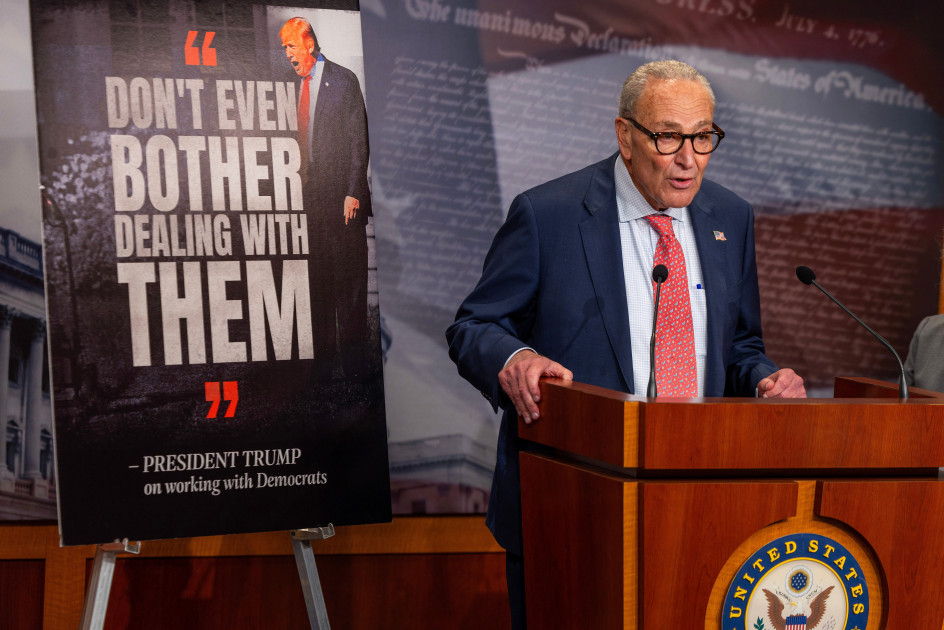
Schumer rejected Republican claims that Democrats are trying to provide federal healthcare benefits to illegal immigrants. “They say that undocumented people are going to get these credits,” Schumer said. “That is absolutely false. That is one of the big lies that they tell.”
He’s technically correct. The ACA subsidies Democrats want to extend explicitly exclude undocumented immigrants from eligibility. Federal law has long prohibited taxpayer-funded Medicaid coverage for illegal immigrants except for treatment of emergency medical conditions.
Democrats want to repeal OBBBA’s healthcare provisions not to grant new benefits to undocumented immigrants, but to restore Medicaid funding levels for states and maintain eligibility for legal immigrants who were cut from the program – refugees, asylum recipients, and abused spouses who are in the country legally but don’t yet have permanent resident status.
The distinction matters. Republicans are claiming Democrats want to provide free healthcare to illegal immigrants. Democrats are actually trying to restore federal matching rates for state programs and maintain eligibility for legal immigrants who OBBBA excluded.
Those are fundamentally different policy positions, but Republicans have successfully conflated them in public messaging.
The Emergency Medicaid Loophole That Complicates Everything
Emergency Medicaid creates the grey area that allows both sides to claim they’re telling the truth. Federal law prohibits Medicaid coverage for undocumented immigrants except for emergency medical conditions. That exception means hospitals can provide emergency care to undocumented patients and receive federal reimbursement.
Some states interpret “emergency medical conditions” broadly to include things like pregnancy-related care, arguing that childbirth constitutes an emergency medical condition regardless of whether complications exist. Other states interpret it narrowly to cover only life-threatening situations.

OBBBA restricted federal Emergency Medicaid reimbursements to reduce what Republicans view as abuse of the emergency exception. Democrats view those restrictions as forcing hospitals to absorb costs for emergency care they’re legally required to provide regardless of patient immigration status.
Republicans characterize this as ending taxpayer-funded healthcare for illegal immigrants. Democrats characterize it as defunding hospital emergency services and creating financial crises for facilities that serve large undocumented populations.
Both characterizations contain truth. Emergency Medicaid does result in federal dollars paying for care provided to undocumented immigrants. But that care is limited to genuine emergencies, and eliminating reimbursement doesn’t eliminate the requirement that hospitals provide emergency treatment – it just shifts costs from federal taxpayers to hospitals and state budgets.
The political fight is about whether federal taxpayers should help cover those costs or whether states and hospitals that serve undocumented populations should bear the full burden.
Why Legal Immigrants Got Caught in Republican Reform
OBBBA’s exclusion of refugees, asylum recipients, and abused spouses from Medicaid eligibility represents a significant policy shift that has nothing to do with illegal immigration. These are people in the country legally through recognized immigration pathways.
Refugees are admitted through formal U.S. refugee programs after extensive vetting. Asylum recipients have successfully demonstrated credible fear of persecution in their home countries. Abused spouses are victims of domestic violence who qualify for immigration relief under the Violence Against Victims of Trafficking Act.

All of these populations were previously eligible for Medicaid. OBBBA excluded them as part of broader restrictions on who qualifies for federal healthcare benefits. The provision takes effect October 1, meaning thousands of legal immigrants currently receiving Medicaid coverage will lose it starting tomorrow.
Democrats want to restore that eligibility. Republicans characterize that restoration as providing benefits to illegal immigrants – which is factually inaccurate but politically effective because most voters don’t distinguish between different immigration statuses.
The policy gets lost in messaging that treats all immigrants as functionally equivalent. Refugees who spent years in U.N. camps waiting for U.S. admission get lumped together with people who crossed the border illegally. Asylum recipients who won their cases in immigration court get characterized the same as those who never appeared for hearings.
This conflation allows Republicans to claim Democrats are fighting for “illegal immigrant healthcare” when Democrats are actually fighting to restore benefits for legal immigrants who were cut from programs they previously qualified for.
The Premium Increase That Democrats Say Justifies Urgency
Democrats argue they need ACA subsidy extensions included in the continuing resolution because insurers are scheduled to send out new coverage guidance and premium rates on Wednesday – October 1, the day after the government funding deadline.
Without the enhanced subsidies, Democrats warn that premium costs for people enrolled in ACA marketplaces would increase by an average of 114%. That’s a dramatic jump that would make insurance unaffordable for millions of Americans who currently depend on subsidized coverage.

Republicans counter that ACA subsidies don’t actually expire until December 31, so there’s time to negotiate subsidy extensions separately from government funding. They’re willing to discuss the issue but refuse to include it in what they characterize as a “clean” continuing resolution.
The timing dispute matters because it determines leverage. If subsidies are addressed now when Democrats can threaten to block government funding, Republicans must negotiate. If subsidies are addressed later when government is already funded, Democrats lose leverage and Republicans can demand reforms or spending offsets that Democrats would reject.
Democrats believe – probably correctly – that “later” means “never” or “only with conditions that gut the subsidies’ value.” Republicans believe – probably correctly – that Democrats are manufacturing urgency to extract concessions they couldn’t get through normal legislative negotiation.
Both sides are playing strategic games with policy that affects millions of Americans’ healthcare costs. Neither wants to admit they’re prioritizing political leverage over immediate constituent needs.
What Actually Happens to Troops During a Shutdown
Republicans’ emphasis on military pay creates emotional resonance but obscures how government shutdowns actually work. Active-duty troops are required to report for duty during shutdowns – they’re considered essential personnel. But their paychecks get delayed until funding resumes.
This creates genuine hardship for junior enlisted personnel living paycheck to paycheck, particularly those with families. Missing even one paycheck can mean difficulty paying rent, buying groceries, or covering childcare costs.

But characterizing Democratic shutdown resistance as choosing illegal immigrant healthcare over troop pay is misleading. Democrats want to fund the government – they just want healthcare provisions included that Republicans refuse to accept. Republicans want to fund the government – they just refuse to include healthcare provisions Democrats demand.
Neither party is deliberately trying to deny military pay. Both are prioritizing their respective policy demands over reaching compromise that would keep the government open and troops paid on schedule.
The troops become rhetorical pawns in a political fight where both sides believe their policy positions are more important than avoiding the immediate disruption a shutdown causes.
The Messaging War That Obscures Policy Reality
Republican messaging has been effective because it reduces complex Medicaid policy to a simple emotional narrative: Democrats care more about illegal immigrants than American troops. That narrative is politically powerful even when factually misleading.
Democratic messaging has been less effective because “we’re fighting to restore federal matching rates for state Medicaid programs and maintain eligibility for legal immigrants” doesn’t fit on a bumper sticker or generate the same emotional response.
The result is a public debate where most Americans believe Democrats are fighting to provide free healthcare to illegal immigrants – which is false – while having no idea that OBBBA cut Medicaid eligibility for refugees and asylum recipients – which is true and directly relevant to what Democrats actually want.
Republicans have won the messaging war even though their characterization of Democratic demands is inaccurate. Democrats are losing the messaging war even though their actual policy position is more defensible than Republican rhetoric suggests.
This pattern repeats constantly in American politics: the side with the simpler, more emotionally resonant message wins public opinion regardless of factual accuracy, while the side trying to explain policy nuance loses because complexity doesn’t generate outrage.
Why This Shutdown Fight Matters Beyond Tuesday
If the government shuts down at midnight, it won’t be because Democrats demanded free healthcare for illegal immigrants or because Republicans refused to pay troops. It will be because neither party prioritizes avoiding shutdowns over achieving their policy objectives.
Democrats believe ACA subsidies and Medicaid funding levels are important enough to risk shutdown. Republicans believe restricting those programs is important enough to risk shutdown. Both sides have calculated that their base will blame the other party and that standing firm demonstrates commitment to core principles.

The actual policy dispute – federal matching rates for state Medicaid programs, eligibility for legal immigrants, and timing of ACA subsidy negotiations – affects millions of Americans’ healthcare access and costs. Those are legitimate issues worth debating.
But the debate isn’t happening. Instead, we get Republican claims about free healthcare for illegal aliens and Democratic warnings about gutting the healthcare system. Both are exaggerations designed to generate political support rather than inform public understanding.
The troops will eventually get paid. The government will eventually reopen. And the underlying policy questions about immigration status, federal healthcare obligations, and subsidy sustainability will remain unresolved until the next shutdown fight forces temporary resolution.
Americans watching this dysfunction might reasonably wonder whether their elected representatives care more about policy outcomes or political messaging, about governing effectively or winning news cycles, about serving constituents or serving party leadership.
The answer appears to be that when those interests conflict, messaging and party loyalty consistently win while governance and constituent service consistently lose.
That’s not a Democratic problem or a Republican problem. That’s a system problem that shutdown fights expose but never resolve.