
Gerrymandering is what happens when the people who draw election districts choose their voters before voters choose them.
More literally: it is the deliberate shaping of district boundaries to tilt election outcomes. Sometimes the goal is partisan advantage. Sometimes it is to weaken the voting power of a racial group. Often, it is both, tangled together in ways courts and lawmakers struggle to separate.
And here is the key constitutional twist: the Constitution does not contain a clean, simple rule that says district maps must be “fair.” That does not mean the Constitution is silent. It means the guardrails come indirectly, through a mix of the Elections Clause (Article I, Section 4), the Equal Protection Clause, the Fifteenth Amendment, federal statutes like the Voting Rights Act, and the Supreme Court’s willingness or unwillingness to police the line between ordinary politics and unlawful discrimination.
Join the Discussion
What gerrymandering is
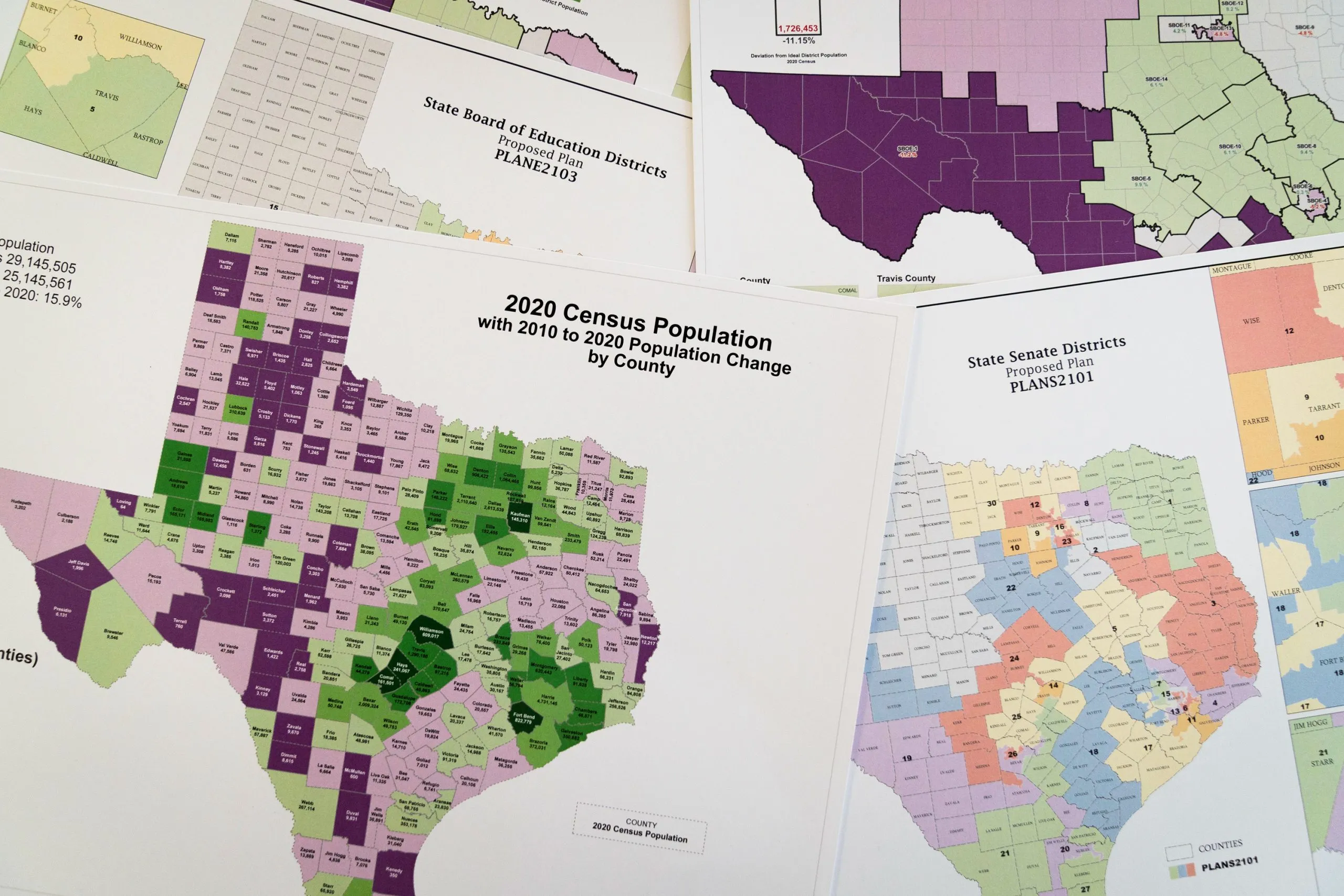
Every ten years, after the census, states redraw U.S. House districts to keep population balanced. That process is called redistricting.
Two important caveats:
- Some maps change mid-decade because of court orders, new laws, or political choices.
- A few states have only one U.S. House seat, so they elect a representative at-large and do not draw congressional district lines.
Gerrymandering is what you call it when redistricting is used as a weapon.
A gerrymandered map can create “safe” districts where the dominant party is almost guaranteed to win. It can also manufacture a majority by spreading the other side’s voters so thin that they rarely control a district, even if they are numerous statewide.
Two classic techniques
- Packing: Concentrating the opposing party’s voters into a small number of districts they will win by huge margins, wasting their votes.
- Cracking: Splitting the opposing party’s voters across many districts so they are a permanent minority in each.
Those techniques are not theoretical. They are the building blocks of modern mapmaking software, where a line can be moved a few blocks and instantly re-run against voting history to see what it does to an election.
Maps, intent, and geography
A common confusion is whether lopsided outcomes are always proof of gerrymandering. They are not.
Political geography matters. If one party’s voters are heavily concentrated in dense cities while the other party’s voters are spread more evenly across suburbs and rural areas, district outcomes can look “unfair” even under neutral rules. That is not automatically gerrymandering.
Gerrymandering, by contrast, is about intent and design: using line-drawing choices to lock in power beyond what geography would naturally produce, or to target particular groups of voters for dilution.
How district maps are drawn
Redistricting is state-by-state, and the rules vary.
Who draws the lines
- State legislatures: In many states, the legislature passes a map like any other bill, and the governor can sign or veto it.
- Independent or bipartisan commissions: Some states use commissions designed to reduce conflicts of interest. These range from genuinely independent bodies to commissions that still reflect partisan appointments.
- Courts: If politicians deadlock or a map is struck down, courts sometimes impose an interim map so elections can proceed.
What mapmakers must balance
Even in states where partisan intent is openly allowed, mapmakers still operate under legal constraints. Common requirements include:
- Equal population: Congressional districts must be extremely close to equal in population. State legislative districts must be roughly equal, but states generally have more leeway than Congress.
- Contiguity: Many states require districts to be one connected piece. This is usually a state-law rule, not a standalone federal constitutional requirement.
- Compactness: Some states require districts to avoid bizarre shapes, though compactness is easy to game.
- Preserving political boundaries: Keeping counties and cities together where possible.
- Compliance with the Voting Rights Act: Protecting minority voters from having their electoral power diluted.
Notice what is missing from that list: a nationwide constitutional rule requiring proportional representation, competitiveness, or partisan symmetry.
Partisan vs. racial gerrymandering
People talk about gerrymandering as if it is one thing. Legally, it is two different categories with two very different levels of constitutional protection.
Partisan gerrymandering
Partisan gerrymandering is drawing districts to advantage a political party, such as Republicans or Democrats.
It can be extreme and still survive in federal court. The reason is not that the Supreme Court thinks it is healthy. The reason is that, since 2019, the Court has said partisan gerrymandering claims present a political question that federal courts cannot resolve because there is no manageable judicial standard for deciding how much partisanship is too much.
Those “standards” exist in the policy world, and litigants have proposed them in court. Examples include the efficiency gap, partisan bias, and the mean-median difference. The Court’s point in practice was that none has been adopted as a binding rule of federal constitutional law.
Racial gerrymandering
Racial gerrymandering is drawing districts primarily on the basis of race, either to dilute minority voting power or to sort voters by race without sufficient justification.
Racial line-drawing triggers stricter constitutional scrutiny under the Equal Protection Clause. It also intersects with the Voting Rights Act, which can require states to draw districts where minority voters have an opportunity to elect candidates of their choice when certain conditions are met.
The complication is that race and party are often correlated in modern elections. That gives mapmakers plausible deniability, and it gives courts a hard question: was the map drawn for politics (often allowed), for race (often not allowed), or for both?
Key Supreme Court cases
If you want to understand why gerrymandering persists even when most voters dislike it, the answer is not only politics. It is doctrine.
Baker v. Carr (1962)
This case opened the door to federal court involvement in redistricting by holding that certain apportionment claims are justiciable. It set the stage for the modern era of redistricting litigation.
Wesberry v. Sanders (1964)
The Court applied the “one person, one vote” principle to congressional districts, grounding it in Article I’s requirement that representatives be chosen “by the People.” In practice, this is why congressional districts must be drawn with near-perfect population equality.
Reynolds v. Sims (1964)
The Court established the “one person, one vote” principle for state legislative districts under the Equal Protection Clause. The basic requirement is population equality, but states typically have more flexibility than Congress.
Thornburg v. Gingles (1986)
This case set the core framework for Section 2 vote dilution claims. The “Gingles preconditions” are why modern litigation so often focuses on whether a minority community is sufficiently large and geographically compact to form a district, whether voting is racially polarized, and whether the political process is equally open in reality, not just on paper.
Shaw v. Reno (1993)
The Court held that districts drawn with race as the predominant factor, especially when shapes are highly irregular, can violate equal protection. Shaw did not eliminate majority-minority districts, but it made race-based mapmaking constitutionally risky without strong justification.
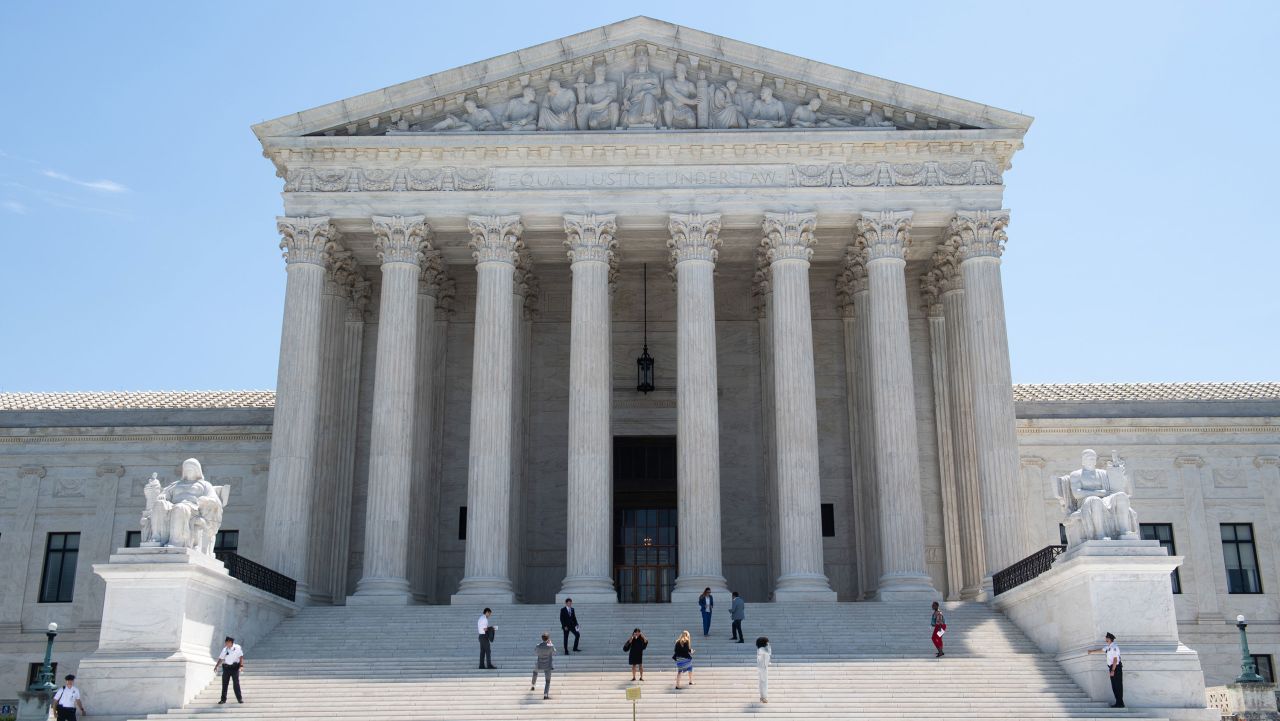
Rucho v. Common Cause (2019)
This is the modern turning point. The Court held that partisan gerrymandering claims are nonjusticiable in federal court. The majority acknowledged partisan gerrymandering is incompatible with democratic principles, but concluded that federal judges cannot decide what level of partisanship is unconstitutional without a standard rooted in law rather than political theory.
After Rucho, the main venues for challenging partisan gerrymanders became state courts, state constitutions, and state commissions. Congress also has theoretical room to act through federal statute under the Elections Clause, but that is a political lift, not a judicial one.
Brnovich v. Democratic National Committee (2021)
This case shaped how Section 2 applies to vote denial claims, such as rules about casting a ballot. It is separate from the vote dilution framework that dominates redistricting cases, but it matters for understanding how the Voting Rights Act has been interpreted in different contexts.
Allen v. Milligan (2023)
The Court reaffirmed that Section 2 of the Voting Rights Act can require additional opportunity districts when the established legal preconditions are met, rejecting Alabama’s attempt to narrow the statute’s reach. In plain terms: for redistricting, Section 2 remains one of the most powerful tools against unlawful vote dilution, even after the Section 5 preclearance formula was struck down in Shelby County.
Effects on elections
Gerrymandering does not just pick winners. It changes the incentives inside the system.
General elections can matter less
In a heavily gerrymandered map, many seats are effectively decided in the dominant party’s primary. That shifts power toward the most motivated primary voters and away from the median general-election voter.
Polarization can increase
If representatives fear a primary challenge more than a general election, they have fewer reasons to compromise. A safe seat is a powerful thing. It can protect incumbents from accountability, and it can punish moderation.
Representation can be distorted
Two states with similar statewide vote totals can produce dramatically different seat totals based solely on district design. That is the entire point of the gerrymander: converting geographic lines into political outcomes.
Minority voting power can be diluted
When racial minorities are cracked across districts or packed into one district beyond what is necessary, their ability to influence elections can be reduced even if their population share is substantial. Section 2 Voting Rights Act cases often turn on whether minority voters are sufficiently large and geographically compact to form an additional district, and whether racially polarized voting prevents them from electing candidates of choice under the current map.
Can it be stopped?
Not completely, because redistricting is inherently political. The question is whether the politics has guardrails.
Main checks
- State constitutions: Some state courts have interpreted state constitutional provisions about free elections or equal protection to limit partisan gerrymanders, even after Rucho.
- Independent commissions: These can reduce the worst abuses, depending on how they are designed and who controls the process.
- The Voting Rights Act: Still central for racial vote dilution claims, especially Section 2.
- Congress: Under the Elections Clause, Congress can regulate the “Times, Places and Manner” of congressional elections, including setting certain redistricting rules by statute.
- Public transparency: Open hearings, published draft maps, and accessible data can raise the political cost of extreme line-drawing.
What citizens can do
- Submit public comments and, where allowed, submit proposed maps during hearings.
- Track your state’s redistricting calendar and litigation deadlines. the decisive moves often happen late.
- Support or oppose ballot measures that create or revise redistricting commissions.
- Use nonpartisan map and data tools to understand how proposed lines would change representation.
There is also a deeper reality: the most durable anti-gerrymandering rules are structural. They live in state constitutions, in commission frameworks, or in federal statutes. If the only barrier is a norm, it will not survive the next high-stakes cycle.
Quick facts
Origin of the term
Gerrymandering comes from Massachusetts Governor Elbridge Gerry. In 1812, a district drawn under his party’s influence was said to resemble a salamander. Newspapers popularized the mash-up: “Gerry” + “salamander.”
Trivia for pronunciation nerds: Gerry’s last name was pronounced with a hard “G.” The modern term “gerrymandering” is typically pronounced with a soft “G,” like “jerry.”
What it is not
- It is not the same thing as naturally occurring political geography, where like-minded voters cluster in cities or rural areas.
- It is not always visible from a district’s shape. Some of the most effective gerrymanders look neat.
States often in court
Redistricting litigation changes fast across election cycles. In recent cycles, high-profile challenges have repeatedly involved Alabama, Louisiana, Georgia, Texas, North Carolina, Florida, Wisconsin, and Ohio, often centered on Section 2 Voting Rights Act claims, state constitutional claims, or both.
Tip: If you want the most current status, check your state’s election board site and the docket pages for federal district courts in your state. Many cases move quickly right before filing deadlines.
The constitutional bottom line
Gerrymandering survives because it exploits a gap between what democracy feels like it should guarantee and what the Constitution explicitly polices.
The federal Constitution demands equal population in congressional districts, and it forbids certain kinds of discrimination through the Reconstruction Amendments and equal protection doctrine. It does not promise competitive elections. It does not promise proportional outcomes. And after Rucho, it does not offer a federal courtroom remedy for maps that are purely partisan, even when they are brazen.
That leaves Americans with a question that is less legal than civic: if you do not want politicians choosing their voters, what institutions do you trust to draw the lines, and what rules do you want them bound by?