
Founding Fathers
Browse articles in Founding Fathers on U.S. Constitution
Key Contributions of Founders
George Washington's leadership at the Constitutional Convention was pivotal. His presence unified diverse delegates and provided a sense of purpose. Washington understood that a stronger central government was essential, and his experiences as a military leader informed his vision of national unity...
Read more →
Founders’ Relationships in Politics
The Founding Fathers had their fair share of clashes, which significantly shaped America’s political landscape. Federalists, like Alexander Hamilton, pushed for a strong national government, believing it was essential for unity and progress. On the other hand, Republicans, led by Thomas Jefferson...
Read more →
Founding Fathers on Civic Duty
The Founding Fathers placed immense value on civic duty, recognizing it as the foundation for a robust republic. George Washington emphasized the collective effort needed to sustain liberty. In his Farewell Address, Washington underlined that responsible citizenship is not optional but an inherent...
Read more →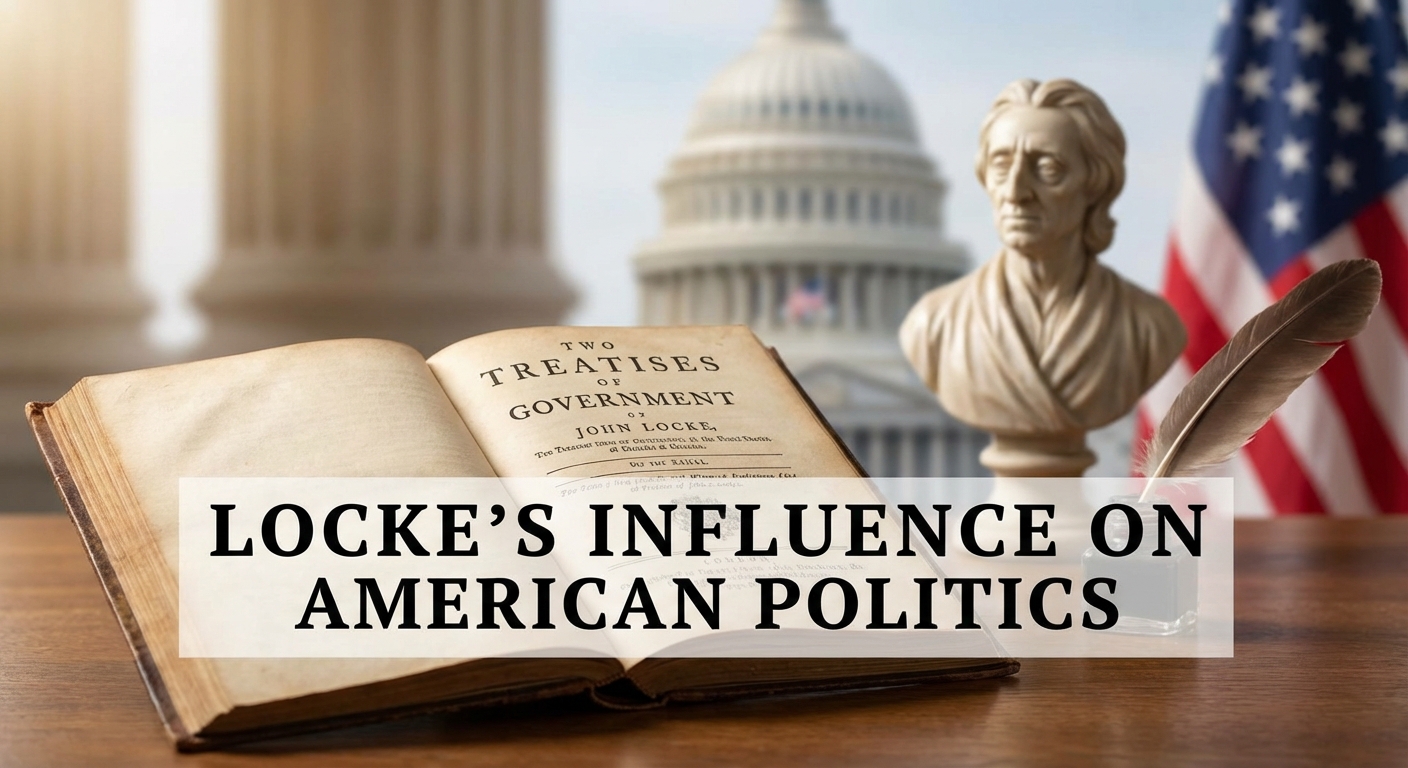
Locke’s Influence on American Politics
Born on August 29, 1632, in Somerset, England, John Locke grew up in a well-to-do Puritan family during a time of political turmoil. His early years were marked by the English Civil War, a conflict where his father served as a cavalry captain. Locke found the classical curriculum at Oxford lacking...
Read more →
Hamilton’s Financial Plan
When Alexander Hamilton suggested that the federal government assume state debts from the Revolutionary War, it wasn't just about paying bills. This move aimed to build unity and trust in the newly formed United States. States owed around $25 million, a significant sum at the time. Hamilton...
Read more →
Founders’ Vision of Religious Freedom
The American founding era encompassed a vast spectrum of religious beliefs, reflecting the diversity of the population itself. Approximately 98% of Americans of European descent identified with Protestantism , predominantly adhering to the reformed theological tradition. This demographic shaped the...
Read more →Impact of Common Sense on Revolution
Thomas Paine's journey from England to America brought with it a significant shift in pace and purpose. Born in Thetford, England, on February 9, 1737, Paine's early years were marked by a sequence of professional failures. He worked variously as a corset maker, teacher, and excise officer – none...
Read more →Top Founding Fathers’ Legacies
George Washington, known as the "Father of His Country," was crucial in the creation and early leadership of the United States. As the first President, his leadership style set key precedents for future officeholders. His role as the commanding general of the Continental Army during the American...
Read more →Classical Influence on Founding Fathers
When Alexander Hamilton entered King's College in 1773, he already had a mastery of Greek and Latin grammar. He could read three orations from Cicero and Vergil's Aeneid in the original Latin, and translate the first ten chapters of the Gospel of John from Greek into Latin. This was not uncommon...
Read more →Mercy Otis Warren’s Revolutionary Impact
Mercy Otis Warren's life and work provide a compelling look into the intellectual and political currents of the American Revolution. Her writings, from satirical plays to critical essays, reflect a deep engagement with the issues of her time and offer valuable insights into the fight for American...
Read more →Roger Sherman: Constitution Architect
Roger Sherman, a pivotal figure in American history, offers a remarkable story of resilience and intellect. Born into humble beginnings, his journey from a self-taught scholar to a key architect of the United States Constitution is nothing short of inspiring. This account will examine Sherman's...
Read more →Benjamin Franklin’s Lasting Impact
Benjamin Franklin's early political journey shows a complex allegiance to the British Empire. He strongly believed in the longevity and benefits of the Anglo-American connection, evident in his role during the French and Indian War and his proactive involvement in the Albany Plan to bolster...
Read more →John Jay’s Hidden Influence
John Jay's roots run deep in New York's colonial soil. Born in 1745, Jay hailed from a wealthy merchant family. Their prestige allowed him an excellent education, beginning at King's College, known today as Columbia University. Graduating in 1764, Jay quickly established himself as a lawyer and a...
Read more →George Mason’s Impact on Bill of Rights
George Mason had a significant role at the 1787 Constitutional Convention. He was immediately concerned with several aspects of the draft Constitution, particularly the issues of federal power and individual liberties. Mason argued persistently, urging that specific rights like freedom of speech...
Read more →
James Wilson Biography
James Wilson's journey from Scotland to American greatness is marked by resilience and intellectual prowess. Born on September 14, 1742, in Carskerdo, Scotland, he studied at prestigious institutions like St. Andrews, Edinburgh, and Glasgow, gaining a rich foundation in philosophy and the...
Read more →Unsung Founding Fathers
Roger Sherman distinguished himself as a critical figure at the Constitutional Convention. Known for his ability to forge unanimity among diverse opinions, Sherman devised the Connecticut Compromise, which resolved an impasse between small and large states. This compromise shaped the structure of...
Read more →Top 10 George Washington Quotes
"I hold the maxim no less applicable to public than to private affairs, that honesty is the best policy." — George Washington This quote captures George Washington's advocacy for truthfulness in all aspects of life. Upholding honesty, whether managing personal relationships or steering...
Read more →Top John Adams Quotes
John Adams once underscored the gravity of moral authority in governance, stating, Because power corrupts, society's demands for moral authority and character increase as the importance of the position increases. This assertion highlights the essential balance between power held and the moral...
Read more →
Benjamin Franklin Childhood
Benjamin Franklin was born in colonial Boston on January 17, 1706. His father, Josiah Franklin, was a candlemaker and soap boiler. Despite the family's modest means, Benjamin had a thirst for knowledge from a young age. His formal schooling ended at the age of ten, but this did not hinder his...
Read more →
John Marshall Childhood
John Marshall was born on September 24, 1755, in a log cabin on the Virginia frontier. As the oldest of 15 children, he faced the challenges of frontier life, including: Isolation Limited educational facilities Economic unpredictability Despite these hurdles, John's father, Thomas Marshall, who...
Read more →