
Every few years, Congress faces the same uncomfortable question: how much surveillance power should the federal government have in the name of foreign intelligence, and what protections do Americans get when their messages get caught in the net?
That question is back because Section 702 of the Foreign Intelligence Surveillance Act (FISA) is scheduled to expire on April 20. The central dispute is simple to state and hard to resolve: should investigators need a warrant before searching Americans’ communications that were collected under a program aimed at foreigners?
Join the Discussion
What Section 702 does
Section 702 was enacted in 2008 to let US intelligence agencies monitor certain communications of non-US persons located outside the United States. Agencies that use this authority include the NSA, FBI, CIA, and the National Counterterrorism Center.
The program is formally about foreign targets. But the reason it keeps pulling Congress into a Fourth Amendment fight is that Americans can be swept in through everyday cross-border communication. If the government wants an American’s communications, critics argue that it can get there by determining that the American is talking to a non-US person. Americans’ messages may be collected and stored in government systems, and then searched later using an American’s identifier like a name, email address, or phone number.
Critics often call this the “backdoor search loophole” because it can allow access to Americans’ communications without a traditional, case-specific warrant, even though the Fourth Amendment is supposed to protect against unreasonable searches.
The deadline and the process
Congress last reauthorized Section 702 in 2024, and it was not smooth. The renewal cleared after a drawn-out fight and passed just after midnight on April 20 that year, meaning the authority technically lapsed for a few minutes.
This time, the basic choice is still being framed as a “clean” extension versus reform, but the procedural reality is messier. House Speaker Mike Johnson has chosen to delay the vote, and critics argue the delay is meant to suppress a bipartisan reform push. Meanwhile, the clock is still running toward April 20.
Clean extension vs reform
Supporters of a “clean” reauthorization argue the program is too important to risk interruption and that reforms enacted in 2024 already added meaningful safeguards.
Reformers, including an unusual coalition of progressives and libertarian-leaning conservatives, say the core problem remains: as long as warrantless searches of Americans’ communications are permitted, the incentive to use that pathway will not disappear.
There is also a political math problem. Johnson, who is pushing for a clean extension, may not have enough Republican votes to pass it without Democratic support. That places unusual pressure on Democratic leadership and on lawmakers urging their caucus to provide the margin.
Why the Fourth Amendment matters
The Fourth Amendment does not forbid searches. It sets a constitutional expectation that the government must have a strong justification and, in many contexts, must obtain a warrant from a judge based on probable cause.
Section 702 sits in a gray area because the collection is aimed at foreigners abroad, but later searching can be directed at Americans’ identifiers. For many lawmakers, that later step feels less like foreign intelligence gathering and more like domestic investigation, which is precisely where warrant protections are traditionally strongest.
This is why the current debate is not just about intelligence policy. It is a dispute about how the Constitution’s privacy guardrails should apply when modern communications routinely cross borders.
Misuse that changed votes
Americans do not have to imagine how a powerful search tool might be misused. Declassified compliance records describe past FBI queries using Section 702 that involved, among others:
- a member of Congress (between 2018 and 2020),
- campaign donors,
- more than 130 Black Lives Matter protesters, and
- “multiple current and former United States Government officials, journalists, and political commentators.”
Those episodes are why some lawmakers who supported reauthorization in 2024 are now changing their position. Rep. Jamie Raskin, for example, has warned colleagues that the existing guardrails have weakened, writing: “The safeguards put in place in 2024 have been badly eroded by the Trump Administration.” He also argued that a clean extension would leave the executive branch “in charge of policing its own abuses of this authority.”
The White House factor
The fight is also shaped by who would control the tool. Critics warn a clean reauthorization would preserve a pathway for President Donald Trump’s administration to spy on anyone, including Americans.
Two people familiar with ongoing conversations over reauthorization have said that Stephen Miller, a White House adviser and architect of the administration’s immigration crackdown, sees Section 702 as critical to homeland security efforts.
Trump has also claimed FISA is essential for the ongoing war in Iran. FISA “is extremely important to our Military,” Trump said on Truth Social on March 25. “I have spoken to many Generals about this, and they consider it vital. Not one said, even tacitly, that they can do without it, especially right now with our brilliant Military Operation in Iran.”
The White House has reportedly called in members of the Freedom Caucus and other skeptical Republicans for briefings on the bill.
The reform plan
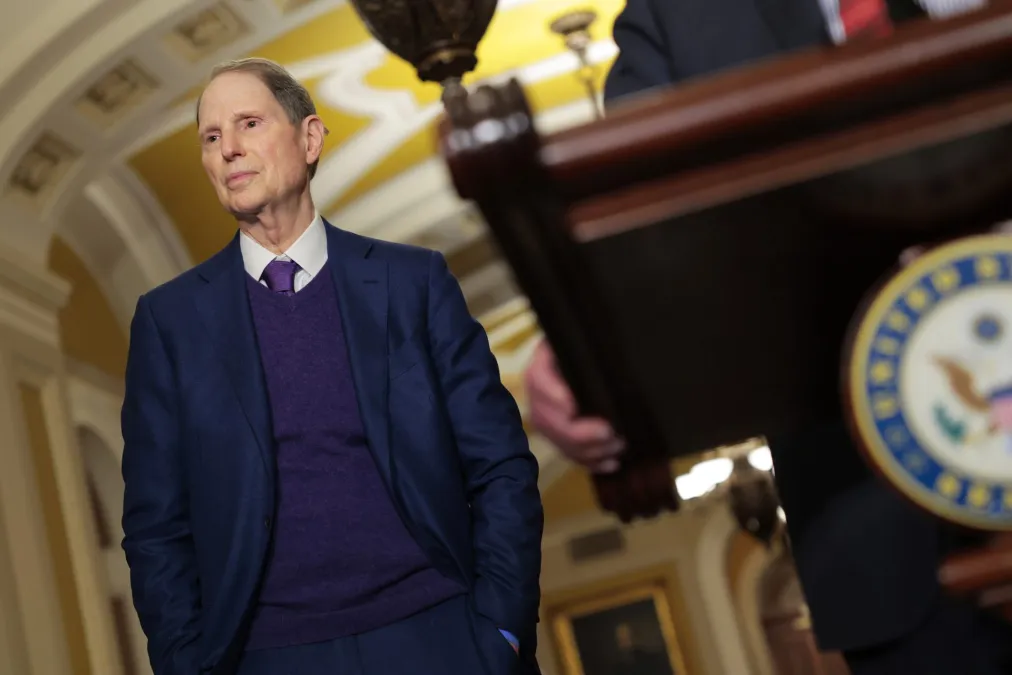
A bipartisan group has offered a more structural fix. Reps. Warren Davidson and Zoe Lofgren, along with Sens. Ron Wyden and Mike Lee, introduced the Government Surveillance Reform Act.
Its headline idea is straightforward: require the government to obtain a warrant to access Americans’ communications collected under Section 702.
It also targets a related modern workaround: buying personal data from private companies. The proposal would bar the government from purchasing Americans’ data from brokers without a warrant, and it would impose warrant requirements tied to sensitive categories such as location data, web browsing data, search and chatbot records, and car onboard data.
Rep. Davidson put the constitutional point plainly: “Constitutional conservatives and progressive liberals don’t agree on much, but we agree that the government shouldn’t be able to intentionally search Americans’ communications or track their movements for domestic law enforcement purposes without a warrant.”
Sen. Wyden’s warning is about scale and new tooling: “Passing FISA 702 without strong new guardrails, while doing nothing to stop the government from buying Americans’ location data and feeding it into AI systems to conduct unprecedented mass surveillance, would be shocking negligence.”
The case for a clean extension
Supporters of a clean renewal argue that Section 702 produces intelligence that is difficult to replace quickly and that delays could carry real risk. Rep. Jim Himes has defended renewal by emphasizing the program’s role in stopping threats, writing that letting 702 lapse “would put the American people at severe risk,” and saying it is used to “thwart terrorist attacks, to stop fentanyl traffickers and to identify foreign spies.”
Himes also offered a condition for his support: “If I saw any evidence that Trump administration officials were directing the intelligence community to use Section 702 for illegal or improper purposes, such as to persecute, surveil, or harass Americans, I would urge a ‘no’ vote on reauthorization, even though I recognize the program’s unparalleled national security value.”
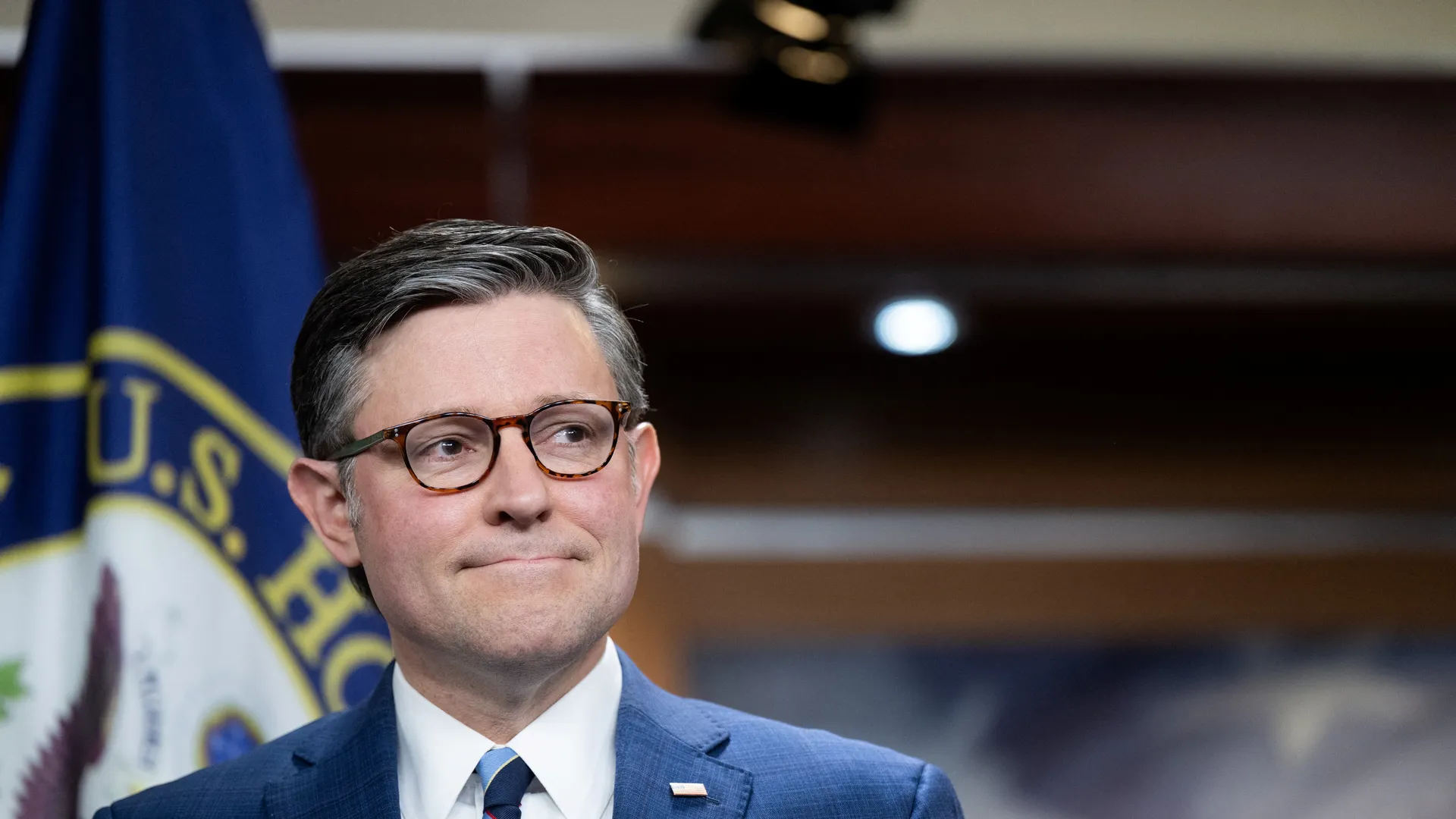
On the Republican side, Speaker Mike Johnson has called a warrant requirement “unworkable,” and argues the 2024 reforms were sufficient.
Why oversight is not enough
A key divide in this debate is whether internal compliance processes can substitute for a warrant signed by a judge.
Privacy advocates point out a recurring pattern: Congress adds reporting requirements or internal procedures, and then later learns that agencies still performed noncompliant queries. Even where audits exist, the public typically learns about failures long after the fact, and often only through declassified summaries.
The dispute is not abstract. After being confronted by protesters at a town hall, Himes said the NSA and other foreign intelligence agencies do not buy Americans’ commercial data. But Sen. Wyden released classified documents revealing that the NSA does in fact buy Americans’ internet records. And as Kash Patel admitted in a hearing before the Senate Intelligence Committee, so does the FBI.
Jake Laperruque of the Center for Democracy and Technology has argued that the current system depends too heavily on executive branch good faith and that meaningful auditing mechanisms have been weakened. In his words: “If something goes wrong in the future, or if things start to get abused in the future, we don’t have the tools to be made aware of it, let alone to stop it.”
The bottom line
When you strip away the slogans, the constitutional question is not whether the government may ever surveil. It is whether searching for an American’s communications inside a foreign-intelligence database should be treated like a serious intrusion that requires a judge’s permission.
In library terms, a “clean extension” asks the public to trust the same institution that holds the records to also set the rules for searching them. A warrant requirement shifts that decision to an outside referee, which is exactly what the Fourth Amendment’s warrant process is designed to do.
With an April 20 expiration approaching, Congress can renew Section 702, reform it, or let it lapse. But the lasting question voters should keep in mind is uncomplicated: if the government wants to look for your communications, should it have to convince a judge first?