
A recently fired top official from the Justice Department’s Antitrust Division has accused his former superiors of corruption, alleging they allowed “corrupt lobbyists” to pervert justice in the handling of a major technology merger.
Roger Alford, the former No. 2 official in the division, delivered a blistering speech on Monday, framing his dismissal as a battle between “the rule of law or the rule of lobbyists.”
His allegations are not just a tale of a personnel dispute; they are a grave warning about the integrity of our justice system and a profound test of the constitutional duty to faithfully execute the law.
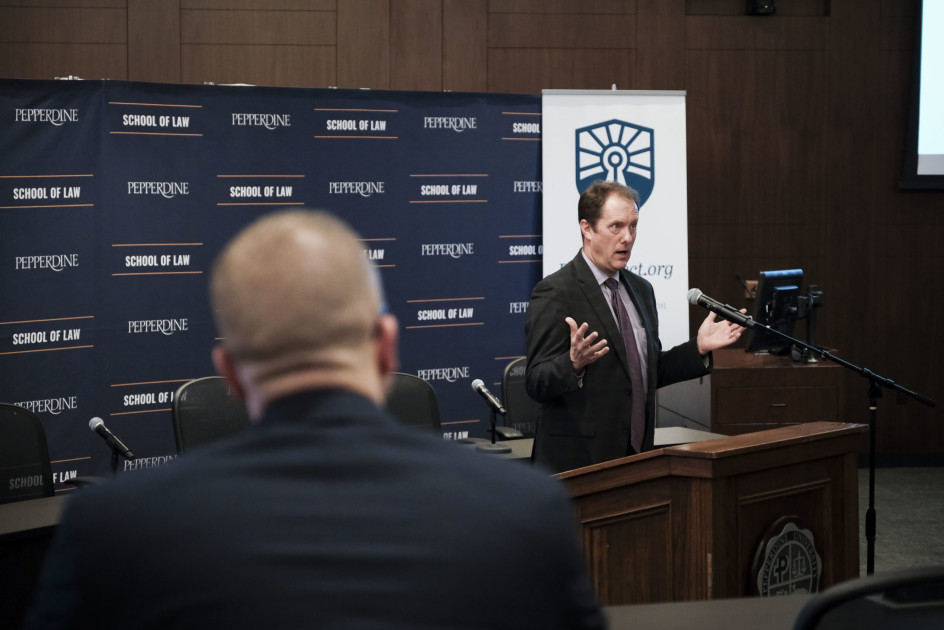
An Accusation from the Inside
Alford, who has now returned to his position as a law professor at Notre Dame, claims he was fired for “insubordination” after he resisted efforts by lobbyists for the tech company HPE to settle its merger with Juniper.
He alleges that senior leaders at the DOJ, specifically Attorney General Bondi’s Chief of Staff and the nominee for Associate Attorney General, “perverted justice and acted inconsistently with the rule of law” by caving to this outside pressure.
“The Department of Justice is now overwhelmed with lobbyists with little antitrust expertise going above the Antitrust Division leadership seeking special favors with warm hugs,” Alford said.
He described the internal dynamic as a struggle “between genuine MAGA reformers and MAGA-in-Name-Only lobbyists,” making it clear that his is an accusation from a conservative who believes the administration’s own principles are being betrayed from within.
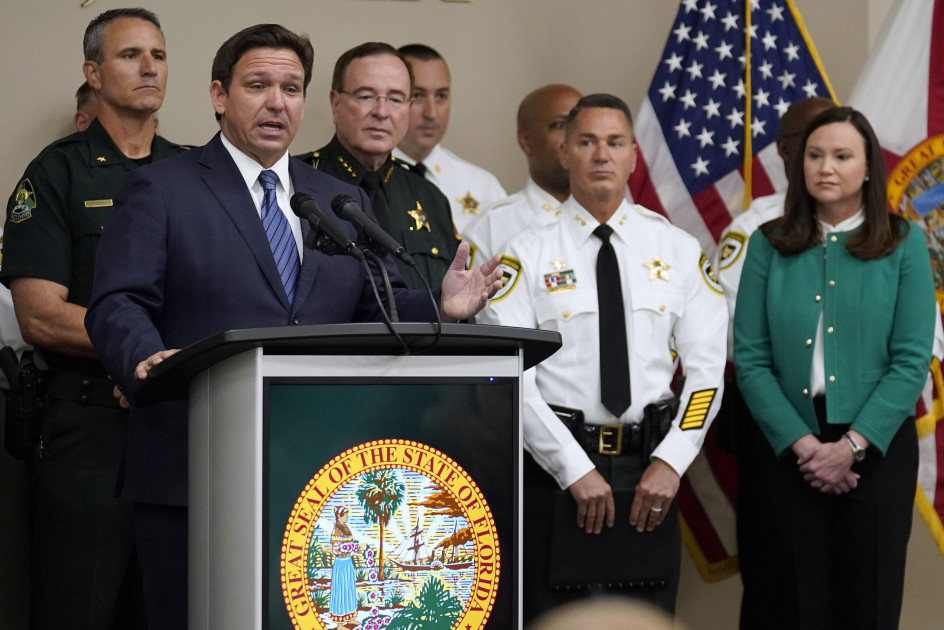
The Constitutional Duty to “Faithfully Execute” the Law
This is, at its core, a constitutional crisis. The nation’s antitrust laws, such as the Sherman and Clayton Acts, are the law of the land. The President and his Attorney General have a sworn duty under Article II’s Take Care Clause to see that these laws are “faithfully executed.”
Alford’s allegation is a direct charge that this constitutional duty has been abandoned. He is claiming that the impartial, evidence-based enforcement of antitrust law has been subordinated to the influence of politically connected lobbyists. This is a claim that justice itself has been compromised.
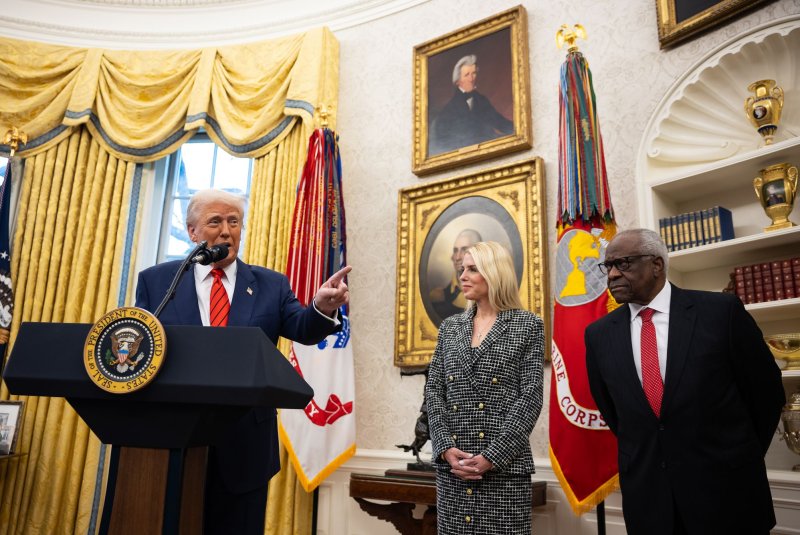
A Forgotten Check: The Power of the Tunney Act
In his speech, Alford appealed to the judiciary to intervene, invoking a powerful but often overlooked law: the Tunney Act of 1974. This post-Watergate reform was designed for exactly this kind of situation. It gives a federal judge the authority to review and potentially reject an antitrust settlement agreed to by the DOJ if the judge determines it is not in the “public interest.”
Alford’s public plea – “I hope the court blocks the HPE/Juniper merger. If you knew what I knew, you would hope so too” – is a call for the judicial branch to exercise its statutory duty to act as a final check on a potentially corrupt executive branch action.
He also called on state attorneys general to consider joining federal cases “as a check on influence peddling,” a plea for federalism to act as a backstop against federal corruption.
Roger Alford’s speech has pulled back the curtain on a fierce internal battle for the soul of the Justice Department. His allegations, and his appeal to the courts and the states to intervene, are a grave test of our system’s ability to police itself. The fate of this multi-billion-dollar merger may now rest in the hands of a single federal judge, who has been asked to be the final guardian of the rule of law.