When a drug kills this many Americans, it stops being just a “crime problem.” It becomes something closer to a sovereignty test. That is the argument South Carolina Attorney General Alan Wilson is forcing the country to face: fentanyl is not only a public health catastrophe, it is a national security threat that rides on a financial pipeline we have been slow to treat like an adversarial supply line.
Here is the hard civics question hiding in plain sight: if an overseas-connected system can reliably poison Americans, launder the profits, and keep doing it year after year, what exactly are we defending with our borders, our agencies, and our laws?
Join the Discussion
The numbers are not routine
Wilson points to a grim statistic from his own state: fentanyl was responsible for more than 70% of overdose deaths in South Carolina in 2023. That is not a marginal uptick. That is a takeover.
He also describes prosecuting cases where a single trafficking operation brought enough fentanyl into South Carolina “to kill half a million people.” You do not have to accept every flourish in political rhetoric to recognize the underlying point: at fentanyl potency, volume is not measured in bricks. It is measured in body counts.
Follow the money
We talk about the drug. We show photos of pills. We debate the border. Meanwhile, the machinery that keeps the enterprise alive is financial.
Wilson describes a money-laundering network moving an estimated $100 million every single week. That figure matters for one reason: it tells you the fentanyl trade is not a scattered set of street deals. It is an industrial model with accounting, brokers, and logistics. And like any industry, it collapses when you choke off payment, communication, and conversion to usable cash.
This is where national security language stops sounding dramatic and starts sounding descriptive. When a transnational network can repeatedly extract nine figures a week from inside the United States, that is not merely “proceeds of crime.” It functions as a strategic revenue stream.
The app gap
Wilson’s focus is not simply on chemical precursors or cartel violence, but on the quiet middle layer that makes the whole machine run: payment platforms and encrypted communications.
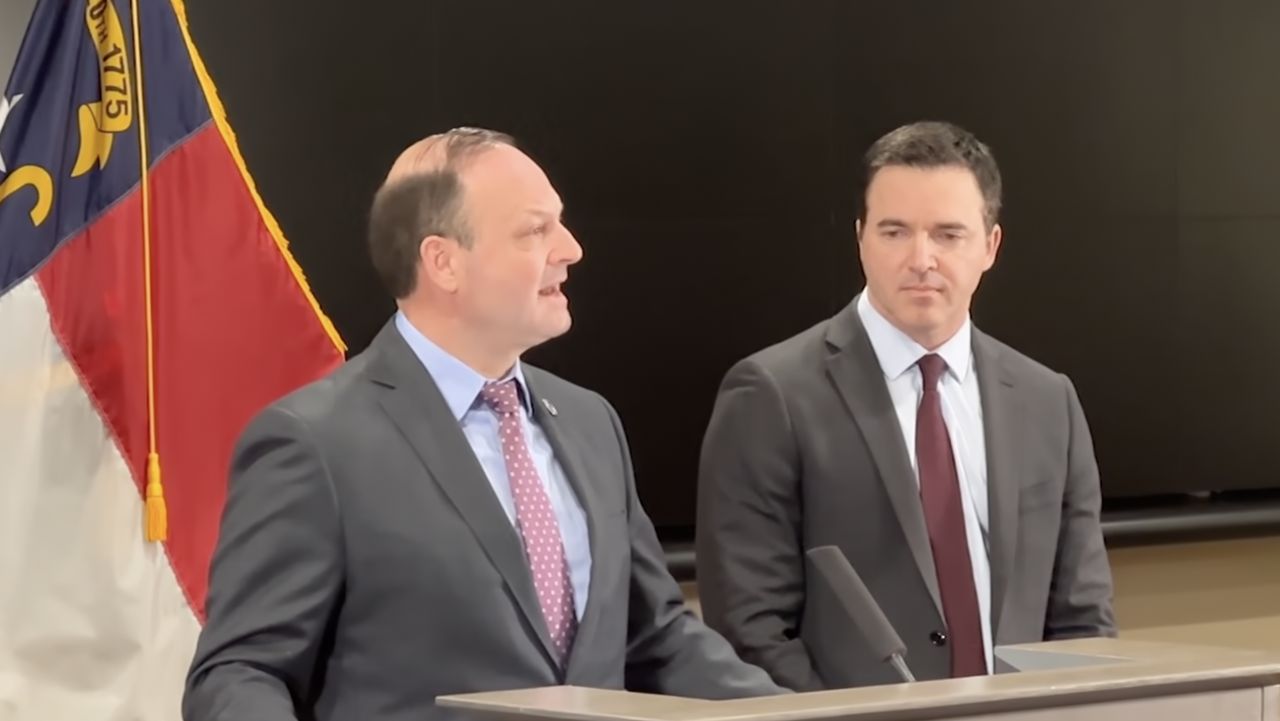
Over the past year, he says a bipartisan coalition of attorneys general led by North Carolina Attorney General Jeff Jackson and Wilson pushed for cooperation from WeChat and secured progress, including faster response times and stronger monitoring tools. But he singles out an ongoing gap: WeChat’s China-based sister app, Weixin, still operates under Chinese data privacy laws and does not adequately respond to U.S. law enforcement requests.
Put in plain English, the complaint is this: if money brokers sit overseas, and the relevant data sits behind a foreign legal wall, American investigators are left knocking on a door that never has to open.

A global pipeline
Wilson describes a supply chain with roles that span borders: Chinese labs produce precursor chemicals, Mexican cartels manufacture and distribute the drugs, and digital platforms help move the money. That structure matters because it clarifies what kind of problem this is.
Local policing alone cannot “solve” an international pipeline. And public health alone cannot dismantle a money-laundering architecture. This is a blended threat, which is why Wilson frames it as gray-zone warfare: pressure applied through proxy networks, technology, financial systems, and cyber warfare rather than open conflict.
Wilson’s core claim is that this is not accidental. It is strategic. You do not have to assume every actor shares the same intent to recognize the operational reality he is highlighting: the system functions, it is durable, and it adapts faster than ordinary bureaucracy.
What the Constitution has to do with it
Everything. Because once a nation calls something “national security,” power moves. Fast. Sometimes too fast.
Calling fentanyl a national security threat invites a broader toolkit: diplomacy, sanctions, intelligence collection, financial regulation, and coordinated federal-state enforcement. It also raises constitutional tensions Americans should anticipate instead of discovering in hindsight:
- Federalism: State attorneys general are on the front lines of prosecutions, but the cross-border elements demand federal muscle. The question is how to coordinate without turning every crisis into a federal takeover.
- Privacy and due process: “Follow the money” can become “vacuum the data.” Americans want traffickers caught, but they also have Fourth and Fifth Amendment rights that do not vanish when the word “security” enters the room.
- Foreign leverage over domestic enforcement: If critical evidence sits behind a foreign platform subject to foreign law, the United States faces an uncomfortable dilemma: accept partial enforcement, or escalate through diplomatic and economic pressure.
Wilson’s position, in effect, is that we have been treating a strategic threat with ordinary posture. That is why, he says, a coalition of attorneys general sent a letter to President Donald Trump urging the federal government to make fentanyl-related money laundering on payment apps an immediate national security priority and to work with Chinese counterparts to stop the flow of fentanyl trafficking.
The question to stop dodging
Here is the question that should not be avoided: if the United States can track terrorist financing across continents, why do we tolerate a fentanyl financing ecosystem that, by Wilson’s estimate, moves $100 million every single week while Americans keep dying?
Maybe the answer is capability. Maybe it is politics. Maybe it is the legal complexity of cross-border data. But whatever the reason, it is not a law of nature. It is a choice.
Wilson is right about one foundational point: if you want to reduce the poison, you have to starve the business. That means treating the money brokers, the laundering channels, and the foreign chokepoints as part of the battlefield. Not metaphorically. Operationally.