
Most constitutional fights between states and the federal government do not look like philosophical debates about federalism. They look like a lawsuit over a warning label, a city ordinance, or a state enforcement policy that collides with a federal program.
That collision has a name: federal preemption. It is the doctrine courts use to decide when valid federal law displaces state law, even if the state law was passed first, even if it is popular, and even if the state insists it is protecting the public.
Preemption is rooted in the Constitution’s priority rule for federal law: the Supremacy Clause (Article VI, Clause 2), which makes valid federal law “the supreme Law of the Land.” But preemption is not limited to constitutional theory. It is the day-to-day legal tool used in product liability cases, immigration disputes, labor regulation, employee benefits, health and safety rules, and the modern regulatory state.
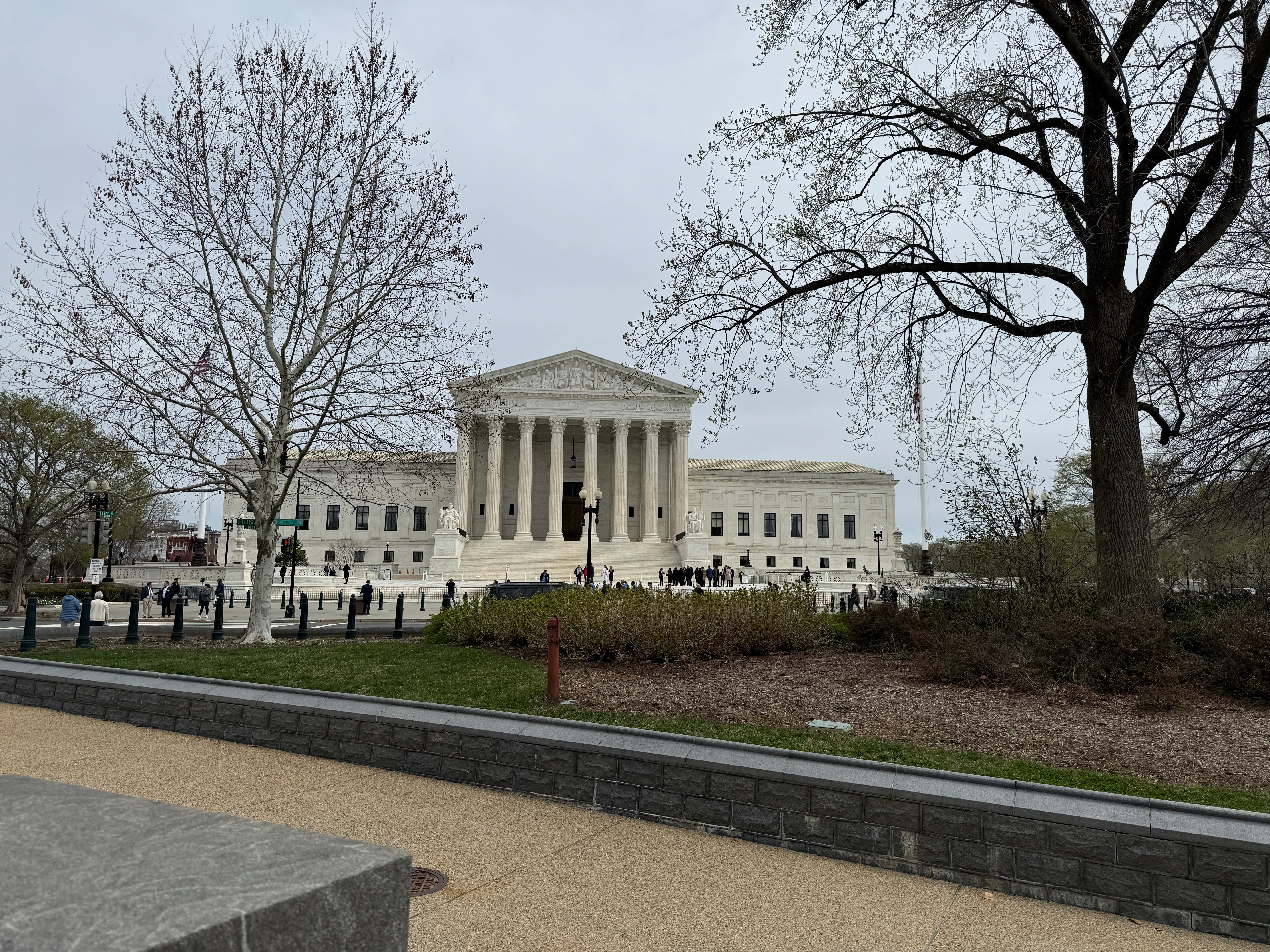
In practice, preemption turns a big question, who governs here, into something concrete: which rules a judge will enforce in a real case.
Join the Discussion
The basic question
Every preemption case boils down to one question:
Did Congress (or a federal agency acting with lawful authority) leave room for states to regulate this area, or did federal law push the states out?
Courts start from a practical reality: states have broad “police powers” to regulate health, safety, and welfare. At the same time, federal law can override those state rules when federal law is valid and meant to be controlling.
But “meant to be controlling” is where preemption lives. Sometimes Congress says it plainly. Sometimes courts infer it from structure, purpose, agency implementation, or unavoidable conflict.
Note on agency rules
Preemption is not limited to statutes. Federal regulations can also preempt state law when an agency is acting within authority Congress lawfully delegated, and when the regulation has the force of law. Whether and how much deference courts should give an agency’s preemptive intent can be contested, so the statute’s text and structure still do most of the work.
Express preemption
Express preemption happens when a federal statute includes an explicit sentence or clause that tells you state laws are displaced.
These clauses can be broad or narrow. Some wipe out nearly any state regulation “relating to” a subject. Others only preempt state requirements that are “different from or in addition to” federal standards.
Example: labeling and “different or additional” demands
Many federal consumer and safety statutes include language that prevents states from imposing labeling requirements that diverge from the federal scheme. The idea is uniformity: a product sold nationwide should not need 50 different labels.
But even an express clause raises hard questions. What counts as a “requirement”? Does a state tort lawsuit function like a “requirement” if a jury verdict pressures a company to change a label nationally? The Supreme Court has treated those questions differently across regulatory contexts, which is why express preemption can still be a litigation minefield.
Savings clauses: the counterweight
Some statutes pair an express preemption clause with a savings clause that says certain state-law claims or remedies are preserved. That combination can create interpretive tension: courts must decide how to give real meaning to both provisions without letting either swallow the other.
Reading tip
In express preemption cases, the fight is usually not about whether the clause exists. It is about what the clause means, and how far it reaches.
Implied preemption
Implied preemption is what courts apply when federal law does not include an explicit preemption clause, but the structure or operation of federal law suggests states cannot regulate in the way they are trying to regulate.
Implied preemption has two major forms:
- Conflict preemption (federal and state law cannot peacefully coexist in practice)
- Field preemption (the federal scheme is so comprehensive that the field is essentially federal-only)
Both forms are controversial in their own way because they ask judges to infer displacement from silence, structure, or practical consequences.
Conflict preemption
Conflict preemption arises in two familiar situations.
1) Impossibility
This is the cleanest version: a private party cannot comply with both state and federal law at the same time.
If federal law requires you to do X and state law forbids X, the state prohibition generally gives way.
2) Obstacle
Even when it is technically possible to comply with both, state law may be preempted if it stands as an obstacle to accomplishing Congress’s objectives.
This version tends to generate the most debate because it forces courts to identify the federal purpose and then decide whether the state rule undermines it.
Drug labeling as a battleground
Drug labeling disputes are where preemption stops being abstract. Consider the competing pressures:
- Federal regulators approve drug labels with specific warnings and language.
- States allow tort lawsuits arguing that a company should have warned more strongly, sooner, or differently.
The Supreme Court has drawn important distinctions here.
- In Wyeth v. Levine (2009), the Court rejected preemption on the facts before it for a brand-name drug failure-to-warn claim. The reasoning emphasized that federal labeling rules often allow manufacturers to strengthen warnings without prior approval (through the CBE process), so compliance with both systems was not impossible on that record. The Court also declined to treat the state claim as an impermissible obstacle to federal objectives in that case.
- In PLIVA, Inc. v. Mensing (2011), the Court held that many analogous failure-to-warn claims against generic manufacturers are preempted because federal law requires generics to match the brand label. A state rule demanding a different warning puts the generic maker in an impossible position.
- In Mutual Pharmaceutical Co. v. Bartlett (2013), the Court extended that logic to certain design-defect claims involving generics where liability would effectively require changing the drug’s composition or labeling. The Court also rejected the idea that a manufacturer can avoid impossibility by simply leaving the market (the “stop-selling” rationale).
Notice the pattern: the preemption result turns less on who is right about safety and more on whether federal law leaves the regulated party legal room to do what the state rule demands.
Field preemption
Field preemption is the broadest implied form. It applies when federal regulation is so comprehensive that courts conclude Congress meant to occupy the field, leaving no room for state law even if the state law is consistent.
The classic field-preemption argument sounds like this:
This is a subject that requires a single national rule, and Congress built one.
Field preemption is not limited to one area, but it appears most often in subjects with heavy federal regulation, national security implications, or strong national uniformity interests.
Immigration
Immigration enforcement overlaps are a recurring preemption flashpoint because states and cities experience the consequences of federal policy directly, but immigration is also a core federal responsibility.
The Supreme Court’s modern touchstone is Arizona v. United States (2012). Arizona enacted several enforcement provisions meant to complement federal immigration law. The Court struck down key parts as preempted, reasoning that:
- Some provisions intruded into a field where the federal government had created a comprehensive framework.
- Other provisions conflicted with federal discretion and priorities, creating an obstacle to federal objectives.
At the same time, the Court allowed one provision to go into effect initially, the one requiring officers to make a reasonable attempt to verify immigration status during lawful stops, while leaving open the possibility of future challenges based on how it was enforced.
The lesson is not “states cannot touch immigration.” The lesson, consistent with the Court’s reasoning, is that states cannot convert federal immigration law into a state-run system with its own penalties, priorities, or workarounds around federal discretion.

Field and conflict preemption often travel together in immigration cases because federal law is both extensive and built around executive discretion, not just fixed rules.
Labor and employment
Preemption in labor law can feel counterintuitive because some federal laws are designed to create minimum protections while allowing states to go further, while others aim for a uniform national framework that limits state interference.
NLRA preemption
The National Labor Relations Act (NLRA) is a major source of labor preemption. The Supreme Court’s NLRA preemption doctrines are often grouped under two labels:
- Garmon preemption (states generally cannot regulate conduct that is arguably protected or prohibited by the NLRA, because the NLRB is the primary forum).
- Machinists preemption (states generally cannot regulate conduct Congress meant to leave to the “free play” of economic forces in collective bargaining).
That is why certain state attempts to regulate union organizing tactics, employer responses, or bargaining conduct can be preempted even if the state frames the issue as workplace fairness or public order.
When federal law sets a floor
Other federal labor statutes, like the Fair Labor Standards Act (FLSA), typically operate as a floor. States can and often do set higher minimum wages or stronger overtime protections. The absence of broad preemptive language matters, and so does statutory design.
A quick way to spot the difference
- If Congress built an expert federal forum to resolve disputes (like the NLRB for many NLRA matters), courts are more likely to see a preempted field or a preempted category of disputes.
- If Congress built baseline protections and assumed states would still regulate local working conditions, preemption is less likely.
Other common examples
Preemption is everywhere once you start looking for it. Two recurring examples:
- Employee benefits (ERISA): ERISA contains a famously broad preemption clause for state laws that “relate to” employee benefit plans, alongside a savings clause for certain state insurance regulation. The result is a long-running body of litigation over what states can still regulate.
- Air travel (Airline Deregulation Act): The ADA preempts many state laws “related to” airline prices, routes, or services, often wiping out state consumer-protection or tort theories that would effectively impose state-by-state standards on airlines.
Those areas illustrate a recurring theme: when Congress prioritizes national uniformity, preemption doctrine becomes the enforcement mechanism.
Preemption is not always federal wins
It is tempting to treat preemption as a one-way ratchet toward federal power. In practice, preemption is more like a translation exercise: courts translate congressional choices into a boundary line for state law.
That means you will see all of the following outcomes, depending on text, structure, and context:
- No preemption: states can regulate alongside federal law.
- Narrow preemption: only state rules that differ from federal standards are displaced.
- Broad preemption: a large category of state regulation is wiped out.
- As-applied fights: a state law is not preempted on its face, but becomes preempted in operation because it interferes with federal objectives or creates unavoidable conflict.
Preemption doctrine is also shaped by a recurring judicial instinct: the presumption against preemption. Courts often say they require a clear signal before assuming Congress intended to displace traditional state powers, especially in areas like health and safety. But what counts as a clear signal varies by statute, context, and judge, so the presumption does not end the argument. It frames it.
How it shows up in lawsuits
You do not need a constitutional showdown to meet preemption. It is baked into ordinary litigation:
- Product liability: a plaintiff alleges a product should have had different warnings; the defendant argues federal regulation controls the label.
- State enforcement: a state creates penalties or enforcement mechanisms that track, supplement, or compete with federal ones.
- Local ordinances: cities regulate in areas like transportation, employment rules, housing, or licensing, and businesses argue a federal statute blocks the ordinance.
In many of these cases, the constitutionality of the state law is not the issue. The issue is whether the state rule is legally displaced because Congress already decided how the subject should be regulated.
A simple checklist
If you are trying to read a headline and figure out what kind of preemption might be in play, these questions help:
- Is there an express preemption clause? If yes, most of the fight is about scope.
- Is there a savings clause too? If yes, the question becomes how the two provisions interact.
- Can the regulated party comply with both federal and state law? If not, impossibility conflict preemption is likely.
- Does the state rule frustrate federal objectives or discretion? That is the obstacle preemption argument.
- Did Congress build an unusually comprehensive regulatory system? That is where field preemption claims live.
- Is the state regulating a traditional local concern like health and safety? The presumption against preemption is often invoked here, and courts frequently demand clearer evidence of displacement.
Why it matters
Preemption decides whether a state can respond to a local crisis, whether a company faces 50 different compliance regimes, and whether injured plaintiffs can use state tort law to pressure safety changes that federal regulators did not require.
It is also one of the quiet mechanisms by which national policy becomes real. Congress can nationalize a standard without sending federal agents into every county, simply by writing rules that leave states with little left to regulate.
So when you hear that a state law was “blocked” because of federal law, it is often not a political slogan. It is preemption doing what it has always done: turning the question “who governs here?” into a concrete legal rule that wins cases and reshapes policy.