
On a quiet stretch of Manhattan’s East Side, a device ignited outside Gracie Mansion, the official residence of New York City Mayor Zohran Mamdani. By Sunday, the case had escalated from a local emergency response into a federal terrorism investigation, with the FBI’s Joint Terrorism Task Force taking the lead and terrorism charges reportedly pending.
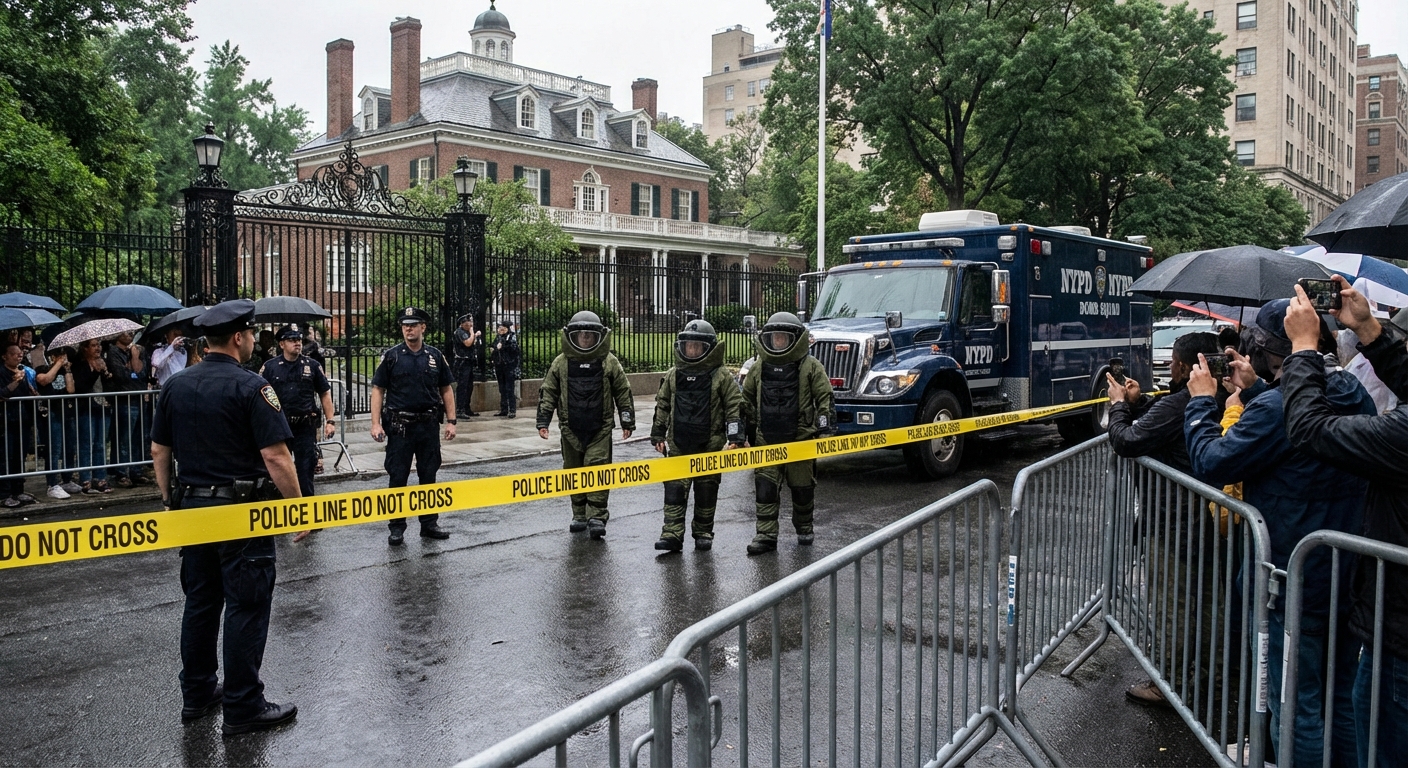
What happened outside Gracie Mansion
According to the NYPD, the incident unfolded amid dueling demonstrations near the mayor’s residence. Police Commissioner Jessica Tisch said an anti-Islam protest had been organized by people connected to Jake Lang, described as a pardoned Jan. 6 participant and far-right influencer. More than 100 counter-protesters also gathered.
Two young men from Pennsylvania were arrested after authorities say homemade explosive devices were brought to the scene and ignited. Law enforcement sources familiar with the investigation told CBS News the intent was to cause harm amid the conflict surrounding the protest.
Join the Discussion
Video detail investigators are weighing
Videos verified by the CBS News Confirmed team capture the chaos from the protests and show a man apparently yelling “Allahu Akbar” (“God is Most Great”) at the moment a protester identified as 18-year-old Emir Balat allegedly throws an ignited device. That detail is now part of the evidentiary backdrop as investigators assess motive and potential extremist inspiration.
Why investigators say it was not “just” smoke
In a statement Sunday, Tisch said one of the devices examined by investigators was not a harmless decoy. It was “an improvised explosive device (IED) that could have caused serious injury or death.”
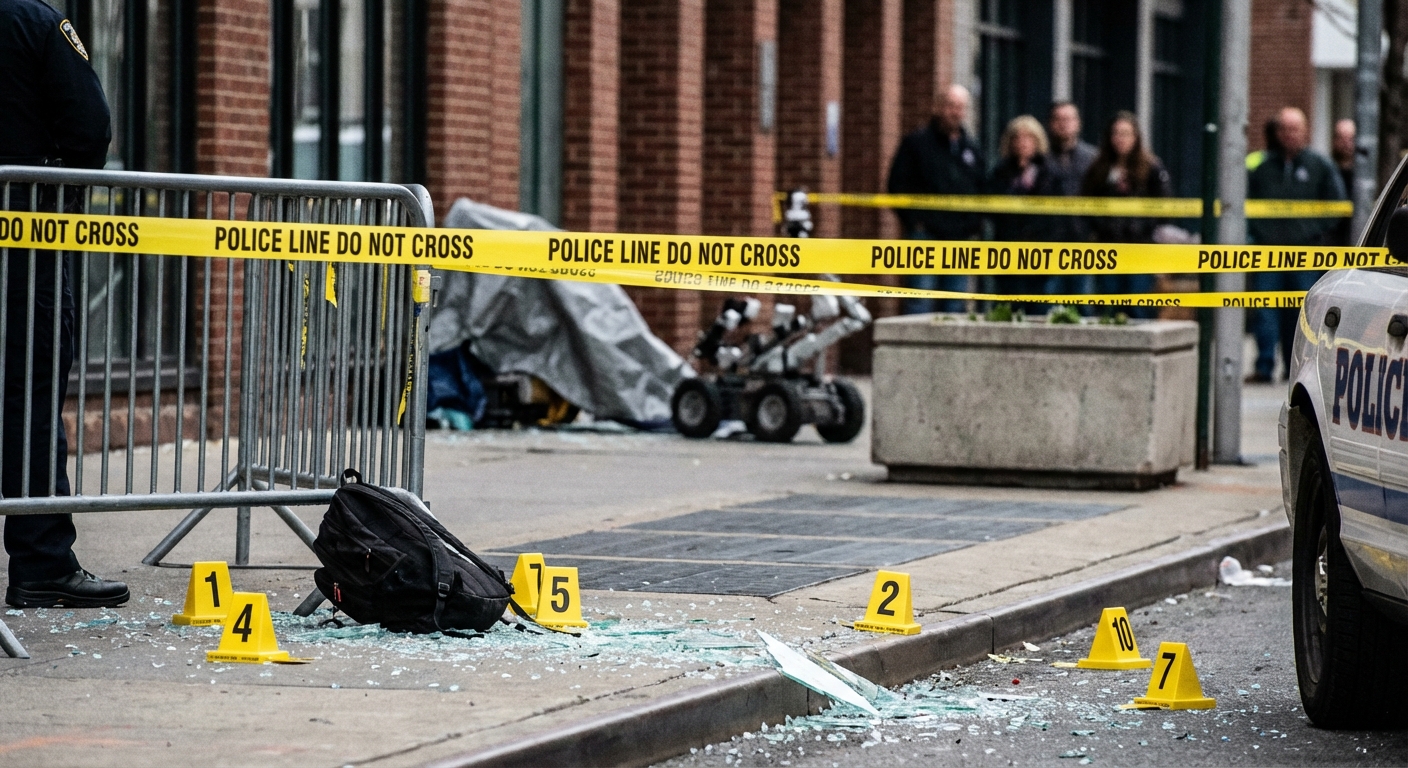
Law enforcement sources told CBS News the construction was designed to do more than make noise. The reported components included a sports drink bottle holding explosive material placed inside glass jars, with added fragmentation such as nuts and bolts. The fuse was reportedly connected to an M80-type firework.
Two sources told CBS News that the IEDs contained triacetone triperoxide (TATP), a highly unstable explosive compound that has been used in prior extremist plots worldwide. If that lab finding is confirmed publicly, it helps explain the federal urgency. TATP is not a substance associated with pranks or protest theatrics. It is associated with mass casualty potential.
Arrests and the timeline described by police
Tisch identified an 18-year-old, Emir Balat of Pennsylvania, as the person who allegedly threw the first ignited device. She said it hit a barrier and went out just a few feet from officers.
Police say Balat then fled, obtained a second device from 19-year-old Ibrahim Kayumi, lit it, ran, and dropped it. Both Balat and Kayumi were taken into custody.
Police also arrested a 21-year-old, Ian McGuiness, who allegedly used pepper spray on counter-protesters, along with three others for disorderly conduct and obstruction.
The federal angle
The FBI’s Joint Terrorism Task Force is now leading the investigation. Sources told CBS News that search warrants were expected to be executed in Pennsylvania and New Jersey.
Investigators are also reviewing potential extremist inspiration. Sources told CBS News they are examining whether at least one suspect may have been influenced by ISIS messaging.
Authorities are looking into overseas travel as part of that broader inquiry. Investigators are reviewing travel that included Balat’s trip to Istanbul from May 6 to Aug. 26, 2025, and Kayumi’s travel to Istanbul for several weeks in July and August 2024 and to Saudi Arabia in late March of that year.
A second device found nearby
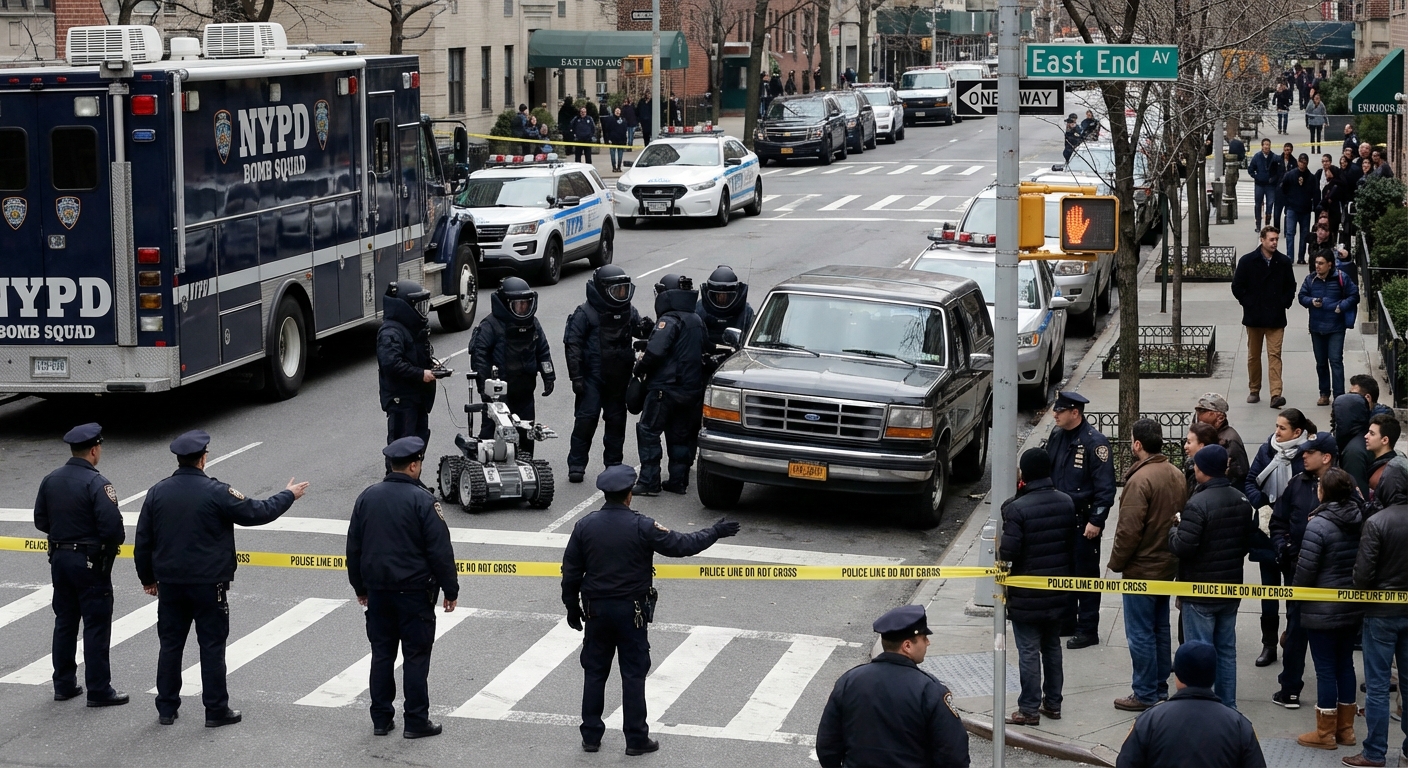
The incident did not end with the first response at Gracie Mansion. On Sunday, the NYPD said another suspicious device was discovered inside a vehicle on East End Avenue, about three blocks south of the mansion area. Police conducted limited evacuations while the Bomb Squad assessed the threat.
The NYPD later said the device was safely removed for additional testing.
Mamdani’s response
Mayor Mamdani condemned both the ideology behind the protest and the violence that followed. In a Sunday statement, he said the demonstration outside his residence was “rooted in bigotry and racism” and added, “It is an affront to our city’s values and the unity that defines who we are.”
He also drew a clear moral line around the use of explosives in political conflict, calling it “not only criminal” but “reprehensible and the antithesis of who we are.”
That distinction matters. The First Amendment makes room for protests that offend, even protests that feel ugly or inflammatory. It does not shield violence. And when a protest environment becomes a staging ground for an IED, the constitutional conversation shifts from public discourse to public safety, from persuasion to coercion.
What to watch next
- Charging decisions: With a terrorism investigation underway and charges reportedly pending, federal prosecutors will likely decide whether to proceed under terrorism statutes, explosives laws, or both.
- Lab confirmation: The NYPD said devices were sent to the FBI lab in Quantico. Public confirmation of the materials, including any finding of TATP, will shape both the legal strategy and the public understanding of the threat.
- Motivation evidence: Investigators are reportedly assessing potential ISIS inspiration. Verified video details will likely be evaluated alongside digital evidence, witness statements, and lab results as authorities argue intent and ideology.
- Security and protest management: New York City will face renewed questions about how to police volatile demonstrations near high-profile officials’ homes without chilling lawful speech.