
Most Americans think the presidential election ends on Election Night.
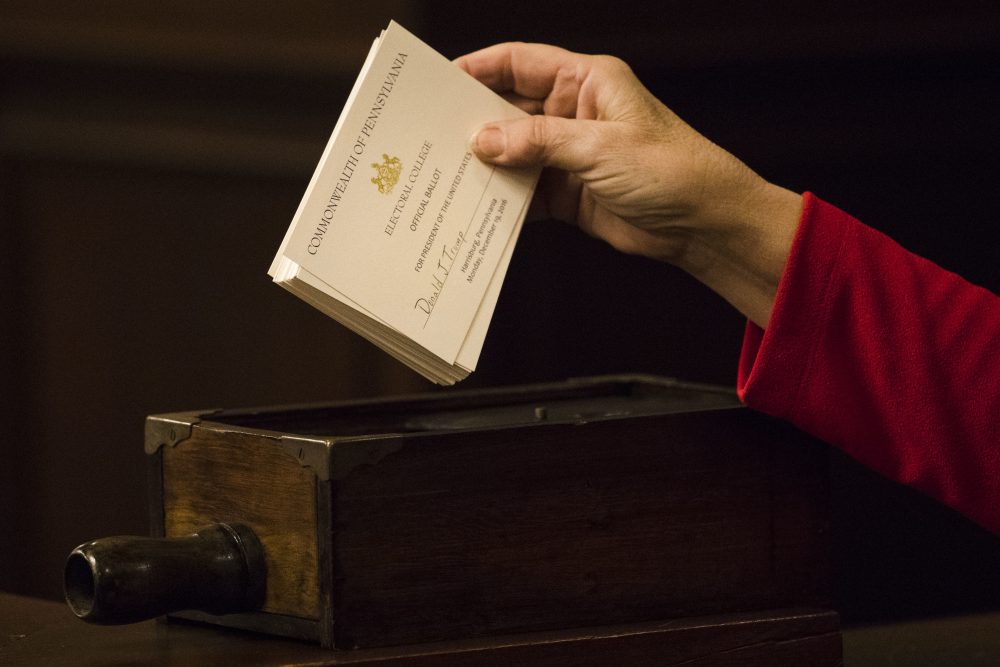
Legally, it does not. In most states, voters are not directly voting for President in a constitutional sense. They are choosing among slates of people called electors that are tied to each candidate or party ticket under state law. Weeks later, those electors meet and cast the votes that actually choose the President and Vice President.
That gap between what voters do and what electors do is where the phrase faithless elector lives. It sounds like a moral judgment. In practice, it is a technical label for an elector who does not vote for the candidate they pledged or were expected to support.
Join the Discussion
What presidential electors are
The Constitution does not call for a national popular vote for President. Instead, it creates the Electoral College.
Here is the simplified structure:
- Each state gets a number of electors equal to its total members in Congress (House seats plus two Senators). Washington, DC gets 3 electors under the 23rd Amendment.
- Voters in each state choose which candidate’s elector slate is appointed (almost everywhere, the statewide winner gets all of them). Maine and Nebraska use a district-based system.
- Those electors meet in their own states on a day set by federal law (currently in mid-December) and cast official votes for President and Vice President.
- Congress counts the votes in January, under procedures set by federal law.
The key point is that electors are real people, usually chosen by political parties, who perform a constitutional function on a specific day. They are not just numbers on a map.
What is a faithless elector?
A faithless elector is an elector who casts an Electoral College vote for someone other than the candidate they pledged or were expected to support.
Faithless votes have happened periodically throughout American history, but they have never changed the winner of a presidential election. They have mattered more as a stress test of the system: are electors independent constitutional actors, or are they functionaries carrying out the state’s voters’ decision?
That question becomes urgent in close elections, when even a handful of unexpected electoral votes could create chaos.
How state pledge laws work
Many states use some form of pledge law to bind electors to the state’s popular vote winner (or to the party’s nominee). The details vary, but states commonly do one or more of the following:
- Require a pledge as a condition of being chosen as an elector.
- Impose a penalty (like a civil fine) if an elector votes contrary to the pledge.
- Remove and replace an elector who attempts to vote for someone else, through a rule that treats the position as vacated and allows a substitute elector to be appointed.
Other states have weaker rules or rely mostly on party vetting, party rules, and political pressure.
Why does the legal mechanism matter? Because an elector “going rogue” can look very different depending on the state. In some places, a faithless vote is recorded and punished after the fact. In others, the elector is removed or replaced before a deviant vote can be finalized and transmitted.
The Supreme Court’s answer in Chiafalo v. Washington
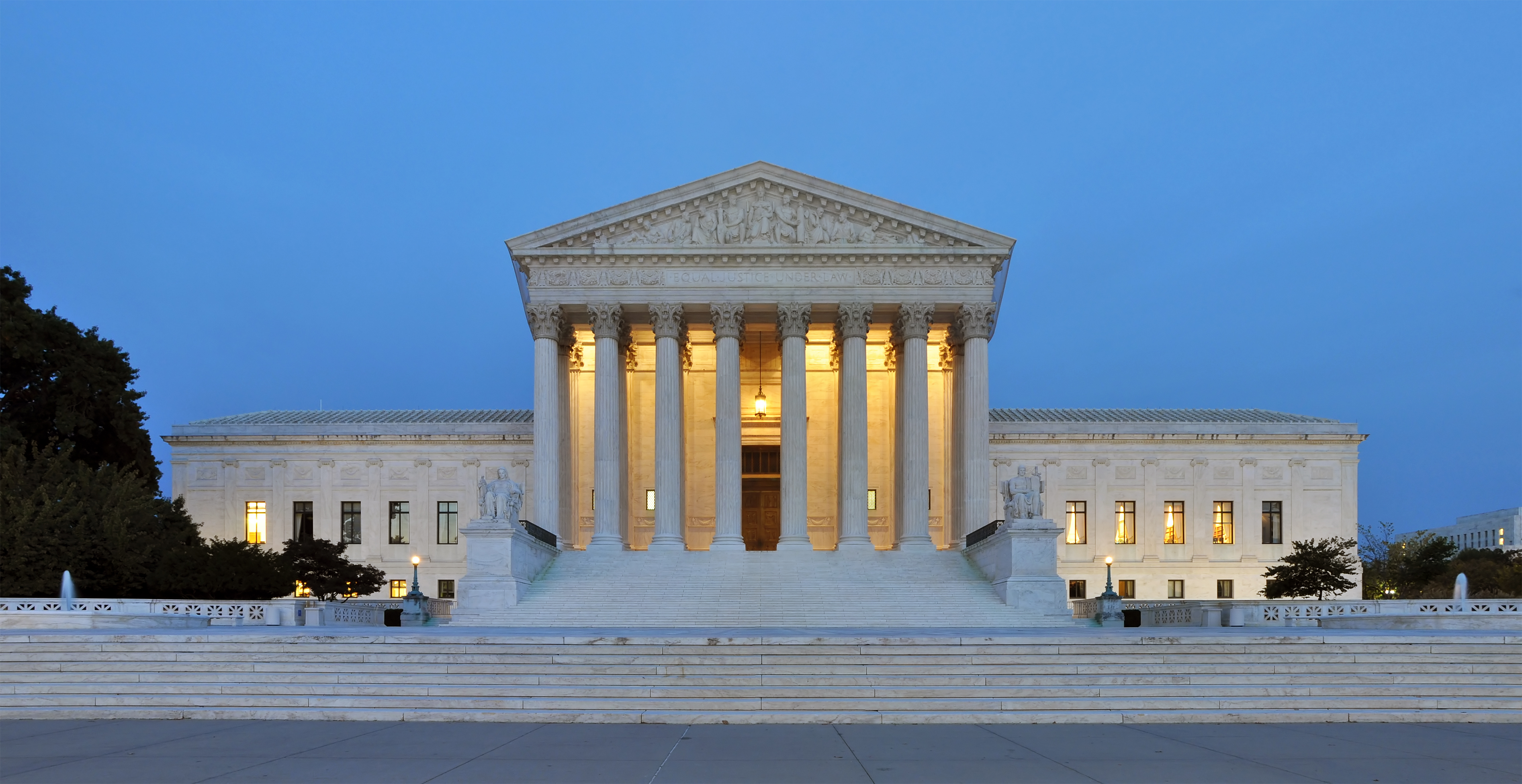
Chiafalo v. Washington (2020) asked a direct question: Can a state enforce an elector’s pledge to support the state’s popular vote winner?
In 2016, Washington State’s voters chose Hillary Clinton. Three Washington electors voted for someone else, casting their presidential ballots for Colin Powell. The state fined them under its pledge enforcement law. The electors challenged the fines, arguing that the Constitution gives electors discretion to vote as they choose.
What the Court held
The Supreme Court unanimously upheld Washington’s law. In plain language, the Court said:
- States may require electors to pledge to support the state’s winner.
- States may enforce that pledge, including by penalizing faithless electors.
The Court’s reasoning leaned on constitutional text and long practice. Article II gives states power to appoint electors “in such Manner as the Legislature thereof may direct.” The Twelfth Amendment describes how electors vote, but it does not explicitly grant them a personal right to vote against the state’s rules. Historically, states have treated electors as agents for the voters’ choice, not free agents making an independent selection.
On the same day, the Court also resolved a related Colorado dispute (Colorado Department of State v. Baca) consistent with the same principle, reinforcing that states can use real enforcement tools, including replacement, when state law provides for it.
What Chiafalo did not do
Chiafalo did not rewrite the Electoral College or settle every election dispute. It resolved a narrower, practical issue: when a state has a binding rule, the Constitution does not forbid the state from enforcing it.
Why this still matters
It is tempting to file faithless electors under “weird constitutional trivia.” But the topic keeps reappearing for a reason: presidential elections are decided by a formal process with multiple points where law and politics intersect.
Chiafalo makes one part of that process sturdier in states that choose to bind electors. If a state wants its electors to mirror the state’s certified result, it can generally do that.
Also, it helps to keep categories straight. A faithless elector scenario involves an elector trying to cast an unexpected vote. That is different from “alternate elector” controversies, which involve competing slates and disputes over certification and which electors are valid in the first place.
So the continuing relevance is less about predicting mass defections and more about understanding what the Constitution allows states to control, and what happens when the political system is under strain.
Quick FAQ
Are electors supposed to be independent?
Some early theories imagined electors using personal judgment. In modern practice, electors are chosen precisely because they are loyal to a party ticket. The Supreme Court in Chiafalo treated elector independence as optional at best, not constitutionally required.
Can an elector vote for anyone?
It depends on state law. In states with binding pledge enforcement, an elector may be fined, removed, or replaced for attempting to vote differently. In states without enforcement, a faithless vote may be counted, though other state rules could still apply.
Is a faithless elector vote valid?
If state law allows it or does not prevent it, the vote may be recorded and sent to Congress. If state law removes or replaces the elector before the vote is finalized, the would-be “faithless” vote may never exist legally.
What did Chiafalo v. Washington actually decide?
That states may enforce elector pledges. Washington could fine electors for breaking their pledge, and that enforcement did not violate the Constitution. Taken together with the Colorado case decided the same day, the Court also confirmed that states can keep electors in line using practical enforcement mechanisms, including replacement, when state law authorizes it.
Did the Supreme Court decide this only for Washington?
No. The ruling interprets the Constitution and applies nationwide, meaning other states can adopt and enforce similar laws.
Could this matter in a close election?
Yes, without assuming any particular outcome. Close elections magnify every procedural step. Knowing whether a state can bind electors helps clarify what is and is not legally on the table when disputes arise.
The bottom line
The Electoral College is not a metaphor. It is a scheduled legal event carried out by named individuals under state rules.
Chiafalo v. Washington confirmed that states can treat electors less like independent decision-makers and more like messengers for the voters’ choice, and can enforce that expectation with real consequences. That does not end election controversy. But it draws a clearer constitutional boundary around one of the system’s most misunderstood actors.