
Most federal appellate cases in the U.S. courts of appeals are decided by three judges.
That is not a fun fact. It is the structural reality that makes “en banc” review so powerful. When a federal court of appeals sits en banc, it is the circuit speaking with a bigger voice, sometimes with enough force to overrule its own past decisions and reshape the law for millions of people at once.
But en banc is also rare, procedural, and often misunderstood. It is not “another appeal.” It is a rehearing inside the same appellate court, under strict rules, usually on the same record and briefing universe, for issues the court thinks it cannot afford to get wrong.
Join the Discussion
Panel vs. en banc
What a panel is
In the federal courts of appeals, cases are typically heard and decided by a three-judge panel drawn from the judges of that circuit, sometimes with a senior judge included. The panel hears argument (or decides the case on the briefs) and issues an opinion or disposition.
A published panel opinion is binding precedent within the circuit unless and until it is overruled by the Supreme Court or the circuit sitting en banc, or effectively displaced by intervening Supreme Court authority (and sometimes intervening statutes). Unpublished or nonprecedential dispositions still bind the parties, but generally do not create binding circuit precedent.
What en banc is
En banc is French for “in full bench.” In U.S. practice, it means the case is reheard by the court acting as a whole, rather than by three judges, subject to statutory and local-rule details.
- In most circuits, en banc means all active judges participate.
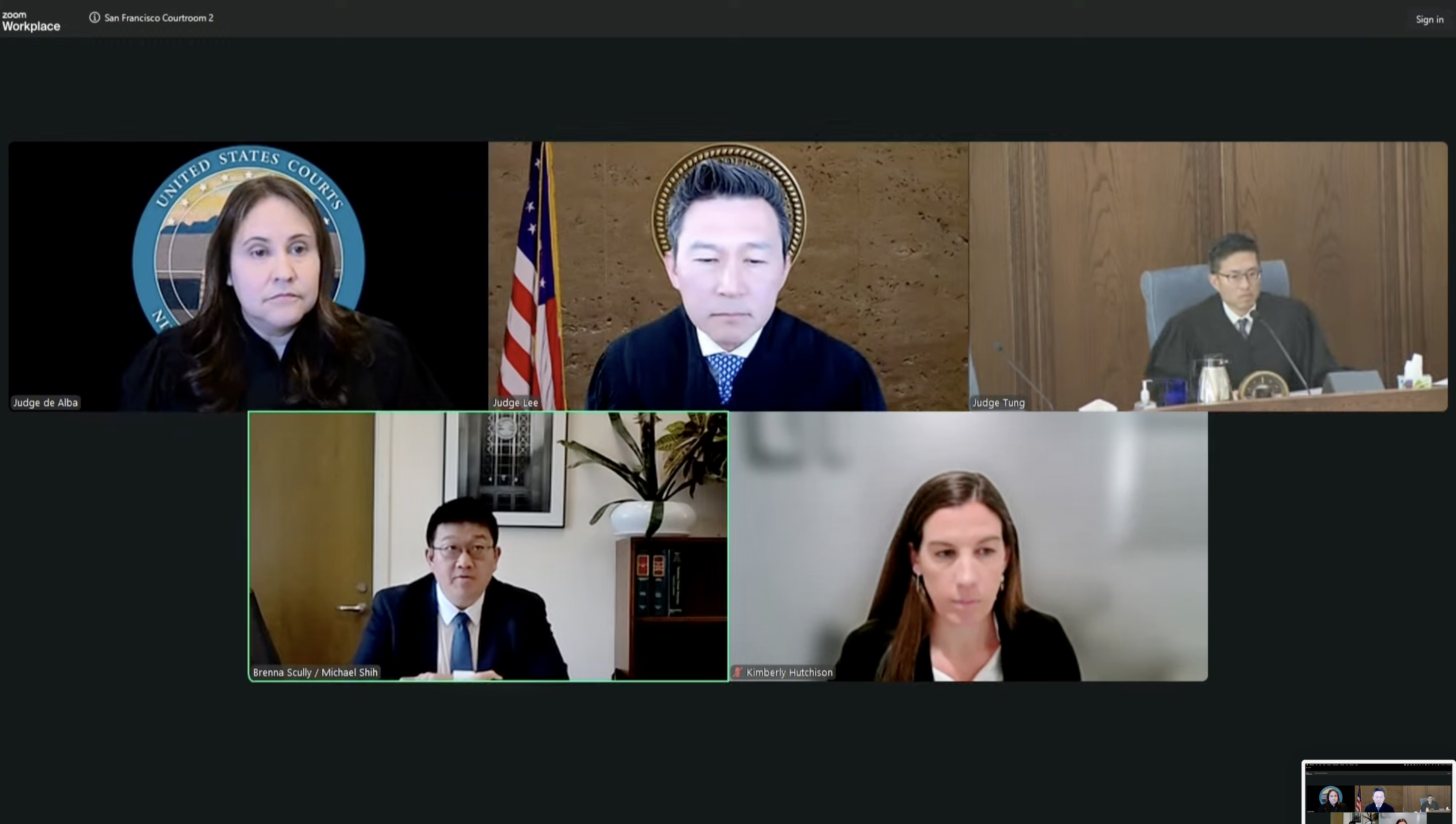
- In the Ninth Circuit, en banc typically means an limited 11-judge en banc court (because the court is so large), not every active judge at once.
Who participates can be more technical than people expect. As a general rule, active judges vote on whether to take a case en banc. Senior judges usually do not vote on whether to rehear en banc, but under 28 U.S.C. § 46(c) and local practice, a senior judge who sat on the original panel may be eligible to sit on the en banc court in that case.
En banc review is governed primarily by Federal Rule of Appellate Procedure 35 (plus Rule 40 on rehearing and each circuit’s local rules and internal operating procedures).
When en banc rehearing is allowed
En banc rehearing is not meant to fix ordinary mistakes. Rule 35 frames it as an exceptional tool.
The two classic grounds
- To maintain uniformity of the court’s decisions. In plain English: the panel opinion conflicts with a prior decision of the same circuit, and the conflict matters.
- The proceeding involves a question of exceptional importance. This is the category people quote most often, and it covers issues with broad consequences, high stakes, or major doctrinal uncertainty.
What “exceptional importance” looks like
Courts do not publish a checklist, but en banc candidates often share a few traits:
- The panel decision creates or deepens a split with other circuits.
- The panel decision affects large numbers of cases going forward, such as immigration, criminal procedure, administrative law, election law, or major constitutional questions.
- The panel opinion appears to conflict with recent Supreme Court doctrine, and the circuit wants to correct course before the Supreme Court intervenes.
- The dispute involves institutional stakes, like how much power federal agencies have or what standard governs qualified immunity.
What en banc is not for
Rule 35 also signals what courts do not want: en banc as routine error correction. If the complaint is essentially “the panel got it wrong,” that is usually not enough.
Also worth keeping in mind: some en banc cases are headline constitutional battles, but others are narrow and technical. What they share is not drama. It is consequence.
How it works
Here is the simple, diagram-style walkthrough in prose. Think of it like a flow of gates. Most cases never reach the final gate.
Gate 1: A panel issues a decision
The panel publishes an opinion or issues an unpublished disposition. Either way, the losing party is now thinking about next steps.
Gate 2: A party seeks rehearing
After the panel decision, a party can file:
- Petition for panel rehearing (Rule 40): asking the same three judges to reconsider.
- Petition for rehearing en banc (Rule 35): asking the full court (as defined by statute and local practice) to take the case.
- Often, parties file a combined petition seeking both types of rehearing.
Deadlines are short. Under Rules 35 and 40, a rehearing petition is generally due within 14 days after entry of judgment. In a civil case, that deadline is generally 45 days when the United States, a U.S. agency, or a U.S. officer or employee sued in an official capacity is a party. Local rules can matter here.
Gate 3: The en banc request is circulated
Even though the case began with three judges, en banc is a court-wide decision. The petition is distributed to the active judges. A judge can call for a vote.
Gate 4: The court votes
If a majority of eligible active judges vote yes, en banc rehearing is granted. The details can get procedural: recusals and disqualifications can change the count, and circuits have local practices for edge cases. The practical point is simple: the case does not go en banc unless the court’s active judges affirmatively choose it.
If the petition is denied, the denial is often summary. Sometimes there are separate opinions respecting the denial or dissenting from it, which can be a signal flare to the Supreme Court.
Gate 5: If granted, the panel decision may be vacated
What happens to the panel opinion depends on circuit rules and the court’s order. In many circuits, granting rehearing en banc vacates the panel opinion and judgment, meaning it no longer functions as binding circuit precedent while the en banc court considers the case. In other settings, the court may vacate only the judgment or specify the precedential effect. Either way, the circuit is now deciding for itself what its law will be.
Gate 6: En banc briefing, argument, and a new opinion
The parties file new briefs. Amicus briefs often flood in because en banc is a sign the issue matters. The en banc court may hear oral argument, then issue a controlling opinion for the circuit.
One more procedural option: initial hearing en banc
En banc can also happen without a panel decision first. Rule 35 allows initial hearing en banc, a rare move reserved for unusually important cases.
Why en banc matters
En banc review matters for the same reason the federal courts of appeals matter. They are where most federal law is finalized for real people in real disputes. The Supreme Court hears only a tiny fraction of petitions.
1) It keeps circuit law coherent
Under the typical “law of the circuit” rule, a three-judge panel cannot overrule an earlier published decision of the same circuit. Only the Supreme Court or the circuit sitting en banc can do that.
There is an important nuance, and it is not just trivia: if an intervening Supreme Court decision (or a new statute) clearly undercuts the circuit’s older precedent, a later panel may treat that older precedent as effectively displaced without waiting for en banc. But when the circuit needs an official reset, en banc is the tool.
2) It can create or eliminate circuit splits
A circuit split is not just a legal trivia question. It means your rights and obligations can depend on geography.
En banc rehearing can:
- Prevent a split by bringing a panel opinion back in line with other circuits or Supreme Court signals.
- Widen a split by having the full circuit endorse a controversial rule, making the disagreement clearer and harder to ignore.
3) It can tee up Supreme Court review
The Supreme Court is more likely to grant certiorari when there is a clean, acknowledged dispute between circuits on an important federal question. An en banc opinion can make that dispute cleaner because it represents the circuit’s institutional position, not a three-judge slice of it.
Also, when judges write separate opinions concurring in or dissenting from en banc denials, they sometimes map out the constitutional or statutory conflict in a way that practically invites Supreme Court follow-on.
4) It is where doctrine meets institution
It is easy to treat en banc as purely procedural. But procedure is where constitutional law becomes enforceable reality. Whether a circuit will rehear a case en banc can determine whether a new rule stands for years, shaping policing, speech disputes, gun regulations, agency power, voting rules, and more.
En banc vs. Supreme Court review
It helps to keep the roles distinct.
- En banc rehearing is internal. It stays within the same circuit. It is about what that circuit’s law will be.
- Supreme Court review is external. It is about national uniformity and major federal questions, and it is discretionary.
A party does not need to seek en banc rehearing to petition the Supreme Court, but parties sometimes do because:
- They want the circuit to fix the issue without the long odds of certiorari.
- They want an en banc opinion that clarifies the question and strengthens the case for Supreme Court review.
- They want to pause the case’s finality while they seek further review.
One practical detail sits behind that last point: under FRAP 41, filing a timely rehearing petition typically stays the mandate until the court resolves the petition. That affects when the appellate judgment becomes effective in the lower court.
Why it can change outcomes
Imagine a three-judge panel announces a new interpretation of a federal statute that affects thousands of pending cases, and the panel’s rule conflicts with an older published circuit precedent. Under normal rules, that panel should not be able to overrule the earlier case.
If the decision stands, district courts will have to guess which precedent controls, or they will treat the newest opinion as practically controlling even if it is technically in tension with older law. Either way, uncertainty spreads.
En banc review is the mechanism that lets the circuit say, clearly and officially, “Here is the rule now.”
Common misconceptions
“En banc means the whole federal judiciary weighs in.”
No. It is still one circuit, deciding one case, with that circuit’s judges as defined by statute and local rule.
“If you lose, you automatically get en banc.”
No. En banc is discretionary and uncommon. Most petitions are denied.
“En banc always means every judge.”
Not always. The Ninth Circuit’s limited en banc procedure is the most famous exception, and senior-judge participation is governed by statute and local practice.
“En banc is just politics.”
It is about law, but law is administered by institutions. En banc sits at the intersection of doctrine and court structure. That is why it matters.
Why a civics-literate reader should care
If you are trying to understand how constitutional meaning changes in practice, watch the courts of appeals.
En banc review is one of the few moments when a circuit can publicly reconsider itself, correct its internal contradictions, or deliberately plant a flag that forces the Supreme Court to decide whether the Constitution or federal law means something different in different regions of the country.
In other words, en banc is where “the law of your circuit” becomes the law you live under.