
Americans talk about presidential elections like they end on election night. Constitutionally and legally, they do not. The public vote drives which slate of electors gets appointed in each state, and those duly appointed electors determine the winner by casting electoral votes. The public-facing finish line comes later, in a second, less glamorous step: Congress meets, opens the states’ certificates, and counts the electoral votes as the formal ascertainment of the result.
That final step feels ceremonial until it is not. The Electoral Count Act (ECA) exists because the Constitution is thin on procedural details, and history proved that “we will figure it out later” is not a governing strategy.
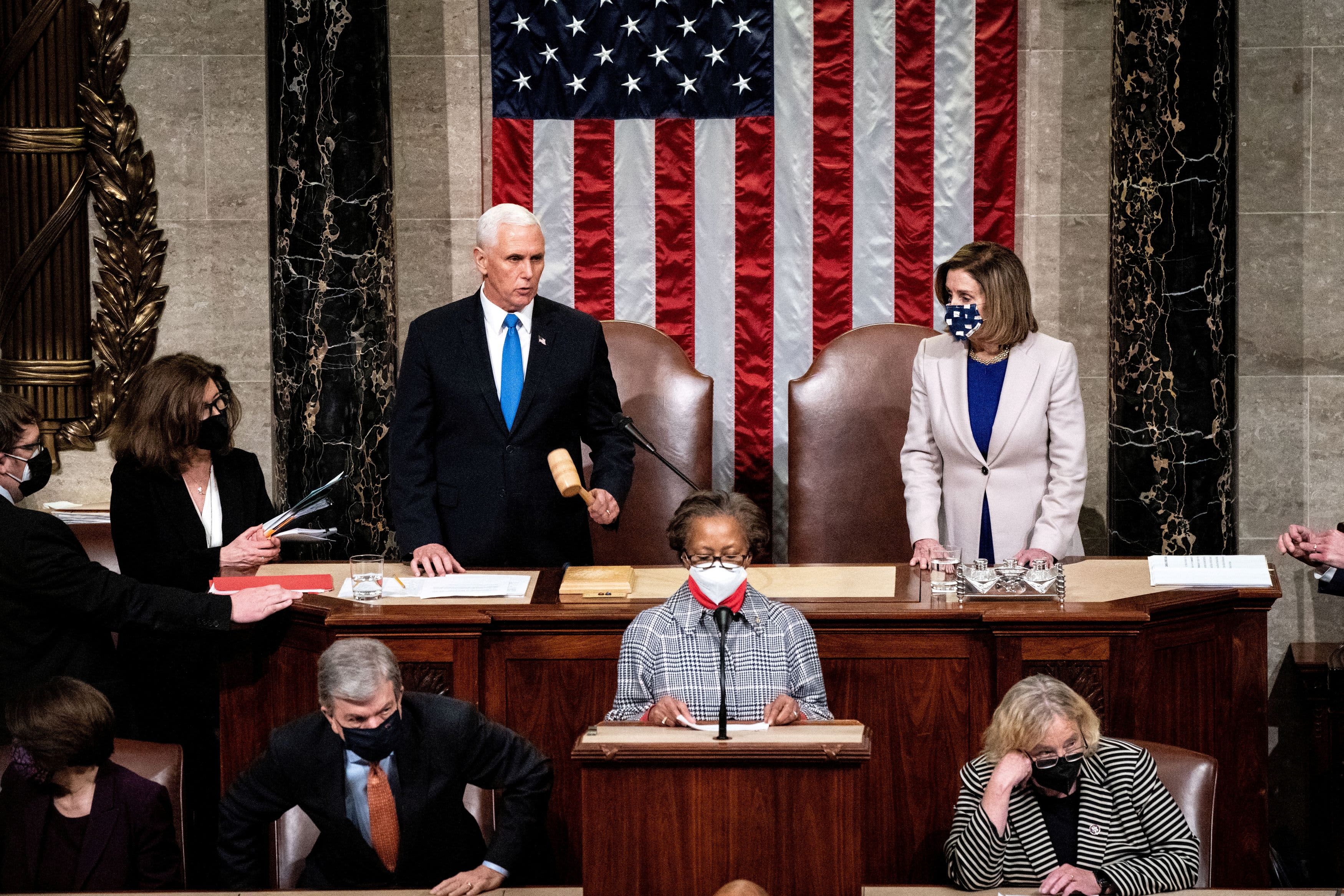
This article is about the statute and the procedure: what Congress does on counting day, how objections work, and what changed with the 2022 reforms. It is not an Electoral College explainer about how electors are chosen or how states run elections.
Join the Discussion
What the Constitution says (and what it does not)
The Constitution gives us the frame, but not the script.
- Article II establishes electors and directs states to appoint them.
- The Twelfth Amendment (1804) refines the process after the chaos of the early elections. It says the President of the Senate opens all the certificates “in the presence of the Senate and House of Representatives,” and “the votes shall then be counted.”
- The Twentieth Amendment sets the presidential term start date (January 20) and provides backstops if a President or Vice President has not qualified.
What is missing is practical governance: who counts, how disputes are handled, which documents matter, and what happens if Congress is presented with conflicting paperwork. That is where the Electoral Count Act steps in.
Why the Electoral Count Act exists
The ECA is Congress’s attempt to turn the Twelfth Amendment’s single sentence into a workable process that can survive disputes without collapsing into improvisation.
The law’s origin story is the election of 1876, one of the closest and most contested elections in U.S. history (Rutherford B. Hayes vs. Samuel J. Tilden). Multiple states sent competing electoral returns, Congress had no settled method to decide which to accept, and the dispute was resolved through an ad hoc Electoral Commission and political bargaining.
Congress responded with the Electoral Count Act of 1887. Its goal was procedural: define what documents count as electoral votes, create a timeline, and set rules for Congress to resolve objections.
After January 6, 2021, Congress revisited the ECA because ambiguities in the statute’s language were argued to permit aggressive theories of what the count could be used to do.
Separate the election from the count
Before we walk through counting day, it helps to draw a bright line between two different systems:
- Choosing electors: This is a state-driven process, mostly governed by state election law, with federal guardrails from the Constitution and federal statutes. It is about ballots, recounts, audits, and certification of results inside each state.
- Counting electoral votes: This is a federal process that happens later in Washington, D.C., governed mainly by the Twelfth Amendment and the Electoral Count Act. It is about documents, timelines, and what Congress may and may not dispute.
The ECA does not run your state election. It governs how Congress treats the states’ final electoral paperwork.
The key documents Congress counts
By the time Congress meets, the election is supposed to be finished in the states. What arrives in Washington is paperwork, transmitted through a belt-and-suspenders system that includes the Archivist of the United States (via the National Archives) and other statutory recipients. Multiple originals exist because the system is designed to survive loss, delay, or dispute.
Certificates of Ascertainment
This is the state’s formal statement of who the appointed electors are, typically signed by the governor after the state certifies its results under state law.
Certificates of Vote
This is what the electors sign when they cast electoral votes for President and Vice President. Multiple originals are created and sent to different officials, including the President of the Senate.
Congress is not recounting ballots at this stage. It is evaluating electoral returns.
When Congress counts the votes
Federal law sets the joint session for January 6 following the meeting of electors, unless Congress sets a different date by statute. Under the statutory rule, if January 6 falls on a Sunday, the joint session takes place on January 7.
The modern statutory framework is found in the ECA as revised by the Electoral Count Reform Act of 2022, enacted as part of the Consolidated Appropriations Act, 2023.
The joint session: what happens
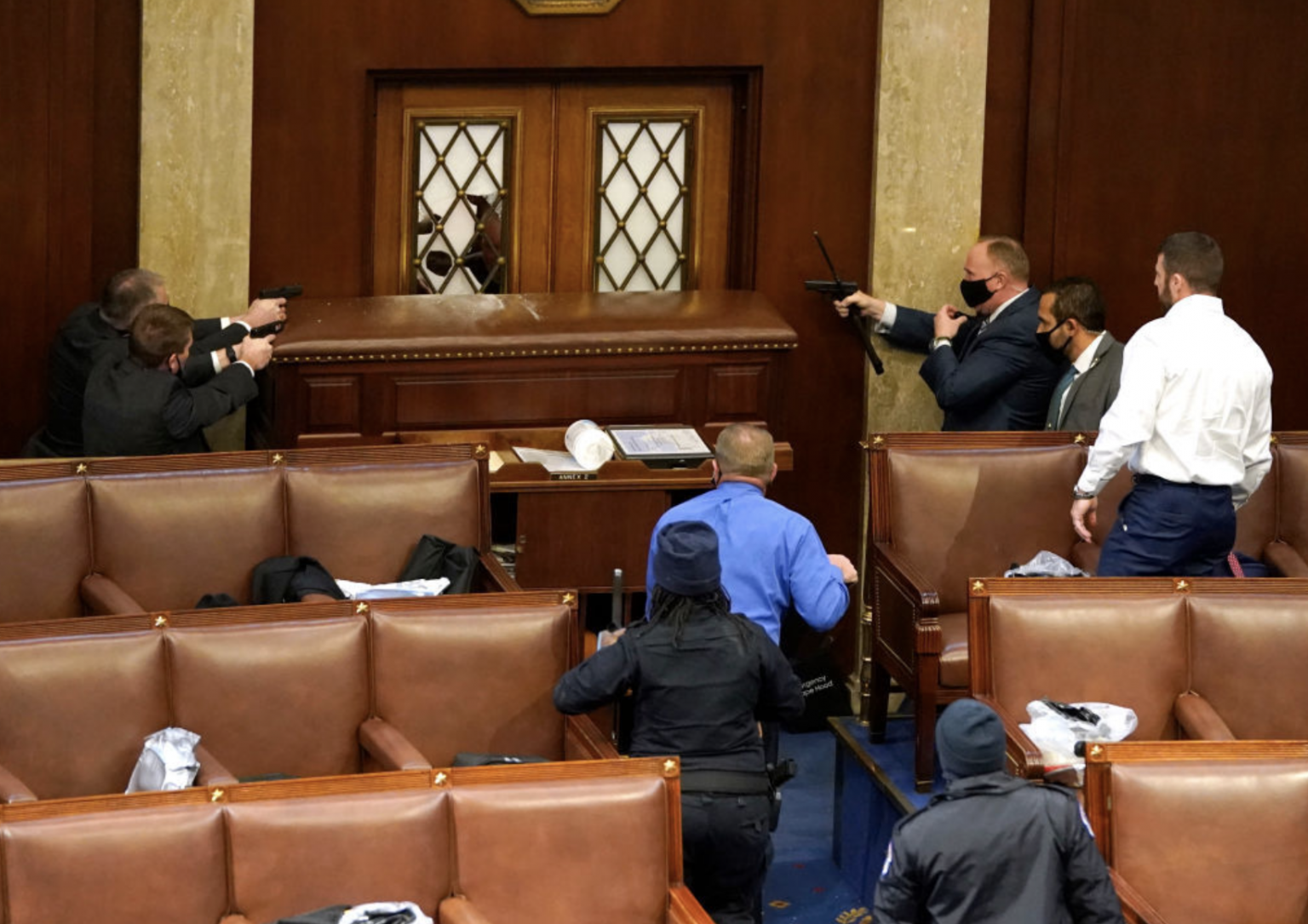
The counting session is a joint meeting of the House and Senate, traditionally held in the House chamber.
The presiding officer
The Vice President, acting as President of the Senate, presides. If the Vice President is unavailable, the President pro tempore of the Senate may preside under the joint-session procedures Congress adopts for the count.
Under the 2022 reforms, Congress made explicit what the constitutional text strongly implies: the presiding officer’s role is ministerial. The Vice President opens the certificates. The votes are counted according to law. The Vice President does not decide which votes count.
Tellers and the reading of returns
Members appointed as tellers read and record each state’s electoral votes, typically in alphabetical order by state. The process is structured, repetitive, and intentionally public.
Declaring the result
After counting, the presiding officer announces the totals. If a ticket receives a majority of appointed electors, the winners are declared elected President and Vice President.
If no one wins a majority
If no presidential candidate receives a majority of appointed electors, the Constitution triggers a contingent election under the Twelfth Amendment. The House chooses the President from the top three electoral vote-getters, with each state delegation casting one vote. The Senate chooses the Vice President from the top two vice-presidential vote-getters. The ECA’s procedures are about counting and resolving limited disputes over returns, not replacing these constitutional backstops.
Objections
The ECA does allow objections. It always has. The question is what qualifies as an objection, who may raise one, and what happens next.
Objections must be in writing
An objection is not a speech. It is a formal written document. If it meets the statutory requirements, the joint session pauses and the House and Senate separate to debate and vote.
The 2022 threshold
Before the 2022 reforms, an objection could be triggered if it was signed by just one member of the House and one senator. That low bar made objections easy to stage, even when no plausible legal dispute existed.
The 2022 reforms raised the threshold substantially. Now, an objection must be signed by at least:
- One-fifth of the House and
- One-fifth of the Senate
That change does not eliminate objections. It makes them harder to use as performance and easier to reserve for real disputes.
What counts as a valid ground
The reforms also narrowed and clarified what objections can be about. The headline idea is simple: Congress is not a national election tribunal. Objections are limited to problems with the electoral return itself, within the statute’s enumerated categories, including whether electors were lawfully certified and whether electoral votes were regularly given, as those concepts are defined and constrained by federal law.
Debate and separate votes
If a valid objection is lodged, the House and Senate withdraw to their chambers. Debate is time-limited under the ECA, and then each chamber votes whether to sustain the objection.
For an objection to succeed, both chambers must agree to reject the electoral votes at issue. If either chamber votes no, the challenged votes are counted.
This “both chambers” rule is a structural brake. It prevents a single chamber from nullifying a state’s electoral votes on its own.
Competing slates
The nightmare scenario that drove the original ECA was not a routine objection. It was a state sending more than one set of electoral votes, backed by competing claims of legitimacy.
The 2022 reforms aim to reduce that possibility by clarifying which state action counts as authoritative. A central theme of the reform is consolidation: fewer actors should be able to manufacture alternative paperwork that looks official enough to create confusion in Congress.
The governor’s certification
The reforms reinforce the role of the governor’s certification of the state’s appointed electors as the key anchor for identifying the lawful slate. This does not mean governors can override their own state’s election law. It means Congress is instructed to treat the state’s official certification, produced through the state’s lawful process, as the controlling starting point for the count.
Expedited court review
The reforms also create clearer routes for expedited federal court review when there is a dispute over what the lawful certificate of ascertainment should be. In broad terms, the law channels these fights toward faster judicial resolution, including an expedited path designed to reach finality before Congress meets to count.
Clarifying the Vice President’s role (post-2021)
One of the most consequential questions raised in the post-2020 period was whether the Vice President can unilaterally decide which electoral votes to count.
The constitutional text never granted that power. The presiding officer opens certificates “in the presence” of both chambers, and “the votes shall then be counted.” That is a collective act governed by law, not personal discretion.
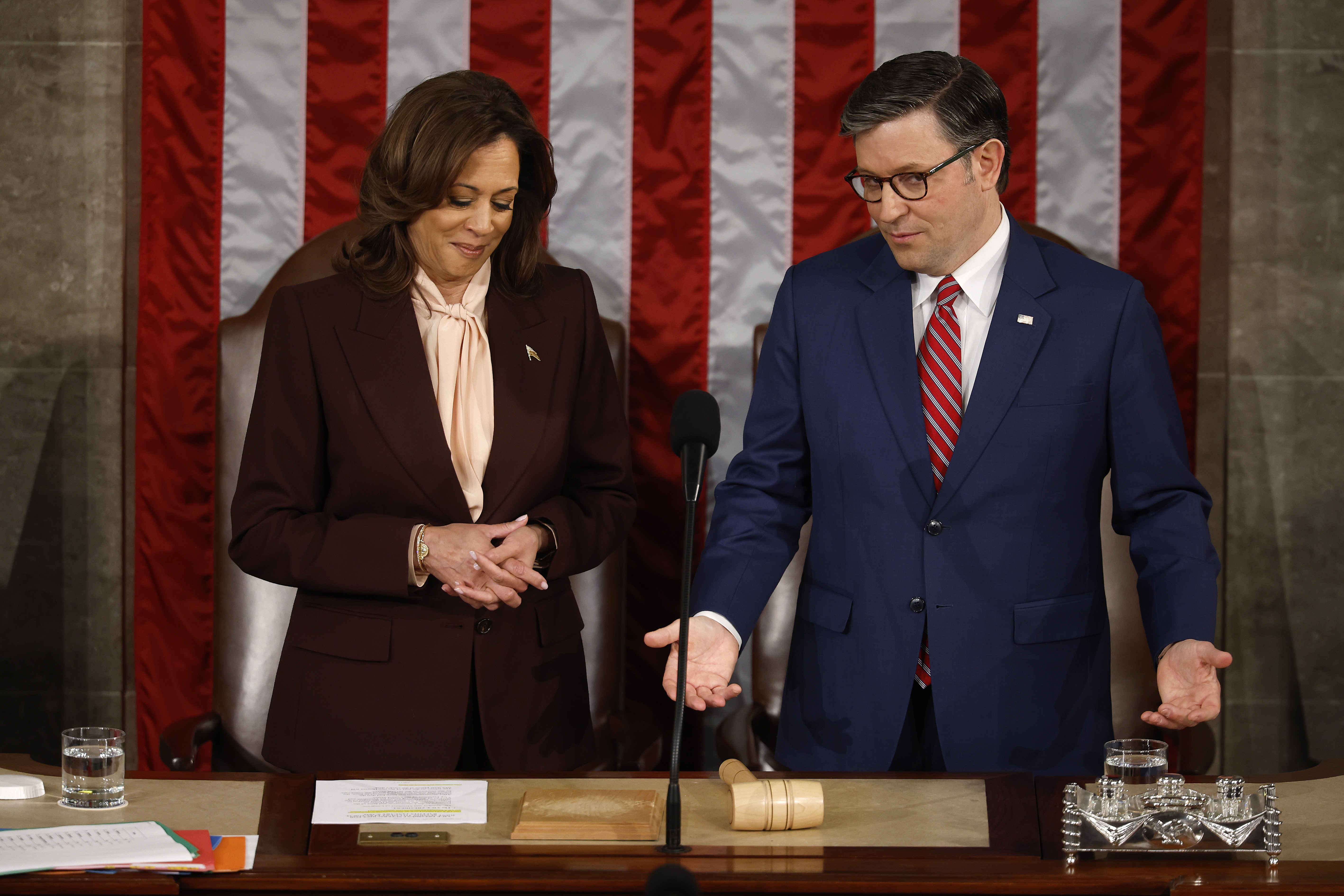
The 2022 ECA reforms made this explicit: the Vice President’s role is to preside and to open the certificates. The Vice President does not adjudicate the validity of electoral votes, does not entertain alternative slates outside the statutory framework, and does not decide the winner.
What the House and Senate are doing
It is tempting to describe the joint session as symbolic. But symbol is not the same as meaningless.
Congress’s job under the ECA is best understood as verification under constraints:
- Verification, because Congress must ensure the formal constitutional precondition for inaugurating a President has been met: a majority of electoral votes cast by duly appointed electors, or the triggering of the Constitution’s contingent-election procedures if no majority exists.
- Under constraints, because Congress is not a national election tribunal. It is bound by statutes, deadlines, and the requirement that both chambers agree to reject votes, and only on the limited grounds the statute permits.
The count is intentionally structured to minimize improvisation. That is the ECA’s entire reason for existing.
Safe harbor (and what changed)
A central ECA concept is the idea often called the “safe harbor”: a timeline and set of conditions under which a state’s resolution of election disputes is treated as conclusive for purposes of the count. The 2022 reforms adjusted and clarified the relevant dates and the relationship between timely state certification and how Congress treats a state’s return, with the goal of making the conclusive effect clearer and harder to game.
What the 2022 reforms changed
Think of the 2022 changes as closing three doors that had been left ajar.
- Door one: the Vice President as decider. The reforms state plainly that the presiding officer’s role is ministerial.
- Door two: easy objections. The one-member-and-one-senator trigger was replaced with the one-fifth requirement in each chamber.
- Door three: manufactured uncertainty. The reforms sharpen the rules around which certificates govern, strengthen the role of lawful state certification, and push disputes toward expedited court resolution before Congress meets.
None of this guarantees a peaceful transfer of power. Laws cannot substitute for political commitment. But they can reduce the space for claims that the statute itself authorizes confusion or unilateral action.
Common misconceptions
“Congress picks the President on January 6.”
No. Duly appointed electors determine the winner by casting electoral votes. Congress’s role is to open and count the states’ returns and formally ascertain the totals, with only limited, statute-bound grounds to reject votes.
“Objections are the same thing as overturning an election.”
Not necessarily. Objections are a procedural mechanism. They become an attempt to overturn an election when used to reject lawful votes without a legitimate statutory basis.
“The Electoral Count Act is in the Constitution.”
No. The ECA is a federal statute. It is Congress filling in procedural gaps left by the Constitution’s broad framework.
“This is the Electoral College.”
Related, but different. The Electoral College refers to the system of electors and state-by-state vote allocation. The ECA is about the later step: how Congress counts the votes those electors cast.
Why this procedure matters
In a system built on written rules, legitimacy often turns on paperwork and process. That sounds cold until you realize the alternative is raw power and improvisation.
The Electoral Count Act is not glamorous, but it is a democratic pressure valve. It tries to ensure that disputes are handled through predictable steps, with clear thresholds, in public view, and with multiple institutional checkpoints.
And it carries a quiet constitutional lesson: the transfer of power is not a single moment. It is a chain of moments. The country stays stable when every link in that chain is boring.
Quick timeline
- November: States administer elections and begin canvassing and certification under state law.
- December: Electors meet in their states and cast votes; electoral certificates are executed and transmitted.
- January 6 (or January 7 if required): Congress meets in joint session to open and count electoral votes under the ECA.
- January 20: Inauguration day under the Twentieth Amendment.
Where to read the law
If you want to go from civics to primary sources, look for the federal statutes governing the electoral count process in Title 3 of the U.S. Code, as amended by the Electoral Count Reform Act of 2022. Reading the text is clarifying in the best way: you can see exactly which decisions are permitted, and which ones are simply claimed.