
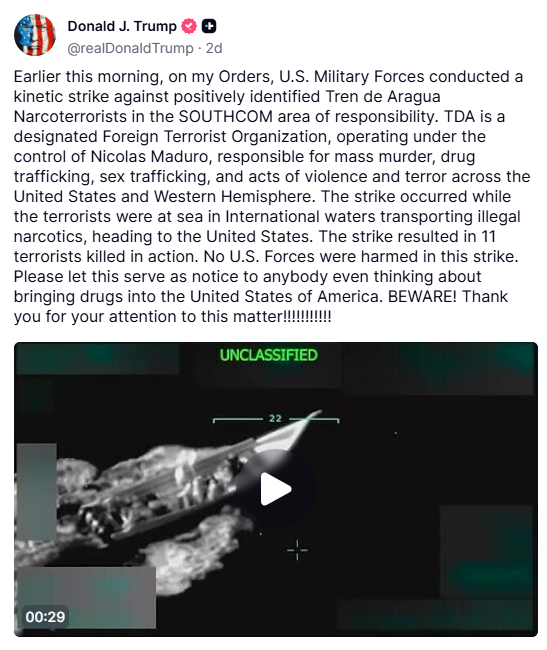
In the calm waters of the Caribbean, the United States military, on the orders of the President, has destroyed a vessel. The target was not a foreign warship, but a boat the administration claims was smuggling drugs, representing an “imminent national security threat.”
This act of lethal military force, conducted without congressional authorization, has ignited a profound constitutional crisis. It is a moment that tests the very definition of “war,” the limits of a president’s power to wage it, and the dangerous consequences of labeling criminals as terrorists.
The Commander-in-Chief and the “Imminent Threat”
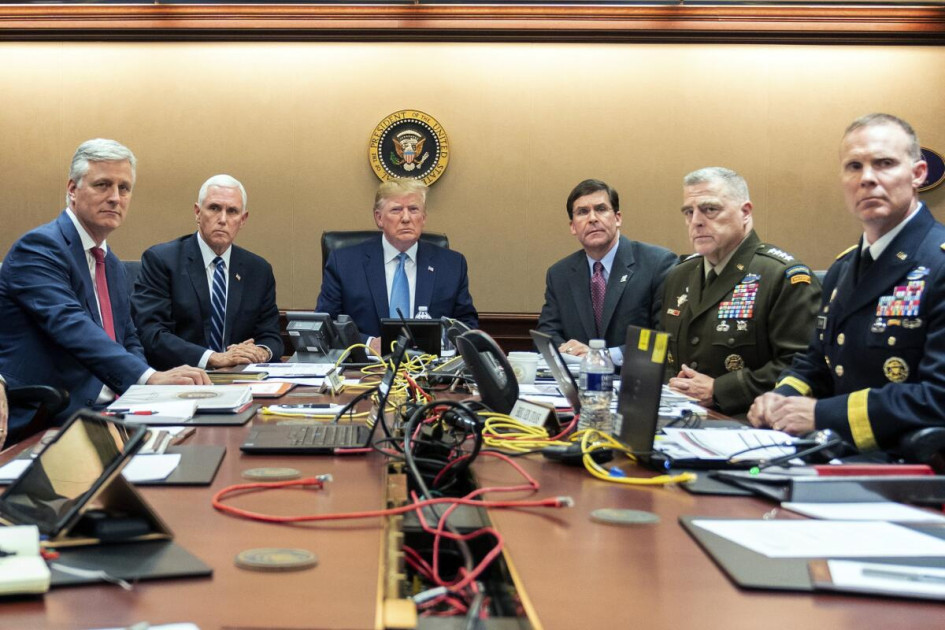
The administration argues that the President was acting within his constitutional authority as Commander-in-Chief to defend the nation. This power, however, is not a blank check.
While the Constitution gives Congress the exclusive power to declare war, it grants the President the power under Article II to command the military and, as the Supreme Court has affirmed since The Prize Cases of 1863, to repel sudden attacks and respond to imminent threats.
The entire legal and constitutional debate over this strike now hinges on two words: “imminent threat.”
Historically, this doctrine has been understood to justify unilateral presidential action only when an attack against the United States is so close at hand that there is no time for congressional deliberation.
The critical question is whether a drug-smuggling vessel, however dangerous its cargo, constitutes the kind of imminent threat that justifies a lethal military strike.
The Consequence of a “Terrorist” Label
The administration’s justification for this expansive new definition of “imminent threat” is rooted in a recent and controversial policy change. Earlier this year, the President designated several Latin American cartels – including the Tren de Aragua gang allegedly connected to this vessel – as Foreign Terrorist Organizations (FTOs).
This is the dangerous chickens-coming-home-to-roost moment. By relabeling criminal drug smugglers as “terrorists,” the administration has now claimed the authority to use the U.S. military – an instrument of war – against them.
This is a profound and constitutionally perilous blurring of the lines between law enforcement, which is bound by the rules of the criminal justice system, and warfare, which is not.

The Judiciary as the Final Check
This action represents a direct challenge to the separation of powers. As legal experts and lawmakers are now arguing, the President appears to have used a new administrative designation (the FTO label) to bypass Congress’s constitutional authority to declare war. He has initiated an act of war against a non-state actor without seeking the authorization that the War Powers Resolution would seem to require.
The courts will now be asked to weigh in. Is the President’s determination that a drug boat is an “imminent threat” a political question that is beyond their review?
Or is it the judiciary’s fundamental duty to interpret the law and determine if the President has exceeded the authority granted to him by the Constitution?
This strike in the Caribbean is a landmark event. If a drug-smuggling vessel can be legally defined as an “imminent threat” justifying a lethal military strike, it opens the door to a future where the president can wage a global war on crime using the full might of the armed forces. This would be a radical and dangerous transformation of presidential power, one that fundamentally alters the constitutional balance the framers so carefully designed.