
A shutdown is usually sold as a budget problem. But the longer it drags on, the more it becomes something else: a live-fire test of who, exactly, controls the machinery of the federal government.
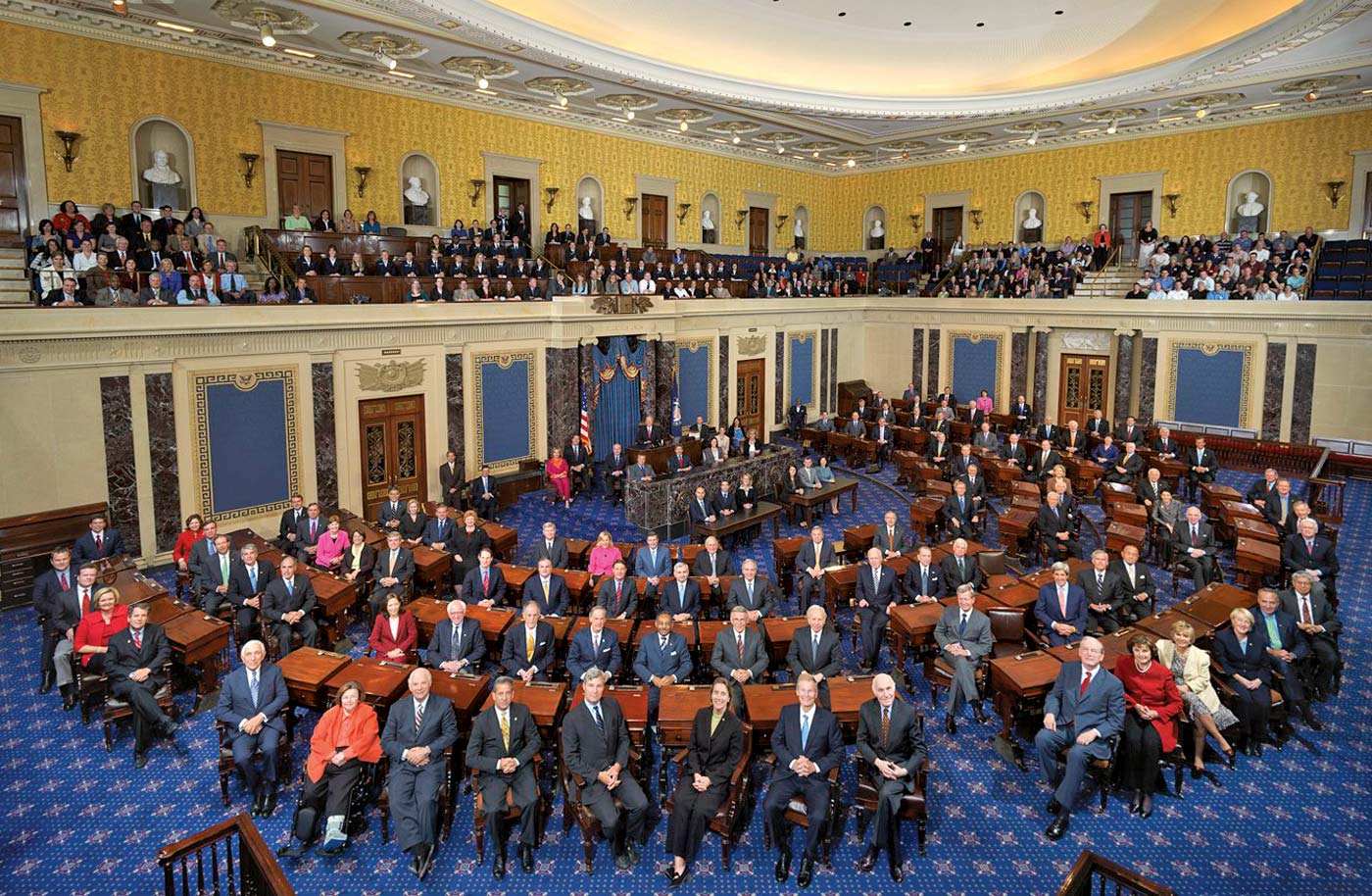
As the Department of Homeland Security entered its 36th day of a partial government shutdown affecting DHS funding, Senate Republicans spent the weekend aiming their frustration squarely at Senate Democrats. At a Saturday news conference, Senate Majority Leader John Thune accused Democrats of not having “any excuses” to keep blocking Homeland Security funding as Republicans and the White House continue to make repeated offers to reopen the government. Republicans accused Democrats of continuing to block funding in pursuit of reforms to Immigration and Customs Enforcement. Democrats, for their part, have tried narrower funding approaches that reopen parts of DHS while excluding immigration enforcement.
Join the Discussion
What it is about
DHS is not a single-purpose agency. It is airport screening, disaster response coordination, cybersecurity, border operations, and yes, immigration enforcement. That breadth is precisely why funding it becomes such an effective pressure point. Shutdowns have a way of shifting public pressure when disruptions show up in everyday life, especially when airport lines start to swell.
Republicans say Democrats are using that leverage, blocking broader DHS funding while seeking structural changes to ICE.
Thune also argued Democrats were continuing their push to keep DHS closed because it was “politically advantageous.” He framed the situation as a negotiation that only works if both parties show up for it.
“The opportunity to actually drive this to a conclusion is there,” Thune said, adding, “You have to have, obviously, to negotiate a deal, you got to have two sides at the table. The White House is there. Senate Republicans are there. The question is, are Senate Democrats going to take yes for an answer?”
Why airports matter
Shutdown politics always look abstract until they become physical. In this case, that physical manifestation has been the airport line: travelers stacking up at TSA checkpoints while tens of thousands of federal workers go without pay.
Thune pointed to that reality when he criticized any attempt to treat the impasse as tolerable or calm. “The people who are sitting in those lines at the airports right now don’t see it as very serene,” he said. “This needs to be resolved. We need a result.”
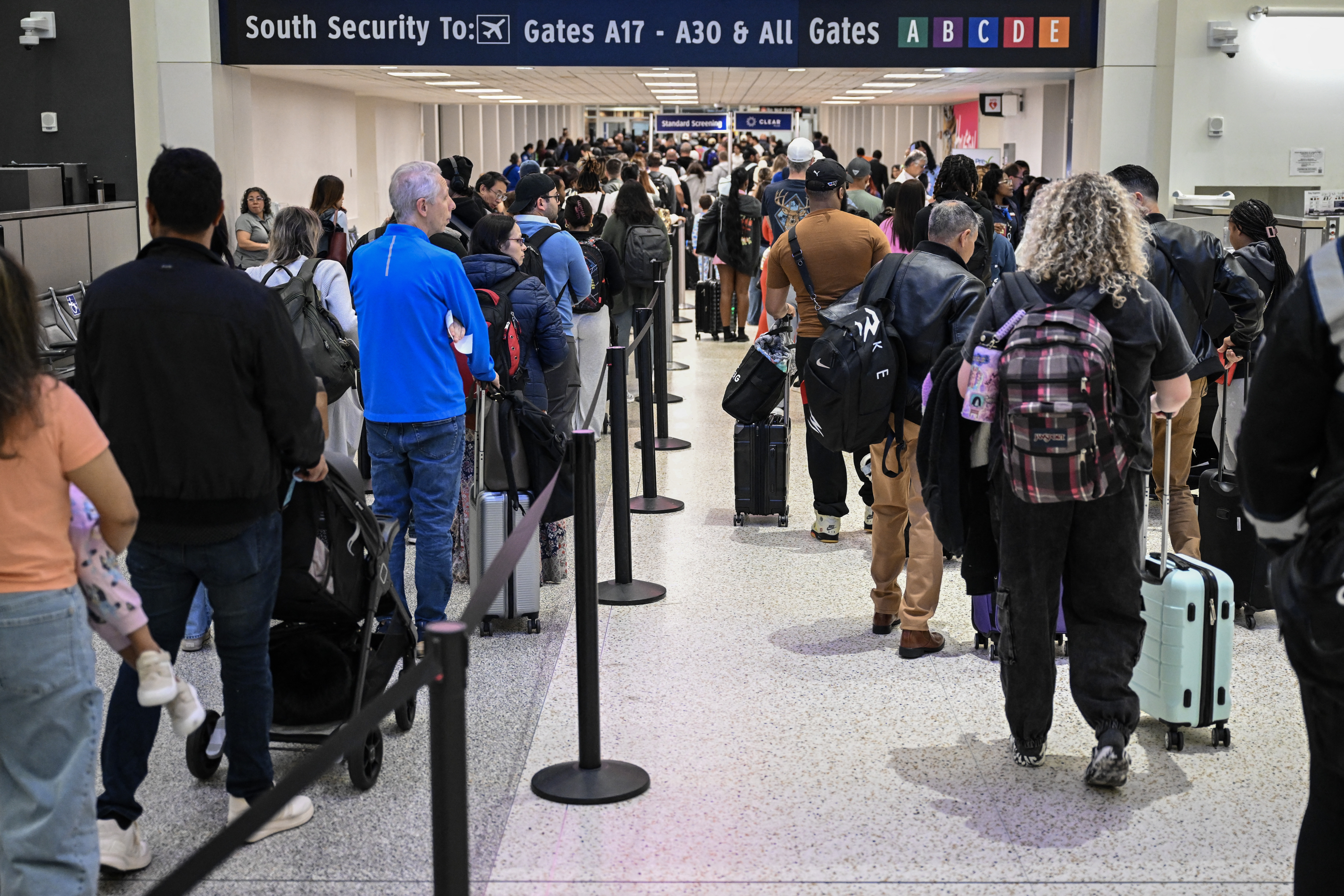
Rather than another general reopening attempt, Democrats have pursued standalone funding bills to open parts of DHS while excluding immigration enforcement. The Senate is set for a full vote on a standalone Transportation Security Administration funding bill pushed by Senate Minority Leader Chuck Schumer later on Saturday, and it will likely fail given Republicans’ position that the department should be completely reopened.
Lankford’s ICE vs. Iran line
Sen. James Lankford sharpened the argument into a national-security contrast, tying the shutdown to foreign threats and the government’s duty to protect the homeland. He made the remark as the Pentagon continues Operation Epic Fury against the Iranian regime, a backdrop Republicans have cited amid increasing concerns about threats in the U.S.
“We have the Department of Homeland Security closed right now because, apparently, my Democratic colleagues are more afraid of ICE than they are of Iran and the challenges that we face now in the conflict internationally that we know that we have threats back in the homeland,” Lankford said.
That sentence is not just a jab. It is a claim about constitutional priorities. “Domestic tranquility” and “common defense” are not policy slogans. They are the job description the Constitution’s preamble gives the national government. When lawmakers treat DHS funding as leverage, they are implicitly arguing that a dispute over immigration enforcement is worth the collateral strain on core protective functions.
What the Constitution allows
The Constitution does not mention the Department of Homeland Security, or TSA, or ICE. What it does provide is the architecture that makes this showdown possible.
- Congress controls the purse. Article I places spending power with the legislative branch. Agencies cannot run on good intentions. They run on appropriations.
- The executive enforces the law. The president is tasked with executing federal law, including immigration statutes Congress has enacted. When Congress conditions funding to reshape enforcement, it is using its strongest tool to steer executive behavior.
- Separation of powers creates stalemate by design. The Framers did not build a system optimized for speed. They built one optimized to prevent unilateral control. Shutdowns are the modern symptom of that design, intensified by polarization.
This is why shutdowns feel both outrageous and strangely inevitable. Our system forces negotiation, but it does not force agreement. It is a constitutional arrangement that assumes political actors will fear public consequences enough to compromise. When that assumption fails, the gridlock becomes the headline.
Talks and escalation
After more than two weeks of negotiations appearing to have stalled, Democrats responded to the White House’s latest offer. That spurred two face-to-face meetings with Senate Republicans and Trump administration officials, including border czar Tom Homan, on Capitol Hill.
The latest meeting, which wrapped on Friday, saw Republicans offer Senate Democrats a compromise DHS funding bill. Thune said the meeting went well and hoped the parties would meet again over the weekend. He characterized the GOP’s offer as filled “with a lot of reforms that have been requested and asked for by Democrats.”
Also on Friday, Republicans tried and failed for a fifth time to fully reopen the agency.
Meanwhile, President Donald Trump took the dispute into a more volatile place, threatening in a Truth Social post to deploy ICE agents to U.S. airports if Democrats did not accept a deal. He said ICE would handle airport security and immediately arrest illegal immigrants coming into the U.S., with a special focus on Somalians.
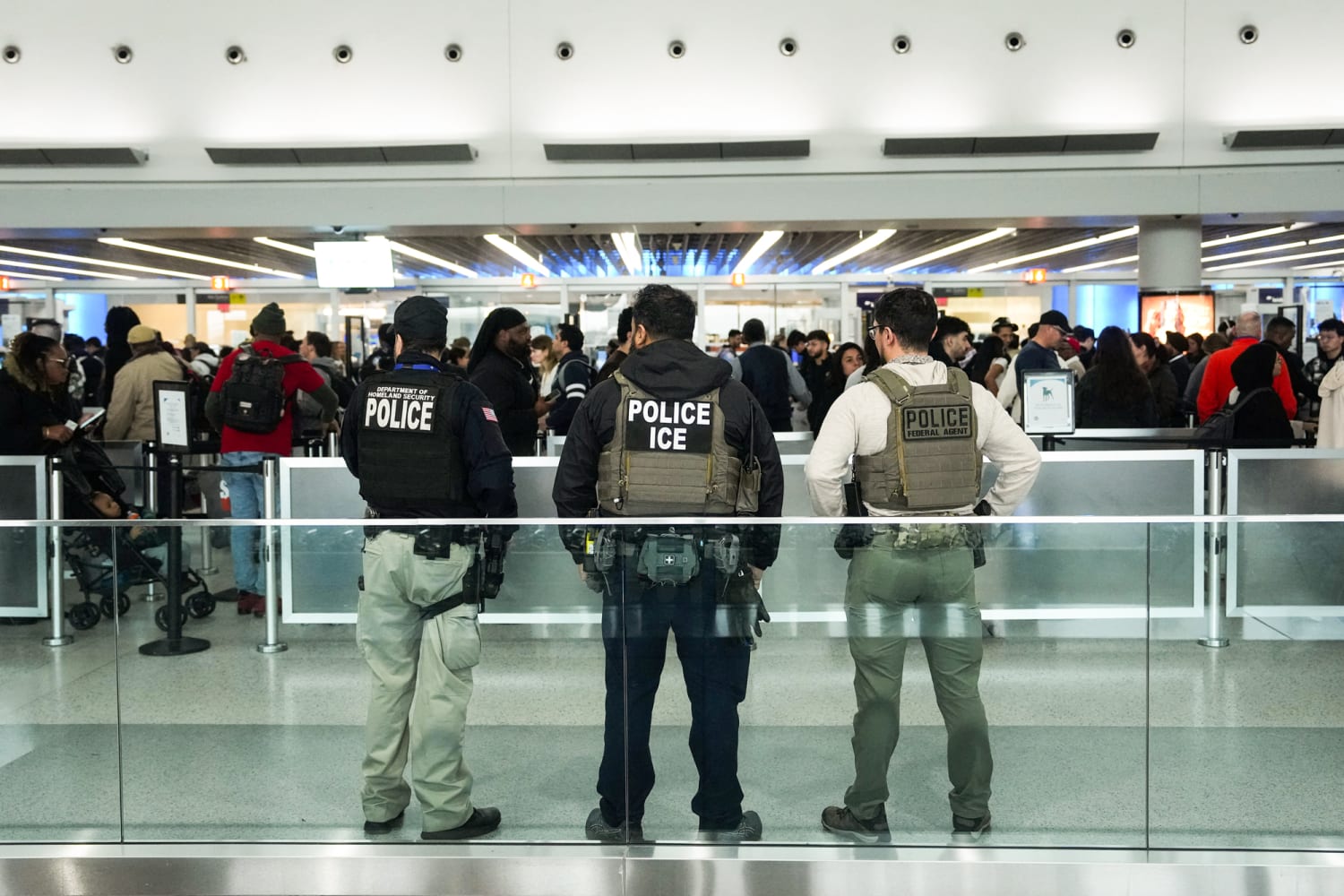
As analysis, here is the civic point worth underlining: once basic operations become bargaining chips, the temptation to substitute one agency for another, or to reroute authority through executive improvisation, grows stronger. That is where constitutional friction can start to feel like constitutional risk, not because the Constitution changes, but because the incentives around power do.
The voter question
Every shutdown fight tries to answer a tactical question: who will blink first? The better civic question is structural: what is an agency for, and what should never be held hostage?
If DHS is essential to national security, then funding it becomes more than a partisan chess move. If immigration enforcement is in need of reform, then reform should be debated and legislated directly, not extracted through a deadline that also ensnares airport screening and homeland threat response.
The Constitution does not tell Congress how to behave. It tells us what powers they have, and it gives voters the authority to reward or punish how those powers are used. A shutdown is what happens when the system’s safeguards against impulsive government turn into a weapon against ordinary governance. And that is the moment when civics stops being theoretical.