
Voter ID is one of those election issues that sounds simple until you look closely at what lawmakers are actually voting on. This week in the Senate, that gap between the slogan and the substance became the story: several prominent Democrats reiterated that they are not opposed to photo identification for voting, then Democratic senators blocked a Republican amendment that would have required photo ID in federal elections.
To many Americans, that looks like a contradiction. To many Democrats, it is a procedural and policy choice driven by what they say is bundled into the broader bill.
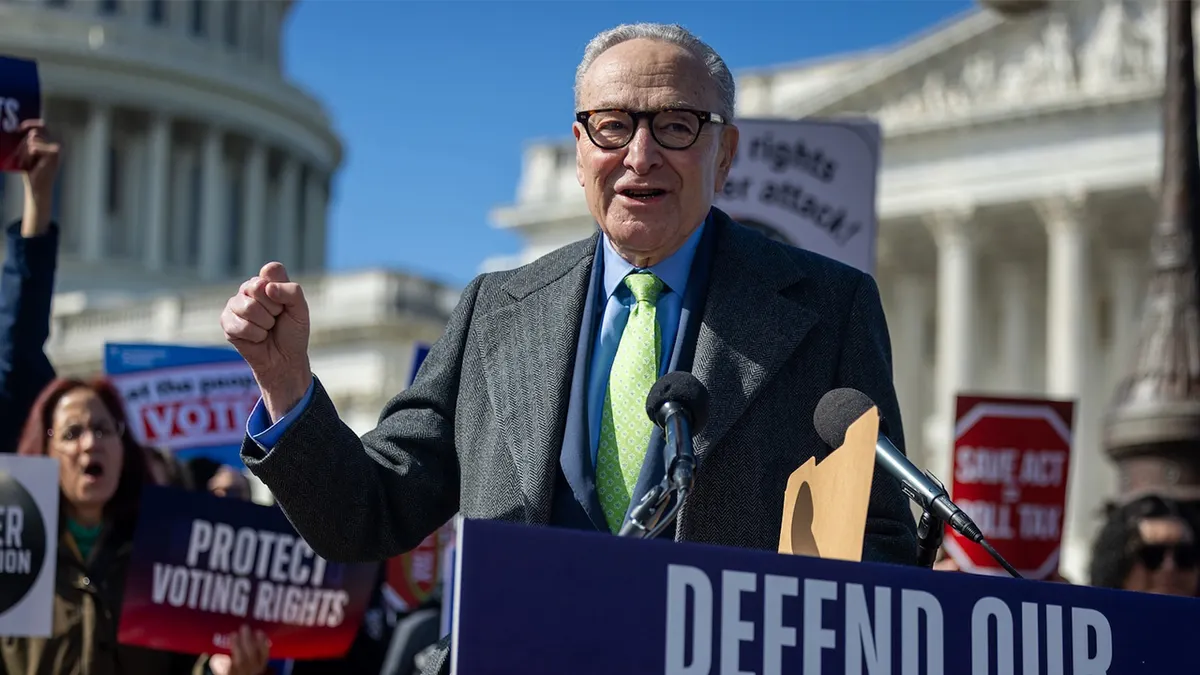
What happened in the Senate
Republicans have been pushing the Safeguarding American Voter Eligibility (SAVE) America Act, a Trump-backed package that includes election administration provisions. During debate, Sen. Jon Husted of Ohio offered an amendment focused specifically on requiring photo identification for voting in federal elections.
Democratic senators blocked that amendment, even as Democratic leaders and some individual senators have recently expressed openness to voter ID in general.
The sound bite problem
On a press call earlier this month, Senate Minority Leader Chuck Schumer said, Democrats support voter ID
and added, In fact, we included it, and it is included, in our Freedom to Vote legislation several years ago.
Separately, when asked whether he would support a clean voter ID bill, Sen. Cory Booker said, Yes.
Booker pointed to his home state by noting, And New Jersey has voter ID laws. I’ve got to show my driver’s license.
Republicans treated those statements as an invitation to put Democrats on the record. Senate Majority Leader John Thune framed it this way: That is one on which the Democrats have said, Sen. Schumer himself, that ‘we are not opposed to photo ID.’ Well, let’s test that proposition. Let’s actually have a vote on it and see where the Democrats are.
Why Democrats blocked it
Democrats’ main response is that the amendment cannot be separated from the larger bill it was attached to. Schumer argued that Republicans were using voter ID language as political cover for provisions Democrats consider restrictive.
Before the vote, Schumer called the effort a wolf in sheep's clothing
and said it amounted to dramatic voter suppression
that could mean kicking 20 million or more people off the rolls without their knowledge or consent.
Democrats have also argued the SAVE America Act goes far beyond identification requirements. Schumer and others have likened the broader bill to Jim Crow-era segregationist laws in the Deep South, saying it would disenfranchise voters, particularly minority communities and low-income Americans.
Democrats have also criticized parts of the SAVE America Act beyond ID requirements, including provisions that would give the Department of Homeland Security access to states’ voter rolls. In other words, their argument is not, “We oppose ID,” but “We oppose this vehicle and what comes with it.”
ID is common, not uniform
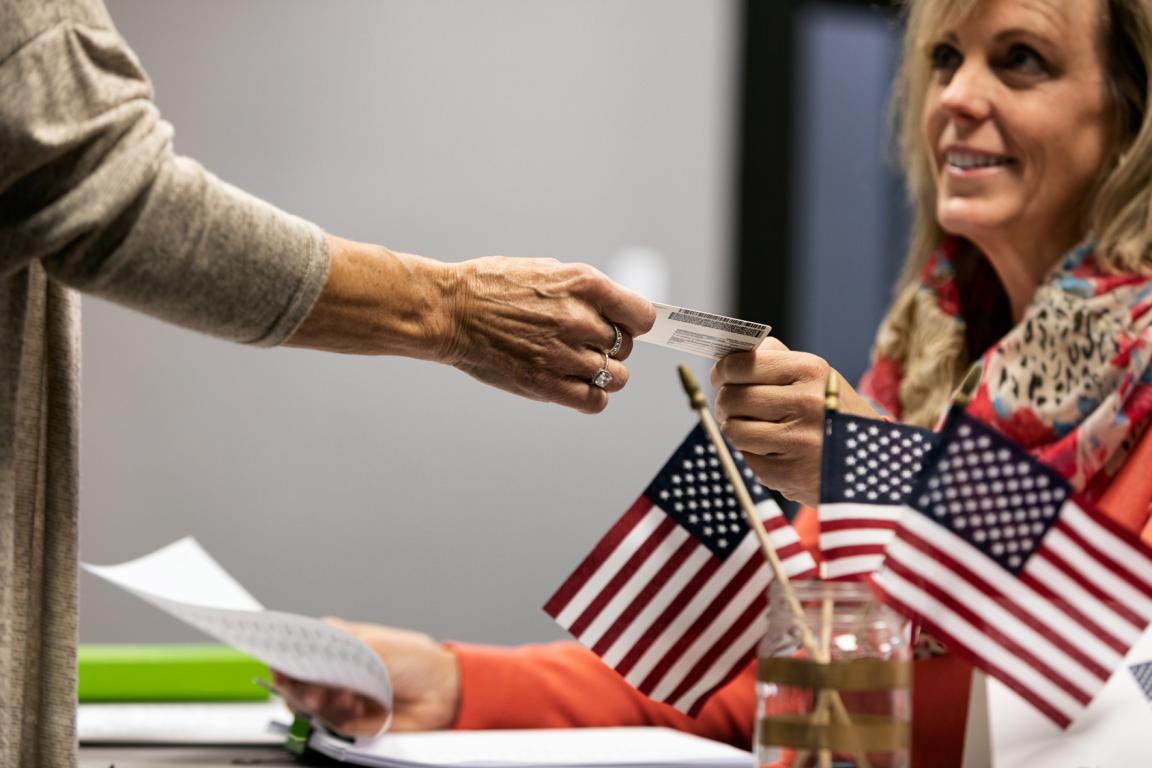
One reason this debate is so politically potent is that many Americans already experience voter identification as normal. Requiring some form of identification is already the practice in 36 states. Among them, 23 states require photo ID, while 13 accept other forms of identification, such as a bank statement.
That patchwork matters constitutionally because elections are administered by states, but federal elections happen inside that system. Congress can set certain rules for federal elections, yet states still do the day-to-day work of registration lists, polling places, and ballot processing.
Public opinion
Support for photo ID has been rising across party lines, and the numbers often surprise people who think this is purely a Republican priority. A widely cited Pew Research poll found that 71% of Democratic voters support showing government-issued photo ID to vote.
But the same polling landscape also shows why Congress struggles to legislate on it: people support the general idea for different reasons. Some see it as basic security. Others worry about fraud claims being used to justify stricter rules that hit certain communities harder, especially when it comes to obtaining documents, transportation to offices, or paying underlying fees.
What the amendment accepted
Husted’s proposal did not limit ID to just one document. The acceptable IDs listed included:
- an unexpired driver’s license with a photo
- an unexpired state-issued ID card with a photo
- a valid passport
- a valid military or veteran ID with a photo
- an unexpired tribal ID with a photo
Husted argued that photo ID is something that can be easily implemented
and emphasized that it is already used widely around the country.
The clean bill issue
Sen. John Fetterman, who is often watched for breaks with party leadership, opposed the SAVE America Act as written, but signaled openness to a narrower approach. His summary was blunt: If the GOP wants real reform over a show vote, put out a clean, standalone bill, and I’m AYE.
But that “clean bill” path is not hypothetical. The reference point is recent: Senate Democrats blocked the measure once before, when Husted tried to force a vote on a standalone photo voter ID bill last week.
This is a familiar dynamic in Congress. Lawmakers frequently agree on a headline idea but disagree on what else must be attached to it, what enforcement should look like, and what exceptions and funding are needed to avoid disenfranchising eligible voters.
What is really being fought over
When Americans hear “voter ID,” they often think only about Election Day. But constitutionally and practically, voting rules begin much earlier, with registration systems, list maintenance, and identity verification. A bill that changes any part of that machinery can raise legitimate questions about access, errors, and who bears the burden of fixing mistakes.
That is why the current Senate fight is not only about whether an ID is required, but also about how voter rolls are managed and what federal agencies can demand from state election offices. Depending on your perspective, those are either sensible guardrails or an invitation to overreach.
What to watch next
If Democrats truly want to separate the principle of voter ID from the controversy surrounding the SAVE America Act, the cleanest option remains a standalone approach that deals only with identification and includes clear safeguards, funding, and workable alternatives for voters who lack documents.
But the politics are now complicated by the fact that Democrats already blocked a standalone photo voter ID push when Husted tried to force a vote last week, not just the amendment attached to the SAVE America Act. That makes the next move less about discovering whether there is a path, and more about whether either party is willing to accept a narrower bill without turning it into a proxy battle over everything else in the election administration fight.
Either way, the episode is a useful reminder for citizens: in Congress, agreement on a phrase is not agreement on a policy. The details are where the constitutional questions and the real-world impacts live.