
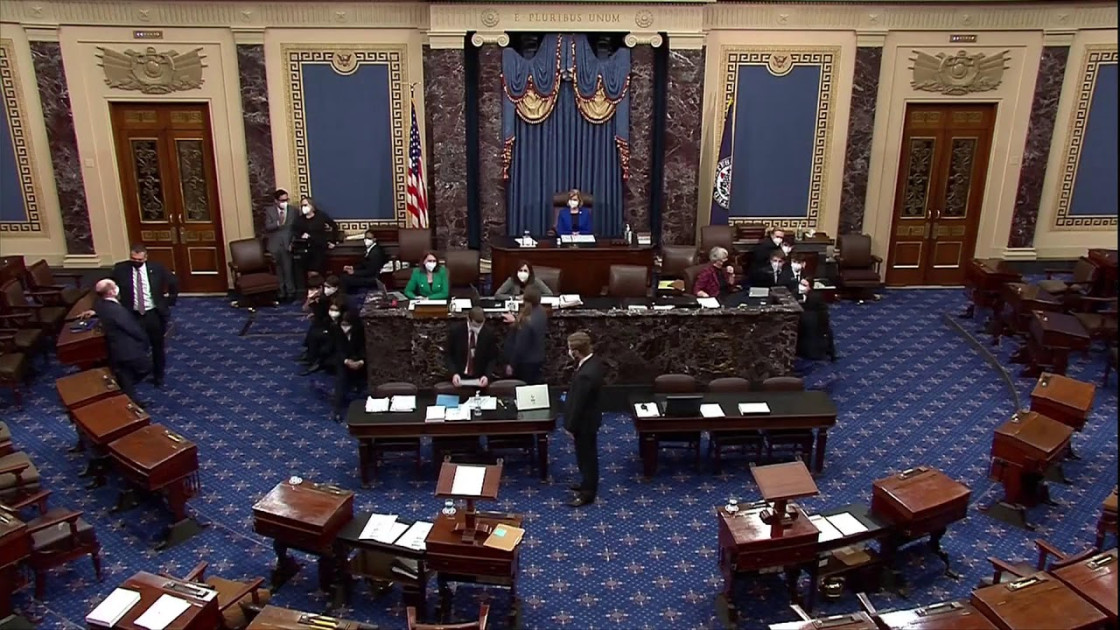
Senate Minority Leader Chuck Schumer walked onto the floor Friday morning with what he called “a very simple compromise.” The government would reopen at current spending levels. Three bipartisan appropriations bills would pass. And expiring Affordable Care Act subsidies – the ones keeping millions of Americans’ insurance premiums affordable – would extend for one year.
Within minutes, Senate Majority Leader John Thune called it a “nonstarter.” Senator Lindsey Graham called it “political terrorism.” Senator John Kennedy called it “stupid.”
The government shutdown continues. And the real story isn’t what the two parties disagree about – it’s what they’re both carefully avoiding saying out loud.
The Offer That Wasn’t Really An Offer
Democrats are presenting their proposal as a reasonable compromise. They’ve backed away from demanding a permanent ACA extension and Trump’s Medicaid cuts be reversed. Now they’re just asking for one year of health care funding alongside the bills needed to reopen the government.
Republicans are treating this like Democrats just demanded they burn down the Capitol. Not because the proposal is radical – but because accepting it would require them to admit what this shutdown is actually about.
It’s not about spending levels. The Democrats are offering current spending levels. It’s not about appropriations process – they’re offering bipartisan bills that already have support. It’s about whether Republicans can extract concessions on healthcare without having to vote for those concessions in daylight.
What “Nonstarter” Really Means
Thune’s response reveals the game. “The Obamacare extension is the negotiation,” he said. “That’s what we’re going to negotiate once the government opens up.”
Translation: Republicans want Democrats to vote to reopen the government with no guarantees about healthcare. Then they’ll negotiate what kind of ACA changes Democrats have to accept to prevent insurance premiums from spiking for millions of Americans.
It’s hostage-taking with extra steps. First, reopen the government and take away Democrats’ leverage. Then negotiate over whether Americans get to keep affordable healthcare – with Republicans holding all the cards and a deadline that makes premium increases automatic if Democrats don’t cave.
Schumer’s offer eliminates that advantage. It says fine, let’s negotiate healthcare – but not with a gun to the head of everyone on Obamacare. Extend the subsidies for a year, create a bipartisan committee, have the debate like adults.
That’s precisely why Republicans can’t accept it.
When “Political Terrorism” Means Asking For A Vote
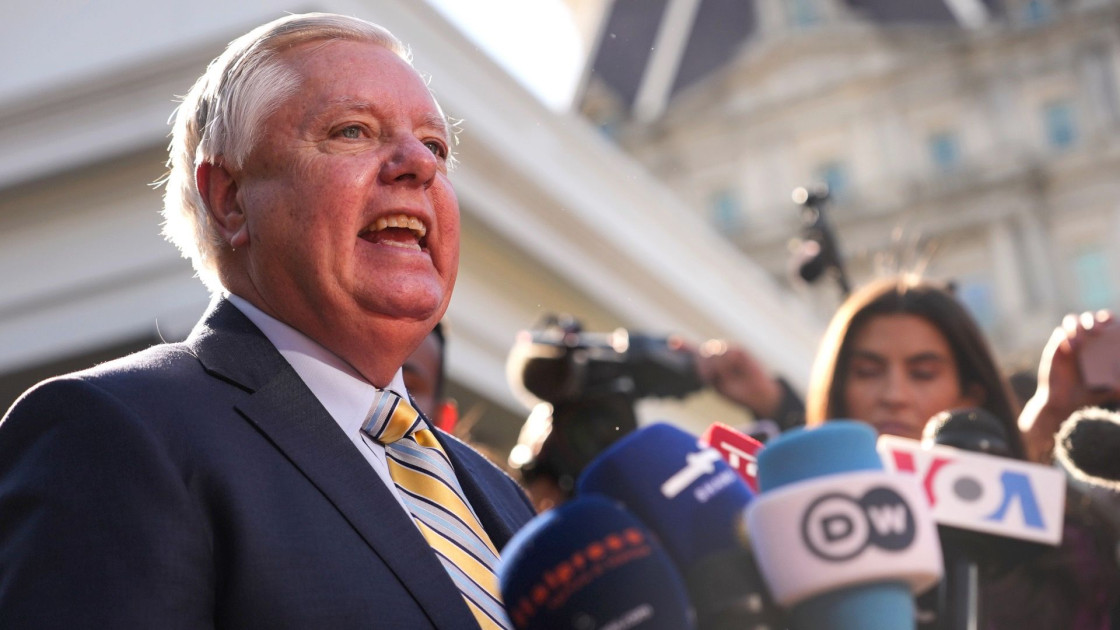
Lindsey Graham’s reaction was particularly revealing. He called the Democratic proposal “political terrorism” and announced he won’t “keep giving taxpayer dollars to the five largest health care insurance companies under Obamacare to get the government open.”
Let’s unpack that rhetoric. Democrats proposed that Congress vote on healthcare subsidies alongside government funding. Graham called this terrorism – the use of violence or threats to achieve political aims.
What’s the actual terrorism here? Republicans shut down the government and are holding it closed until Democrats accept their healthcare agenda without a standalone vote. That’s the textbook definition of using institutional power to force political concessions.
But Graham’s framing of ACA subsidies as handouts to insurance companies is where the real game becomes visible. Those subsidies don’t go to insurance companies – they go to Americans to make their premiums affordable. Eliminating them doesn’t hurt insurers, it hurts the people buying insurance.
Republicans know this. They’re betting Americans don’t.
The Senator Who Actually Tried
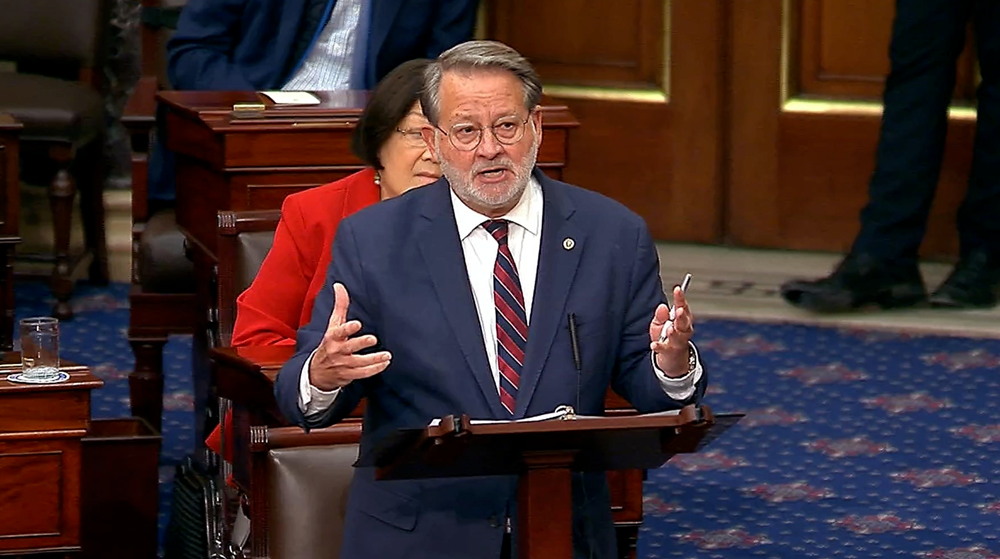
Gary Peters, a Michigan Democrat, crafted this proposal after talking with Republican senators about finding common ground. He’s been part of the rank-and-file discussions – the senators who supposedly want to end this mess and get back to normal governance.
“I’m willing to compromise,” Peters said on the floor. “But our Republican colleagues have to be willing to compromise, too.”
Here’s what Peters learned: There is no Republican compromise position. Mike Rounds – who has publicly called for an ACA extension – still opposed the Democratic offer because “it doesn’t contain any restrictions on the funds.”
What restrictions? Rounds didn’t say. Because the restrictions aren’t the point. The point is maintaining the crisis long enough to extract maximum concessions.
This is how legislative hostage-taking works. You can never actually accept an offer, because accepting an offer means giving up leverage. The goal isn’t to solve the problem – it’s to make the other side desperate enough to solve it on your terms.
The Health Care Cliff Nobody’s Talking About
Lost in the political theater is what happens if these subsidies actually expire. Millions of Americans who bought insurance through the ACA exchanges did so because subsidies made the premiums affordable. Without those subsidies, premiums spike – in some cases doubling or tripling.
This isn’t a hypothetical. The subsidies are set to expire. If Congress does nothing, real people face unaffordable insurance costs starting next year. Many will simply drop coverage because they can’t pay.
Democrats are proposing to prevent this. Republicans are calling that terrorism while refusing to commit to any alternative. Their position is: reopen the government first, then we’ll talk about whether Americans deserve affordable healthcare.
That’s not a negotiating position. That’s a ransom demand.
What Schumer’s “Simple Compromise” Actually Reveals
Schumer framed his proposal as common sense – reopen the government, extend healthcare subsidies, create a committee to negotiate long-term solutions. “After so many failed votes, it’s clear we need to try something different,” he said.
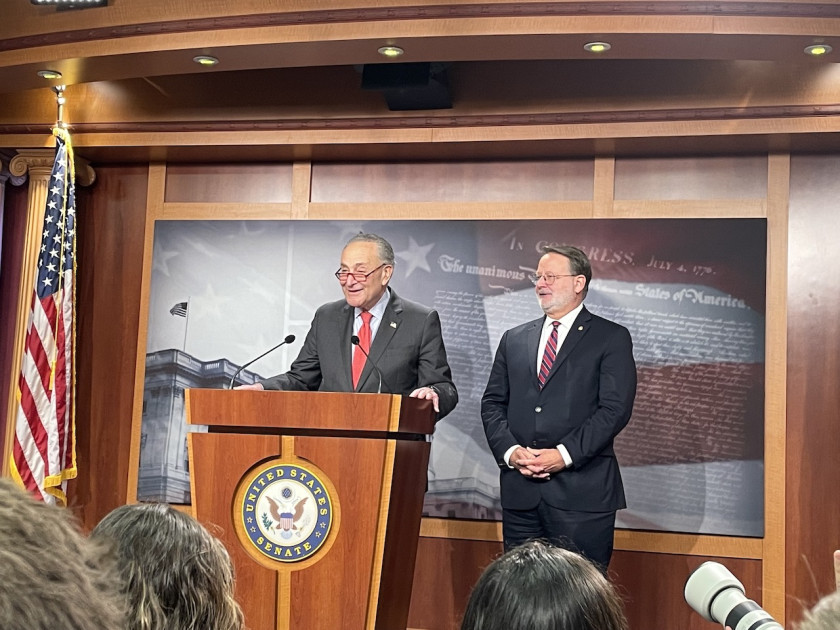
What’s notable is what he didn’t propose. Democrats aren’t demanding permanent subsidies anymore. They’re not demanding Trump’s Medicaid cuts be reversed. They’ve compromised down to a one-year extension and a promise to negotiate.
In a functional legislature, this is where both sides declare victory. Democrats get their year of subsidies, Republicans get their negotiating committee and the promise of future reforms. Everyone reopens the government and takes credit for being reasonable.
But this isn’t a functional legislature. It’s a battlefield where the goal isn’t legislation – it’s dominance.
The House Problem Nobody Wants To Mention
Even if Senate Republicans miraculously accepted this offer, it would still have to pass the House. Speaker Mike Johnson already said he “cannot make any promises” about voting on ACA extensions. House Minority Leader Hakeem Jeffries previously called a one-year extension a “nonstarter” – he wants something longer-term.
So Democrats in the Senate just offered something their own House leader has rejected. And they offered it knowing Senate Republicans would reject it too.
This is shutdown theater. Both parties are making proposals designed to fail so they can blame the other side for the failure. The goal isn’t to reopen government – it’s to win the blame game.
What “Clean CR” Actually Means In This Fight
Democrats keep proposing a “clean” continuing resolution – funding the government at current levels without policy riders. Republicans keep rejecting it because it’s too clean.
The dispute isn’t about spending amounts. It’s about whether reopening the government should require Democrats to accept Republican policy priorities on healthcare, immigration, or other issues that have nothing to do with appropriations.
This is the fundamental breakdown. Democrats say: fund the government, then debate policy. Republicans say: policy concessions first, then maybe we’ll fund the government.
The Constitution doesn’t give guidance here. It just says Congress has to appropriate funds for the government to operate. It doesn’t specify what happens when one party decides appropriations are leverage for unrelated policy wins.
The Bipartisan Bills That Still Can’t Pass
Schumer’s proposal included three bipartisan appropriations bills that already have support. These aren’t controversial – they’re bills both parties helped craft and both parties claim to support.
They still can’t pass. Not because of their content, but because passing them would reduce the pressure on Democrats to cave on healthcare.
This is where the shutdown reveals itself as manufactured crisis rather than genuine impasse. The tools exist to reopen government. The votes probably exist too. What doesn’t exist is the political will to solve the problem without extracting maximum damage to the other side.
What Peters’ Involvement Tells Us About The Senate
Peters isn’t a bomb-thrower. He’s exactly the kind of senator who’s supposed to make deals across the aisle. He talked to Republicans, crafted a proposal that incorporated their concerns, and brought it to the floor.
It died instantly. Not because it was bad policy – but because the Senate has stopped being a place where Peters-style deal-making works.
The current Republican majority doesn’t need Democratic votes to pass most things. What they need is Democratic cooperation to reach the 60-vote threshold on appropriations. And they’ve decided that cooperation is something Democrats should provide unconditionally – or watch the government stay closed.
That’s not governance. That’s constitutional hardball where the rules are: our way, or crisis continues.
The Coming Insurance Premium Crisis
While senators debate, the clock runs on those ACA subsidies. If they expire, insurance companies will have to recalculate premiums for next year. Those calculations are happening now.
Without subsidies, a family paying $200 a month might face $600. A single person paying $100 might see $300 or more. These aren’t worst-case scenarios – they’re the mathematical result of subsidies disappearing.
Republicans are betting Democrats will panic about this and accept bad terms to prevent it. Democrats are betting Republicans will get blamed for the premium spikes. Both parties are comfortable gambling with other people’s healthcare costs.
What neither party is doing is actually preventing the crisis.
When “Compromise” Becomes A Dirty Word
Schumer used the word “compromise” four times in his floor speech. Peters used it twice. The word appears nowhere in Republican responses – just “nonstarter,” “terrorism,” and “stupid.”
That linguistic choice reveals everything. Democrats are trying to position themselves as the reasonable party seeking middle ground. Republicans are trying to position Democrats as enemies making unreasonable demands.
Both framings avoid the truth: This shutdown isn’t about finding common ground. It’s about which party blinks first when Americans start suffering enough to force one side to surrender.
The government stays closed because both parties have decided their political positioning matters more than the people depending on that government to function. That’s not a failure of compromise – it’s a failure of basic obligation.
What Friday’s Rejection Guarantees
The immediate rejection of Schumer’s proposal means the shutdown continues through the weekend at minimum. SNAP benefits stay at 65% in some states, zero in others. Federal workers stay furloughed or working without pay. The uncertainty compounds.
More importantly, it signals that neither party sees sufficient political pain yet to force resolution. Republicans think they can outlast Democrats. Democrats think public opinion will eventually force Republicans to cave. Both are willing to keep testing that theory while real people pay real costs.
The Constitution created a system where Congress controls spending and the president executes the laws. It didn’t create a system where both can simply refuse to function until the other surrenders.
But that’s the system we have now. Not because the Constitution failed – but because the people operating within it have decided constitutional obligations are optional when political leverage is available.
And that’s why Schumer’s “very simple compromise” never had a chance.