
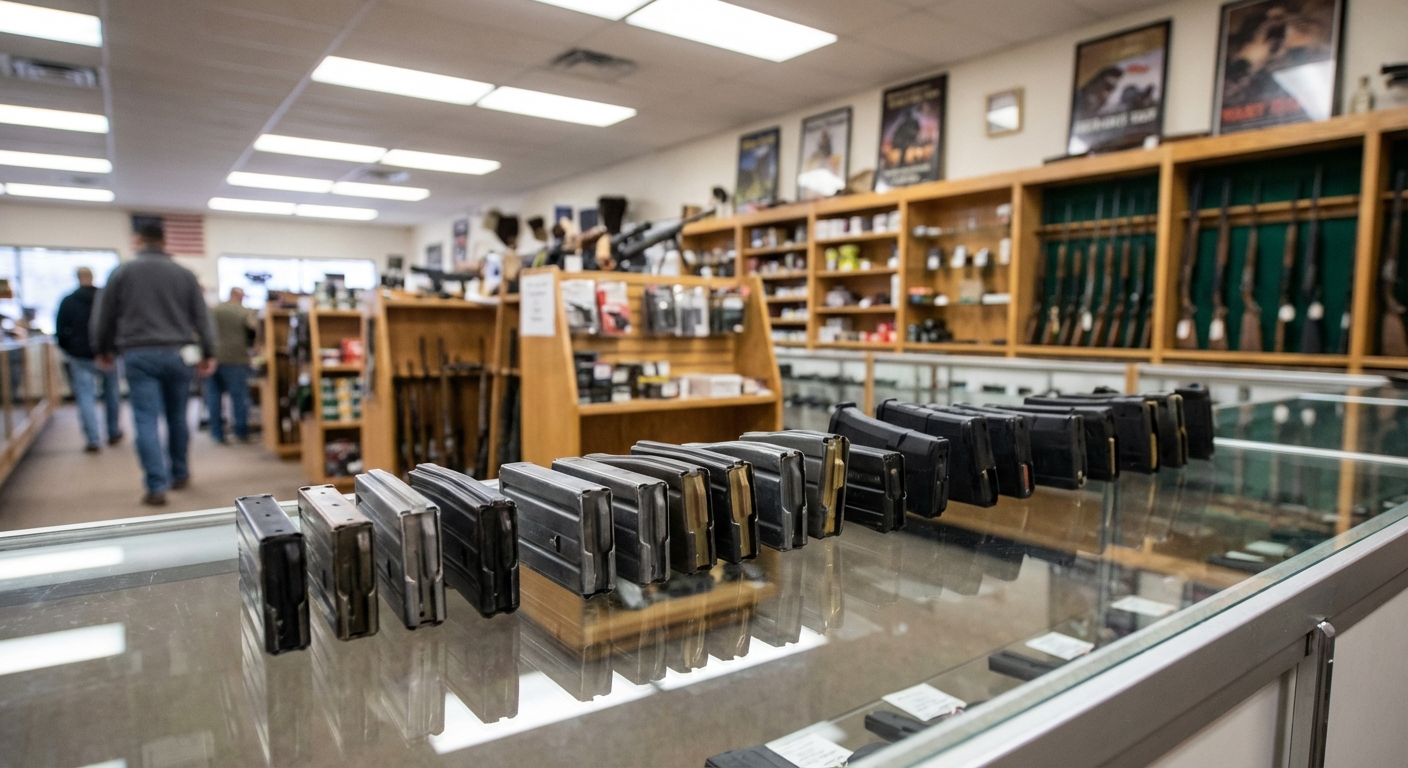
The District of Columbia’s long-running limit on certain firearm magazines is on shaky ground after a new decision from the District of Columbia Court of Appeals. In a ruling issued Thursday, a three-judge panel concluded that the District’s ban on magazines holding more than 10 rounds violates the Second Amendment.
The case matters for two reasons at once. It changes what the law looks like for gun owners in the nation’s capital, and it offers another real-world example of how courts are applying the Supreme Court’s modern Second Amendment framework, especially the focus on whether a weapon or accessory is in “common use.”
What the court decided
The panel reversed the conviction of Tyree Benson, who was arrested in 2022 for possessing a handgun equipped with a magazine that could hold 30 rounds. The court’s majority opinion was written by Judge Joshua Deahl.
Deahl framed the constitutional question as straightforward under current doctrine: if magazines over 10 rounds are commonly possessed by law-abiding Americans for lawful purposes, then an outright ban faces serious constitutional trouble.
In one of the opinion’s key passages, Deahl wrote: “Magazines capable of holding more than 10 rounds of ammunition are ubiquitous in our country, numbering in the hundreds of millions, accounting for about half of the magazines in the hands of our citizenry, and they come standard with the most popular firearms sold in America today.”
Based on that view of prevalence and ordinary ownership, the court concluded the District’s prohibition could not stand. Deahl summarized the holding this way: “Because these magazines are arms in common and ubiquitous use by law-abiding citizens across this country, we agree with Benson and the United States that the District’s outright ban on them violates the Second Amendment.”
Why multiple convictions were undone
This case was not only about the magazine itself. The opinion explains that the magazine restriction effectively blocked Benson from being able to comply with other parts of the District’s firearms rules.
As Deahl put it, “because Benson could not have registered, procured a license to carry, or lawfully possessed ammunition for his firearm given that it was equipped with a magazine capable of holding more than 10 rounds, we likewise reverse his convictions for possession of an unregistered firearm, carrying a pistol without a license, and unlawful possession of ammunition.”
That detail is easy to miss, but important. In plain terms, the court treated the magazine ban as the legal domino that knocked over the rest of the charges in this particular case.
The split on “common use”
Chief Judge Anna Blackburne-Rigsby dissented, and her disagreement helps readers see where the legal fight is likely to concentrate next.
She argued that the majority leaned too heavily on broad ownership statistics and did not focus enough on the specific type of magazine Benson had. In her words, “The majority bases its common usage analysis on ownership statistics that show only that magazines holding 11, 15, or 17 rounds of ammunition are in common use.”
She also drew a sharper line around the 30-round magazine at issue, writing: “The majority, however, fails to contend with the reality that these statistics do not support the conclusion that the particularly lethal 30-round magazine, such as the one Mr. Benson possessed here, is in common use for self-defense. It simply is not.”
That difference is not just academic. It points to the practical question courts repeatedly face after recent Supreme Court Second Amendment rulings: how broadly should “common use” be defined, and what level of specificity matters when a law targets a subset of commonly owned items?
The federal government’s unusual posture
One notable procedural wrinkle is that the United States, which prosecuted Benson, changed its position during the appeal. The opinion states that the federal government “now concedes that this ban violates the Second Amendment,” even while the District of Columbia continued to defend the local law.
For everyday readers, the significance is simple: when the prosecuting authority agrees with a defendant on a constitutional point, the court’s job does not disappear, but the usual adversarial posture is altered. The District remained a party and continued to argue the law was valid, so the constitutional question still had to be resolved.
What happens next
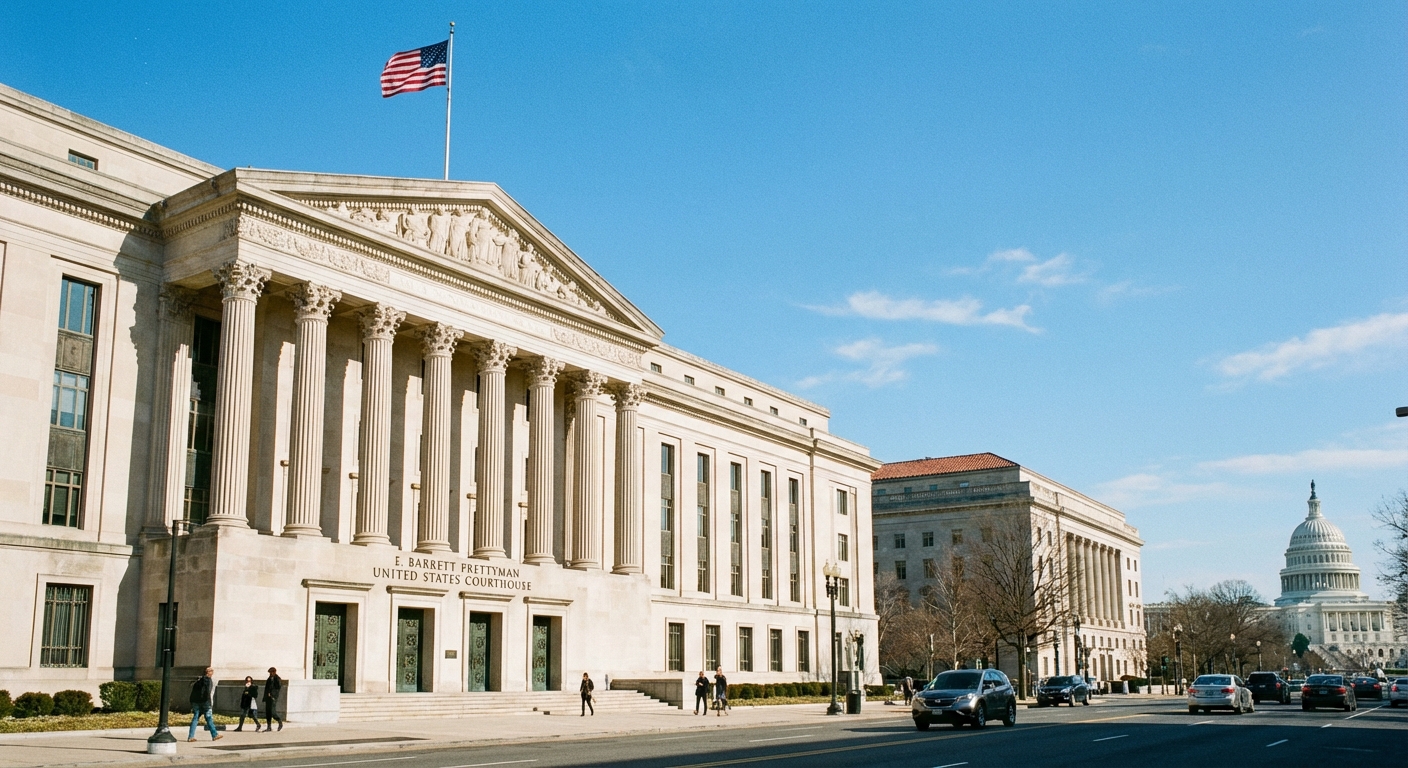
The District of Columbia has options. It can ask the D.C. Court of Appeals to rehear the case with a larger panel, or it can seek review at the U.S. Supreme Court, as reported by The New York Times.
There is also a bigger-picture complication: the Times reported that a prior decision by the U.S. Court of Appeals for the District of Columbia Circuit had upheld the constitutionality of the District’s magazine law. How those rulings interact is not yet clear, and that uncertainty is one reason this issue may not be settled quickly.
Why this matters beyond Washington
Magazine capacity limits show up in state and local laws across the country, and they sit at the intersection of two hard realities. On one hand, lawmakers point to public safety concerns tied to rapid, sustained firing. On the other, courts have to evaluate whether a restriction takes something commonly owned for lawful purposes and removes it from ordinary citizens altogether.
This D.C. decision is a reminder that Second Amendment cases often turn less on abstract ideology and more on method: What counts as an “arm”? What does “common use” mean in practice? And when a law is a flat ban rather than a regulation, can it survive constitutional scrutiny?
For now, the immediate takeaway is limited but clear: the D.C. Court of Appeals has declared the District’s ban on magazines over 10 rounds unconstitutional, and the District must decide whether to continue the fight in a larger court.