
Washington, D.C. feels like it should work like any other American city. It has neighborhoods, public schools, police, courts, taxes, and a mayor who can lose an election for potholes just like anywhere else.
But constitutionally, D.C. is not “anywhere else.” It is the seat of the national government, built to be outside the control of any one state. That single design choice, baked into Article I, is why D.C. can have local elections and still be ultimately governed by Congress.
Home rule is the compromise that tries to make both facts true at once: D.C. residents can run their city day to day, and Congress retains the last word.
That last word matters even more because D.C. residents do not have voting representation in the body that governs them. The District has a single, nonvoting delegate in the House and no senators, even though Congress can rewrite D.C. law.

Join the Discussion
The constitutional reason D.C. is different
The Constitution anticipates a national capital that is not part of a state. The key text is the District Clause in Article I, Section 8, Clause 17. It gives Congress power:
“To exercise exclusive Legislation in all Cases whatsoever” over a federal district that would become the seat of government.
That is unusually sweeping language. It is not a shared power. It is not a limited list. It reads like a broad grant of authority for Congress to act as the local legislature for the capital.
Why would the Framers do that? Because they had lived through a moment when Congress felt physically vulnerable. In 1783, during the Pennsylvania Mutiny, disgruntled soldiers confronted the national government in Philadelphia, and Pennsylvania authorities did not promptly protect Congress. The episode helped cement the idea that the federal government should not depend on any state for its security.
So D.C.’s constitutional status is not an accident of modern politics. It is an intentional design choice: the national capital is meant to be governed by the nation, through Congress.
From direct control to home rule
For much of D.C.’s early history, there was no elected city government in the modern sense. Congress directly controlled the District’s governance, sometimes through appointed commissioners and sometimes through structures Congress created and could revise at will.
Modern home rule arrived much later. In 1973, Congress passed the District of Columbia Self-Government and Governmental Reorganization Act, commonly known as the Home Rule Act.
The Home Rule Act did not change the Constitution. It did something more limited and more revealing: Congress used its District Clause power to delegate some of its own authority to locally elected officials.
That means home rule is not an inherent constitutional status for D.C. It is a permission structure created by statute. And what Congress delegates by statute, Congress can also revise by statute.
How D.C. government works
The Home Rule Act creates a local government that looks familiar to anyone who has lived in a city with a strong mayor:
Mayor, elected by D.C. voters, who runs the executive branch and city agencies.
D.C. Council, a legislative body that passes local laws and oversees the executive.
Advisory Neighborhood Commissions (ANCs), neighborhood-level elected bodies that advise on zoning, public safety, and local concerns.
D.C. can pass ordinances, set local policy, and fund services through its budget process. It operates many of the functions people associate with self-government.
But the Home Rule Act also makes the constitutional reality explicit: D.C. is self-governing only within the boundaries Congress sets.

How Congress keeps control
If you want to understand D.C. home rule, skip the talking points and focus on the mechanics. Congress keeps leverage in three durable, structural ways.
1) Congress can block or undo D.C. laws
D.C. Council legislation does not become untouchable local law the moment it passes. Under the Home Rule Act, many D.C. acts are transmitted to Congress for a review period. Those review windows are not always identical across categories and have changed over time.
During the review period, Congress can negate a D.C. law by passing a disapproval law (a joint resolution) that the president signs, or that Congress enacts over a veto.
And even outside the formal review mechanism, Congress can intervene at any time through ordinary federal legislation. That is part of what “ultimate legislature” means in practice.
2) Congress controls D.C. through the budget
D.C. raises substantial local revenue, but its budget still runs through a process that involves Congress. That creates a major oversight point where Congress can impose conditions, restrict how funds are used, or require specific actions.
Even when the dollars are locally raised, the constitutional relationship is not the same as a state’s control over its own appropriations. Congress can and does use budget riders to shape District policy.
3) Congress can rewrite the rules of D.C. government
The Home Rule Act is a federal statute. Congress can amend it. Congress can expand D.C.’s authority, narrow it, restructure institutions, or reclaim authority it previously delegated.
This is the part that often gets missed: congressional oversight is not just about particular controversial laws. It is about the legal architecture of the District itself.
What D.C. can and cannot do
The Home Rule Act grants broad local authority, but it also includes explicit limits. The details can get technical, but the high-level idea is easy to grasp: D.C. can run municipal affairs, but it cannot fully act like a sovereign state.
A few concrete examples of home rule limits include:
No commuter tax. D.C. is barred from taxing the income of nonresidents who work in the District.
Constraints tied to the federal presence. D.C. cannot freely tax or regulate federal property and many federal functions.
Criminal justice is a shared, unusual space. Many serious prosecutions in D.C. are handled by the U.S. Attorney for the District of Columbia, a federal office, and Congress can scrutinize major criminal code changes more closely than in a typical city.
Those constraints are not just policy preferences. They are the practical consequence of D.C.’s constitutional status: Congress is not merely a higher level of government. In the District, Congress is the ultimate legislature.
Delegation, not federalism
In a state, local governments exist because the state allows them to. Counties and cities are typically creatures of the state, and state law defines their powers. Under American federalism, the state is not subordinate to Congress in the same way for internal governance. States have their own constitutional footing and reserved powers, even though federal law is supreme within its sphere.
D.C. is different. D.C. does not sit in the federal system as a state does. It is a federal district, and its authority is fundamentally delegated from Congress.
So when people say, “Why doesn’t D.C. just do what states do?” the constitutional answer is straightforward: because D.C. is not a state, and the Constitution does not treat it as one.
City, state, or something else?
D.C. is best understood as a hybrid created by constitutional design and statutory compromise.
It functions like a city in daily governance.
It has responsibilities that look state-like in certain areas.
But it remains, legally, a federal district under congressional supremacy.
This hybrid status explains why debates about D.C. often feel like category errors. Critics talk as if D.C. should operate like a state. Defenders talk as if D.C. should operate like a city. The Constitution created a third thing, and the Home Rule Act tries to make that third thing workable for the people who live there.
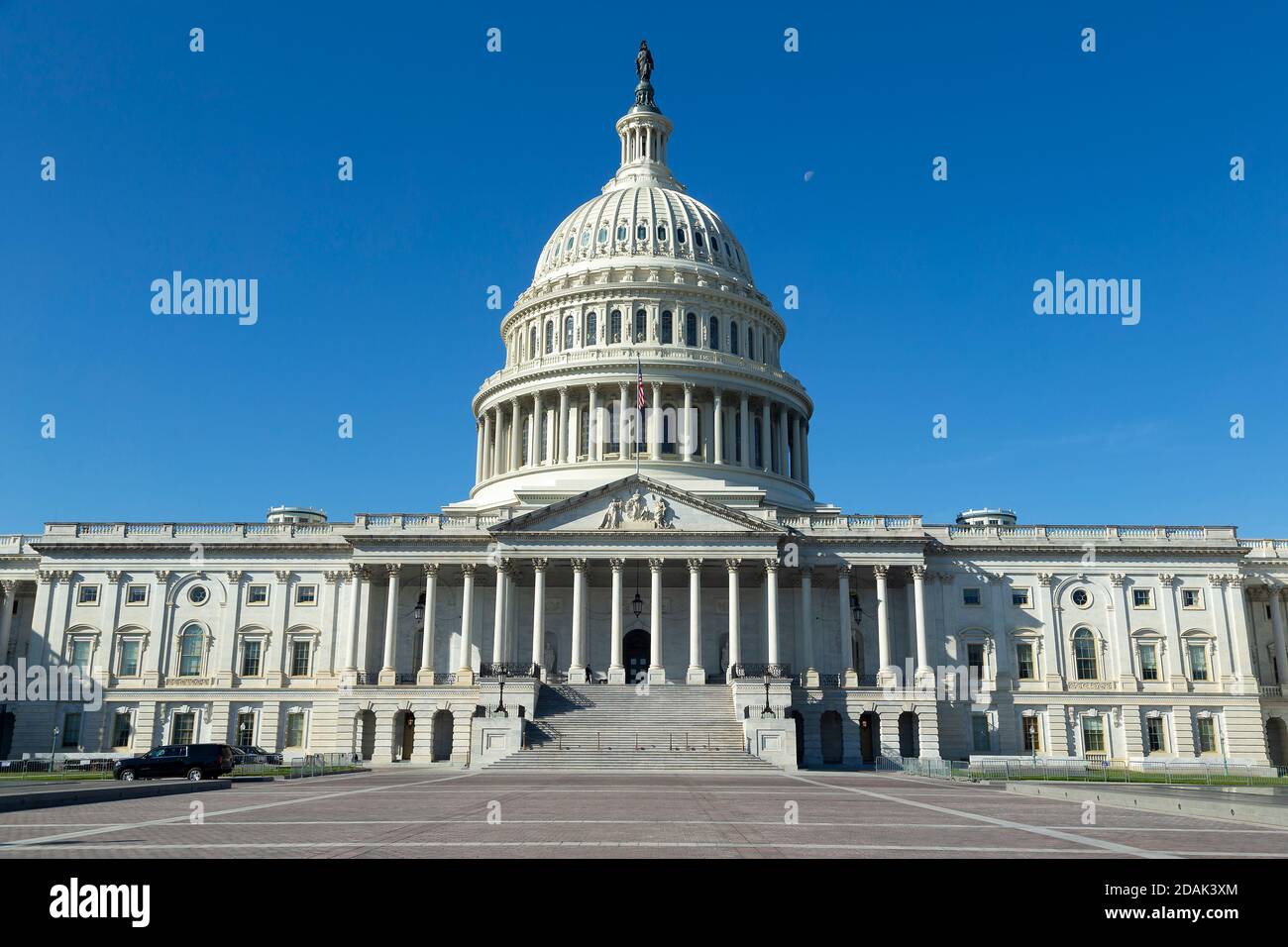
Representation is part of the story
Home rule debates are not only about who writes local laws. They are also about who gets a vote in the institution with final authority.
D.C. has one nonvoting House delegate and no senators. Separately, the 23rd Amendment gives D.C. a limited role in presidential elections by awarding the District electoral votes as if it were a state, up to the number of electors of the least populous state.
Put those pieces together and you get a distinctive civic reality: D.C. residents can vote for mayor and council, and for president, but they do not have voting power in Congress even though Congress can overrule local decisions.
Common misconceptions
“Home rule means Congress cannot interfere.”
Home rule means the opposite: Congress can interfere, but often chooses not to. The oversight power is structural and always available.
“D.C. is treated like a state now.”
D.C. residents have some constitutional and political rights extended by amendments and statutes, but that does not convert the District into a state. The District Clause remains the central governing text.
“Congress oversees D.C. like it oversees states.”
Congress can preempt state law through valid federal legislation, but it does not sit as a state legislature. In D.C., Congress is closer to a legislature with final local authority.
Why this matters
D.C. home rule is a living civics lesson about sovereignty in the American system. It reveals three constitutional truths that are easy to forget:
Not all American communities sit in the same constitutional category. States, territories, tribal nations, and the District all have different constitutional relationships to Congress.
Structure matters as much as rights. D.C. residents can vote locally, yet still lack the same self-governing security states enjoy because the District’s structure is delegated and its representation in Congress is limited.
Congressional power can be broad when the Constitution says it is. The District Clause is one of the Constitution’s clearest grants of plenary legislative authority.
Whether you view that design as sensible, outdated, or unjust is a separate argument. The constitutional point is simpler: D.C. home rule is a statutory window inside congressional supremacy, not a replacement for it.
The takeaway
Washington, D.C. is governed differently because the Constitution intentionally made the capital a federal district, not a state. The Home Rule Act gives D.C. residents meaningful local self-government, but it does so through congressional delegation, not constitutional equality with states.
Congress retains leverage through law review and disapproval, budget control, and the ability to rewrite the rules of D.C. governance itself. And D.C.’s lack of voting representation in Congress helps explain why those levers are not just abstract civics. They shape daily politics.
Home rule is not a myth. It is real power. It is just not final power. In the District, final power still lives where the Constitution put it: in Congress.