
DACA is one of those policies that hundreds of thousands of recipients, and millions of family members, coworkers, and neighbors, experience as a life plan, while the Constitution treats it like a power problem.
Deferred Action for Childhood Arrivals, first announced in 2012, does not create a new immigration status. It does not hand out green cards. It does not promise citizenship. What it does is more modest and, constitutionally speaking, more volatile: it directs the executive branch to temporarily defer deportation for a defined group and to issue work authorization under existing regulatory authority.
That is why DACA has always lived in a strange space. It is intensely real in the daily lives of recipients, employers, universities, and communities. It is also perpetually exposed to the basic constitutional question that hovers over modern government: when Congress does not act, how far can a president go?

Join the Discussion
What DACA does and does not do
DACA is best understood as a package of two related decisions inside the executive branch.
- Deferred action: a discretionary choice by immigration authorities to temporarily deprioritize removal of specific individuals.
- Work authorization: eligibility for an Employment Authorization Document based on regulations that allow work permits for certain categories of noncitizens, including those granted deferred action. DACA work permits are commonly issued under category (c)(33), and whether the government can attach this kind of benefit to deferred action at scale has been part of the ongoing legal fight.
For recipients, that means a renewable period of protection from deportation and permission to work lawfully, usually in two-year increments, as long as eligibility requirements are met.
Eligibility basics
The exact requirements are spelled out in DHS guidance and later rulemaking, but the broad idea has remained consistent. DACA generally hinges on factors such as:
- Arrival in the United States as a child and continuous residence for a set period.
- School, graduation/GED, or qualifying military service.
- Background checks and limits tied to certain criminal convictions and public safety concerns.
What DACA does not provide
- No lawful permanent resident status.
- No direct path to citizenship.
- No guaranteed protection that cannot be reversed by a future administration.
- No immunity from all immigration consequences. For example, DACA does not erase unlawful presence and does not automatically fix the barriers that can appear in family-based or employment-based processes.
Travel and advance parole
DACA, by itself, is not permission to leave and re-enter the country. Historically, many DACA recipients have applied for advance parole, a separate discretionary travel authorization. Advance parole has sometimes been legally significant for people pursuing other immigration options later, but it is not automatic, it can change with policy and litigation, and it is not a substitute for lawful status.
This is a central civic education point: DACA looks like a status because it functions like one in everyday life, but legally it is not one. That gap explains much of the litigation.
How DACA began
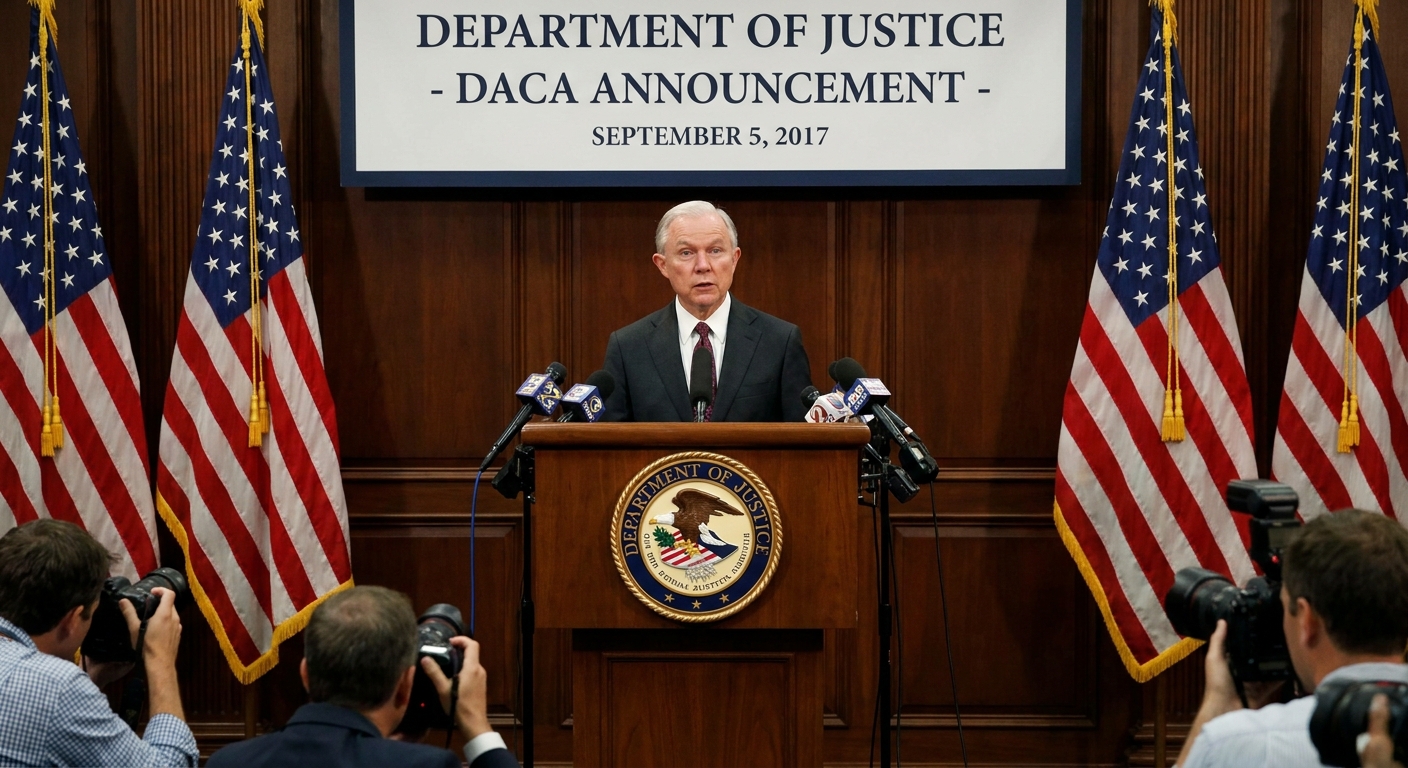
In 2012, after repeated legislative failure of the DREAM Act and related proposals, the Obama administration announced DACA through a Department of Homeland Security memorandum. The core theory was straightforward: immigration enforcement resources are limited, and agencies must set priorities. Certain young people brought to the United States as children, with school or military ties and no serious criminal history, were defined as a low priority group.
That reasoning leans on a familiar feature of the presidency. The executive branch cannot enforce every law against every person all the time. It has to choose. Those choices, in legal terms, are often grouped under prosecutorial discretion.
But DACA did more than decline to pursue individual deportations case by case. It established a standardized program with eligibility criteria, an application process, and large-scale reliance. That programmatic structure is what pulls DACA from the realm of ordinary discretion into the realm of constitutional controversy.
The constitutional tension
The Constitution does not mention immigration programs by name, but it does build a system for who makes law and who executes it. Immigration policy today is largely statutory, centered on the Immigration and Nationality Act (INA), and administered through federal agencies.
- Article I: Congress writes the laws, including immigration statutes.
- Article II: the president must “take Care that the Laws be faithfully executed,” and oversees executive agencies that enforce those statutes.
DACA sits at the intersection of those two sentences. Supporters tend to describe DACA as a lawful exercise of enforcement discretion within a complex statutory system. Critics tend to describe it as a president effectively rewriting immigration law by conferring benefits Congress never authorized for that group.
Why this is not just politics
Separation of powers questions feel abstract until you watch them operate in real time. If a president can create a nationwide, renewable program that reshapes the labor market and the lives of hundreds of thousands of people, using only executive memos, then Congress’s control over immigration policy starts to look optional. If a president cannot do that, then the executive branch becomes far less able to respond to legislative gridlock or humanitarian urgency.
DACA is where those institutional fears meet.
The key legal battleground
Many DACA cases turn not on a single dramatic constitutional clause, but on something more procedural and more powerful: the Administrative Procedure Act (APA). The APA governs how federal agencies create, change, and justify policy.
Courts often ask questions like these:
- Was the policy adopted through the correct process, including notice-and-comment rulemaking when required?
- Did the agency give a reasoned explanation for its decision?
- Did it consider reliance interests, meaning the real-world consequences for people and institutions that reorganized their lives around the policy?
This is why DACA’s story includes a particularly American kind of irony. A program criticized as “executive overreach” can survive or fail because of bureaucratic steps and the quality of an agency’s written explanation.
But the APA is not the only fault line. A second, recurring question is statutory authority: even if an agency follows perfect procedure, does the INA actually allow DACA’s combination of deferred action plus associated benefits on this scale?
What the Supreme Court has said
The Supreme Court has addressed DACA directly, but not in the way many people assume.
Department of Homeland Security v. Regents (2020)
In 2020, the Supreme Court ruled that the Trump administration’s attempt to end DACA was arbitrary and capricious under the APA because the agency did not adequately explain its decision and did not properly weigh reliance interests. The Court did not hold that DACA was required by the Constitution, and it did not definitively bless DACA as substantively lawful. It held that if the government is going to end it, it must do so through a legally adequate process.
That is an important civic lesson: the Court can block an action without endorsing the underlying policy. Procedure can decide outcomes while leaving the core constitutional question unresolved.
Why lower courts keep blocking it
After 2020, litigation continued, especially in Texas and the Fifth Circuit. Several courts have concluded that DACA, as structured, conflicts with immigration statutes and exceeds what Congress authorized in the INA. The details shift with each ruling, stay, and appeal. The structural point does not: when a program is not anchored in a statute, it is easier to attack from multiple angles at once.
A short timeline
- 2012: DACA is created by DHS memo.
- 2017: the Trump administration announces a rescission; litigation follows.
- 2020: the Supreme Court, in DHS v. Regents, blocks that rescission for inadequate APA reasoning.
- 2021: a federal district court in Texas rules DACA is unlawful and enjoins approval of new applications, while allowing renewals to continue for existing recipients.
- 2022: DHS issues a final rule after notice-and-comment rulemaking, attempting to “reinforce and preserve” DACA and cure the procedural defect tied to the original 2012 memo.
- After 2022: lower courts continue to block expansion to new recipients, concluding that even with proper procedure, DACA is substantively unauthorized under the INA.
Renewals versus new applications
A common posture in DACA litigation has been allowing renewals to continue while blocking new enrollments. Courts sometimes do this to avoid abrupt disruption to people who have already organized their lives around the program, even while holding that the program cannot expand under the challenged legal framework.
Operational details can change quickly with injunctions, stays, and appeals. As a general matter in the current litigation era, existing recipients have often been able to renew, while first-time applications have been accepted but not approved. Any moment-in-time description should be read as contingent on court orders and DHS guidance.
Congress’s role
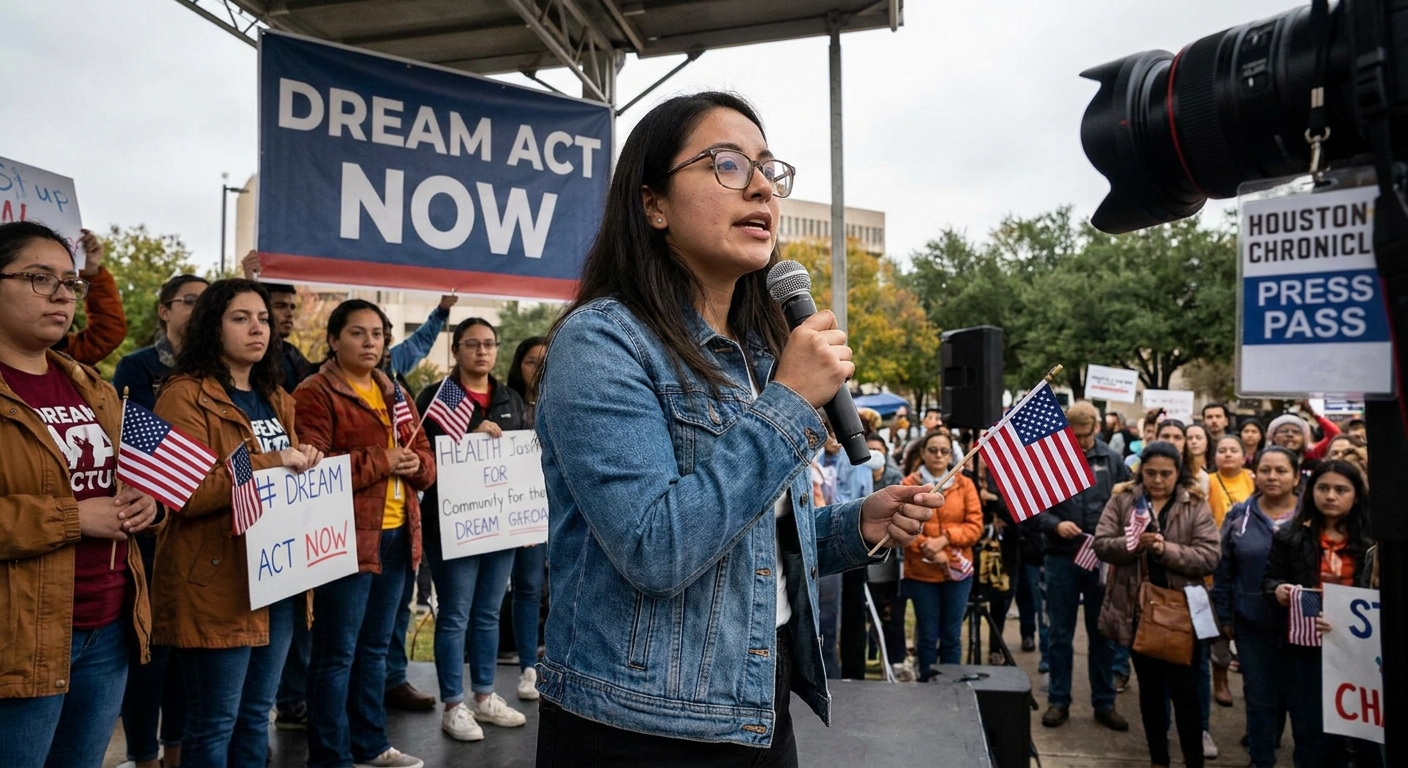
If you want the simplest explanation for why DACA feels permanent to recipients but temporary in court, here it is: Congress has the primary authority to create durable immigration status and a path to citizenship through statute. DACA does not come from Congress.
Congress can, through legislation:
- Create lawful status for people brought to the U.S. as children.
- Set eligibility rules and procedural protections.
- Provide stable work authorization.
- Create a path to permanent residency and citizenship.
An executive program can approximate parts of that in practice, but it cannot easily supply permanence. Even if one administration defends DACA, another can try to unwind it. Even if one court permits it, another can enjoin it. That is what life is like when policy rests on discretion rather than statute.
States and lawsuits
Immigration is primarily federal, but states often challenge federal immigration policies by arguing that they bear financial or administrative costs. DACA litigation has featured these claims, including arguments about employment, public services, and the downstream effects of federal decisions.
This is part of a larger constitutional pattern: states use the courts to pressure national policy when Congress is stuck. It is not unique to immigration. It is a recurring feature of modern American governance.
Rights and limits
One reason DACA creates confusion is that people understandably talk about it in the language of rights. DACA recipients have built lives, careers, and families. That feels like something the law should protect as a matter of fairness.
But constitutionally, DACA is not like speech or due process in the Bill of Rights. It is closer to a revocable government policy that confers eligibility for certain benefits, as long as the executive branch maintains it and as long as courts permit it under statutory and administrative law.
That does not make DACA insignificant. It makes it fragile.
Where DACA goes from here
DACA’s future is shaped by three levers, and only one of them is a court.
- Congress: the only actor that can reliably turn DACA-like protections into durable legal status.
- The executive branch: can prioritize enforcement, create guidance, and attempt rulemaking, but will always face the question of statutory authority under the INA.
- The judiciary: will continue to referee the boundary between discretion and lawmaking, often through the APA rather than sweeping constitutional declarations.
If you are looking for the constitutional moral of the story, it is this: DACA is what happens when the demand for policy outruns the machinery designed to make it. The Constitution does not guarantee that the machinery will move quickly. It guarantees that the machinery will be separate, contested, and hard to bypass.
Frequently asked questions
Is DACA in the Constitution?
No. DACA is an executive branch policy first announced in 2012. The constitutional issues arise from separation of powers and the president’s duty to execute the laws, plus statutory and administrative law limits on agencies.
Does DACA give citizenship?
No. DACA does not provide lawful permanent residency or citizenship. It provides temporary deferred action and, typically, work authorization.
Why did the Supreme Court “save” DACA in 2020?
The Court did not declare DACA permanently lawful. It held that the attempt to end it at that time violated the Administrative Procedure Act because the agency’s explanation and consideration of reliance interests were inadequate.
Can a president end DACA?
A president can try, but the end must comply with administrative law requirements and must survive court challenges about statutory authority and procedure. The broader durability question is political and legislative: only Congress can create stable legal status.
What should DACA recipients do right now?
This is not legal advice, but the practical reality is that timelines and requirements can shift quickly. Many recipients track DHS updates, court rulings, and renewal windows closely, and consult qualified legal help for individual decisions, especially around travel, criminal issues, or potential pathways that depend on advance parole or other discretionary approvals.