
DACA is one of those policies that feels like it must be written into law somewhere, simply because it has shaped so many lives for so long.
It is not. Deferred Action for Childhood Arrivals was created in 2012 by the executive branch, not by Congress. That single fact explains nearly everything that has happened since: the uncertainty, the litigation, the political whiplash, and the constitutional arguments that keep returning like a tide.
If you want to understand DACA, you have to understand the machinery underneath it. Not just immigration policy, but the Constitution’s allocation of power between Congress and the President, the administrative law rules that govern how agencies act, and the way courts decide whether an administration can change course.

Join the Discussion
What DACA does
DACA provides two main benefits to eligible recipients:
- Deferred action, meaning the federal government decides not to pursue removal (deportation) for a period of time, typically in renewable two-year increments.
- Work authorization, which is granted through separate regulatory authority once deferred action is approved, allowing recipients to apply for employment authorization documents.
DACA does not create lawful immigration status. It does not provide a green card. It does not create a direct path to citizenship. It can count as “lawful presence” for certain purposes, but that phrase is a term of art and it does not equal lawful status.
That distinction matters because it is the fault line in the legal debate. Supporters tend to describe DACA as a humane prioritization decision in a system with limited enforcement resources. Critics tend to describe it as a large-scale policy that only Congress has the authority to create.
Who DACA covers
DACA is aimed at people often called “Dreamers,” who were brought to the United States as children and have built their lives here. The eligibility rules are detailed, but the core idea is simple: arrival as a minor, long-term continuous residence, and a clean enough record that the government is willing to exercise discretion.
At a high level, eligibility has generally required:
- Coming to the United States before age 16 and meeting age-related cutoffs tied to the original 2012 program.
- Continuous residence since 2007 and physical presence at key dates.
- Meeting education or military service requirements (for example, being in school, having graduated, having a GED, or having served).
- Not having certain criminal convictions, and not posing a public safety or national security risk.
This is not a full checklist, and the details matter. But it helps explain why DACA has always been framed as a narrow slice of the undocumented population, even though the program’s scale is large.
The constitutional question
Immigration law is federal law, and Congress has broad power to write it. The Constitution does not contain a single “immigration clause,” but it gives Congress powers that courts have long treated as central to immigration authority, including the Naturalization Clause and the power to regulate foreign commerce. The federal government also acts with sovereign authority in foreign relations and border control, even when that authority is not spelled out in one neat sentence.
So where does the President come in?
The President’s job, under Article II, is to “take Care that the Laws be faithfully executed.” That is the constitutional hook for executive enforcement. And enforcement inevitably includes discretion, because no administration has the people, time, or money to enforce every violation against every person all the time.
DACA lives in that gap. It is the executive branch saying: given finite resources and humanitarian priorities, we will defer action against a defined category of people who came to the United States as children and meet additional conditions.
The key constitutional tension is this:
- Enforcement discretion is real, and courts have long recognized it.
- Congress writes the rules, and the President cannot effectively create a new legal status that contradicts or bypasses those rules.
Most DACA litigation is less about whether discretion exists and more about whether DACA is discretion at scale or legislation in disguise.
How DACA reached the Court
DACA was announced in 2012 during the Obama administration. Years later, the Trump administration attempted to end the program.
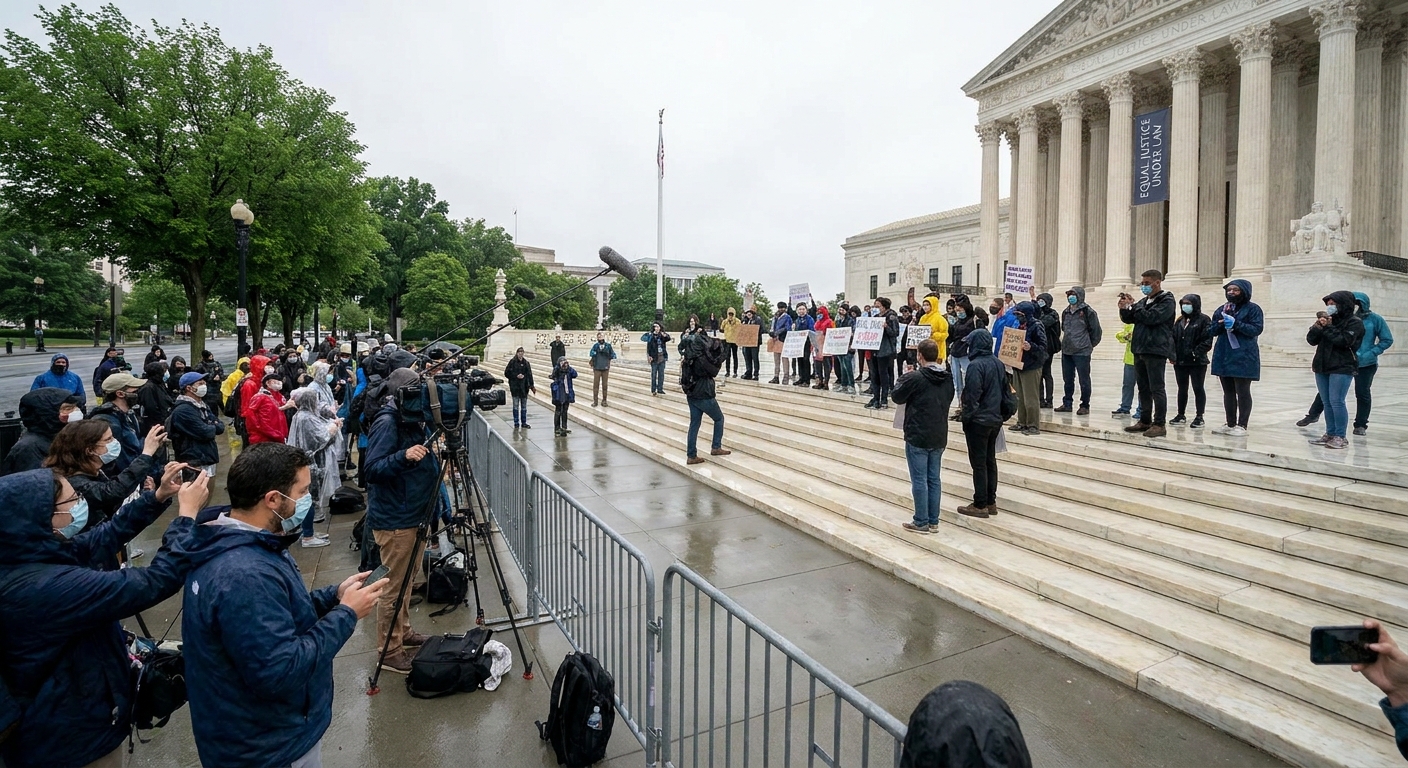
That rescission triggered a wave of lawsuits, and the Supreme Court took the case in Department of Homeland Security v. Regents of the University of California (2020).
The Court’s holding is often misunderstood. The Court did not declare DACA constitutional. It did not declare DACA required. Instead, it ruled that the way the administration tried to end DACA was arbitrary and capricious under the Administrative Procedure Act (APA).
Regents (2020) in plain language
When an agency makes a major policy shift, it must offer a reasoned explanation. It must consider important aspects of the problem. It cannot simply announce a reversal and treat reliance as someone else’s problem.
The Court said DHS did not adequately consider a key alternative: keeping forbearance (deferred action) in place while ending associated benefits like work authorization. DHS treated the two as inseparable. The Court said the agency had to grapple with the possibility that they could be separated, and explain its choice.
The Court also said DHS did not adequately address the real-world reliance interests of DACA recipients, employers, schools, and communities.
So DACA survived in 2020, but it survived on administrative law grounds, not on a clean constitutional endorsement.
Why challenges continued
After Regents, DACA remained in a kind of legal limbo. The Court had said the rescission was unlawful as executed, not that DACA itself was beyond challenge.
That opened the door for new lawsuits aimed at the program’s legality. The major line of attack has been that DACA is an agency program with sweeping effects that should have gone through formal rulemaking and exceeds executive authority.
The APA issue
The Administrative Procedure Act generally requires agencies to use notice-and-comment rulemaking for substantive rules. DACA began as guidance and policy memoranda, which made it easier to launch quickly, but also easier to attack later as procedurally improper.
In response, the Biden administration attempted to fortify DACA by issuing a regulation, finalized in 2022, to preserve it through a more formal administrative process. That step addressed one vulnerability. It did not erase the underlying statutory and constitutional arguments raised by challengers.
The deeper dispute
Even if an agency uses proper procedures, it still must act within the authority Congress granted. Critics argue that DACA is not merely deciding whom to deport first, but instead confers benefits at scale in a way that looks like a parallel immigration system. Supporters counter that deferred action has long been part of immigration practice, and that work authorization is contemplated by regulations tied to deferred action categories and related determinations of lawful presence for specific purposes.
This is where the constitutional theme returns: if Congress has not created a Dreamers legalization program, can the executive branch do something close to one through enforcement discretion and work authorization?
Where things stand now
Here is the practical reality that often gets lost in the constitutional debate: as of the date of publication, DACA is still operating in a limited form because of ongoing litigation, including Texas v. United States in the Fifth Circuit.
The government is generally continuing to process renewals for existing recipients. But it has been barred from granting new, first-time DACA applications under court orders that have shaped how the program can function while the lawsuits continue. That means DACA can be both very real for current recipients and effectively closed for people who would otherwise be applying for the first time.
Because this area moves through courts and administrations, readers should treat the status of new applications as a live question and check the most recent official guidance and court developments.
Separation of powers
DACA’s durability has always been a paradox: it has lasted because presidents have power, but it remains fragile because presidents have power.
When Congress does not legislate, the executive branch often fills gaps with policy. Sometimes that is necessary. Sometimes it is controversial. Sometimes it is both at once. The Constitution does not offer a neat boundary line for every scenario. Instead, it sets up competing principles that courts apply case by case.
Congress: permanence
Congress can create stable legal status through statutes. Statutes can be repealed, but they carry the democratic legitimacy of bicameralism and presentment, and they are not as vulnerable to being undone by a new administration on day one.
DACA, by contrast, is renewable but not guaranteed. Its existence depends on choices made by the executive branch and the outcome of ongoing litigation.
The executive branch: speed
Presidents can respond quickly to changing enforcement priorities, humanitarian crises, and resource constraints. That flexibility is a feature of the system, not a bug. The question is when flexibility becomes something else: a replacement for legislation.
Rights and limits
A common misconception is that DACA creates constitutional rights. It does not. DACA recipients are still protected by the Constitution in many ways, just like any person within the United States is protected by many constitutional guarantees. But DACA itself is not a constitutional entitlement.
That distinction affects expectations and legal strategy:
- Due process can constrain how the government takes away certain benefits once granted, especially where rules and reliance interests exist.
- Equal protection principles can shape how policies are applied, though immigration classifications often receive different judicial treatment than most domestic classifications.
- But the existence of DACA is primarily a question of statutory authority and administrative law, not a newly discovered constitutional right.
In other words, DACA is a policy that interacts with constitutional protections, not a constitutional promise in itself.

What courts focus on
When DACA is litigated, courts typically focus on a few recurring questions:
- Statutory authority: Does existing immigration law allow the executive branch to implement a program like this, including the related work authorization?
- Administrative procedure: Did the government follow the APA requirements for creating, modifying, or rescinding the program?
- Arbitrariness: Did the agency offer a reasoned explanation that considers reliance and alternatives?
- Standing and remedies: Who can sue, and what relief can a court order, especially when a policy affects hundreds of thousands of people?
Notice what is not usually the centerpiece: a sweeping Supreme Court declaration that the Constitution requires DACA or forbids it. The cases tend to be narrower and more procedural, because that is often how modern governance disputes are resolved in court.
Why it is a case study
If you want a single issue that reveals how American government actually works, DACA is a strong candidate.
It shows how:
- Congressional inaction can push policy into the executive branch.
- Executive action can provide real, immediate relief while remaining legally precarious.
- Courts can preserve or disrupt major policies without directly answering the biggest moral question underlying them.
- Administrative law, a subject most people never study, can decide the fate of families and communities.
The Constitution is often discussed as a list of rights. But it is also an operating system. DACA is what it looks like when that operating system is forced to run a high-stakes program without a clean statutory command from Congress.
Key takeaways
- DACA was created by the executive branch in 2012 and provides deferred action and work authorization for eligible recipients.
- It does not create lawful immigration status or a path to citizenship. “Lawful presence” in this context is limited and does not mean lawful status.
- The Supreme Court’s 2020 decision in DHS v. Regents preserved DACA because the rescission was arbitrary and capricious under the APA, not because the Court definitively upheld DACA’s legality.
- The core dispute is separation of powers: how far enforcement discretion can go before it looks like lawmaking.
- As litigation continues, including Texas v. United States, DACA’s real-world availability has been constrained. Renewals have continued, while new, first-time applications have been blocked.
- DACA’s long-term stability is most likely to come from Congress, because statutes are harder to unwind than executive policies.
FAQ
Is DACA in the Constitution?
No. DACA is not mentioned in the Constitution and is not a constitutional right. It is a federal immigration policy created by the executive branch.
Did the Supreme Court say DACA is constitutional?
Not in a broad, final way. In 2020, the Supreme Court held that the attempt to end DACA was arbitrary and capricious under the Administrative Procedure Act. That is different from a definitive ruling that DACA is lawful in all respects.
Can a president end DACA?
A president can try, but the government generally must comply with administrative law requirements to rescind a major policy, including offering a reasoned explanation and addressing reliance interests. Ongoing litigation also shapes what can happen and when.
Is DACA open to new applicants right now?
In general, no. Because of ongoing litigation, including Texas v. United States, the government has continued processing renewals but has been barred from granting new, first-time DACA applications. Readers should check the latest official guidance because court orders can change what is possible.
Why is DACA so vulnerable compared to a law passed by Congress?
Because DACA is an executive policy, not a statute. It can be changed by future administrations and remains subject to legal challenges arguing that the executive branch exceeded its authority.