
DACA is one of those modern policies that feels bigger than its paperwork. It shapes who can work, drive, study, and plan a future in the only country many recipients remember. And yet its legal foundation is thin by design: it is not a law passed by Congress. It is an executive branch decision about how to enforce existing immigration law.
That single fact explains almost everything about DACA’s legal controversy. A program built through executive action can be changed or unwound by a later administration, but doing so in a legally durable way usually requires the agency to follow administrative law rules and offer a reasoned explanation.

As of 2026: DACA remains the subject of ongoing litigation and shifting court orders. The details can change quickly, so readers should treat this as a constitutional and legal framework guide, not individualized legal advice.
This page walks through DACA’s origins, the constitutional concepts people argue about, and the key court decisions that keep pushing the program into an uncertain holding pattern.
Join the Discussion
What DACA does
DACA stands for Deferred Action for Childhood Arrivals. Deferred action is a long-used tool in immigration enforcement. It is an affirmative decision by the federal government to defer removal action against a person for a set period, even if that person is removable under federal law.
DACA, announced in 2012 by the Department of Homeland Security (DHS), created a standardized process for certain undocumented immigrants who arrived as children to request:
- Deferred action for a set period, renewable in practice depending on the policy in force.
- Work authorization, granted through DHS and USCIS regulations that allow employment authorization for certain categories tied to deferred action.
- Practical spillover benefits that come from lawful employment authorization, like being able to obtain a Social Security number and, in many states, a driver’s license.
DACA does not create lawful permanent residence. It does not provide a direct path to citizenship. It is closer to a temporary shield than a legal status.
It also does not erase prior unlawful presence. In general, a grant of deferred action can affect the accrual of unlawful presence going forward during the deferral period, but it does not cure past unlawful presence or automatically resolve other immigration consequences.
Who qualifies (high level)
Eligibility rules have been specific and document-heavy, but the basic idea has been consistent: DACA is aimed at people who came to the United States as children and built lives here. In broad strokes, applicants have typically had to show things like:
- Arrival in the U.S. as a minor and continuous residence for a required period.
- School enrollment, graduation, GED completion, or qualifying military service.
- No disqualifying criminal history and no serious public-safety concerns.
Because eligibility and application processing are affected by court orders and agency policy, anyone seeking current requirements should check official DHS or USCIS guidance and, if possible, consult an immigration attorney or accredited representative.
Why this is a constitutional fight
DACA litigation often turns on the Administrative Procedure Act (APA), which governs how agencies make and rescind major policies. But the heat behind DACA is constitutional: who gets to set immigration policy, and what counts as enforcing the law versus rewriting it?
Congress holds the core immigration power
The Constitution does not contain a single “immigration clause,” but it gives Congress multiple tools that, together, form the backbone of federal immigration authority. The most cited are:
- Naturalization Clause (Article I, Section 8): Congress establishes a “uniform Rule of Naturalization.”
- Foreign affairs and commerce powers: Immigration implicates national sovereignty and international relations in ways that courts often treat as uniquely federal.
- Necessary and Proper Clause (Article I, Section 8): Congress can build an administrative system to carry out federal immigration policy.
So Congress writes the immigration statutes. It defines who is removable and who may be admitted, and it sets categories for visas and relief.
The President enforces, and enforcement includes priorities
Article II requires the President to “take Care that the Laws be faithfully executed.” No enforcement system can pursue every possible violation. In immigration, that reality is amplified by scale. Millions of people could be subject to removal, while budgets and personnel are finite.
That gap creates a space for prosecutorial discretion, including decisions like:
- Whether to initiate removal proceedings.
- Whether to prioritize certain cases (recent border crossers, serious crimes) over others.
- Whether to grant temporary deferred action in compelling circumstances.
DACA’s defenders argue it fits inside this enforcement discretion. DACA’s critics argue it crosses the line from enforcement to lawmaking, especially because it is offered at large scale and is paired with eligibility-based access to work authorization under existing regulations.
The separation-of-powers question underneath it all
DACA forces a blunt constitutional question: when the executive branch announces a broad, durable policy that affects hundreds of thousands of people, is it still merely deciding how to enforce the law in individual cases, or is it effectively creating a new legal regime?
Courts and commentators disagree on where that line sits. But the importance of the line is hard to dispute: it is the difference between an executive branch choosing how to deploy limited resources and an executive branch setting immigration policy that looks, in real-world effect, like legislation.
How DACA began
DACA was announced in June 2012 under the Obama administration, after Congress repeatedly failed to pass versions of the DREAM Act, a legislative proposal that would have provided a statutory path to lawful status for certain individuals brought to the United States as children.
The executive branch argument was not that Congress had created a “DACA statute” and DHS was simply implementing it. The argument was that DHS had authority within existing law to set enforcement priorities and to grant deferred action, and that a standardized program would make that discretion consistent rather than ad hoc.
Regents (2020)
In 2017, the Trump administration moved to rescind DACA. That rescission triggered a wave of lawsuits. The Supreme Court addressed the rescission in Department of Homeland Security v. Regents of the University of California (2020).
The key point: the Court did not hold that DACA itself was lawful or required by the Constitution. Instead, the Court held that the way DHS tried to end DACA was arbitrary and capricious under the APA.
What “arbitrary and capricious” meant here
In simplified terms, the Court said DHS failed to adequately consider important aspects of the problem, including:
- The difference between ending deferred action and ending associated benefits like work authorization.
- Serious reliance interests, meaning that DACA recipients, employers, schools, and communities had structured their lives and decisions around the program’s existence.
So DACA survived in 2020, not because the Court embraced it, but because the Court insisted that an agency must give a reasoned explanation when it dismantles a major policy.
That distinction matters. An agency can often try again with a better process. Regents was a procedural shield, not a constitutional endorsement.
Lower courts and ongoing risk
After Regents, DACA faced renewed challenges, especially in litigation brought by Texas and other states. In 2021, a federal district court in Texas ruled that DACA was unlawful, largely on APA grounds and statutory interpretation, concluding that DHS had exceeded its authority and that the program should have gone through formal notice-and-comment rulemaking.
The legal story that followed became a familiar modern pattern:
- Courts ruled DACA unlawful or legally defective.
- But courts often paused the practical consequences to avoid immediate disruption for current recipients.
- New applications became the first casualty, while renewals for existing recipients were sometimes allowed to continue during appeals.
In 2022, the Biden administration issued a regulation to “fortify” DACA through notice-and-comment rulemaking. That step helped on the procedural front, but it did not automatically solve the deeper dispute about whether the executive branch has statutory authority to implement a program like DACA at all. Litigation continued after the rule, and courts have treated the regulation as not necessarily curing underlying statutory-authority objections.
Key arguments, decoded
1) “The President is enforcing the law”
This is the pro-DACA framing. It emphasizes the executive’s duty to allocate limited enforcement resources. If you cannot remove everyone who is removable, you inevitably choose priorities. Deferred action is portrayed as a humane, orderly way to make those choices.
Constitutionally, this argument leans on the Take Care Clause and on a long tradition of executive discretion in enforcement.
2) “The President is rewriting immigration law”
This is the anti-DACA framing. It treats DACA as a policy that effectively confers a quasi-status to a large category of people, something the executive branch cannot create absent clear congressional authorization.
In court, this often turns on concrete features, not just vibes: the size of the covered group, the degree to which eligibility criteria look like a statutory scheme, and whether benefits like work authorization appear to go beyond case-by-case nonenforcement.
3) Federalism and state standing
Many DACA lawsuits are brought by states claiming DACA imposes costs. A frequently cited example in major litigation has involved driver’s-license processing and related administrative expenses, though states sometimes point to other downstream impacts as well.
Standing is not a technicality. It is how the judiciary enforces Article III’s limit that federal courts decide “cases” and “controversies,” not generalized political disputes.
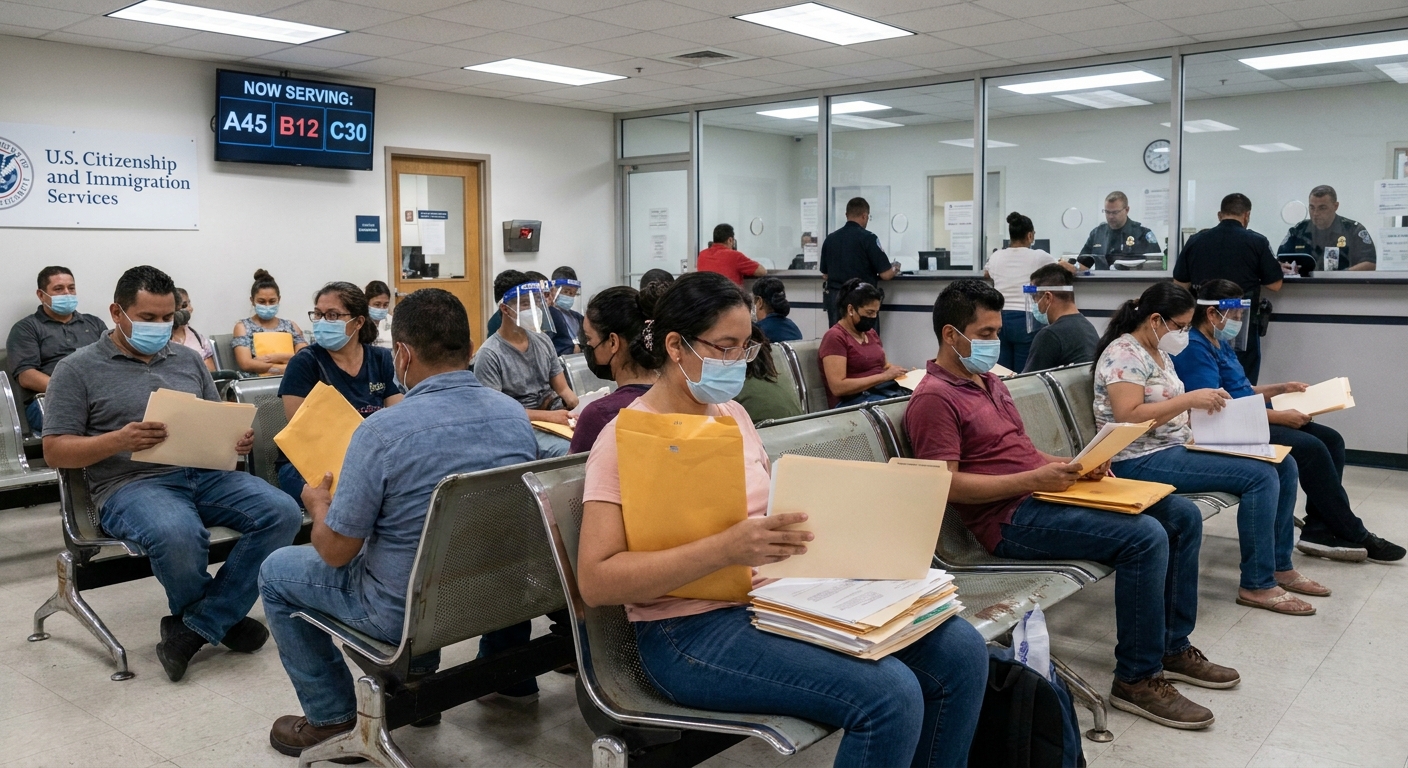
What recipients have in practice
DACA recipients occupy a status that is both real and fragile.
- Real, because deferred action and work authorization are concrete legal recognitions that can be verified, renewed, and relied upon in daily life.
- Fragile, because DACA is not an act of Congress, and because courts can invalidate agency action that exceeds statutory authority or violates procedural requirements.
DACA also comes with common misconceptions. Two clarifications matter:
- “Lawful presence” is limited. DACA is often described as making recipients “lawfully present” for certain purposes during the deferral period, but it does not convert someone into a lawful permanent resident or create an immigrant visa category.
- International travel is not automatic. DACA does not itself authorize travel abroad and return. Travel has typically required separate permission, such as advance parole under the rules in effect at the time.
Why Congress matters most
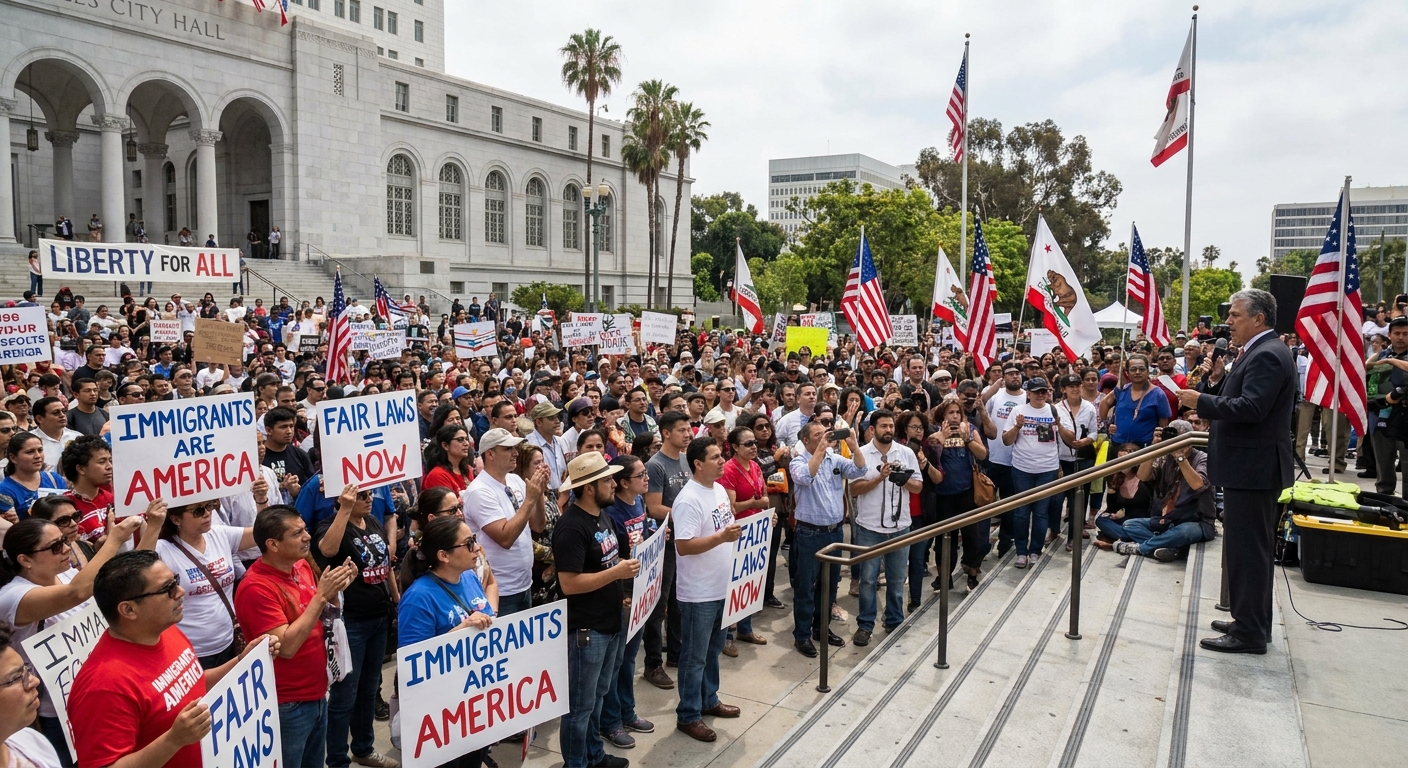
Courts can answer whether an agency acted lawfully. They can enforce procedural rules. They can police the boundary between statutory authority and executive improvisation.
What courts generally cannot do is pass a durable immigration compromise. The constitutional structure puts that burden on Congress.
If Congress enacted a DREAM-style statute, the legal posture would change dramatically. The question would no longer be whether the executive created a program out of enforcement discretion. The question would become how the executive implements a law that Congress actually wrote.
This is why DACA, as a policy, tends to be permanently “in court,” even when it is temporarily stable in practice. It is a program built to function, but not built to last.
Common questions
Is DACA in the Constitution?
No. DACA is not a constitutional right and it is not mentioned in the Constitution. The constitutional arguments are about the scope of presidential enforcement discretion and the separation of powers between Congress and the executive branch.
Can a President end DACA on day one?
A President can direct DHS to change enforcement priorities, but ending DACA in a legally durable way typically requires the agency to follow APA requirements and to give a reasoned explanation that accounts for reliance interests. That is the practical legacy of Regents.
Does DACA give legal status?
DACA grants deferred action and, if approved, employment authorization under existing regulations. It does not create lawful permanent residence and does not itself provide a path to citizenship.
Why does DACA keep changing?
Because it rests on executive policy choices and agency procedure, and because courts are still wrestling with whether the underlying program exceeds statutory authority.
Where does DACA stand right now?
That depends on current court orders and agency guidance. In recent years, the broad pattern has been that renewals for existing recipients have often continued while litigation proceeds, while access for new applicants has been more restricted or delayed. For the most current status, readers should check USCIS updates and reputable legal aid organizations.
The takeaway
DACA sits in a constitutional tension point that the Constitution’s basic structure did not design for modern-scale immigration enforcement: a Congress that writes the law, a President who cannot possibly enforce it in full, and courts asked to decide when prioritizing enforcement becomes a substitute for legislating.
That is why DACA has always been both a lifeline and a legal gamble. It can persist for years in practice. But unless Congress turns the policy into statute, DACA will remain the kind of “right” that exists not in constitutional text, but in the shifting space between politics, procedure, and prosecutorial discretion.