
Ted Cruz is making a familiar midterm argument, but with a distinctly constitutional edge: control of Congress is not just about policy. It is about the machinery of oversight, confirmations, and impeachment. In his telling, if Democrats retake the House, President Donald Trump will be “impeached over and over and over again.”
This is campaign-season language, yes. But it also points to something real and often misunderstood. The Constitution does not treat Congress as a single body with a single “will.” It sets up two chambers with different powers, different incentives, and different choke points. Flip one chamber, and the entire governing equation changes.
That warning is landing in a midterm environment Cruz himself calls “unbelievably consequential,” and Republicans are entering it with crosswinds that have little to do with parliamentary theory. The party in power traditionally loses seats in the midterms, and Republicans are also facing a rough political climate fueled by economic concerns over persistent inflation, an unpopular war with Iran, and Trump’s underwater approval ratings.
Cruz, who won re-election in 2024 and is not on the ballot this year, is nonetheless making the case that the stakes are immediate for Trump and for what Republicans can actually do in Washington.
Impeachment starts in the House
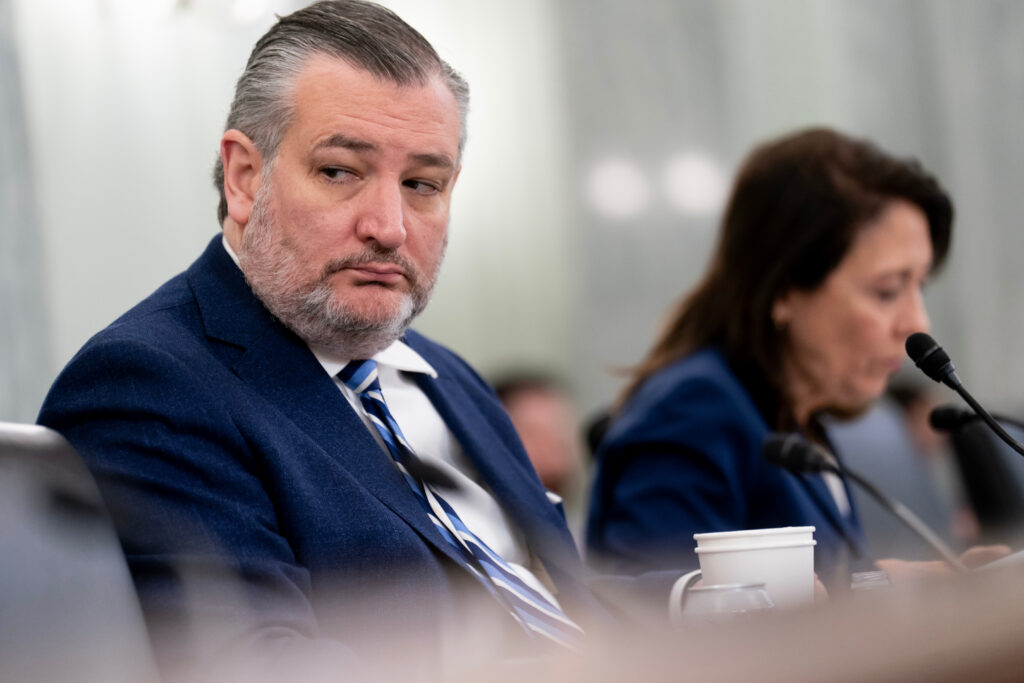
Cruz’s warning hinges on a constitutional asymmetry: impeachment begins in the House. The House can approve articles of impeachment by a simple majority. The Senate then holds a trial, and conviction requires a two-thirds vote.
That structure makes the House the ignition switch. As a matter of political reality, it is also the chamber that tends to react fastest to public mood, with shorter terms and smaller constituencies. When Cruz predicts a barrage of impeachment attempts, he is pointing to how easily the process can be initiated once the House majority changes.
In the interview, he goes further: “If the Democrats take the House, no meaningful legislation will pass for the next two years, and we will see the president impeached over and over and over again. And by the way, it won't matter what for. They will impeach President Trump just because they hate him, because he is Donald Trump,” Cruz claimed.
More broadly, impeachment is often discussed like criminal law, but it operates on a constitutional standard rather than a criminal code. The Constitution gives the House the “sole Power of Impeachment,” and the stated grounds are “Treason, Bribery, or other high Crimes and Misdemeanors,” a phrase that has long been interpreted through both legal and political lenses.
Oversight becomes the agenda
Cruz also predicts a blizzard of investigations if Democrats take the House, saying, “We will see investigations attacking the administration in every House committee if they take the House.” That is not an idle threat. Oversight is one of Congress’s most potent tools because it does not require the president’s signature.
Legislation needs bicameral agreement and, usually, presidential approval. Oversight does not. Committees can hold hearings, issue subpoenas, demand testimony, and shape public narratives. Even when investigations do not lead to impeachment, they can still drain time, distract agencies, and shift the center of gravity in Washington from governing to defending.
In constitutional terms, this is separation of powers doing what it does best and worst: checking the executive while also creating incentives to weaponize scrutiny.
The Senate can freeze staffing
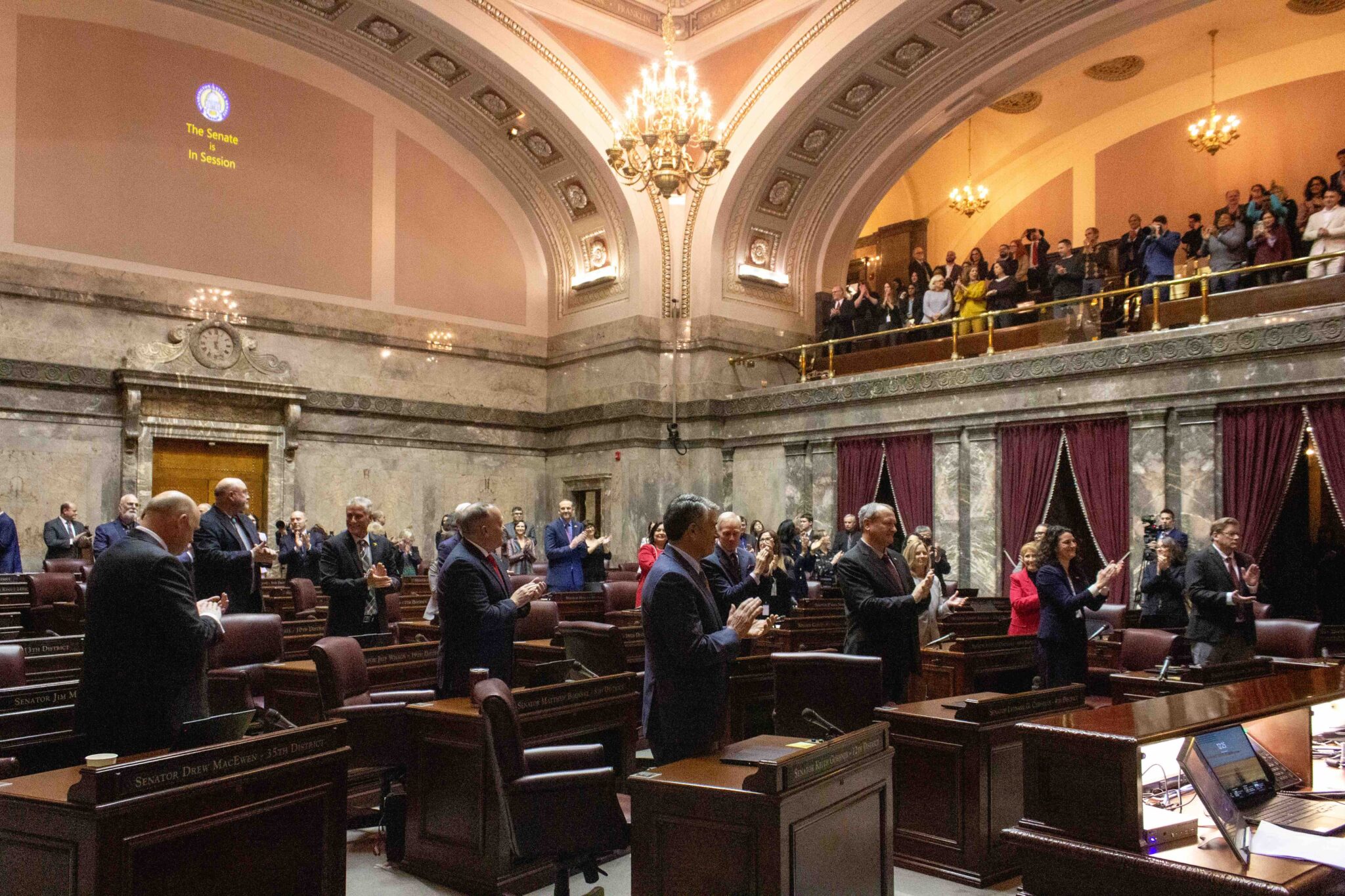
Cruz’s darker scenario comes if Democrats also win the Senate. He predicts a confirmation freeze, claiming, “If they take the Senate, we would see an almost complete halt of Senate confirmations — Cabinet members. I think these radical Democrats would leave cabinet offices empty, leave them vacant, rather than confirm President Trump's nominees. I think judicial nominations — if the Democrats took the Senate, they would essentially halt judicial nominations,” he claimed.
The Constitution requires the president to seek the Senate’s “Advice and Consent” for key positions, but it does not compel the Senate to confirm nominees or even to act quickly. In practice, that gives the chamber leverage to delay, deny, or simply let nominations stall.
That is why Senate control changes the presidency in ways voters often feel only later. A Senate majority can accelerate the staffing of an administration and reshape the federal judiciary. A hostile Senate can slow-walk both, leaving acting officials in place and vacancies on the bench.
Midterms and capacity
Cruz calls the midterms “unbelievably consequential,” and the Constitution backs him up, even if voters do not always think in those terms. Midterms are not only a referendum on the president’s popularity. They are a referendum on whether the president gets to govern with support, govern under siege, or govern through gridlock.
Cruz is explicit about the goal. “I am all in, fighting for us to win in the midterms, fighting for us to hold the House, fighting for us to hold the Senate and, ideally, grow our majorities in both houses,” he pledged.
That matters more in an era when major legislation is increasingly packed into sprawling party-line bills. Cruz points to recent Republican accomplishments and highlights specific provisions he says he authored, including “no tax on tips,” “school choice” language, and the Trump Accounts, tax-advantaged, IRA-style investment accounts for children under 18.
Whatever one thinks of the policy, the constitutional takeaway is simple: unified government is when the modern Congress can move. Divided government is when Congress becomes a brake, and the parts of the Constitution designed for conflict start doing most of the talking.
Two competing stories
Cruz is not subtle about what he thinks Democrats would do with power. He argues that if Democrats win both chambers, “they will do whatever they can to burn it down,” and he charges, “I think Chuck Schumer and the radicals are so extreme that if they get a majority, they will do whatever they can to burn it down.”
Democrats tell a different story. They are not arguing that they want to “burn it down.” They are framing their case as a check on presidential power and a defense against what they describe as harmful governance. Sen. Kirsten Gillibrand calls Trump’s agenda “hurtful and harmful.” “President Trump is creating a toxic agenda that's harming people, and they're looking for Democratic leadership to take them out of this nightmare,” Gillibrand argued.
Democratic National Committee Rapid Response Director Kendall Witmer put it even more sharply: “If Democrats take Congress, the Republicans won’t be able to give massive tax breaks to billionaires, shutter nursing homes and rural hospitals, bomb foreign countries instead of feeding kids, or turn a blind eye to Trump’s open and egregious corruption.”
This is the competing story both parties tell in midterms: one side calls it accountability, the other calls it sabotage. The Constitution makes room for both interpretations because it creates a government where conflict is not a malfunction. It is the design.
2028 in the background
The constitutional fight over 2026 is also, in the background, a fight over the party’s next chapter. Cruz, in the same interview, did not rule out a 2028 presidential run. Asked if he is seriously considering another White House campaign, he responded: “There will be plenty of time to make those decisions. I don't have an announcement for you today.”
The travel calendar matters here because politics is rarely subtle. Cruz heads to Texas to address the crowd in Dallas at the annual Conservative Political Action Conference, better known by its acronym CPAC. Then comes a stop on May 1 in Iowa, the state whose caucuses for half a century have kicked off the race for the Republican presidential nomination, a move that naturally sparks speculation about whether he is laying the groundwork.
He was runner-up to Trump in the combustible 2016 GOP presidential primaries, and he took a look at making another run in the 2024 cycle before deciding to seek re-election to the Senate. Now, he appears to be positioning himself as a conservative alternative to Vice President JD Vance, described as the odds-on favorite to be Trump’s MAGA and America First heir. He has also grabbed attention with clashes with far-right figures such as Tucker Carlson, while bolstering grassroots outreach through his widely downloaded podcast, ‘Verdict with Ted Cruz.’
Even his midterm pitch reads like an opening argument for something bigger. “I look back to the last year with President Trump in the White House and with a Republican Senate in the house, we have accomplished more in the last year than I've seen Congress and the president accomplish in the preceding 13 years that I was here. It is an incredible record of success that we've been able to produce. And so my focus is, number one, keep delivering results, keep delivering big wins for the American people,” Cruz said.
What voters miss
Cruz is also, implicitly, making a civic-education argument. The president is not the only national election that matters. The House controls the opening act of impeachment and the tempo of investigations. The Senate controls the staffing of the executive branch and the long-term architecture of the courts.
So when Cruz warns Republicans about what a Democratic Congress would do, he is pointing at the Constitution’s pressure points: the places where a simple majority can create maximum leverage.
Whether that leverage is used responsibly is not guaranteed by parchment. It is shaped by politics, incentives, and voters who decide, every two years, which branch gets the next turn at the wheel.