

CPAC has always been part pep rally, part power audit. But in Texas this week, the mood felt less like a routine gathering of conservative celebrities and more like a political war room with stadium lighting. The message from the stage and the crowd was consistent: this is not just another election cycle. This is a contest over the country’s trajectory, the legitimacy of its institutions, and the meaning of constitutional limits themselves.
That last point matters most, not because the Constitution is suddenly fragile parchment, but because it is being treated as an obstacle by some and as a weapon by others.
When a movement frames politics as an emergency, constitutional guardrails start looking optional.
And when audiences cheer for outcomes the document plainly forbids, the most important civic question becomes very simple:
Join the Discussion
The 22nd Amendment

One of the most arresting moments in Texas was not about policy. It was about duration. Evangelist Franklin Graham urged attendees to “do everything” they can to try to get President Donald Trump reelected. He framed it as a once-only opportunity, telling the audience, “I love him [Donald Trump]. And we will only have one chance at this. We will never get another president like Donald Trump, never.”
Graham’s argument was not subtle. He said the urgency is precisely why, in his view, “it’s important we do everything that we can to try to get him re-elected,” adding that Trump “stands not only for religious freedom, he stands up for Christians, like no president we’ve ever had.”
But there is a constitutional problem hiding in the applause. Under the current Constitution, Trump cannot legally serve a third term. The 22nd Amendment, ratified in 1951, is blunt: “no person shall be elected to the office of the President more than twice.” It was adopted in the shadow of Franklin D. Roosevelt’s four elections, precisely to prevent the presidency from becoming a renewable personal office rather than a temporary public trust.
Could the rule change? In theory, yes. In practice, it is one of the hardest things American politics can attempt. A constitutional amendment requires two-thirds support in both chambers of Congress and ratification by three-fourths of the states. The Constitution has not been amended since 1992 with the ratification of the 27th Amendment.
So when you hear “third term” talk, you are not hearing a standard campaign slogan. You are hearing a pressure test of whether constitutional structure still has cultural authority. The legal barrier is clear. The civic barrier is whether a major movement treats that clarity as the end of the conversation or the start of a workaround.
Who is pushing it
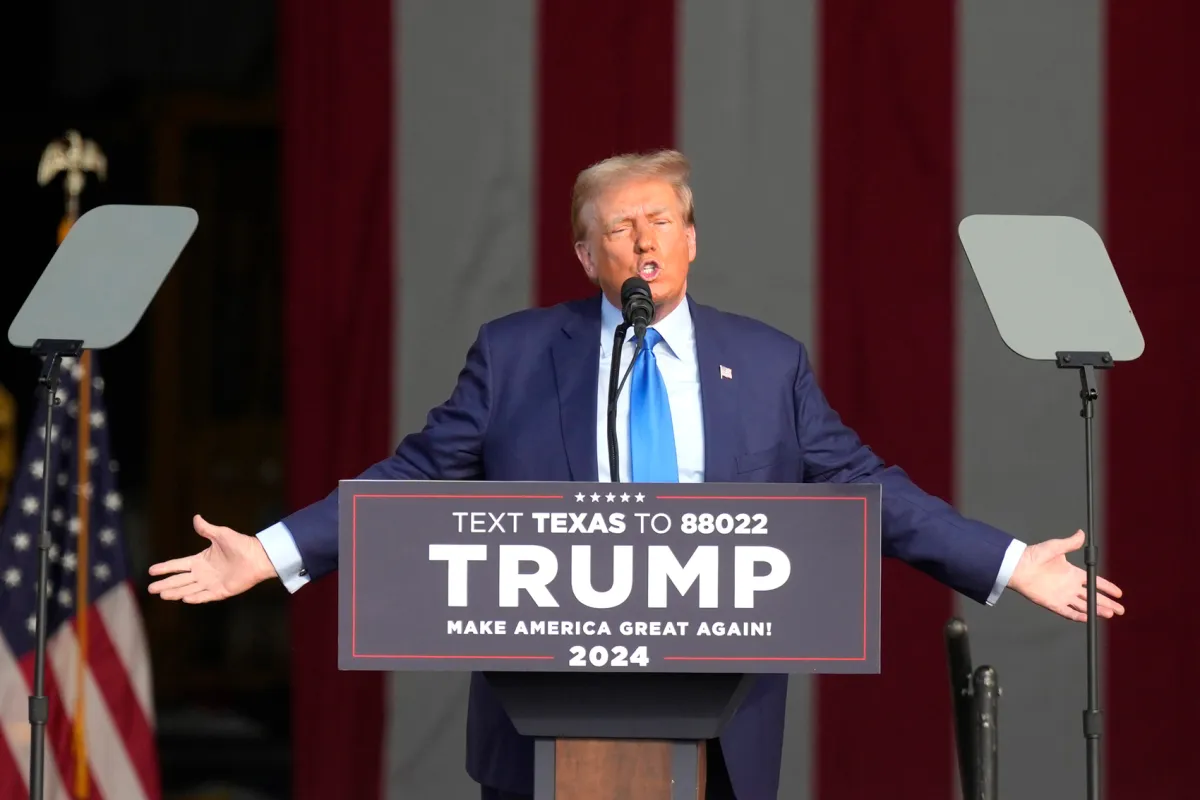
The rhetoric around term limits is not appearing in a vacuum. While calls for Trump’s third term appeared to have dwindled more recently, the president has spoken about it publicly, including during a January speech to House Republicans where he mused, “I could have the most unbelievable four years. I guess I'm not allowed to run... I'm not sure, is there a little something out there I'm not allowed to run? Let's assume I was allowed to run. I could have,” then added, “This is going to be a constitutional movement.”
Outside the room, the idea has been kept alive by prominent allies. Steve Bannon has repeatedly claimed there is a plan to ensure the president remains in the White House after the next election, and he told The Economist in October 2025: “He's going to get a third term...so Trump is going to be president in 2028. And people just ought to get accommodated with that.” Trump 2028 merchandise has even been sold online.
And there is also the effort to turn the abstraction into paper. Representative Andy Ogles proposed an amendment to revise the 22nd Amendment’s limits. In a January statement, Ogles argued that Trump “has proven himself to be the only figure in modern history capable of reversing our nation's decay and restoring America to greatness, and he must be given the time necessary to accomplish that goal,” adding, “To that end, I am proposing an amendment to the Constitution to revise the limitations imposed by the 22nd Amendment on presidential terms. This amendment would allow President Trump to serve three terms, ensuring that we can sustain the bold leadership our nation so desperately needs.”
Here is the catch: the Constitution is not moved by vibes. It is moved by text, procedures, and political consensus large enough to overcome faction. That is the whole point of making amendment difficult. The system is built to force the country to prove it wants change durably, not just passionately.
That does not mean constitutional change is illegitimate. It means constitutional change is supposed to be rare, expensive, and slow. If a political movement starts treating “rare and slow” as unacceptable, it is telling you something about how it views power.
White House response
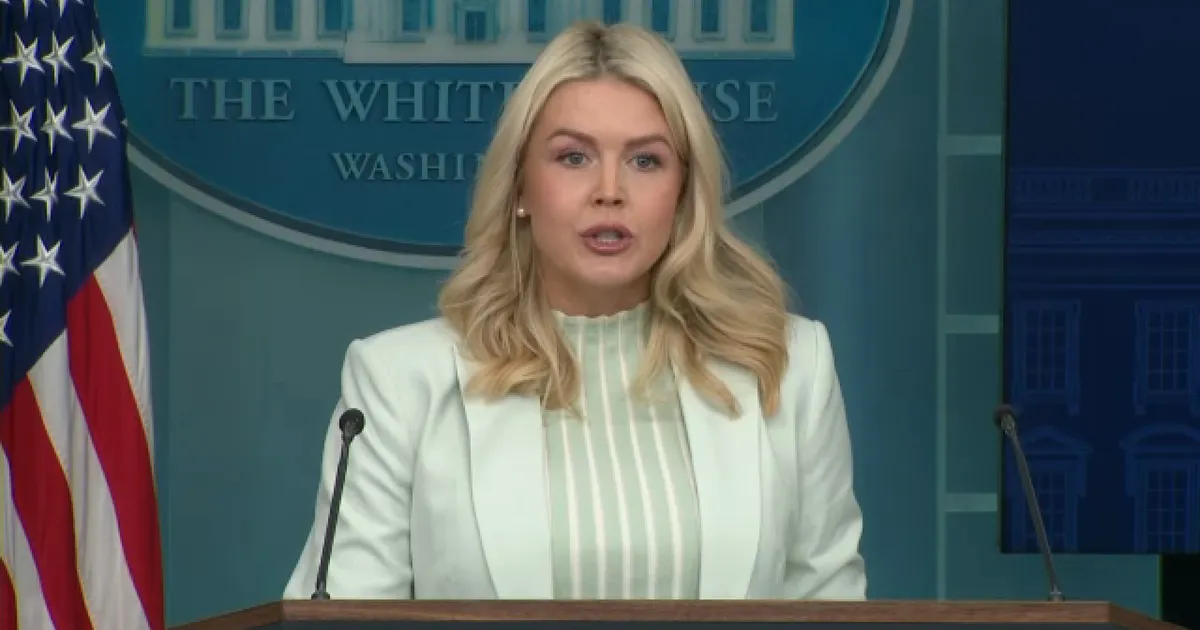
Notably, this idea has not been confined to activist chatter. In late 2025, White House spokesperson Abigail Jackson responded to reports that Trump privately discussed running for a third term with his former attorney, saying, “There has never been an Administration that has accomplished as much in less than one year than the Trump Administration. The American people would be lucky to have President Trump in office for even longer.”
Pushback
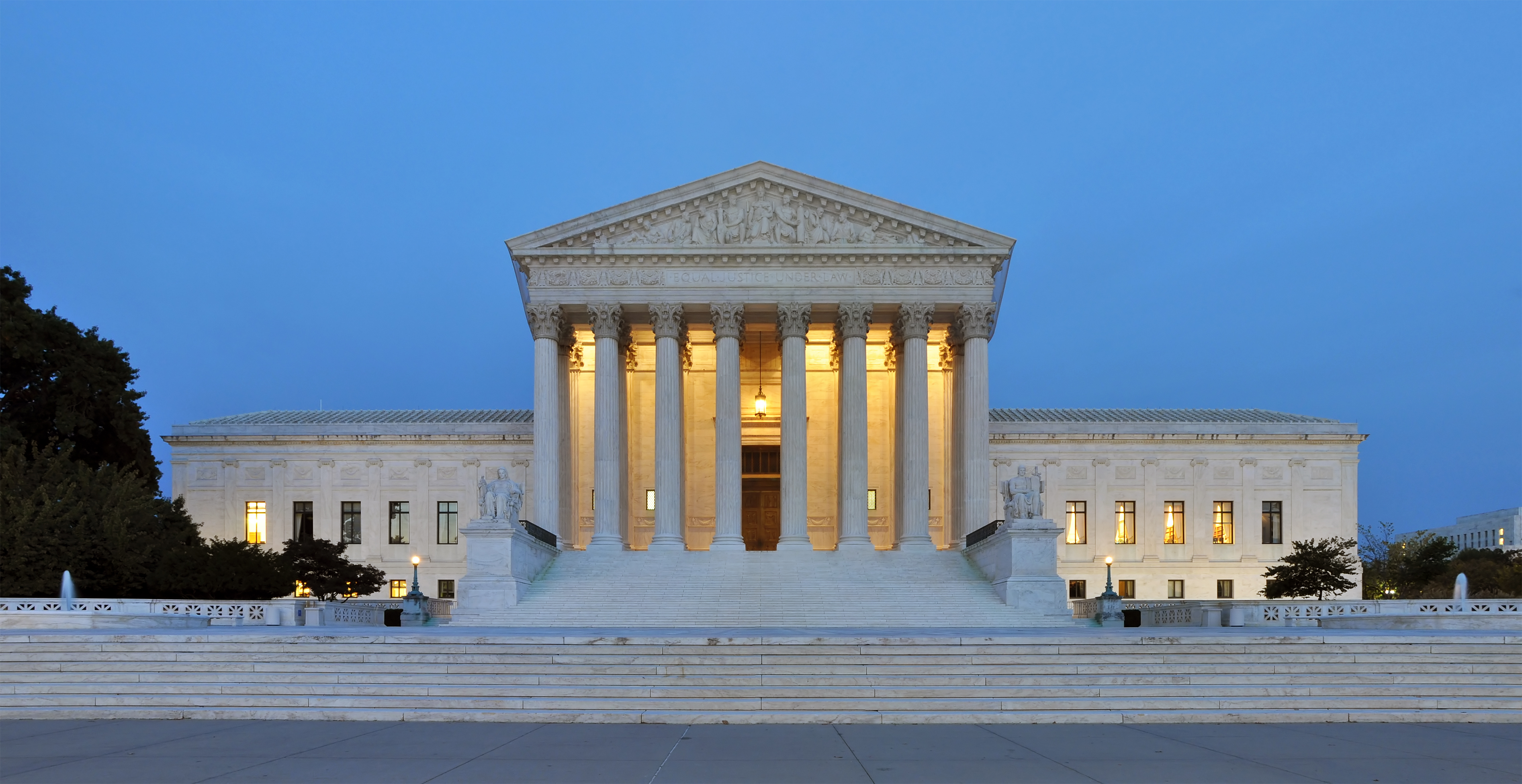
The resistance is not merely academic, and it is not limited to procedural purists. Representative Mike Levin, a California Democrat, wrote in a March 24 X post: “There will be no third term for President Trump, and certainly not one as a reward for an election that was never stolen from him in the first place. This is delusional, and this is not up for debate.”
House Minority Leader Hakeem Jeffries, also a Democrat, put it even more plainly in a March 2025 statement: “Donald Trump is once again talking about running for a third term. You're not getting a third term. Stop talking foolishness. The Constitution doesn't permit it. And not a single Democrat in the Congress will ever vote for it. Therefore, it's not happening,” Jeffries said. “We're going to push back. We're going to show up, stand up and speak up until we end this national nightmare once and for all.”
Those quotes are not just partisan jabs. They are reminders that the constitutional line is bright, and that political energy does not dissolve it. Not unless the country undertakes the formal, high-consensus work of amending the text.
Why CPAC matters
It is tempting to dismiss conference talk as theatrical. But conferences are where movements rehearse their future arguments, train their activists, and socialize their assumptions. CPAC draws hundreds of conservatives each year for a gathering that features prominent voices on the right, including politicians, activists and media figures. And this one is not yet over. CPAC will continue programming through March 28.
When a crowd is energized by the idea of extending a presidency beyond constitutional limits, it signals a deeper shift: loyalty to a figure is being elevated over loyalty to a system.
In constitutional terms, this is the difference between constitutionalism and outcome-ism. Constitutionalism says: we pursue our goals through the rules, and if the rules block us, we persuade the country to change them through the prescribed process. Outcome-ism says: if the rules block us, the rules are the problem.
Every movement is tempted by outcome-ism. The only question is whether leaders discourage it or monetize it.
The fight is trust
The Texas gathering underscored a broader theme running through American politics right now: a struggle over which institutions deserve obedience. Courts, elections, agencies, legislatures, the press, the universities, even the idea of neutral administration all get sorted into friend or enemy categories. That sorting is not new. What feels new is the increasing insistence that legitimacy comes from alignment with a movement rather than from constitutional role.
The Constitution does not require citizens to admire their institutions. It does require them to accept lawful outcomes they dislike, and to pursue change through legitimate channels. That is the quiet discipline of self-government, and it is exactly what collapses when political identity becomes apocalyptic.
CPAC’s energy is not, by itself, a constitutional crisis. But it is a useful mirror. It shows what a significant segment of the electorate is prepared to demand from the system. And it forces the rest of us to answer: what do we demand from ourselves?
A plain civic test
If you want a clean, almost laboratory-grade test of constitutional commitment, term limits provide it. The 22nd Amendment is not ambiguous. It is not a riddle for lawyers. It is a bright line.
So the question is not whether the text exists. The question is whether Americans still believe that power has an expiration date, even when they love the person holding it.
That is the battle for America’s future that matters most, because it determines whether every other political fight is refereed by rules or by raw momentum.