
Congress cannot pass laws, oversee the executive branch, or expose corruption if witnesses can simply ignore it. That is the basic logic behind contempt of Congress: a set of tools that lets the House or Senate punish or pressure people who obstruct investigations, refuse to testify, or defy subpoenas.
But “contempt” is not one power. It is best understood as three enforcement paths that run on different constitutional theories and different pipelines: inherent contempt, criminal contempt, and civil subpoena enforcement through the courts.
What contempt means
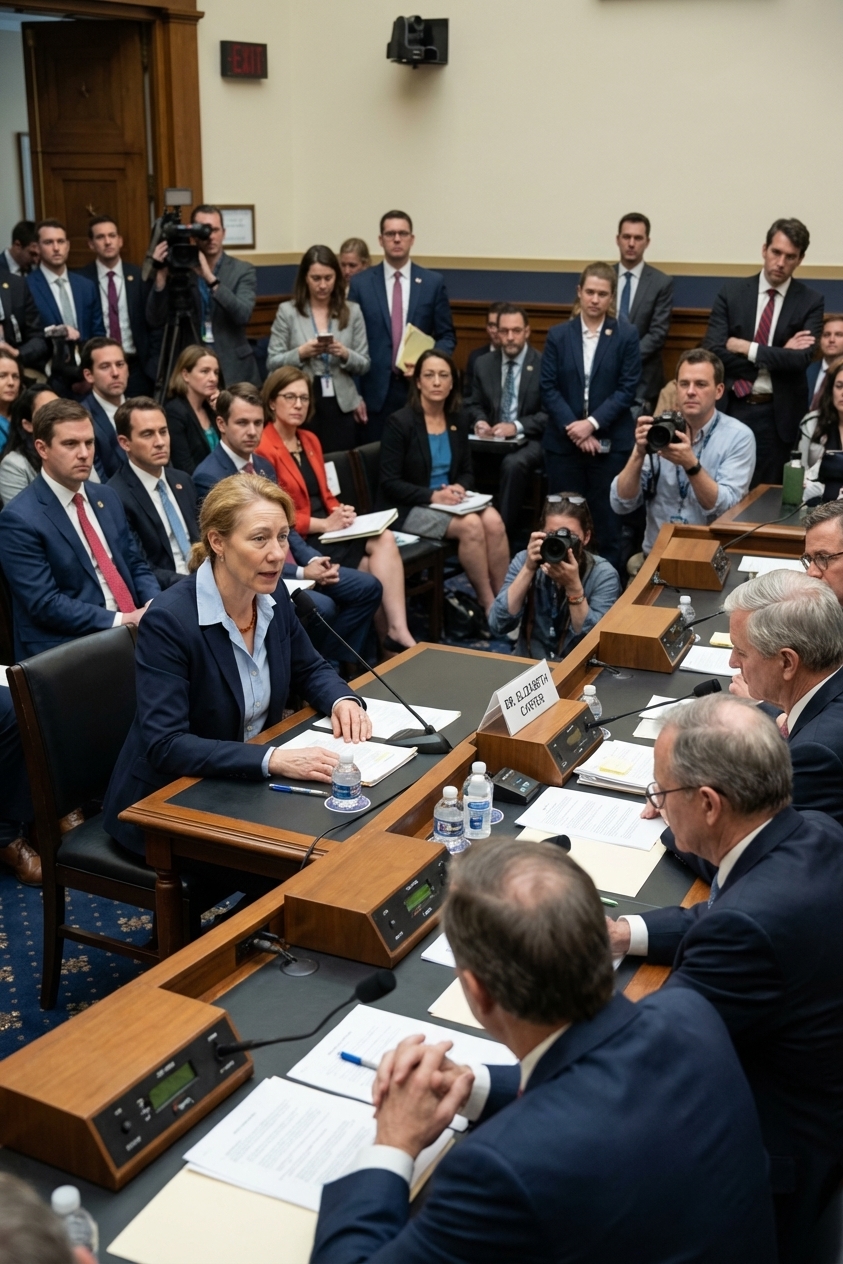
Contempt of Congress is a finding by either chamber that a person has interfered with Congress’s legislative or oversight work. In practice, contempt most often arises when someone:
- Refuses to comply with a congressional subpoena for documents or testimony
- Refuses to answer questions after appearing, when the questions are pertinent
- Refuses to appear at all when duly summoned
Other conduct can also trigger consequences, but it is important to separate labels. For example, lying to Congress, destroying evidence, or witness tampering can be serious misconduct and may be referred for prosecution under other federal statutes (for example, perjury, false statements, or obstruction). That is related to contempt fights, but it is not the core of criminal contempt under 2 U.S.C. §§ 192 and 194, which focuses on noncompliance with compulsory process.
Not every subpoena dispute becomes contempt. Negotiation is common, and courts often encourage or credit accommodation efforts, especially in separation-of-powers disputes. But when talks collapse, contempt is the escalation lever.
Where the power comes from
The Constitution never uses the phrase “contempt of Congress.” It does not need to. The Supreme Court has long recognized that Congress has implied powers necessary to carry out its enumerated functions.
The key foundations are:
- Article I legislative power: Congress cannot legislate intelligently without information.
- Oversight as incident to legislation: Investigations are legitimate when tied to a valid legislative purpose.
- Necessary and Proper Clause (Article I, Section 8, Clause 18): supports means useful to execute constitutional powers.
- Each House’s internal authority (Article I, Section 5): the House and Senate may set rules and protect their proceedings.
The modern doctrine is often traced to cases like McGrain v. Daugherty (1927), which affirmed that Congress can compel testimony as part of investigations serving legislative ends. Courts also recognize limits and balancing in modern subpoena disputes. A prominent recent example is Trump v. Mazars (2020), which emphasized that congressional demands for information, especially involving the President, can raise separation-of-powers concerns that courts take seriously.

Three enforcement paths
1) Inherent contempt
Inherent contempt is Congress’s original, old-school enforcement method: the House or Senate itself can order its Sergeant at Arms to take a contemnor into custody, bring them before the chamber, and detain them until they comply or until the session ends.
How it works (in theory):
- A committee reports contempt to the full chamber.
- The House or Senate adopts a contempt resolution.
- The Sergeant at Arms arrests the contemnor and brings them to the chamber for a proceeding.
- Congress can detain the person to coerce compliance.
What is settled and what is not: Historically, courts have recognized inherent contempt as part of Congress’s implied powers (for example, Anderson v. Dunn (1821) and Jurney v. MacCracken (1935)). The modern hesitation is less about whether the power exists and more about practical, political, and logistical realities of trying to use it today. It is the constitutional option everyone knows is there, even when nobody wants to touch it.
Fines? Inherent contempt is most clearly associated with detention to coerce compliance. The idea of Congress imposing inherent contempt fines is often discussed, but it is far less tested in modern practice and would likely be litigated.
2) Criminal contempt (2 U.S.C. §§ 192 and 194)
Criminal contempt of Congress is the most famous path because it sounds like ordinary prosecution. Congress votes to hold someone in contempt, then refers the matter to the executive branch for prosecution.
The basic statute: Under 2 U.S.C. § 192, it is a misdemeanor to willfully refuse to answer pertinent questions or to produce subpoenaed documents when summoned by Congress.
Penalties: The statute provides a fine (historically $100 to $1,000) and imprisonment for not less than one month nor more than twelve months.
Referral process: Under 2 U.S.C. § 194, the presiding officer of the chamber certifies the contempt to the U.S. Attorney for the District of Columbia. The statute uses mandatory-sounding language about presenting the matter to a grand jury.
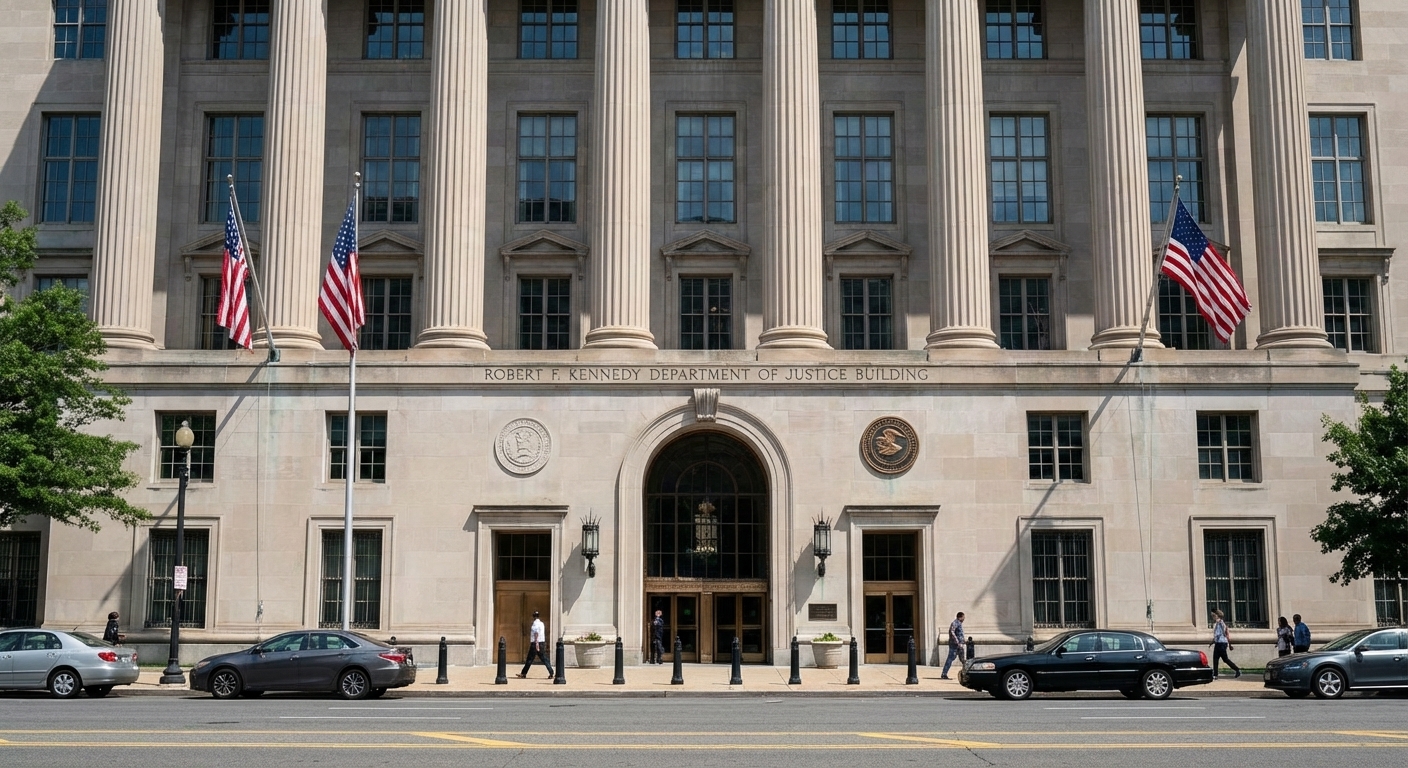
The reality check: In practice, criminal contempt depends on the executive branch to act. DOJ has long taken the position that it retains prosecutorial discretion and may decline to proceed, especially where executive privilege, separation-of-powers concerns, or Office of Legal Counsel (OLC) views about immunity for certain executive officials are in play. So the statute reads like a conveyor belt, but the belt has an on-off switch controlled by the executive branch.
3) Civil subpoena enforcement (courts)
Civil enforcement is Congress going to court and asking a judge to enforce a subpoena, typically through a lawsuit seeking a declaration and an order compelling compliance. This is sometimes casually described as “civil contempt,” but the key point is that the court, not Congress, supplies the coercive power through judicial orders and, if necessary, judicial contempt sanctions.
House vs. Senate mechanics:
- Senate: The Senate has a statutory civil-enforcement framework (commonly cited at 2 U.S.C. §§ 288b, 288d, and 288e) that supports seeking court enforcement of Senate subpoenas.
- House: The House has used civil litigation through institutional counsel and authorizing resolutions, but its path is more practice-driven and authorization-dependent than the Senate’s statutory scheme.
Why civil enforcement matters: It can bypass the need for the executive branch to prosecute. Instead, Congress seeks judicial enforcement directly.
Limits: Civil litigation can be slow, and courts sometimes hesitate to move quickly in separation-of-powers fights. The value of civil enforcement depends on time. A subpoena enforced after the investigation’s political moment has passed is a win on paper and a loss in practice.
Possible remedies: A court may order compliance, and continued refusal can lead to judicial civil contempt sanctions, including daily fines or confinement designed to coerce rather than punish.
If someone defies a subpoena
Most subpoena fights follow a predictable escalation pattern. The details vary by committee and by whether the target is a private citizen, a corporation, or an executive-branch official, but the skeleton looks like this:
Step 1: Subpoena issued
A committee with delegated authority issues a subpoena for documents, testimony, or both. The recipient can comply, negotiate scope and timing, or object.
Step 2: Negotiation
Congress frequently narrows requests, adjusts deadlines, or offers phased production. This is especially common when privilege, classified information, trade secrets, or sensitive personal data are involved.
Step 3: Noncompliance
Noncompliance can be total, partial, or strategic. Examples include producing some documents but withholding others, refusing a deposition but offering a public appearance, or declining to answer questions on specific topics.
Step 4: Committee vote
The committee votes to recommend contempt to the full chamber. The report usually lays out the subpoena’s validity, the witness’s refusal, and why the information is pertinent to Congress’s purpose.
Step 5: Full chamber vote
If the chamber adopts a contempt resolution, Congress must choose how to enforce it: inherent detention, criminal referral, civil litigation, or a mix of pressure tactics alongside formal tools.
One terminology note: a contempt report is the committee’s formal write-up supporting a contempt resolution. A criminal referral is the act of sending the matter to DOJ under the criminal contempt framework. They often travel together, but they are not identical.
Step 6: Enforcement or stalemate
Here is where constitutional design shows its seams.
- Criminal contempt can stall if DOJ declines to prosecute.
- Civil enforcement can stall in court for months or years.
- Inherent contempt is fast on paper, but politically and practically unlikely.
The result is that contempt is often less about immediate punishment and more about leverage: reputational cost, legal risk, and the possibility that a judge or prosecutor eventually backs Congress.
Limits and guardrails
Congress’s subpoena power is broad, but not infinite. Courts have repeatedly emphasized a few guardrails:
- Legitimate legislative purpose: Oversight must relate to potential legislation or another constitutional function. The boundaries of this concept are litigated, and courts sometimes read it broadly, but the principle remains: Congress is not a roving law enforcement agency.
- Pertinency: Questions and document demands must be pertinent to the investigation.
- Constitutional rights: Witnesses can assert rights like the Fifth Amendment privilege against self-incrimination. That is not contempt. It is a constitutional shield.
- Privileges: Executive privilege, attorney-client privilege, and other confidentiality claims often drive modern disputes, though the scope and strength of each claim varies by context.
- Speech or Debate Clause: Members of Congress and certain congressional acts receive constitutional protection that often shapes how subpoena fights are litigated and whether Congress can be sued over investigative acts.
Because these limits are fact-specific, contempt disputes often become separation-of-powers litigation disguised as a subpoena fight.
Federal employees and agency orders
A special modern wrinkle arises when the witness is a federal employee directed by an agency or the White House not to comply. DOJ, including OLC, has taken the position in various administrations that certain senior executive officials have immunity from compelled congressional testimony, and that executive privilege can bar disclosure in some contexts. Congress disputes these claims, and the result is often a familiar pattern: accommodation talks, followed by civil litigation, followed by a negotiated settlement that arrives after everyone is tired.
Notable cases
McGrain v. Daugherty (1927)
Often treated as a cornerstone of modern congressional investigative power, McGrain upheld the Senate’s ability to compel testimony during a Teapot Dome era investigation. The case involved a Senate inquiry tied to alleged misconduct and the functioning of the Department of Justice. The Court recognized that compelling witnesses can be necessary to legislate effectively. In other words: subpoenas are not a congressional hobby. They are part of how Congress does its job.
Watkins v. United States (1957)
During the Cold War, the House Un-American Activities Committee questioned witnesses about alleged communist ties. In Watkins, the Supreme Court reversed a contempt conviction, emphasizing that Congress must make the subject of inquiry sufficiently clear and respect due process constraints. The decision is a reminder that contempt cannot be built on vagueness and surprise.
Barenblatt v. United States (1959)
Two years after Watkins, the Court upheld another contempt conviction in Barenblatt, accepting Congress’s investigative interest in national security and subversive activity. Together, Watkins and Barenblatt show how context and judicial balancing shape contempt outcomes.
Anne Gorsuch Burford and the EPA (1982)
The House held EPA Administrator Anne Gorsuch Burford in contempt in a dispute over Superfund enforcement documents. The contempt vote was for criminal contempt. President Reagan asserted executive privilege, and DOJ did not prosecute. The conflict ultimately moved through negotiation and accommodation. This episode became a modern template for the problem with criminal contempt: when the executive branch is the target, the executive branch can be the gatekeeper.
Harriet Miers and Josh Bolten (2008)
The House cited former White House Counsel Harriet Miers and White House Chief of Staff Josh Bolten for contempt over subpoenas related to the firing of U.S. attorneys. DOJ declined to prosecute, and the dispute turned into civil litigation and settlement dynamics. The lesson was structural: contempt can generate leverage, but it does not guarantee speed.
Eric Holder and Fast and Furious (2012)
The House held Attorney General Eric Holder in contempt over documents connected to Operation Fast and Furious. Again, executive privilege and DOJ’s role complicated criminal enforcement. Years of litigation and negotiated releases followed. Even when contempt is voted, resolution can look less like a courtroom verdict and more like a drawn-out constitutional bargaining process.
Steve Bannon (2021 subpoena, 2022 conviction)
In the January 6 investigation, the House select committee subpoenaed Steve Bannon. He did not appear and did not produce documents. The House voted criminal contempt, DOJ prosecuted, and a jury convicted him on two counts in 2022. The case became a modern example of criminal contempt actually moving through the full pipeline when the target is a private citizen or non-governmental actor.
Peter Navarro (2022 conviction)
Former Trump adviser Peter Navarro was also convicted of criminal contempt for defying a January 6 committee subpoena. The prosecution reinforced that contempt can carry real criminal consequences when privilege claims are not accepted and negotiations fail.
Defenses and misconceptions
“I can ignore Congress because it is political.”
Investigations are political. That does not make them unconstitutional. Courts generally look for a valid legislative purpose and proper authorization, not purity of motive.
“Executive privilege automatically blocks a subpoena.”
Privilege is real, but it is not a magic word. It often triggers negotiation and sometimes litigation. The hardest cases involve senior advisers and sensitive communications, where courts balance the need for confidentiality against Congress’s need for information.
“Taking the Fifth is contempt.”
No. The Fifth Amendment privilege against self-incrimination is a constitutional right. Congress can respond by granting immunity in some circumstances, but a proper invocation of the privilege is not contempt.
“Congress can jail anyone whenever it wants.”
Inherent contempt can involve detention in theory, but in modern practice Congress almost never uses physical detention, and the political costs are enormous. Contemporary enforcement usually runs through courts or the executive branch.
Why it matters
Contempt disputes are not just procedural drama. They are stress tests for separation of powers.
When Congress cannot compel information, oversight becomes performance. When Congress can compel anything without limits, oversight becomes a weapon untethered from law. The Constitution sits uncomfortably between those extremes, relying on negotiation, institutional incentives, and the courts to prevent either side from turning information into a monopoly.
If you want the simplest takeaway, it is this: a congressional subpoena is not a suggestion, but enforcing it depends on which tool Congress chooses and whether other actors, prosecutors, judges, or both, are willing to make Congress’s demand real.
Quick glossary
- Inherent contempt: Congress enforces compliance itself, potentially through detention by the Sergeant at Arms.
- Criminal contempt: Congress refers the case for prosecution under federal statute.
- Civil subpoena enforcement: Congress asks a court to order compliance with the subpoena; courts may later impose civil contempt sanctions for violating judicial orders.
- Legitimate legislative purpose: The investigation must relate to possible legislation or another constitutional function.
- Executive privilege: A confidentiality doctrine claimed by the executive branch, often litigated and often negotiated.