
One essential requirement of Congress’s lawmaking process is this: the House and the Senate have to pass the same bill text. That sounds simple until you remember Congress is two separate institutions with different rules, different political incentives, and often different versions of what the “same” idea should look like.
When both chambers act on legislation but disagree on the language, Congress has a few procedural routes to get to one final version. In modern practice, the two most common are conference committees and amendment exchanges (often called “ping-pong”). One is a formal negotiation between selected members. The other is a back-and-forth of amendments and messages between the chambers.
Both exist to solve the same constitutional problem: you cannot send a bill to the President until both chambers have passed identical legislative language.

Join the Discussion
The constitutional rule: one identical text
Article I requires bicameralism and presentment. In practice that means:
- The House passes a bill.
- The Senate passes a bill.
- They must pass identical legislative text.
- Only then can the bill be enrolled and presented to the President.
If the House passes H.R. 1234 and the Senate passes “basically the same thing,” that is still not enough. “Basically” does not satisfy Article I. Congress needs one final version that both chambers approve in the same form.
Two common ways to reconcile differences
1) Conference committees (formal negotiation)
A conference committee is a temporary, bill-specific negotiating team made up of members from the House and the Senate. The goal is to hammer out a single compromise version that can pass both chambers.
Think of it as Congress recognizing that a clean, on-the-floor amendment process may not be the fastest or most predictable way to reach agreement, so key members negotiate a package, often with substantial behind-the-scenes work.
2) Amendment exchanges (ping-pong)
The alternative is an exchange of amendments and messages between chambers. This is often called “ping-pong” because the bill text bounces back and forth:
- The House passes a bill and sends it to the Senate.
- The Senate amends it and sends it back.
- The House agrees, rejects, or offers its own amendment in response.
- The cycle continues until both chambers pass the same text.
Ping-pong can be faster and more tightly managed by leadership, especially when differences are narrow, when deadlines are real, or when reopening debate through a formal conference feels risky.
What a conference committee is
Conference committees are not standing committees like Ways and Means or Judiciary. They are ad hoc and exist only to reconcile a particular legislative disagreement.
Once both chambers agree to go to conference, they appoint “conferees” who meet to negotiate. When they reach a deal, they issue a single package called a conference report, which contains the final legislative text and an explanation of the compromises.
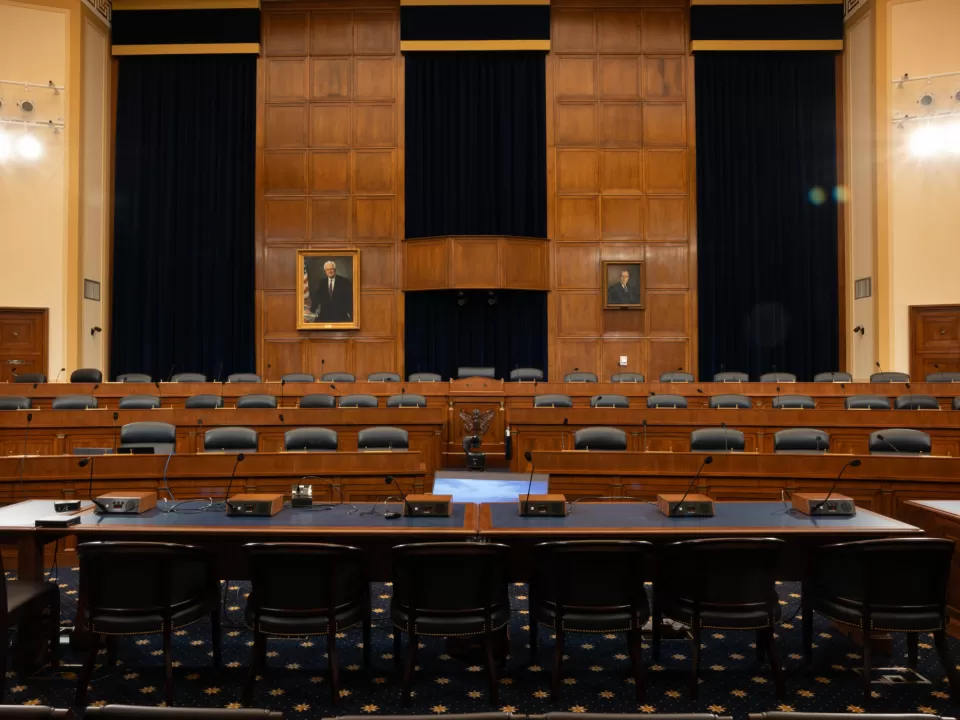
Who serves on a conference committee
Conferees are typically chosen from the committees of jurisdiction that handled the bill, plus party leadership. The exact process differs between chambers, but a few patterns show up again and again:
- They are members of Congress, not staff, not lobbyists, not agency officials.
- They usually come from the relevant committee because that is where the expertise and turf are.
- Both parties are represented, but the majority party in each chamber usually controls the delegation.
- Leadership matters. Speakers, Majority Leaders, and committee chairs often shape who gets a seat at the table.
There is also a power dynamic inside the room. Conferees are not all equal. Committee chairs, subcommittee leaders, and leadership appointees often do most of the direct negotiating, while other members help solidify support, communicate priorities, and signal where the votes are.
What conferees can and cannot do
In theory, a conference is supposed to reconcile disagreements between two versions of the same bill. That implies limits: the conferees are expected to stay within the “scope” of the differences the House and Senate sent them to resolve.
In practice, conferences can become a tempting place to settle disputes that were hard to resolve earlier, combine tradeoffs into one package, or add provisions that ride along because they help assemble a winning coalition. That is why conferences have a reputation for “Christmas tree” compromises, last-minute add-ons, and complex deals that would be tougher to pass as stand-alone votes.
Congress tries to impose guardrails through chamber rules and points of order. But those guardrails are enforced through politics as much as procedure. Sometimes the rules are applied strictly. Sometimes leadership and majorities find ways to work around them when the deal is the deal.
What a conference report is
The conference report is the official product of a conference committee. It usually includes:
- The final agreed text of the bill, prepared so it is identical for House and Senate consideration.
- A joint explanatory statement that describes what the conferees changed and why.
This matters because the conference report becomes the one version both chambers must pass to finish the job. It is the bridge between “we both passed something” and “we passed the same thing.”
Up-or-down votes
Once the conference report is filed, each chamber votes on it. The key point is that the vote is generally up or down. Members do not amend the conference report on the floor the way they might amend an earlier version of the bill.
There are still procedural tools around the edges, like points of order, motions that effectively send the matter back, or decisions to return to negotiations. But the basic design is blunt: accept the negotiated package or reject it.
That structure changes the leverage. It forces lawmakers to decide whether they can live with the compromise as a whole, even if they hate parts of it.
Conference vs. ping-pong
Both methods can produce an identical final text, but they feel different because they distribute power differently.
Conference committees tend to:
- Concentrate negotiating power in a smaller group of members.
- Create a single, bundled compromise that is hard to modify on the floor.
- Depend on leadership to manage the politics and timing of the final votes.
Amendment exchanges tend to:
- Keep the process more visibly inside each chamber’s ordinary amendment and messaging structure.
- Let leadership script the sequence of votes and tradeoffs more tightly.
- Move quickly when differences are narrow, or when time is short.
Neither approach is inherently more democratic or more cynical. They are procedural tools. The real question is always the same: who gets to write the final words that end up on the enrolled bill?
Simple timeline
Here is the clean, civics-class version of what happens after each chamber passes its own version.
1) Each chamber passes a bill
- The House passes its version.
- The Senate passes its version.
2) Congress sees the texts differ
If the Senate amends a House bill, or both chambers pass different vehicles, the texts do not match.
3) Congress chooses a path to agreement
- Amendment exchange: one chamber accepts the other’s amendments, or the bill bounces back and forth until identical.
- Conference committee: both chambers agree to go to conference and appoint conferees.
- Simple agreement: sometimes one chamber just takes up and passes the other chamber’s exact text, ending the process without further changes.
4) A final text is produced
- In ping-pong, one chamber ultimately accepts the other’s final amendment package.
- In conference, the conferees issue a conference report with agreed text.
- In simple agreement, one chamber passes the other chamber’s bill as-is.
5) Both chambers pass the identical final text
This is the decisive bicameral step. No match, no law.
6) Enrollment
The final, agreed bill is enrolled, meaning it is prepared in its official final form for authentication. Congressional officers attest to it, reflecting that both chambers passed the same language.
7) Presentment to the President
The enrolled bill goes to the President, who can sign it into law, veto it, or take no action under the Constitution’s presentment rules.

Why conference committees matter
Most civic myths about Congress start with a comforting assumption: that the decisive vote is the one you watched on C-SPAN.
But some of the most consequential language in modern legislation can emerge after the headline passage, in the reconciliation stage where the real question becomes: which chamber’s version survives, which provisions get traded, and what compromises can actually clear the finish line.
That finish line is not just math. In the House, passage typically means a majority of those voting (often described as 218 when all seats are filled). In the Senate, passage is a majority too, but moving a bill can also mean finding a way through Senate debate rules, often requiring 60 votes to end debate unless there is unanimous consent or a special procedure that limits debate.
Conference committees are where bicameralism stops being a theory and becomes a negotiation. They are not a constitutional footnote. They are one of the major ways Congress turns disagreement into a single, binding text that can become federal law.
Quick note: a conference committee is not the same thing as budget “reconciliation.” Reconciliation is a separate, budget-related procedure with its own rules. Conferences are about aligning House and Senate versions so they match.