
People talk about Citizens United like it flipped a single switch and suddenly “money became speech.” But the decision is narrower and stranger than the slogan. It began with a political documentary, turned into a constitutional showdown about who gets to speak during an election season, and ended with a Supreme Court majority saying the government cannot ban certain independent political spending based on the speaker’s identity, even when the speaker is a corporation.
To understand what the case did to American elections, you have to separate three things we often mash together: contributions to candidates, spending done independently of candidates, and disclosure rules about who paid for what.

Join the Discussion
The basic facts
Who: Citizens United, a conservative nonprofit corporation.
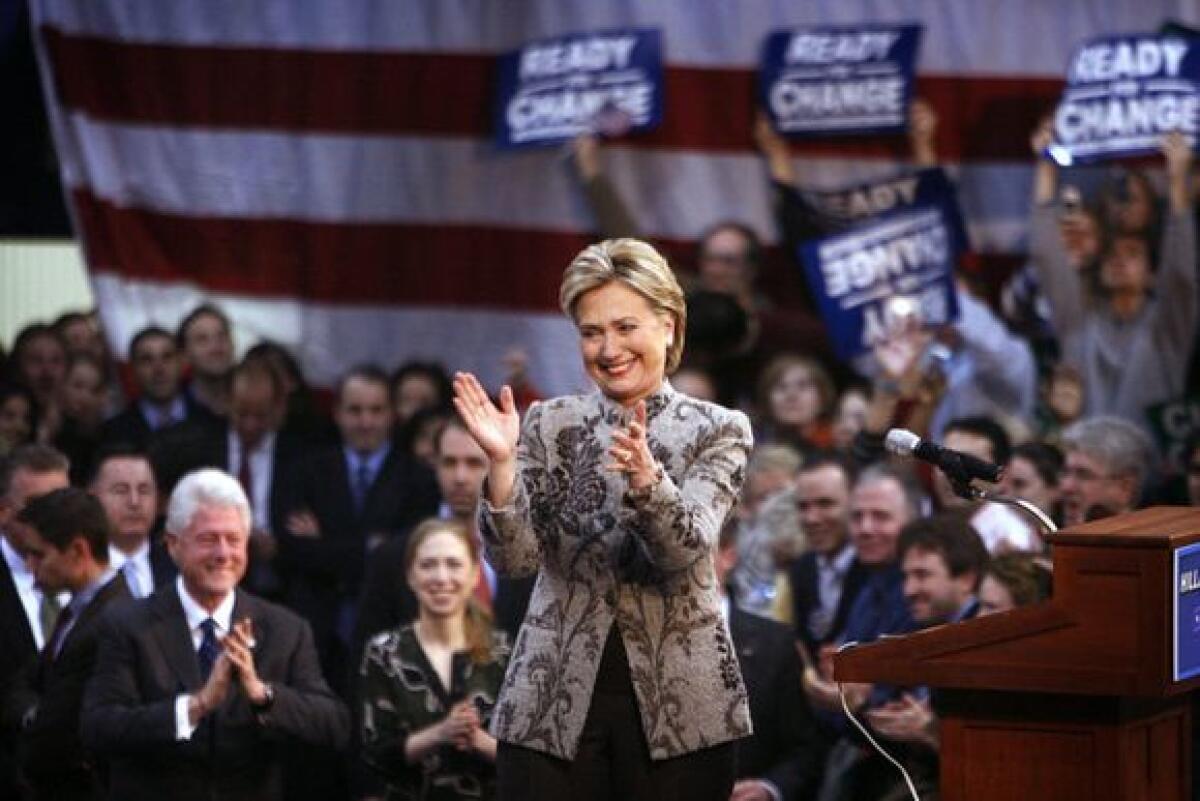
What: It financed and distributed (and is often described as producing) Hillary: The Movie, a sharply critical film about then-Senator Hillary Clinton during the 2008 Democratic primary season.
The legal problem: Federal election law at the time, specifically provisions of the Bipartisan Campaign Reform Act of 2002 (often called McCain-Feingold), restricted certain broadcast communications that referred to a federal candidate shortly before an election. One key category was “electioneering communications,” like broadcast ads naming a candidate within 30 days of a primary or 60 days of a general election.
Citizens United planned to make the film available through video-on-demand and to run ads promoting it. The organization argued that the restrictions, as applied to its film and ads, violated the First Amendment.
The question the Court decided
The case started with an “as applied” challenge: whether the law could be applied to this specific film and its promotion.
But the Court broadened it into a bigger constitutional question: Can the government restrict independent election-related spending based on the speaker being a corporation or union?
That is where Citizens United became a landmark.
Key terms
Independent expenditure: Money spent on election-related messages not coordinated with a candidate or campaign.
Express advocacy: Communication that explicitly tells people how to vote, using phrases like “vote for,” “elect,” “defeat,” or “reject.”
Electioneering communication: A defined category under federal law, generally a broadcast, cable, or satellite communication that names a federal candidate close to an election, even if it stops short of explicit “vote for” language.
The holding in plain English
In a 5–4 decision (2010), the Supreme Court struck down the part of McCain-Feingold (BCRA §203) that barred corporations and unions from using general treasury funds for certain independent expenditures and electioneering communications.
Put another way: The government cannot suppress independent election-related spending just because the speaker is a corporation or union. The ruling did not declare that every conceivable limit on every form of independent spending is unconstitutional. It invalidated this speaker-based ban.
The Court also upheld key disclosure and disclaimer requirements, meaning the government could still require “paid for by” type statements and reporting in many circumstances.
- What the ruling protected: independent spending supporting or opposing candidates, including corporate- and union-funded election-related communications, so long as they are not coordinated with a campaign.
- What it did not create: a right for corporations to give unlimited money directly to candidates.
- What it left standing: contribution limits to candidates and parties, and many disclosure rules.
What got overturned
This was not just a statutory ruling. The majority overruled Austin v. Michigan Chamber of Commerce (1990) and overruled part of McConnell v. FEC (2003) that had upheld BCRA §203’s restrictions.
The Court’s reasoning
1) Political speech gets the highest First Amendment protection
The majority treated the film and its promotion as core political speech. Under First Amendment doctrine, the government faces its steepest constitutional burden when it tries to restrict speech about elections and public officials.
2) The government cannot pick winners by deciding who is allowed to speak
The majority’s central idea was that the First Amendment does not allow restrictions that depend on the speaker’s identity. In their view, “corporation” is not a constitutional off-switch. If a message is protected when spoken by an individual, it does not become unprotected when spoken through a corporate form.
3) Independent spending is treated differently from direct contributions
The Court drew a sharp line between independent expenditures and contributions. A direct contribution goes to a candidate or campaign. An independent expenditure is spending done separately, like paying for ads yourself, without coordinating with the campaign.
Why does that distinction matter? Because the Court has long treated preventing quid pro quo corruption as the main justification for limiting money in politics. Quid pro quo means an explicit trade: money for official action.
The majority reasoned that independent spending is not a payment to the candidate and does not create the same kind of direct exchange. So a ban aimed at corporate and union independent expenditures was, in the majority’s view, an unconstitutional way to address corruption concerns.
4) Disclosure was seen as a less restrictive alternative
Rather than banning speech, the Court said transparency can let voters judge messages for themselves. So while the majority struck down the expenditure restriction, it generally supported disclosure and disclaimer rules as constitutionally permissible.
The dissent’s core concern: The dissenting justices argued that corporate spending can distort elections, that corporations are not the same as natural persons in a democratic system, and that the Court was overruling precedent too aggressively. Even if you never read the opinions, this is the real divide: whether election integrity can justify treating corporate political spending as a special case.
What changed and what did not
Changed: It removed a major category of restrictions on corporate and union independent spending in federal elections. After Citizens United, corporations and unions could spend money from their general treasuries on independent advocacy, including messages that explicitly urge voting for or against a candidate, as long as the spending is not coordinated with the candidate.
Not changed: It did not authorize corporations to write unlimited checks directly to candidates. Candidate contribution limits remained in place.
Also important: Before Citizens United, corporations and unions could still participate in federal elections through separate segregated funds, commonly called PACs, funded by voluntary contributions subject to rules and limits. What Citizens United changed is that it allowed certain independent spending to be funded with general treasury money, not only PAC money.
Still debated: How “independent” outside spending really is in practice, and whether the coordination line is policed aggressively enough to prevent functional workarounds.
How this connects to Super PACs
Citizens United is not the case that created Super PACs, but it is one of the load-bearing cases for the outside-spending world they live in.
The practical connection works like this:
- Citizens United (2010): corporations and unions cannot be barred from making certain independent expenditures from general treasury funds based on speaker identity.
- SpeechNow.org v. FEC (D.C. Cir. 2010): limits on contributions to groups that make only independent expenditures were struck down, helping pave the way for what we now call Super PACs.
- The guardrail: these groups must not coordinate their spending with candidates or campaigns. That independence rule is the tradeoff that makes large independent spending legally possible.
In plain terms, Citizens United strengthened the constitutional foundation for outside spending, and SpeechNow helped define how outside groups could be funded at scale.
Donation limits FAQ
Did Citizens United let corporations donate unlimited money to candidates?
No. Citizens United focused on independent expenditures, not direct contributions to candidates. Federal limits on how much you can give to a candidate’s campaign still exist.
So are there no limits at all after Citizens United?
There are still many limits, but they apply differently depending on where the money goes. Direct candidate contributions are capped. Independent spending by outside groups has far more constitutional protection, so the government’s ability to cap that category is much narrower, especially when the rule turns on who the speaker is.
Can I give unlimited money to a political party?
Not to a national party committee’s main federal account that supports candidates, which is subject to federal limits. Party fundraising is also shaped by the specific committee, the specific account, and what the money will be used for. State and local parties can have separate state-regulated accounts for certain activities, and some party-related arrangements (like joint fundraising committees) come with their own rules. The bottom line is that it is regulated and it is not a blank check.
If outside spending is “independent,” can it still help a candidate?
Yes. “Independent” in election law means not coordinated with the candidate or campaign, not that it has no effect. The constitutional theory is that the lack of coordination reduces the risk of a direct quid pro quo exchange.
Did Citizens United strike down disclosure rules?
Not generally. The Court upheld key disclosure and disclaimer requirements, reasoning that transparency is a less speech-restrictive way to inform voters than banning speech outright.
Why it still matters
Citizens United is less about corporations as characters and more about a constitutional choice: whether the First Amendment allows the government to restrict election speech because of who is speaking, and whether independent spending can be limited to prevent corruption or distortion.
The Court answered those questions in a way that pushed election regulation toward disclosure and away from bans, while drawing a bright constitutional line around speaker-based limits on independent political expenditures.
Whatever you think of that line, it is one of the load-bearing beams of the modern campaign finance system. If you are trying to understand why outside spending plays such a large role in federal elections, Citizens United is a case you have to grapple with, even if it is not the only one.