
There is a particular kind of argument that never happens in a courtroom and yet shapes constitutional culture anyway: the argument about who gets to live under the “real” rules.
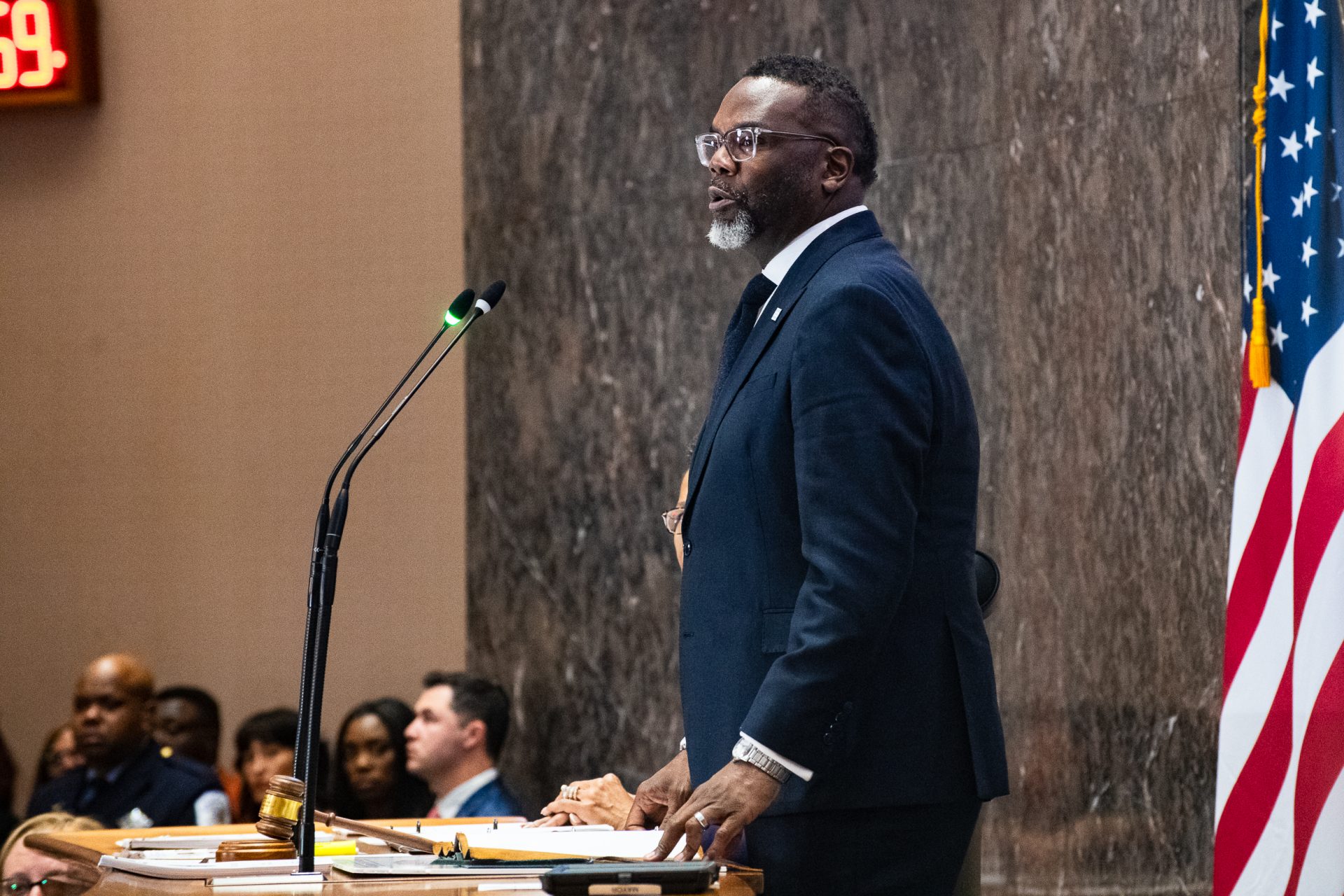
That is why a reported price tag attached to Chicago Mayor Brandon Johnson’s personal security has landed with such force. In a report by Lawrence Keane, the senior vice president and general counsel of the National Shooting Sports Foundation, the figure is about $30 million a year, with a detail that can include as many as 150 Chicago Police Department officers. If those numbers are even close, Chicago taxpayers are funding a protective bubble that ordinary citizens cannot replicate with anything like the same reliability.
And that would be merely a budget controversy if it were not paired with something else: a political posture that treats private firearm ownership as a public threat while treating government armed protection as a public necessity.
Join the Discussion
The tension is obvious
The Second Amendment is not a promise that everyone must own a gun. It is a limitation on government power. It assumes something basic about political reality: that self defense is not reserved for officials, and that the tools of defense cannot be treated as the state’s exclusive domain without consequences.
When a city’s top elected official relies on armed officers for protection while supporting policies that narrow what law abiding residents can own, the resulting message is not policy nuance. It reads like a two tier theory of safety, one standard for officials and another for everyone else.
- Protected class: public officials and their publicly funded security.
- Restricted class: ordinary residents asked to accept fewer options for lawful defense.
That gap is where public cynicism grows. Not because everyone wants the mayor’s detail, but because citizens recognize the difference between “we all must sacrifice” and “you must sacrifice.”
What Johnson supported
Mayor Johnson has backed some of Illinois’ most restrictive firearm policies, including the state ban on certain semiautomatic rifles often labeled “assault-style weapons,” along with the state’s magazine restrictions. After the U.S. Court of Appeals for the Seventh Circuit in 2023 reversed a lower court’s preliminary injunction against the ban, Johnson praised the ruling and called the law an “important step” that would keep “weapons of war” out of neighborhoods.
Whatever one thinks of that rhetoric, it is hard to miss the structural contradiction. The mayor’s worldview still assumes that guns, in the right hands, provide safety. The disagreement is about which hands count as “right.”
Spending matters
Constitutional debates often become abstract, but this one comes with a line item. If taxpayers are truly covering roughly $30 million per year for a security operation that can involve up to 150 officers, then the city is making a statement about priorities as well as risk.
Every large city must provide security for high profile officials. The question is proportionality. At what point does “protection” become an elite service tier funded by people who are simultaneously told that the most effective defensive tools are too dangerous for them to possess?
This is where fiscal accountability and civil liberties collide. If leaders argue that an armed presence is essential to safety, voters are entitled to ask why that logic stops at the doors of government.
A national pattern
This is not just a story about one mayor or one city. It is a recurring American pattern: officials who live inside publicly funded layers of protection while urging tighter restrictions on the public outside those layers.
For example, Hillary Clinton has said, “No one actually needs an AR-15,” despite having spent years with taxpayer funded protection from agencies and departments that have access to rifles including AR-15s. Following the December 2, 2015, San Bernardino terror attack, she also said, “Guns, in and of themselves… will not make Americans safer.”
President Joe Biden has likewise been described as enjoying round the clock, wall to wall protection by good guys armed with the very guns he wanted to bar Americans from owning.
The point is not that officials should be left unprotected. The point is that the moral logic used to justify armed defense at the top does not vanish when it reaches the public.
Who gets to use force
The Founding era was not naive about public safety. The Constitution empowers government to enforce laws and provide for the common defense. But it also distributes power, because concentrated power is the easiest power to abuse.
Modern gun policy arguments sometimes drift into a quiet assumption that security is something delivered to the public, rather than something the public may also lawfully provide for itself. But the American system was built on the opposite instinct: that the citizen is not merely a subject to be managed, and that rights do not depend on one’s proximity to government.
If you want a healthier constitutional culture, you want fewer “special rules.” Not because everyone should be forced into equal vulnerability, but because laws gain legitimacy only when they apply without favor.
Questions for Chicago
If Chicago residents want to cut through the talking points, the questions become practical and measurable:
- What is the full cost of the mayor’s security detail, including overtime, vehicles, and administrative support?
- How many officers are assigned on an average day, and how does that affect patrol coverage elsewhere?
- What threat assessments justify the scale of the operation?
- What is the city’s guiding principle for self defense: a universal right, or a licensed privilege?
The Constitution does not require citizens to trust their leaders. It assumes they will verify. If the public is paying for armed protection at the top while being told to accept less autonomy at the bottom, the burden is on officials to explain why that is not hypocrisy, and why it is consistent with equal citizenship.