
The Fourth Amendment was written for a world of paper ledgers and locked desks. But it was built for a problem that never goes out of style: the government’s temptation to search first and justify later.
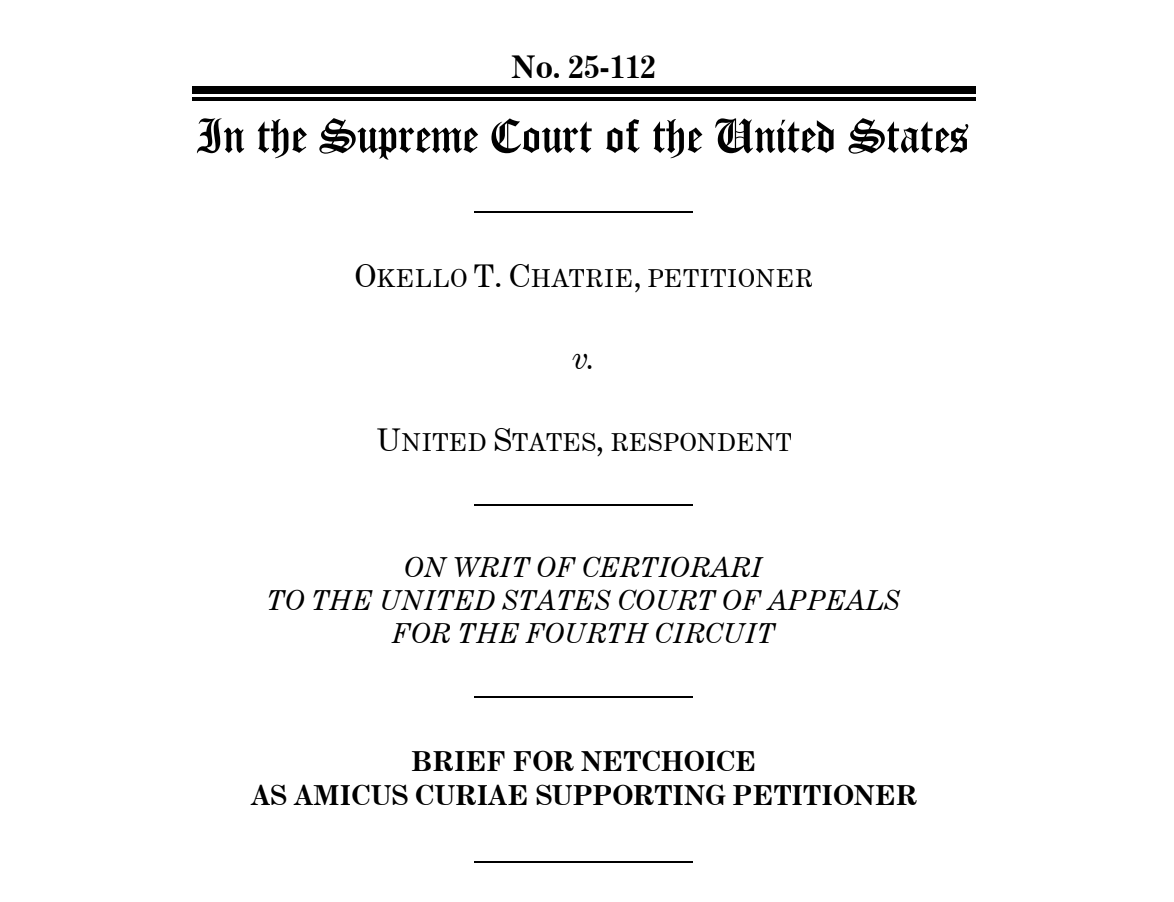
Later this month, the Supreme Court will hear a case that forces that old constitutional instinct into a very modern question. Can police use a warrant that effectively asks a tech company: show us everyone who was here?
The case is Chatrie v. United States, and it sits right on the fault line between two competing Fourth Amendment stories. One story says your location trail is deeply private. The other says you handed it to a third party, so you assumed the risk.
Join the Discussion
What is a geofence warrant?
A geofence warrant is not a warrant for one person. It is a warrant for a place and a time.
Instead of naming a suspect and seeking evidence tied to that suspect, law enforcement serves a warrant on a technology company and demands information about devices that were located within a defined geographic boundary during a specified window. In Chatrie, police served such a warrant on Google. It told Google to search the location history of every one of its users to determine which users were present in the vicinity of a bank robbery. Okello Chatrie was ultimately convicted based on the information obtained via this geofence warrant.
That is the constitutional friction point: the search begins with a perimeter, not a person. Suspicion comes later, after the dataset is pulled and sifted.
General warrants
The Fourth Amendment does not ban all searches. It bans unreasonable ones, and it sets conditions for warrants: probable cause, supported by oath or affirmation, and a requirement that the warrant “particularly” describe what is to be searched and seized.
That particularity requirement was a direct reaction to the broad search authorities the Founding generation had lived under. The classic constitutional enemy here is the general warrant, the kind that lets officials rummage widely, hoping to find something that justifies the intrusion.
Chatrie and his lawyers lean into that history and describe the geofence warrant in this case as “an unconstitutional general warrant” that compelled Google “to conduct a fishing expedition through millions of Google accounts, without any basis for believing that any one of them would contain incriminating evidence.” They argue: “This technology may be novel, but the constitutional problem it presents is not. The Fourth Amendment was born of the Founders' revulsion for general warrants and writs of assistance, instruments that allowed the government to search first and develop suspicions later.”
This is not just rhetoric. It is an accusation about structure. If the warrant is defined by geography rather than individualized suspicion, the question becomes whether “particularity” has been replaced by a digital dragnet.
The government’s theory
The government’s central move is familiar in Fourth Amendment doctrine. If you “voluntarily” share information with a third party, the argument goes, you cannot later claim a reasonable expectation of privacy in that information.
This principle is commonly called the third-party doctrine. The Supreme Court summarized it in Smith v. Maryland (1979) as the rule that “a person has no legitimate expectation of privacy in information he voluntarily turns over to third parties.”
Applied to geofencing, that becomes a sweeping proposition: if your phone’s location history is stored by a company you agreed to use, then police can reach the data through the company with fewer Fourth Amendment obstacles.
In Chatrie, the Trump administration argues that the defendant “had no reasonable expectation of privacy in the short-term location information, which he voluntarily allowed Google to collect.”
Carpenter and location privacy
The Supreme Court complicated the cleanest version of the third-party doctrine in Carpenter v. United States (2018).
In Carpenter, the Court held that warrantless government tracking of cellphone users via their cellphone location records violated the Fourth Amendment. “A person does not surrender all Fourth Amendment protection by venturing into the public sphere,” the Court said. “We decline to grant the state unrestricted access to a wireless carrier's database of physical location information.”
Even more pointedly, the Court wrote: “Whether the Government employs its own surveillance technology…or leverages the technology of a wireless carrier, we hold that an individual maintains a legitimate expectation of privacy in the record of his physical movements as captured through [cell site location information].”
That does not automatically decide Chatrie, because the tools and records at issue are not identical. But the logic of Carpenter creates a direct problem for any argument that location data becomes fair game merely because it sits in a private company’s database.
Who owns the records?
There is another Fourth Amendment thread running through the case, and it is older than “reasonable expectations.” It is the property-based idea that the amendment protects people against governmental intrusion into their “persons, houses, papers, and effects.”
As the Cato Institute pointed out in an amicus brief, “under state law and Google's user agreements, Chatrie may own his Location History records.” The reason that matters is because, as that brief argues, “property rights lie at the heart of the Fourth Amendment, and they do not dissolve merely because one's records are stored by a third party.”
This reframes the real constitutional question. The problem is not just whether you exposed information. It is whether the government can compel a private intermediary to hand over what amounts to a dossier of movements, including movements of many people who are not suspected of anything at all.
What the Court might do
No one knows how the justices will resolve these tensions. But the broad paths are easy to see, and each would set a different baseline for digital privacy.
1) Treat geofence warrants as general warrants
The Court could conclude that a demand for everyone’s location data in a defined area is too close to the Fourth Amendment’s historical target: a search that starts broad and narrows only after the government has a pile of information to comb through.
2) Uphold them narrowly
The Court could uphold the concept while emphasizing tight limits, such as narrow time windows and small geographic boundaries, so that the search looks less like a dragnet and more like a targeted request.
3) Lean hard on the third-party doctrine
The Court could accept the claim that allowing Google to collect short-term location information substantially reduces Fourth Amendment protection. That would be a major privacy loss, not because most people are suspected of crimes, but because most people carry a sensor that continuously generates searchable location evidence.
Why it matters
For most of American history, police investigations tended to start with a suspect. They needed a name, a description, a reason. Geofence warrants can invert that order. They start with a dataset and ask the dataset to produce the suspect.
That inversion is why Chatrie matters even if you never commit a crime, never step into a bank, and never interact with police. A rule that permits broad location sweeps changes the baseline of civic life. It makes being near an event grounds for your data to be examined, retained, and cross-referenced.
The Fourth Amendment is not supposed to guarantee perfect secrecy. It is supposed to prevent the government from treating the public as a pool of suspects.
On April 27, the justices will hear oral arguments in Chatrie v. United States. The question under the legal doctrine will be “reasonable expectation of privacy.” The question under the civic reality will be simpler: in a world of ubiquitous location tracking, does your innocence still get to be private?