
This article is a forward-looking scenario, not a description of current Canadian leadership. In today’s reality, Justin Trudeau is Canada’s prime minister. But the dynamics described here, about Ottawa’s Iran messaging and Washington’s institutional constraints, are best understood as a stress test in a plausible near-future moment: a Canada led by Mark Carney, the former central banker turned political leader, navigating a volatile Iran file under intense allied scrutiny.
In that scenario, when Canada’s prime minister looks “all over the place” on Iran, it is not just a foreign policy optics problem. It is a constitutional stress test, for Canada’s parliamentary accountability on one side, and for America’s separation of powers on the other.
Carney’s critics circle a familiar charge: inconsistent messaging on Tehran that complicates coordination with Washington. In a moment when the United States is trying to keep allies aligned on sanctions, IAEA verification and access, and regional deterrence from maritime security to proxy violence, mixed signals from Ottawa can land as something worse than disagreement. They can read as unreliability.

Join the Discussion
What “all over the place” means
In practice, the complaint is usually less about any single sentence and more about the pattern: one day, a tone that suggests openness to diplomatic engagement; the next, language that sounds like hardline pressure; then a pivot back to caution about escalation or a reminder of humanitarian concerns. Each piece can be defensible in isolation. Together, they can look like a government trying to satisfy multiple audiences at once.
That matters because Iran policy is uniquely sensitive to sequencing, meaning the order and timing of moves. For example, allies may want to tighten enforcement and add listings first, while keeping a clear diplomatic off-ramp and coordinated messaging about what would pause further escalation. If allies are not synchronized, the gaps become leverage for Tehran and friction for the coalition. It also matters because the U.S. government itself often speaks with multiple voices. When Canada adds its own internal dissonance, Washington’s already complicated Iran posture becomes harder to manage.
Why Washington cares
Canada is not a bit player in the U.S. strategic imagination. It is a core intelligence and security partner, bound up with the United States through NORAD, the Five Eyes intelligence network, and day-to-day coordination on sanctions, listings, and controlled goods and technology. On Iran, those tools matter because enforcement is a large part of the policy.
If Ottawa is perceived as drifting, U.S. officials worry about three concrete problems:
- Sanctions coherence: mismatched restrictions create loopholes and compliance confusion for banks, shippers, and insurers.
- Intelligence and law enforcement alignment: terrorism listings, financial tracing, and counter-proliferation investigations work best when allies use compatible legal frameworks and share assumptions about what triggers action.
- Deterrence messaging: allies do not need identical language, but they do need a shared “bottom line” that adversaries can hear.
The fear is not that Canada will suddenly “switch sides.” It is that uncertainty itself becomes policy, and uncertainty invites miscalculation.
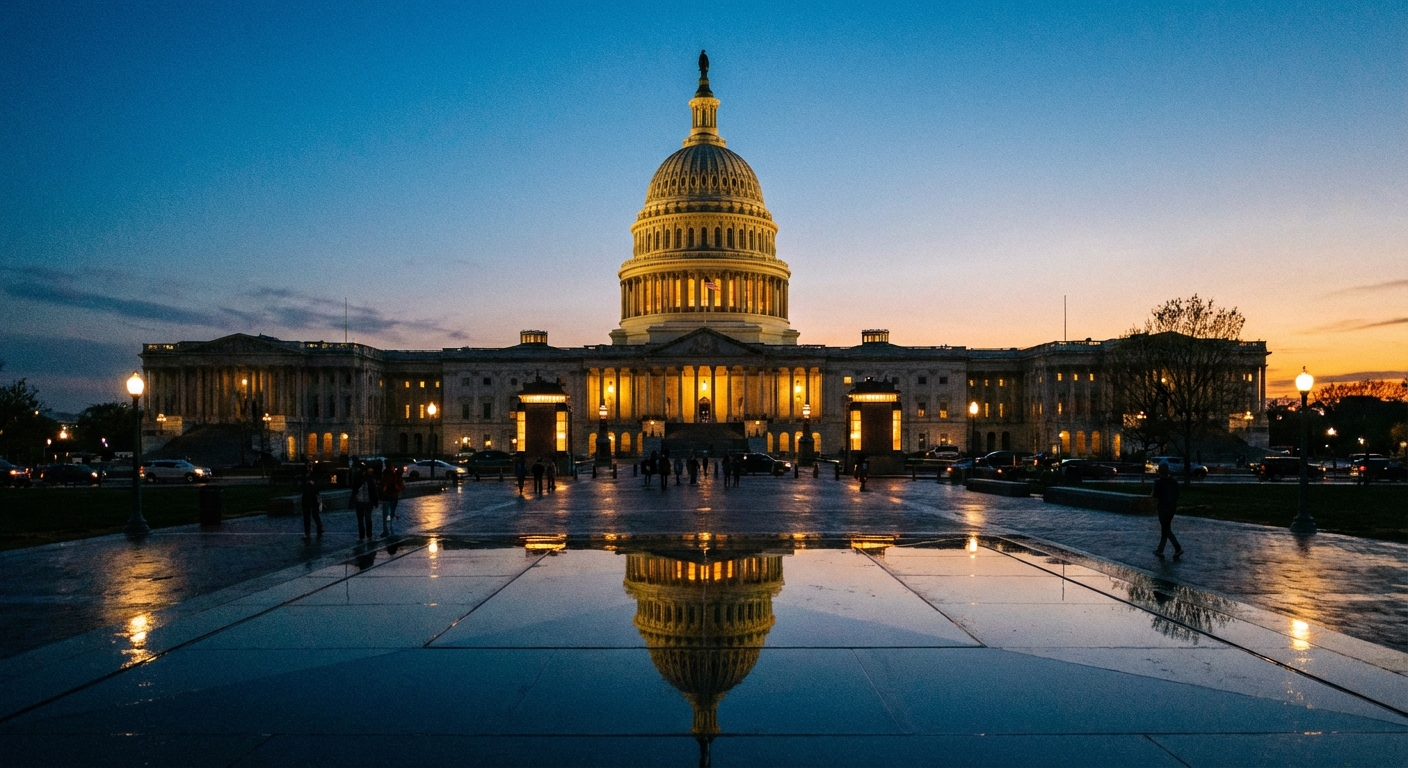
U.S. checks and balances
Americans often talk about foreign policy as if the president simply decides. The Constitution makes it messier on purpose.
Under Article II, the president leads diplomacy and serves as commander in chief, but the president does not hold the entire foreign policy toolkit. Under Article I, Congress controls funding, regulates foreign commerce, and can impose sanctions through legislation. The Senate’s advice-and-consent role over treaties and many appointments adds another layer of friction. Courts usually avoid refereeing high-level diplomacy, but they can shape the boundaries at the margins, for instance when sanctioned parties challenge designation procedures or when executive authority is tested in disputes over implementation.
That division matters for Canada because Ottawa is not negotiating with a single American “voice.” It is navigating an ecosystem: the White House, State, Treasury, the Hill, and sometimes the courts. When Canada’s leadership appears inconsistent, it becomes harder for U.S. officials to sell cooperation domestically, especially to members of Congress who already distrust Tehran and treat any nuance as weakness.
Where rifts form
U.S.-Canada relationships rarely break in dramatic fashion. They fray at the seams, through bureaucratic slowdowns and political mistrust. Iran is a particularly good candidate for that slow-burn damage because it intersects with several high-salience areas at once: terrorism, proliferation, energy markets, regional war risk, and domestic security.
Sanctions enforcement
U.S. Iran sanctions often have extraterritorial reach, meaning non-U.S. firms can feel the pressure if their conduct triggers U.S. financial jurisdiction. Canada can object to that extraterritorial reach in principle while still coordinating in practice. But if a Carney-led government looks indecisive in this scenario, U.S. agencies may respond by tightening compliance expectations, increasing scrutiny, or taking a more unilateral posture.
Terror listings and politics
Another fault line is how governments categorize Iranian state-linked actors. In the United States, designations carry legal weight and political symbolism. Canada’s posture can be read as a moral signal, not just a technical one. If Ottawa’s signal wavers, critics in Washington can frame Canada as an unreliable partner on counterterrorism, even if operational cooperation remains strong.
De-escalation vs pressure
Alliances struggle when one partner prioritizes de-escalation messaging and the other prioritizes deterrent clarity. Neither is inherently wrong. The risk is that mixed messaging produces the worst of both worlds: escalation still happens, but coordination collapses first.
Canada’s political logic
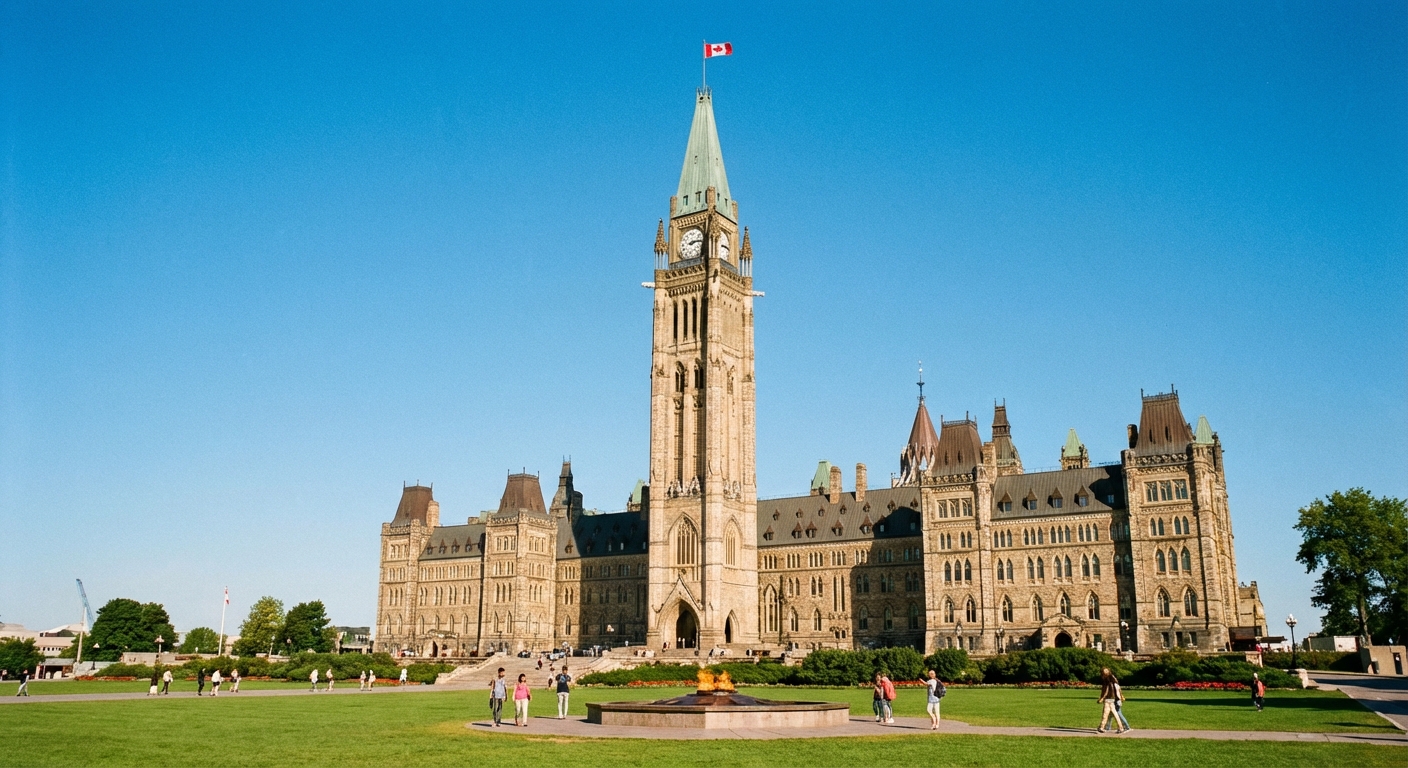
Canadian foreign policy flows through a parliamentary system where party discipline and cabinet solidarity are supposed to create clarity. When clarity is missing, critics interpret it as leadership failure. But some of the “all over the place” effect can come from legitimate tensions: balancing diaspora concerns, trade exposure, intelligence assessments, allied expectations, and the political reality that Iran policy is never just about Iran. It is also about Israel, the Gulf states, Russia and China alignment, energy markets, and domestic security.
There is also a practical mechanics problem. Messaging can fragment when the PMO, Global Affairs, portfolio ministers, and caucus are answering different questions for different audiences on different timelines. A minister stresses de-escalation after a regional flare-up, an opposition-facing line stresses toughness at Question Period, officials emphasize legal process and evidence thresholds, and the prime minister tries to reconcile it all in a single statement. Parliamentary accountability can heighten that effect because Canada’s leaders are pushed to speak quickly and often, not only when the interdepartmental process has fully converged.
Still, there is a difference between complexity and inconsistency. Complexity explains why tradeoffs exist. Inconsistency suggests the tradeoffs are not being owned.
What would reassure the U.S.
If the problem is perception as much as substance, the fix is not a single “tough” speech. It is a coherent framework that makes future decisions predictable even when the headlines change.
- Define objectives plainly: nonproliferation, regional stability, hostage recovery, human rights, and counterterrorism do not always align. A government earns credibility by saying which goal leads.
- Set thresholds: specify what actions by Iran trigger additional sanctions, diplomatic downgrades, or defensive coordination.
- Coordinate sequencing with Washington: allies can disagree, but they should avoid surprising each other in public.
- Communicate enforcement capacity: sanctions without enforcement are theater. Enforcement capacity signals seriousness more than rhetoric does.
The lesson
Foreign policy headlines tempt us to treat diplomacy like personality. But constitutional democracies are built to be slower and more argumentative than that, because power that moves quickly can also move recklessly.
In the United States, the Constitution divides foreign policy authority so that no leader can unilaterally bind the country without checks, whether the issue is war powers, sanctions, or funding. That design makes alliance coordination harder, but it also makes policy more durable once it is genuinely agreed upon.
If a future Carney government wants to avoid a wider U.S. rift, the task is not to sound exactly like Washington. It is to sound like Canada, consistently, with a strategy that U.S. institutions can understand and work with. In an era when alliances are tested by ambiguity as much as aggression, coherence is not spin. It is security.