
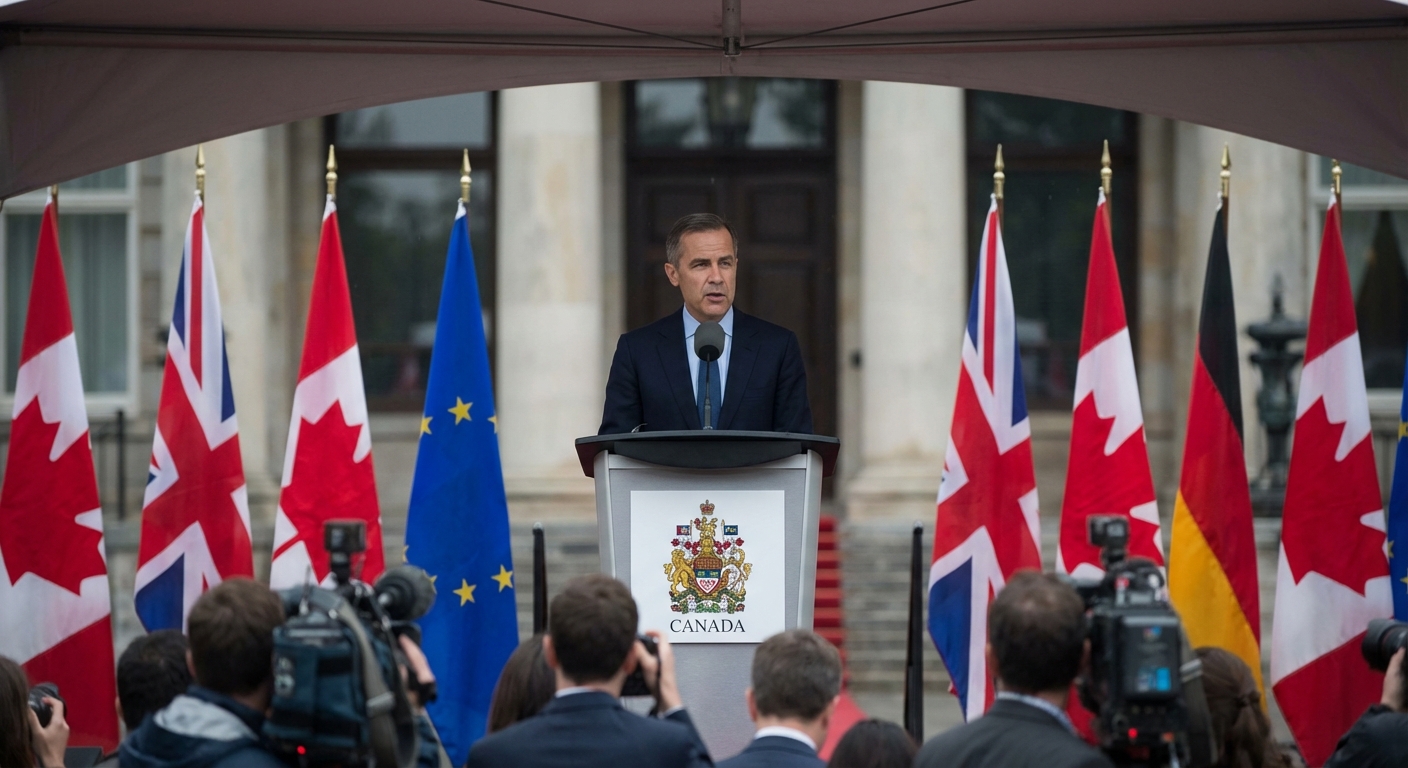
Canada’s new prime minister, Mark Carney, is taking heat at home after a fast-moving series of public comments on the escalating U.S.-Israeli conflict with Iran. In the span of days, his government moved from sounding supportive of U.S. action to warning that the operation bypassed allies and the United Nations, and then to declining to rule out Canadian involvement later.
That kind of zigzag is politically risky in any country. For Canada, it also lands at a sensitive moment in the U.S.-Canada relationship, where even small shifts in tone can be read as bigger signals about alliance cohesion.
What Carney said
The criticism is not just about the substance of Canada’s Iran policy. It is about the consistency of the message.
Nader Hashemi, a Canadian-born associate professor of Middle East politics at Georgetown University, told Fox News Digital, “He’s been all over the place.”
Hashemi argued that Carney’s initial tone appeared to welcome the U.S.-Israeli strikes, but that the messaging shifted after public and political blowback, particularly because early remarks did not emphasize Canada’s traditional language about international law, a rules-based order, and the United Nations.
During a visit to Australia, Carney also raised a process critique, pointing to concerns that the U.S. and Israel “acted without engaging the United Nations or consulting with allies, including Canada.”
That statement placed Canada closer to a familiar middle-power posture: caution about unilateral action and an emphasis on multilateral legitimacy.
Military role question
In Australia, Carney was asked directly whether Canada could join the U.S. militarily against Iran. He did not offer a firm yes or no. Instead, he said that “one can never categorically rule out participation”
and that Canada “will stand by our allies, when makes sense.”
Those lines are flexible by design, but that flexibility is exactly what opponents are attacking. When leaders keep multiple doors open, critics often hear indecision.
NATO limits
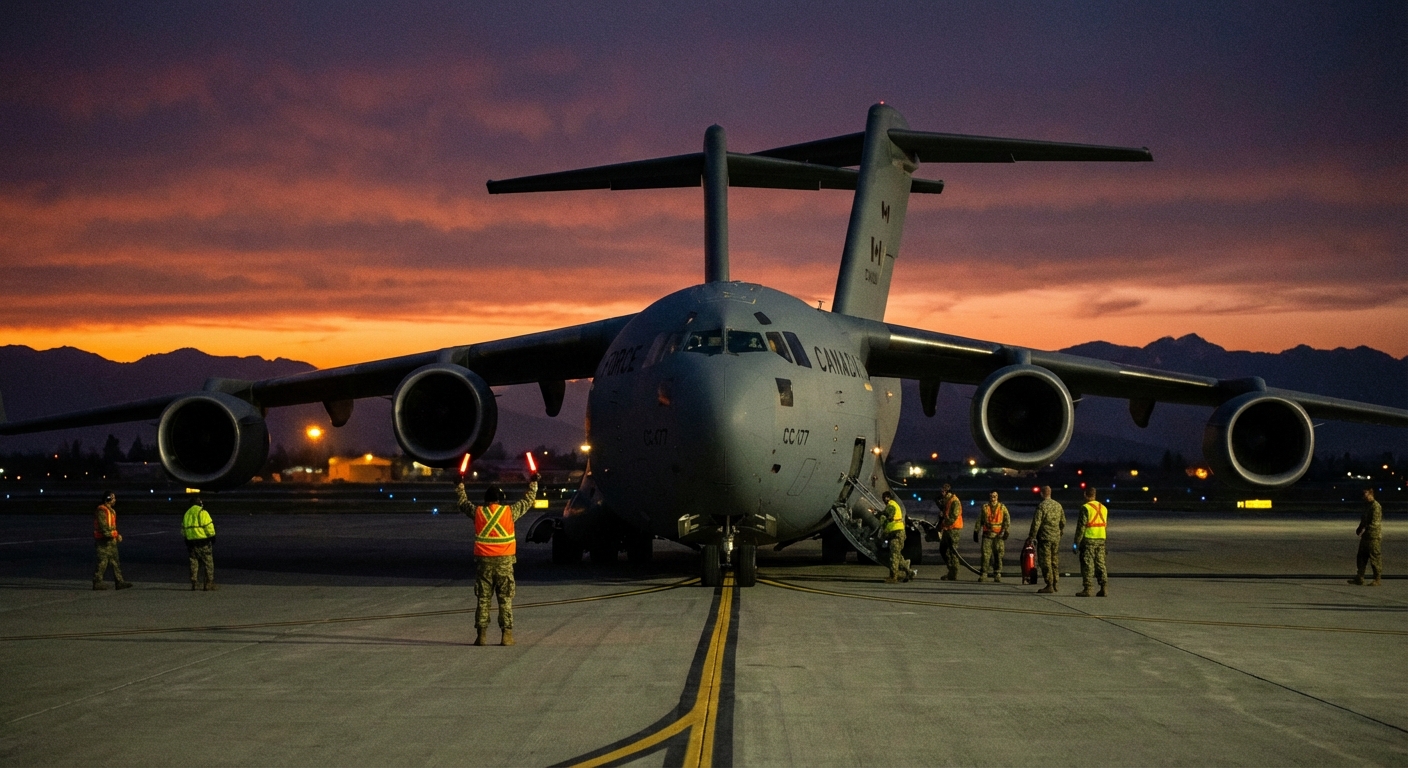
Canada is not a bystander in the West’s security architecture, but it is also not automatically pulled into every U.S. conflict. Retired Canadian major-general David Fraser, a former NATO commander, told CTV News Channel it is “unlikely”
Canada would be drawn into a U.S.-Israeli war with Iran unless a NATO member state such as Turkey sought help under Article 5 of the North Atlantic Treaty.
That distinction matters in the domestic debate: the U.S. and Canada are close allies, but Canadian participation often turns on specific legal and alliance frameworks, not just solidarity or sentiment.
Attacks from both sides
Carney’s shifting tone has given Canada’s opposition parties room to sharpen their attacks.
Conservative deputy leader Melissa Lantsman boiled down what she sees as the government’s evolving stance in an X post: “We support it, we’re upset about it, we think it’s bad, but also, we might join in.”
Michael Chong, the Conservative shadow minister for foreign affairs, told CTV that “supporting the airstrikes and at the same time calling for a secession of those strikes”
[sic] is “an inherent contradiction.”
On the left, the New Democratic Party’s foreign affairs critic Alexandre Boulerice criticized the U.S. and Israeli bombing campaign and accused the Carney government of backing it too readily, urging a stronger focus on diplomacy, peace, and international law.
Split public opinion
One reason leaders hedge is simple: the public is not unified. An Angus Reid Institute poll of 1,619 respondents, released Tuesday, found that 49% of Canadians opposed the U.S.-Israeli airstrikes against Iran, while 34% supported them.
In practice, a divided public can produce statements that sound like they were written to satisfy multiple audiences at once: allies abroad, critics at home, and voters who want the conflict to cool down.
Balancing act
In his comments this week, Carney tried to thread a familiar Canadian needle. He said Canada backs “efforts to prevent Iran from obtaining a nuclear weapon and to prevent its regime from further threatening international peace and security,”
but added that Canada “take[s] this position with regret because the current conflict is another example of the failure of the international order.”
He also said Canada calls for “a rapid de-escalation of hostilities”
and is prepared to assist in achieving that goal.
During his Australian tour, Carney also framed the moment more broadly, saying that “hegemons are increasingly acting without constraint or respect for international norms or laws while others bear the consequences.”
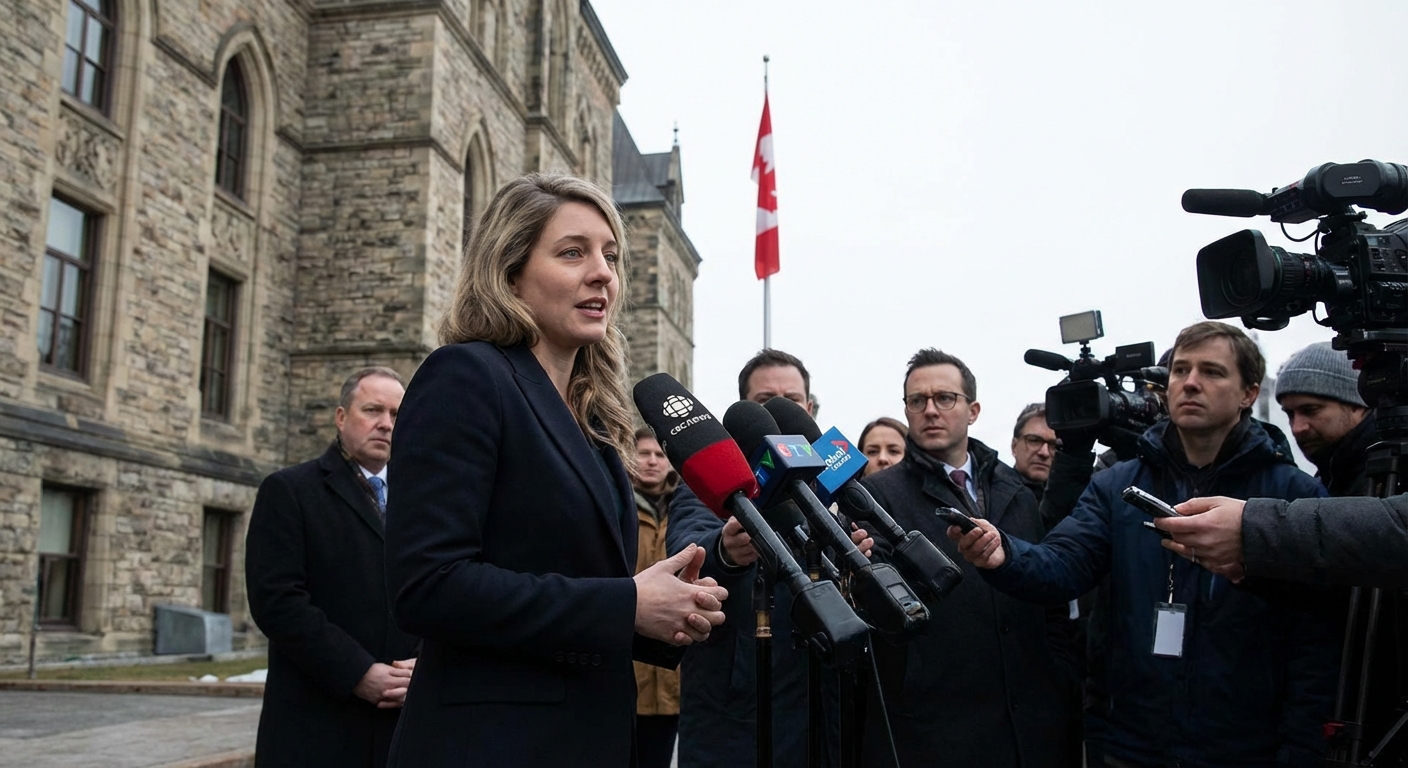
Foreign Affairs Minister Anita Anand echoed the legal framing at an Ottawa security and defense conference, saying Canada calls on all sides to respect the rules of international engagement and that international law binds all parties in the conflict.
Why it matters for U.S.-Canada ties
For American readers, this is less about Canada taking sides and more about how allied governments signal reliability in a crisis. When messaging changes rapidly, it can complicate coordination, even if the underlying policy has not fully changed.
Hashemi suggested Carney’s latest wording may reflect a desire to prevent “a deeper rupture with the United States than already exists.”
In that light, Carney now faces a basic leadership test: clarify Canada’s red lines, explain the legal basis for any potential action, and show Canadians and allies alike that Ottawa’s approach is coherent. If he cannot, the criticism that he is all over the place will only get louder, and the diplomatic cost could rise alongside it.