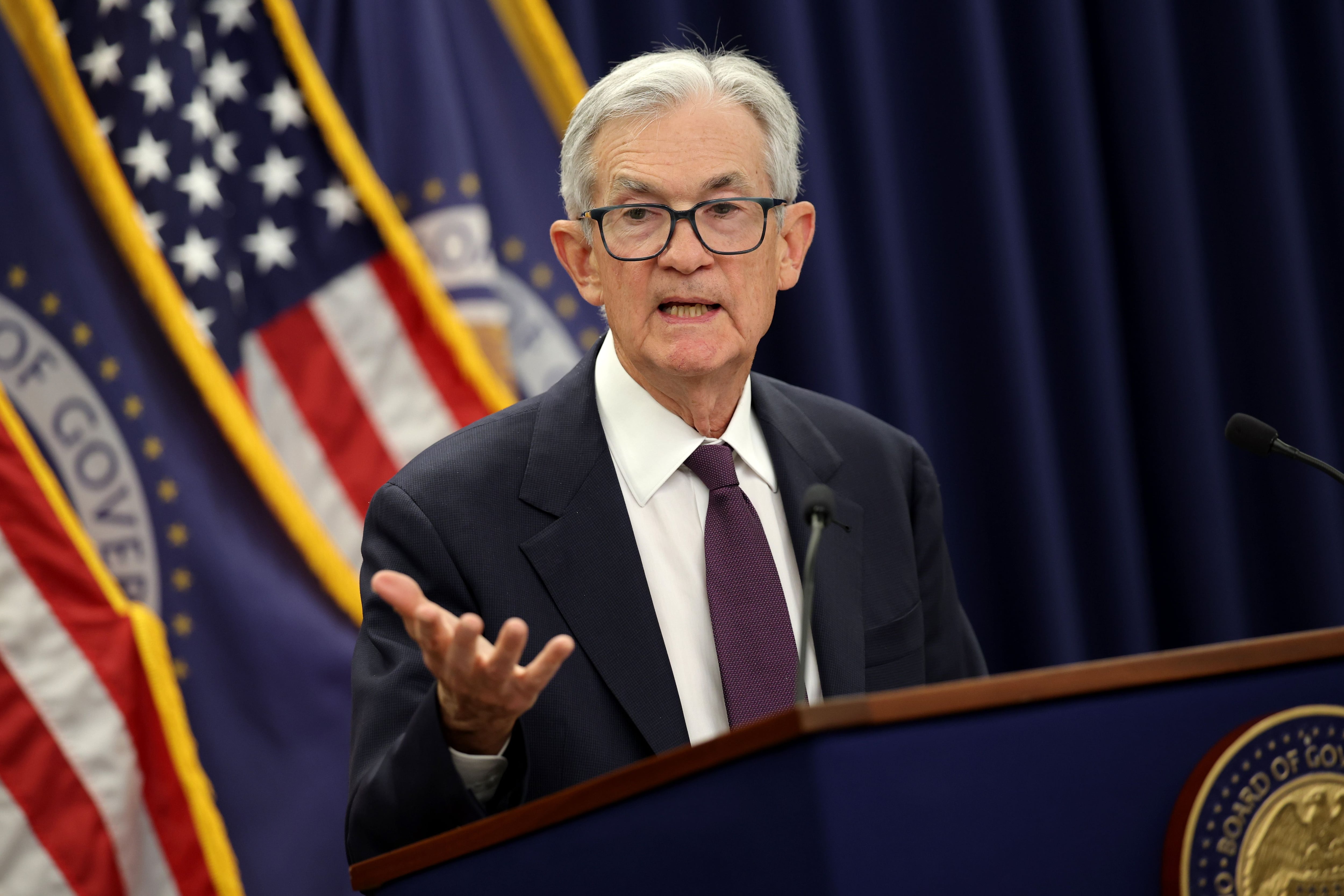
There are a lot of ways a President can try to bend Washington to his will. Public pressure. Backchannel persuasion. Personnel changes. And, sometimes, something far more fraught: using the optics of a criminal process as a lever in a political dispute.
That is the concern sitting at the center of a newly unsealed ruling from U.S. District Judge James Boasberg, who blocked the Justice Department from issuing two grand jury subpoenas to the Federal Reserve Board in a probe connected to Federal Reserve Chair Jerome Powell. In Boasberg’s telling, the subpoena effort was not a neutral evidentiary step, but a “pretext” for pressure.
Join the Discussion
What was blocked
Boasberg’s bottom line was blunt. The subpoena effort did not read as a neutral attempt to gather evidence of a crime. In his view, it read as pressure.
In the ruling, Boasberg wrote that the Justice Department offered “no evidence whatsoever” that Powell committed a crime “other than displeasing” President Donald Trump. He framed the central question this way: “Did prosecutors issue those subpoenas for a proper purpose?” And then answered it: “The Court finds that they did not.”
Most striking was the court’s finding about purpose. Boasberg said there was “abundant evidence that the subpoenas’ dominant (if not sole) purpose is to harass and pressure Powell either to yield to the President or to resign and make way for a Fed Chair who will.”
How the probe started
The underlying inquiry traces back to Powell’s June 2025 testimony before the Senate Banking Committee, centered on the Fed’s years-long renovation of its Washington, D.C., headquarters. According to the reporting, U.S. Attorney for the District of Columbia Jeanine Pirro opened a criminal inquiry tied to that testimony.
Powell later made the investigation public in January, describing it as an attack on the Fed’s independence.
Appeal and blowback
Pirro said Friday that the Justice Department would appeal the ruling to a higher court. At a news conference, she criticized Boasberg in sweeping terms: “This process has been arbitrarily undermined by an activist judge,” she said, arguing that he “put himself at the entrance door to the grand jury, slamming that door shut — irrespective of the legal process — and thus preventing the grand jury from doing the work that it does.”
Any appeal could prolong Trump’s efforts to remove Powell from the Fed and replace him with his pick, former Fed Governor Kevin Warsh. Sen. Thom Tillis of North Carolina reacted on social media Friday by calling the investigation “weak and frivolous” and “nothing more than a failed attack on Fed independence,” adding: “Appealing the ruling will only delay the confirmation of Kevin Warsh as the next Fed Chair.”
Purpose matters
On paper, this dispute is about subpoenas and grand jury process. In practice, Boasberg’s ruling turns on a narrower but crucial point: purpose. The court was not weighing competing policy views about interest rates. It was evaluating whether prosecutors were using compulsory process for a proper investigative end.
That distinction is why the ruling reads like more than a routine procedural loss. If subpoenas are issued to investigate specific, articulable criminal conduct, they sit on familiar legal ground. If they are issued primarily, as Boasberg concluded, to pressure a Fed chair to lower interest rates or resign, the ruling suggests the legal tool is being put to a use it was not built to serve.
Posts the court cited
Boasberg’s opinion also laid out what it treated as supporting context for improper purpose: a stream of public attacks on Powell and pressure to cut rates. The ruling cited one post calling Powell “Jerome ‘Too Late’ Powell” and adding that he is “TOO LATE, and actually, TOO ANGRY, TOO STUPID, & TOO POLITICAL, to have the job of Fed Chair,” noting it was among “at least 100 statements that the President or his deputies have made attacking the Chair of the Federal Reserve and pressuring him to lower interest rates.”
Boasberg also wrote, “Being perceived as the President’s adversary has become risky in recent years,” adding: “In his second term, Trump has urged the Department of Justice to prosecute such people, and the Department’s prosecutors have listened.”
What happens next
The immediate next step is the government’s appeal, which could move the fight to a higher court and stretch out the timeline around any attempted leadership change at the Fed.
The larger question raised by the ruling is not an abstract claim about presidential intent. It is the one the court itself posed and answered: whether the criminal process here was deployed for a proper purpose, or as a means of pressure. Boasberg says the record points to the latter. The appeal will test whether that conclusion holds.