
A decade-long consent decree is reshaping how several federal agencies may interact with social media companies, and it is being celebrated by two Republican-led states as a major First Amendment win.
The agreement resolves a lawsuit brought by Missouri and Louisiana, alongside individual plaintiffs, over what critics called government pressure on platforms to remove or reduce the visibility of lawful speech. In everyday terms, the settlement targets a familiar modern problem: when government officials do not directly censor you themselves, but instead lean on private companies to do it for them.
What the settlement does
Under the consent decree, three federal entities are restricted for 10 years from using threats or coercion to influence content moderation decisions involving constitutionally protected speech:
The Office of the Surgeon General
The Centers for Disease Control and Prevention (CDC)
The Cybersecurity and Infrastructure Security Agency (CISA)
The core idea is simple: these agencies cannot pressure social media companies to remove, suppress, or throttle protected speech, and they cannot “direct” or “veto” a platform’s moderation choices.
That matters because the First Amendment limits the government, not private platforms. But when government officials effectively strong-arm private companies into suppressing speech, courts have long wrestled with whether the state has crossed the constitutional line.
What is still allowed
The decree does not impose a gag order on government. Officials may still communicate with platforms, including flagging posts or expressing disagreement, as long as the communication does not contain threats or implied punishment. In other words, the government can talk, but it cannot intimidate.
The settlement also reflects an important caveat: the federal government retains authority to address criminal activity and national security threats on online platforms. The constitutional question is not whether government can ever raise concerns, but whether it can use its power to compel a private company to silence lawful speech.
Why states call it historic
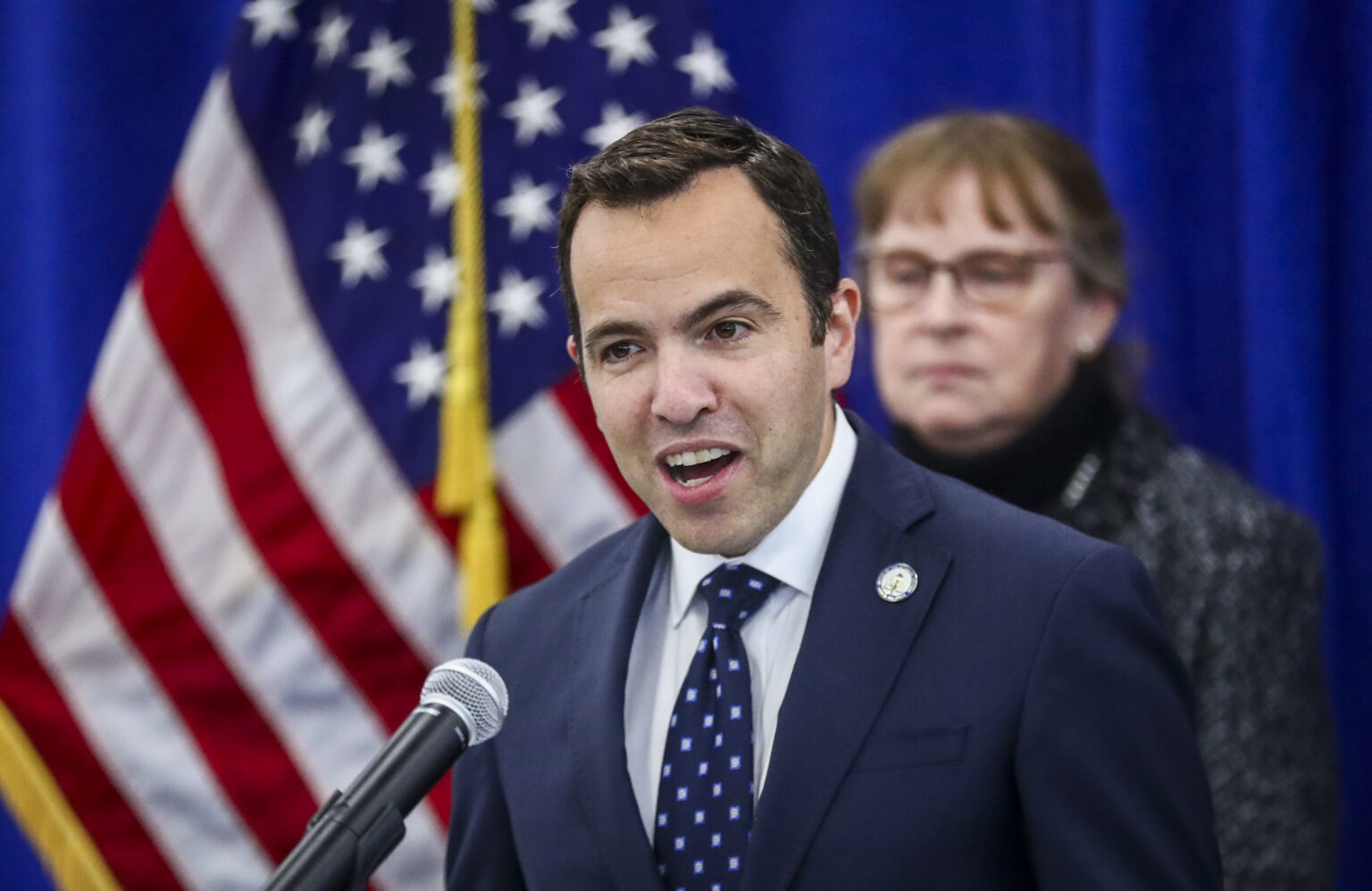
Louisiana Attorney General Liz Murrill praised the agreement as “simply historic in nature,” saying it helps set a precedent that this kind of conduct is out of bounds. She described the alleged government conduct as “Orwellian in nature.”
Sen. Eric Schmitt of Missouri, who helped initiate the lawsuit when he was the state’s attorney general, framed the decree as a concrete constraint rather than a symbolic statement: “This is the first real, operational restraint on the federal censorship machine.”
Missouri Attorney General Catherine Hanaway likewise applauded the result, stating that her state “will NOT allow politicians to police speech.”
The lawsuit, plain English
The case was filed in 2022 and became one of the most closely watched legal fights over so-called “jawboning.” That term is often used for behind-the-scenes government persuasion that stops looking like mere persuasion when the government is also the regulator, funder, or enforcer standing across the table.
The plaintiffs alleged that officials from the Biden administration, and some government activity dating back to the first Trump administration, improperly pressured platforms such as YouTube, X (formerly Twitter), and Facebook (now Meta). The disputed topics included COVID-19 policy debates, election security claims, and public discussion connected to Hunter Biden’s laptop.
Republican anger over the issue intensified during the 2020 election season. After the New York Post published a report about the Biden family and Ukraine based on contents from Hunter Biden’s laptop, Twitter restricted the story and Facebook reduced its reach, a sequence that became a central example for critics who argued the platforms were policing political speech.
As the case moved forward, discovery and later congressional investigations added more context about the government’s contact with platforms. According to those findings, FBI officials during the first Trump administration met with social media companies shortly before the story ran and warned about a potential Russian “hack and leak” effort tied to the 2020 election. The companies later said that warning influenced their choice to block the story.
One reason this issue resonates with so many Americans is that it sits at the intersection of two modern realities:
Social media is where public debate happens.
Government has strong incentives to manage narratives during emergencies and elections.
The First Amendment exists precisely because those incentives never fully go away.
How the courts got here
Earlier in the litigation, U.S. District Judge Terry Doughty issued an injunction in 2023 that described the evidence as depicting “an almost dystopian scenario” and likened the government’s role to an Orwellian “Ministry of Truth.”
That injunction did not remain intact. The U.S. Court of Appeals for the Fifth Circuit narrowed it. The Supreme Court later vacated the injunction entirely, concluding the plaintiffs had not established standing. Notably, that meant the Court did not decide the underlying First Amendment merits of the alleged government pressure.
The consent decree arrives in the space left behind by that procedural ending. It functions as a negotiated set of rules that bind the agencies named in the agreement for the next decade.
Why it matters long term
From a civics perspective, the most important feature of this settlement is that it is not a campaign-season talking point. It is an enforceable framework that attempts to separate two things that are easy to blur online:
Government speech, which is generally permitted (officials can advocate, warn, and persuade).
Government coercion, which can become unconstitutional when it uses the force of the state to induce private censorship.
A practical way to think about the line is this: would the message still feel optional if it came from someone who also controls your license, your contracts, or your regulatory fate? First Amendment concerns begin when the answer is no.
The federal government did not admit wrongdoing as part of the settlement. Even so, the restrictions reflect a recognition that certain lines are dangerous to approach, especially when federal agencies communicate with platforms that effectively host the modern public square.
What to watch next
Consent decrees can be powerful, but they are also specific. This one names particular agencies and focuses on particular types of conduct. Future disputes will likely turn on details: what counts as a “threat,” what qualifies as “coercion,” and how courts interpret subtle pressure in emails, meetings, and back-channel requests.
For readers who want the constitutional takeaway, it is this: the First Amendment’s protection does not mean the government must stay silent. It means the government must not use its power to make other people silence you.