
Articles by Eleanor Stratton
Browse articles in Articles by Eleanor Stratton on U.S. Constitution
Right to Work: Constitutional Insights
Right-to-work laws originated with the 1947 Taft-Hartley Act. Before this, union membership was often mandatory in certain industries. The Act's Section 14B allowed states to prohibit compulsory union membership, a significant shift in labor relations. Idaho and Wyoming were early adopters of these...
Read more →Electoral College and Federalism
The Electoral College, a cornerstone of American federalism, was created by the framers of the United States Constitution to balance power among states of varying sizes and populations. This article examines the historical context, mechanics, and ongoing debates surrounding this pivotal institution...
Read more →Constitution’s Role in Foreign Policy
The U.S. Constitution outlines the separation of powers in foreign policy among the Executive, Legislative, and Judicial branches. This division serves as a safeguard against tyranny, ensuring a balanced approach to international relations. The U.S. Constitution divides foreign policy...
Read more →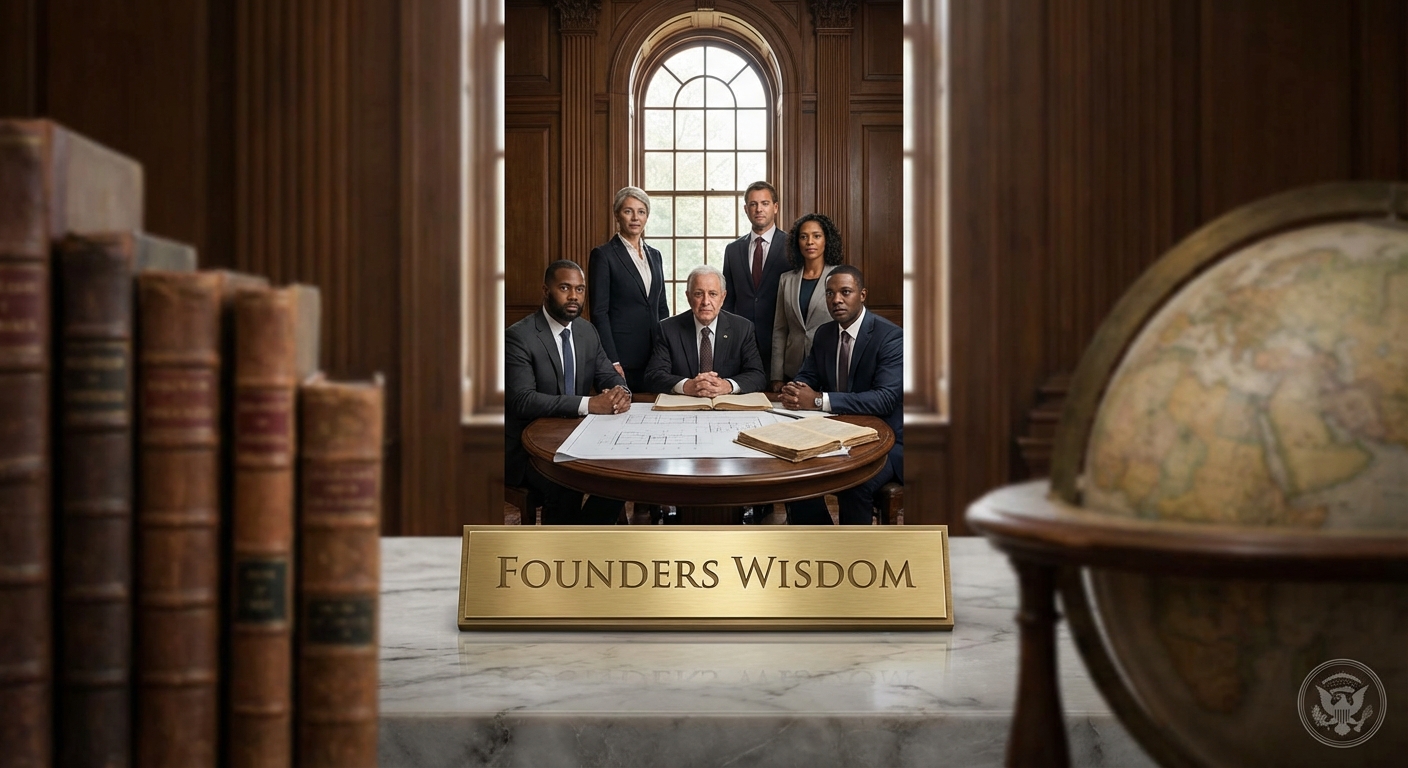
The Founders’ Lasting Wisdom
Education, literacy, and separation of church and state were key principles for the Founding Fathers. Their insights into human nature and virtue shaped the Constitution, aiming to create a balanced government. Understanding these elements offers a deeper appreciation of the values that continue to...
Read more →Constitution and Disability Rights
The U.S. Constitution has played a significant role in shaping disability rights. Through amendments and legislation, the principles of equality and justice in this foundational document have extended to protect individuals with disabilities. This article examines the constitutional basis and legal...
Read more →Constitution and Cybersecurity Laws
The Constitution forms the bedrock of American governance, providing a framework that balances federal oversight with state autonomy. This balance is crucial for cybersecurity, where threats often transcend state boundaries and require coordinated responses. By examining key constitutional...
Read more →Space Colonization and Governance
The principles laid out in the Outer Space Treaty of the 1960s have shaped our approach to space activities, much like the U.S. Constitution has guided American governance. This comparison provides a lens through which we can examine the challenges and opportunities of space colonization, ensuring...
Read more →Harriet Tubman and Constitutional Freedom
Harriet Tubman's life exemplifies the principles of liberty and justice that form the foundation of the United States Constitution. From her early years under slavery to her role in the Underground Railroad and her contributions during the Civil War, Tubman's journey is a story of resilience and...
Read more →Brown v. Board: Equal Protection
The historical and legal landscape of racial segregation in the United States has been shaped by pivotal court decisions and societal shifts. This examination explores the legal battles, social contexts, and challenges that have defined this critical aspect of American history, from the "separate...
Read more →Frederick Law Olmsted’s Public Spaces
Frederick Law Olmsted's journey from varied professions to landscape architecture was marked by a deep appreciation for nature and a commitment to public health and social reform. His work, including Central Park and the Emerald Necklace , set a precedent for urban green spaces that promote...
Read more →Constitution and Corporate Influence
The history of corporate rights in America is a journey through significant legal milestones and judicial decisions. From the early 1800s to the present day, corporations have continually pushed the boundaries of their constitutional protections. Understanding this progression offers insight into...
Read more →AI in Warfare: Constitutional Issues
The integration of artificial intelligence into military operations brings forth significant constitutional and ethical considerations. The use of AI in autonomous weapons, surveillance, and decision-making processes raises questions about the protection of fundamental rights, the balance of power,...
Read more →Eighth Amendment Protections
The Eighth Amendment's roots trace back to the 1689 British Bill of Rights, which first introduced protection against cruel and unusual punishment. This concept was later incorporated into American law, beginning with Charles Mason's inclusion of similar protections in the 1776 Declaration of...
Read more →Constitution and Affirmative Action
Affirmative action policies trace their roots to the Civil Rights Movement of the 1960s. The Civil Rights Act of 1964 aimed to eradicate discrimination based on race, color, religion, sex, or national origin. Title VII specifically targeted employment discrimination, laying groundwork for...
Read more →Constitution’s Role in Drug Policy
The United States Constitution establishes the structure for drug policy regulation. The Commerce Clause in Article I, Section 8 allows Congress to regulate interstate commerce, significantly impacting drug regulation. The Controlled Substances Act (CSA) relies on this clause to regulate drugs...
Read more →Constitutional Right to Work
Economic rights trace their origins to English common law and philosophy that shaped the early American legal system. English courts resisted monopolies imposed by the Crown, asserting that individuals had the right to earn a living through lawful means. This principle of economic freedom became...
Read more →Constitution and Education Funding
The Constitution guides the division of educational responsibilities between federal and state governments. The 10th Amendment reserves powers not given to the federal government for the states, making education primarily a state responsibility. States establish public schools, determine curricula,...
Read more →Constitution and Financial Regulation
The Constitution emerged from a period of economic distress under the Articles of Confederation. The federal government was weak, unable to levy taxes or pay debts. States had too much autonomy, leading to economic chaos with each printing its own money and establishing trade rules. The Founding...
Read more →Constitutional Rights of Prisoners
The United States Constitution lays the foundation for a society that values individual rights and freedoms, including protections for those within the prison system. These protections, grounded in the First, Eighth, and Fourteenth Amendments , reflect a balance between maintaining order and...
Read more →Constitution and Same-Sex Marriage
The journey toward marriage equality in the United States illustrates the complex interplay between state and federal powers, judicial interpretation, and societal change. From the Defense of Marriage Act in 1996 to the Supreme Court’s decision in Obergefell v. Hodges in 2015, the path to...
Read more →