
Republicans on the House floor erupted in cheers Wednesday night as the vote total crossed the threshold needed to pass. Democrats quietly exited the chamber. The final tally was 222-209.
After 43 days – the longest government shutdown in American history – Congress sent a bill to President Trump’s desk to reopen the federal government. Trump signed it at 9:45 PM, ending a standoff that paralyzed air travel, cut SNAP benefits to 42 million Americans, and left hundreds of thousands of federal workers without paychecks.
Democrats accomplished nothing. They held out for six weeks demanding guaranteed extensions of Affordable Care Act subsidies. What they got was a promise from Senate Republicans to hold a vote in December on a bill of Democrats’ choosing. No commitment that it will pass. No guarantee the House will even consider it.
Six Democrats voted with Republicans to pass the funding measure. Two Republicans – Thomas Massie and Greg Steube – voted against it. House Speaker Mike Johnson called the shutdown “completely and utterly foolish and pointless in the end.”
He was right. The question is which party bears more responsibility for 43 days of pointless damage.
The Deal That Gave Democrats A Handshake
The bill extends most federal funding through January 30. It includes full-year appropriations for the Department of Agriculture, Veterans Affairs, and the legislative branch. SNAP benefits get funded through September 2026, ending the legal fight over whether the Trump administration could withhold them during the shutdown.
That’s what Democrats got in writing. What they didn’t get in writing matters more.
Senate Majority Leader John Thune promised to hold a vote by mid-December on legislation Democrats will craft to extend the expiring ACA subsidies. No commitment about what that vote will be on. No guarantee it will pass. And Speaker Mike Johnson made no such promise in the House.

The enhanced ACA tax credits expire December 31. Without them, millions of Americans will see sharp premium increases – in some cases doubling or tripling. Democrats went into the shutdown declaring this their non-negotiable demand. They came out with a promise Republicans can abandon without consequence.
House Minority Leader Hakeem Jeffries called it exactly what it is: “A handshake deal to take a future vote on extending the healthcare subsidies… the equivalent of asking two wolves and a chicken to vote on what’s for dinner. It is dead on arrival.”
Yet Jeffries couldn’t stop his caucus from exiting the chamber quietly rather than voting no and extending the shutdown. Because after 43 days, Democrats had no leverage left and no credibility to claim more time would change that.
The Eight Democrats Who Broke First
In the Senate, eight Democrats voted with Republicans Monday night to advance the bill. Their votes provided the 60 needed to overcome a filibuster. Those eight senators – none facing reelection until 2028 at the earliest, with two retiring – decided ending the pain mattered more than holding out for guaranteed healthcare wins.
In the House, six Democrats voted yes: Tom Suozzi of New York, Henry Cuellar of Texas, Adam Gray of California, Marie Gluesenkamp Perez of Washington, Don Davis of North Carolina, and Jared Golden of Maine.
These aren’t random defections. They’re members from competitive districts who watched constituents suffer while Democratic leadership held out for concessions that weren’t coming. They calculated that voters would punish them more for prolonging the shutdown than for abandoning party unity.
Whether they’re right depends on whether Democratic base voters punish representatives for ending suffering, or whether they punish them for failing to secure healthcare guarantees. Either way, the split reveals Democrats lost control of their shutdown strategy before they admitted it publicly.
The Provision Nobody Knew Was In There
Drama threatened to crack Republican unity hours before the vote when members discovered a last-minute provision allowing senators whose communications were tapped during former Special Counsel Jack Smith’s investigation to sue the federal government for $500,000 each.
Representatives Chip Roy, Austin Scott, and Morgan Griffith all expressed concerns but said they wouldn’t extend the shutdown over it.
Representative Greg Steube was less diplomatic: “I’m not voting to send Lindsey Graham half a million dollars.”
Johnson promised a separate vote next week to repeal the provision. Whether that vote happens, and whether it passes, remains to be seen. But the provision’s inclusion reveals how Senate deal-making works – insert favors for members in must-pass legislation, then dare the House to vote it down and extend the crisis.
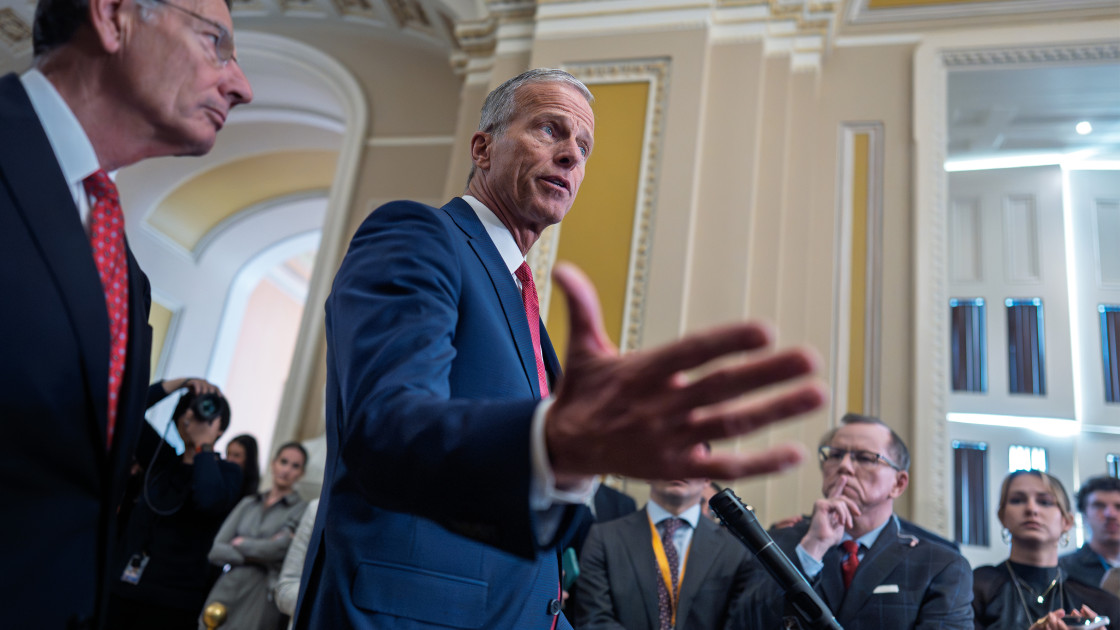
House Appropriations Chairman Tom Cole admitted he was “surprised” to see the provision and “unaware of it” until the Senate bill arrived.
“Do I think it needs to be in a funding bill? Not particularly,” Cole said. “But do I think getting the government open is important? Yes, I do.”
That’s the calculation that carried the bill. Even provisions members opposed weren’t worth extending the shutdown to fix. Which means senators who negotiated the deal could slip in favors knowing the House had no leverage to remove them.
The Rules Committee Fight That Revealed Everything
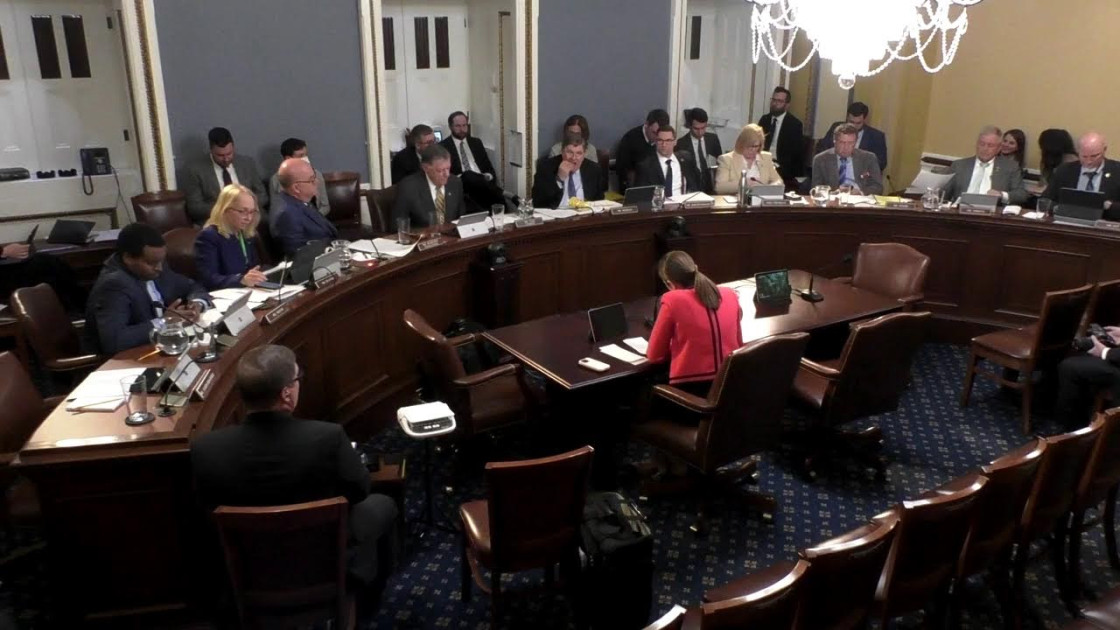
Before the House floor vote, the Rules Committee met Tuesday night to set the parameters for debate. Democrats attempted to amend the bill to include a three-year extension of ACA subsidies. The amendment failed on party lines, 4-8.
Democrats also tried to strip the $500,000 senator notification provision. That failed too. They proposed redirecting what they called Trump’s “$40 billion bailout to Argentina” toward ACA funding instead.
“I guess MAGA stands for MAKE ARGENTINA GREAT AGAIN,” Representative Teresa Leger Fernández said.
None of it mattered. Republicans controlled the committee. They rejected every Democratic amendment. The only question was whether enough Democrats would vote no on the floor to extend the shutdown further.
Jeffries vowed Tuesday night that Democrats would “be strongly opposed” to the bill. He gave a fiery speech Wednesday using unlimited debate time, declaring “This fight is not over. We’re just getting started.” He spoke for 15 minutes, then watched his caucus exit the chamber after the vote.
The fury was performative. Jeffries knew Democrats didn’t have votes to sustain opposition. The Rules Committee defeats proved that. But he needed to demonstrate to the base that leadership fought until the end, even if the end was inevitable days earlier.
Flight Chaos That Finally Broke The Standoff
Air traffic controllers missed two full paychecks during the shutdown. Thousands took second jobs to feed their families. Staffing shortages at the country’s busiest airports caused cascading flight delays and cancellations.
The FAA ordered airlines to cut flights by 6% at 40 major airports, with reductions increasing to 10% by week’s end. Transportation Secretary Sean Duffy warned that without resolution, Thursday and Friday would see “double, triple the number of cancelations and delays” compared to the chaotic previous weekend.
This visible crisis created political pressure neither party could ignore. When flights get canceled, business travelers miss meetings. Families can’t reach funerals. Thanksgiving plans face uncertainty. Those people call their representatives. Those representatives – especially ones in competitive districts – started calculating whether healthcare leverage was worth being blamed for holiday travel nightmares.
The answer turned out to be no. Air traffic controllers will receive 70% of back pay within 48 hours of the government reopening, according to Duffy. The rest follows over weeks. But the damage to the system – controllers who quit and won’t return, passengers who lost confidence in air travel, holiday plans disrupted – doesn’t get fixed by back pay.
SNAP Recipients Caught In Legal Whiplash
The Agriculture Department issued four different guidance memos to states about SNAP benefits during the shutdown. Recipients experienced whiplash – promises of partial benefits, then full benefits, then partial again, all while courts issued conflicting orders.
A federal judge in Rhode Island ordered full benefits restored. The Trump administration appealed. The Supreme Court granted a temporary stay Friday night, allowing continued withholding. That stay was set to expire Tuesday at 11:54 PM.
The government reopening makes the legal fight moot. SNAP gets funded through September 2026 under the bill Trump signed. But 42 million Americans spent weeks uncertain whether they’d get food assistance, watching their benefits get reduced or eliminated while courts and politicians fought over constitutional authority.

The bill includes provisions to reverse all shutdown-related layoffs and ensure federal workers receive full back pay. That’s restoration, not remedy. The weeks without adequate food assistance don’t get retroactively fixed. The stress of not knowing whether benefits would arrive doesn’t get compensated.
The January 30 Deadline That Guarantees This Happens Again
The bill funds most of government through January 30. That’s 11 weeks – just long enough to pretend the problem is solved before the next crisis arrives.
Republicans expressed confidence they’d finish work on all remaining appropriations bills by then. “There are nine remaining bills, and we’d like to get all of those done in the next few weeks,” House Majority Leader Steve Scalise said.
House Appropriations Chairman Tom Cole agreed: “I think we can.”
They won’t. Congress hasn’t passed all appropriations bills on time in decades. The pattern is continuing resolutions, shutdown threats, last-minute deals, and repeat. This shutdown lasted 43 days. Nothing in the resolution suggests the next one will be shorter.
The bill also creates another deadline: December for the promised ACA vote. Then January 30 for the next funding fight. Then December 31 for ACA subsidies actually expiring. Congress has constructed a calendar of guaranteed crises over the next seven weeks.
What Democrats Lost By Holding Out
Democrats began the shutdown with a clear position: No funding bill without guaranteed ACA subsidy extensions. They held that line through September, October, and early November. Fourteen Senate votes failed because Democrats refused to surrender.
Then they surrendered anyway. The eight Senate Democrats who voted yes Monday night didn’t extract new concessions. They accepted the same deal Republicans offered weeks earlier – a promise to hold a vote, with no guarantee of passage.
If Democrats were always going to accept that deal, they could have accepted it on day one. Instead, they waited 43 days, inflicted maximum damage on federal workers and SNAP recipients, disrupted air travel, and then took the deal they could have had at the start.
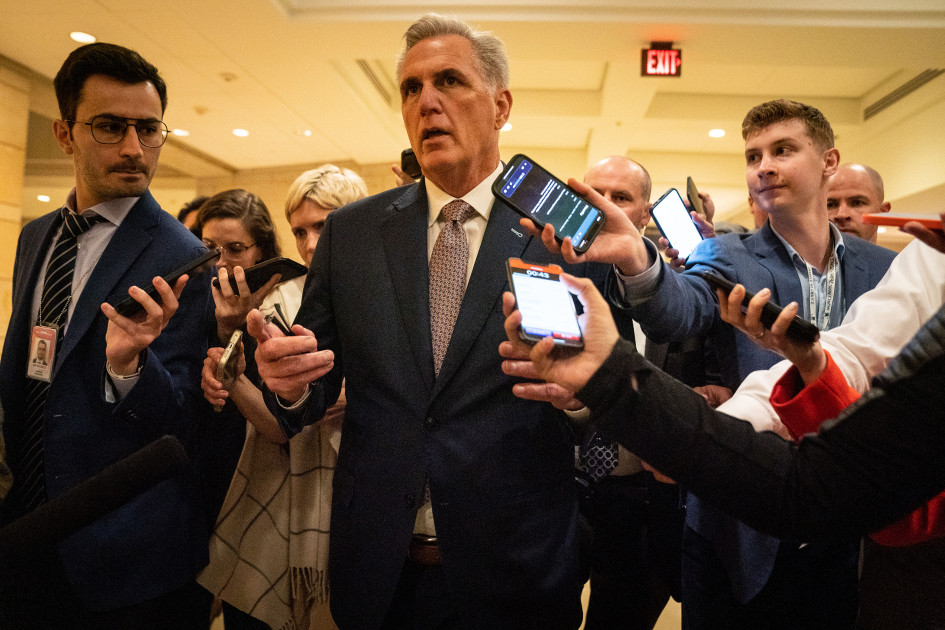
Republican Study Committee Chairman August Pfluger summarized it bluntly: “They literally got absolutely nothing except for a total and complete surrender, that accomplished nothing more than hurting American families.”
Democrats would argue they forced Republicans to promise the December vote, which creates pressure to act. But pressure without enforcement mechanism is wishful thinking. If Republicans bring up a bill loaded with poison pills Democrats can’t accept, they can claim they held the vote and Democrats refused to compromise.
The House Freedom Caucus Talking Points That Revealed The Game
The House Freedom Caucus – typically the most rebellious faction of House Republicans – circulated internal talking points praising the bill. Those points, obtained by NBC News, claimed victory:
“This is now the fourth time we have successfully blocked an omnibus spending bill.”
That framing reveals what this fight was really about for hardline Republicans. Not just ending the shutdown, but establishing that they can force short-term continuing resolutions instead of full-year omnibus spending packages. They view that as a win regardless of whether they extracted specific policy concessions.
Democrats fought for healthcare policy. Republicans fought over process. The process Republicans wanted – short-term CRs creating perpetual leverage over Democrats – is what they got. And they got it while Democrats claimed the shutdown was about protecting healthcare.
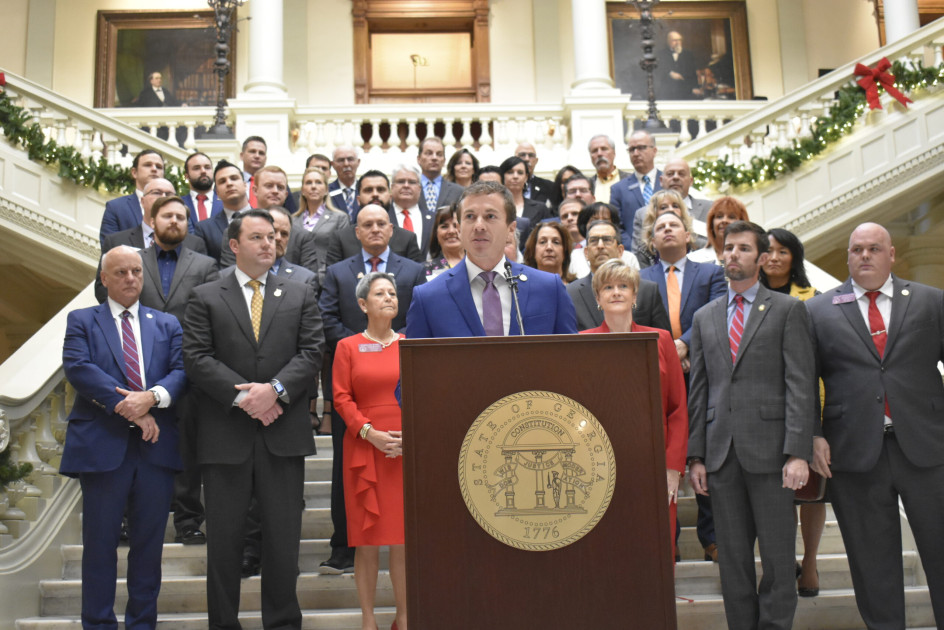
The disconnect explains why Republicans erupted in cheers when the bill passed. They weren’t celebrating ending the shutdown – they were celebrating that Democrats spent 43 days fighting for healthcare guarantees and ended up with nothing while Republicans entrenched their preferred appropriations process.
The Veterans And Federal Workers Who Paid The Price
The bill includes full-year funding for Veterans Affairs – one of three appropriations bills that won’t need revisiting until next fiscal year. VA Secretary announced that veterans’ benefits would be paid in full immediately upon reopening.
Federal workers will receive full back pay for the 43 days they worked without paychecks or stayed home on furlough. The bill reverses all shutdown-related layoffs the Trump administration imposed.
These provisions restore what should never have been taken away. Federal workers who missed two full paychecks don’t get compensated for the stress of not knowing how they’d pay rent or buy groceries. Air traffic controllers who quit to find work that actually pays them don’t get their jobs back through legislative provision.
Veterans Day fell during the shutdown. Trump used his Arlington National Cemetery remarks to congratulate Johnson and Thune on “a very big victory” while the government was still closed. “We’re opening up our country,” he said. “Should have never been closed.”
That last sentence is correct. The shutdown should never have happened. But assigning responsibility for why it did requires acknowledging that both parties found the suffering useful as leverage until it became more politically costly than beneficial.
The ACA Subsidies That Will Probably Expire Anyway
Enhanced ACA tax credits expire December 31. Without extension, millions of Americans will see premium increases averaging 75%, according to estimates. Some could see premiums double or triple.
Democrats fought for 43 days to guarantee extensions. They got a promise that Senate Republicans will hold a vote in December. Speaker Johnson hasn’t promised anything in the House.
Representative Mike Lawler of New York said Wednesday he’s willing to extend subsidies for one year, but wants income thresholds lowered “so that somebody making $600,000 is not being subsidized by taxpayers to buy a health care plan.”
That qualification reveals how negotiations will proceed. Republicans will offer extensions with conditions Democrats find unacceptable. When Democrats reject those conditions, Republicans will claim they tried but Democrats refused to compromise. Subsidies expire, premiums spike, and both parties blame each other.
The December vote Republicans promised could be on any bill. They could propose a one-month extension. They could attach poison pills making it unpassable. They could simply bring up a bill so inadequate Democrats vote it down, then claim they held the vote as promised.
Democrats bet 43 days of shutdown pain would force Republicans to provide binding guarantees on healthcare. They lost that bet. Now they’re hoping political pressure from rising premiums will force Republicans to act. That’s hope, not strategy.
Johnson’s Seven-Week Recess That Worked Perfectly
Speaker Johnson kept the House out of session from September 19 until Wednesday night. Seven weeks during a government shutdown. Federal workers went without pay while representatives stayed home.
Johnson’s explanation was that he wouldn’t bring the House back until there was a deal to vote on. Democrats called it a taxpayer-funded vacation designed to avoid tough votes. Both interpretations are correct.
By keeping the House out, Johnson avoided having to whip votes on multiple failed funding bills. He avoided members from competitive districts facing repeated roll calls where they’d vote against reopening government. He consolidated the pain into a single moment when members returned, voted once, and ended it.
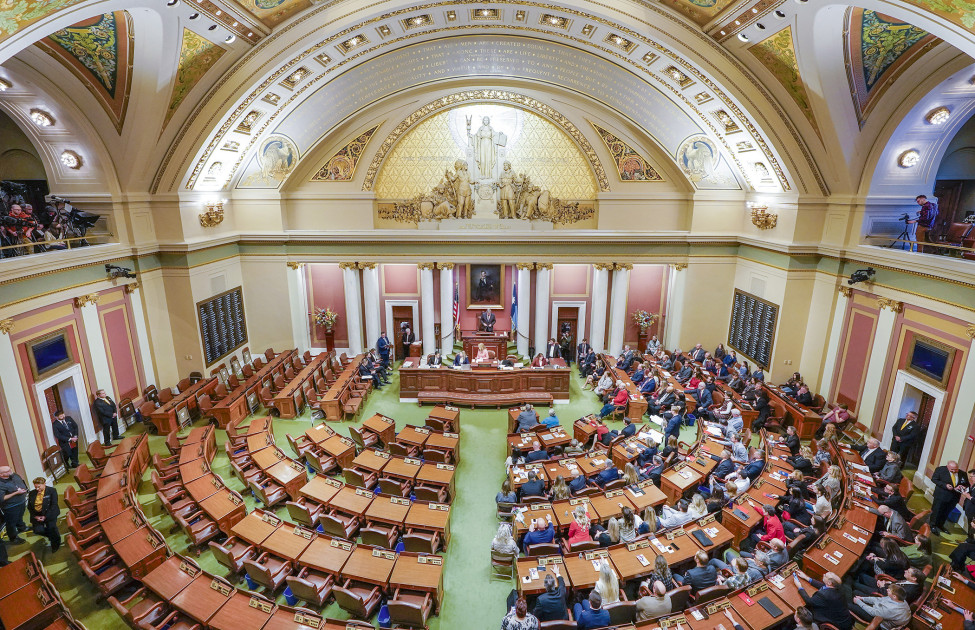
Jeffries mocked this strategy Wednesday: “House Republicans, welcome back from your taxpayer-funded seven-week vacation.” But the strategy worked. Republicans passed the bill with only two defections. Johnson maintained party unity by giving members no votes to explain until one final vote they could justify as ending the crisis.
Democrats, by contrast, faced repeated Senate votes where their position eroded week by week until eight senators finally broke ranks. Johnson’s approach – keep members out until the deal is done – proved more effective at maintaining unity than forcing repeated votes.
What Forty-Three Days Actually Accomplished
The shutdown began October 1. It ended November 12. In those 43 days:
- Air traffic controllers missed two paychecks and some quit permanently
- 42 million Americans experienced SNAP benefit reductions or uncertainty
- Flight cancellations and delays disrupted travel nationwide
- Hundreds of thousands of federal workers went without pay
- Democrats went from demanding guaranteed ACA extensions to accepting a promise of a vote
What changed to justify ending it? Nothing about the underlying policy disputes. Democrats didn’t get healthcare guarantees. Republicans didn’t extract spending cuts or policy concessions.
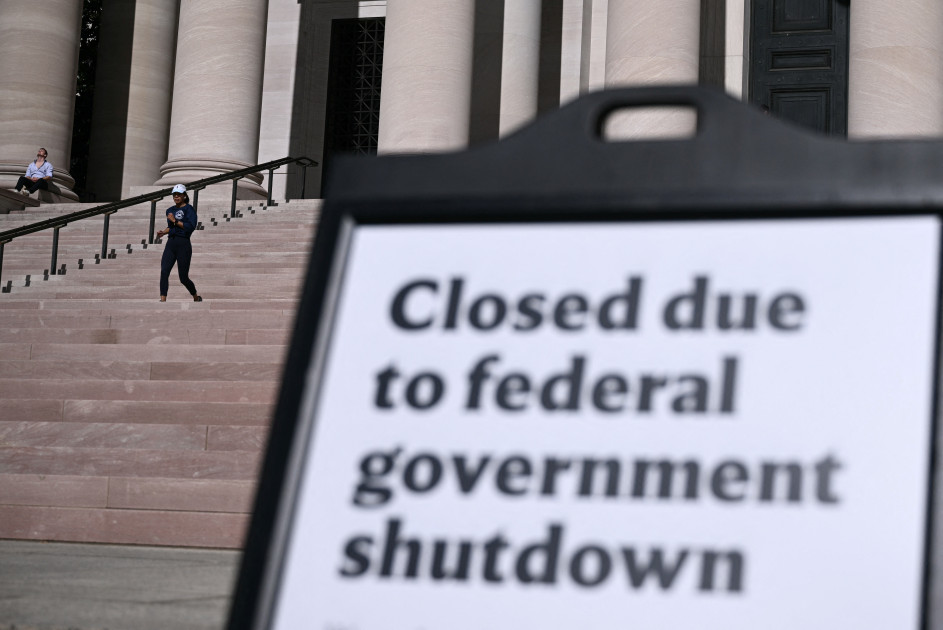
The shutdown ended because the visible pain – flight chaos, hungry families, unpaid workers – created more political cost than either party could sustain. Not because anyone won the policy fight, but because continuing it became untenable.
That’s not how representative democracy is supposed to work. Shutdowns aren’t negotiating tactics – they’re failures of governance. The fact that both parties treated 43 days of dysfunction as acceptable leverage reveals how thoroughly shutdown politics have been normalized.
The Fight Jeffries Says Is Just Beginning
“This fight is not over. We’re just getting started,” Jeffries declared Wednesday. “There’s only two ways that this fight will end: Either Republicans finally decide to extend the Affordable Care Act tax credits this year, or the American people will throw Republicans out of their jobs next year.”
That’s fighting words backed by no leverage. Democrats just spent 43 days using every tool they had – withholding votes, holding out through pain, maintaining unity across chambers – and got nothing. Jeffries is promising to keep fighting with no explanation of what leverage Democrats possess now that they lacked during the shutdown.
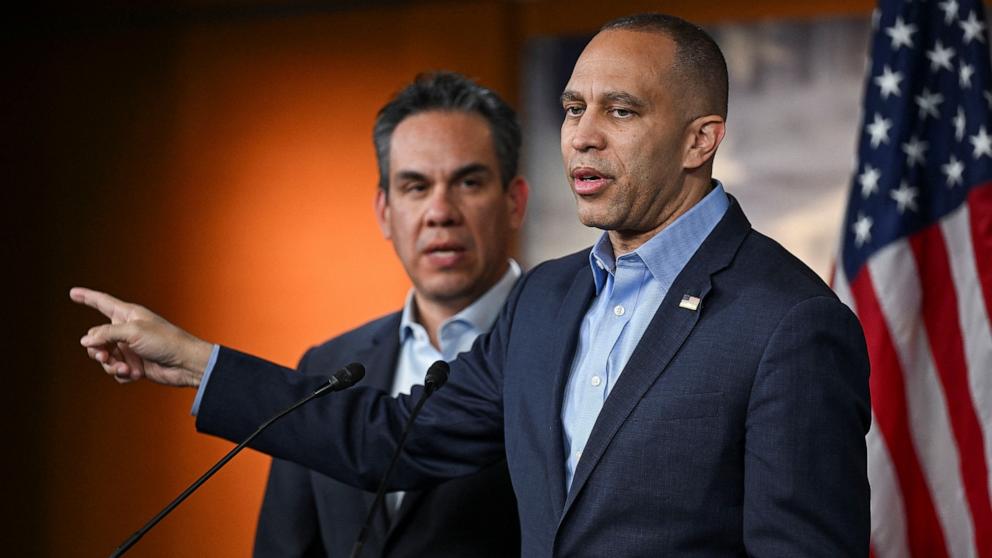
The threat that voters will “throw Republicans out” next year depends on whether Americans blame Republicans for rising premiums or Democrats for failing to prevent them. That’s not obvious. Republicans can argue they offered to negotiate but Democrats rejected reasonable compromises. Democrats can argue Republicans broke their promise. Both narratives have elements of truth, which means neither party faces clear accountability.
The Signing Ceremony That Closed The Longest Shutdown Ever
Trump signed the bill at 9:45 PM Wednesday in the Oval Office. Federal workers were told to report Thursday morning. Back pay processing would begin immediately, with 70% arriving within 48 hours.
“The long national nightmare is over,” Johnson said earlier Wednesday. He was echoing Gerald Ford’s line about Watergate – an odd comparison that suggests Johnson views 43 days of unnecessary suffering as equivalent to constitutional crisis. Or perhaps he just reached for a dramatic quote without thinking through the implications.
Either way, the nightmare is over until January 30. That’s when the next funding fight begins. Same process, same leverage points, same willingness to use government function as a bargaining chip.
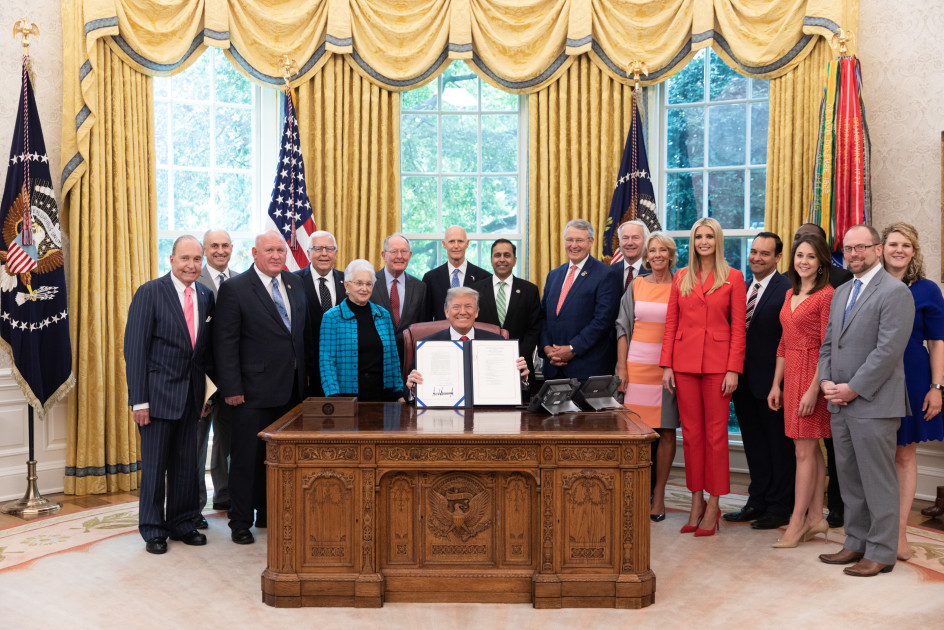
Nothing in the resolution changes the incentives that created this shutdown. Both parties still believe threatening dysfunction creates leverage. Both parties still calculate that voters will blame the other side. Both parties still prioritize their policy demands over stable government operation.
The longest shutdown in American history ended not because either party won, but because both parties finally decided the damage outweighed the potential gains. That’s not resolution – it’s mutual exhaustion.
And in 11 weeks, when the January 30 deadline arrives, we’ll discover whether exhaustion has any lasting effect on how Congress does business. History suggests it won’t.