
What happens when a state’s highest court upholds its own state’s constitution? In our current political climate, the answer is a furious public attack from the President of the United States.
President Trump’s recent social media post, declaring a Utah court order “absolutely Unconstitutional” and its judges “Radical Left,” is more than just another political broadside. It is a new and alarming front in the ongoing war over the rule of law, one that now targets the very foundation of our federalist system: the independence of our state judiciaries.
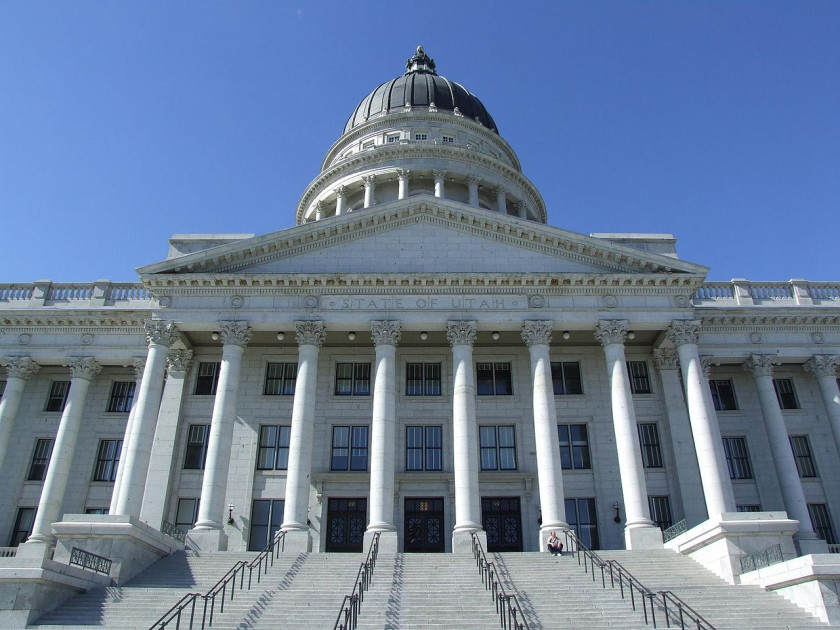
A State Court, A State Constitution
To understand this conflict, one must first understand the legal battle in Utah. In 2018, the citizens of Utah passed a ballot initiative, Proposition 4, to create an independent commission to handle the drawing of congressional districts and combat partisan gerrymandering.
The Republican-led state legislature, however, largely ignored the commission’s recommendations and drew its own map, which was widely seen as a partisan gerrymander designed to maintain a 4-0 Republican congressional delegation.
That map was challenged in state court. The court’s recent order, the one the President calls “Unconstitutional,” was a ruling that found the legislature’s map violated the Utah State Constitution’s guarantee of free and fair elections. The judges were not inventing new law; they were upholding the supreme law of their own state.
An Attack on an Independent Judiciary
The President’s response was a direct assault on the principle of judicial independence.
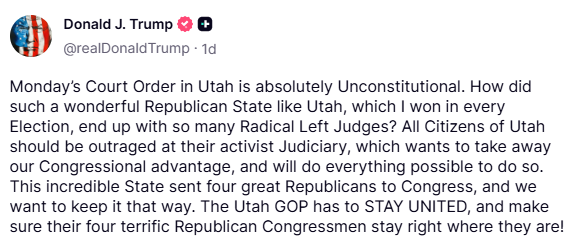
“How did such a wonderful Republican State like Utah… end up with so many Radical Left Judges?” the President wrote. “All Citizens of Utah should be outraged at their activist Judiciary, which wants to take away our Congressional advantage.”
This is a dangerous and corrosive argument. It suggests that the legitimacy of a court and its judges should be measured not by their fidelity to the law and their own constitution, but by whether their decisions produce a favorable outcome for a particular political party. It is a demand for partisan loyalty from a co-equal branch of government that is sworn to be impartial.
A Lesson in American Federalism
The President’s intervention is also a profound violation of the principles of federalism. Our constitutional system is a dual-sovereign one. The Utah Supreme Court is the final arbiter of the Utah Constitution, just as the U.S. Supreme Court is the final arbiter of the U.S. Constitution.
For the President of the United States to attack a state court for interpreting its own state constitution is a deep infringement on the sovereignty of that state, a principle protected by the 10th Amendment. It is an attempt by the federal executive to use his national platform to intimidate a state-level institution and to interfere in a legal matter that belongs exclusively to the people and government of Utah.
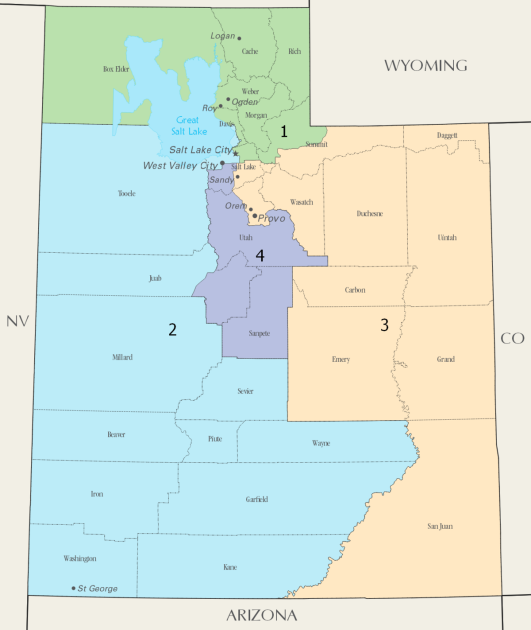
The President’s post is a revealing statement about his view of the rule of law. In this worldview, a court is only legitimate if it produces the “correct” political outcome. A state court that upholds its own state constitution to strike down a partisan gerrymander is, in his eyes, an “activist Judiciary” that must be condemned. This is a dangerous perspective that threatens the independence of every court in the land, from the local courthouse to the U.S. Supreme Court, and undermines the very structure of our federal republic.