
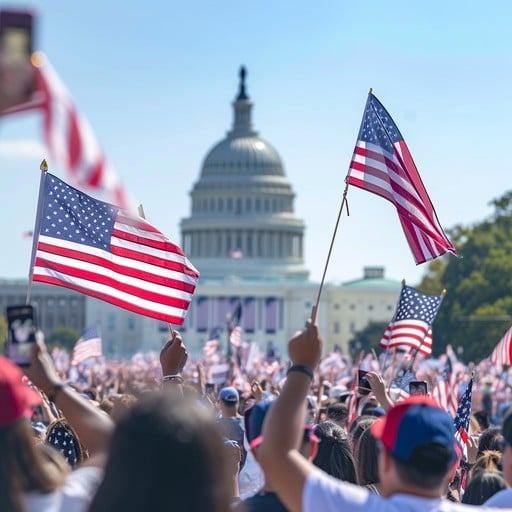
This Fourth of July, the familiar sounds of fireworks and patriotic music are being met with a competing noise: the sound of protest. As millions of Americans gather for parades and barbecues, thousands more are taking to the streets, arguing there is little to celebrate.
On the nation’s 250th birthday weekend, the country is not merely observing a holiday; it is locked in a profound and deeply personal debate over the very meaning of patriotism itself.
This isn’t just a political divide over policy. It’s a fundamental conflict over how one is supposed to love one’s country—and what to do when you feel your country isn’t loving you back.
A Tale of Two Fourths
This year, two starkly different visions of Independence Day are on display.
On one side is the official celebration, President Trump’s “America 250” initiative. It’s a year-long project designed, in the words of Ambassador Monica Crowley, to “unite America based on patriotism, shared values, and this renewed sense of pride in our country.” This vision frames patriotism as an act of unity and reverence for American history and achievement.
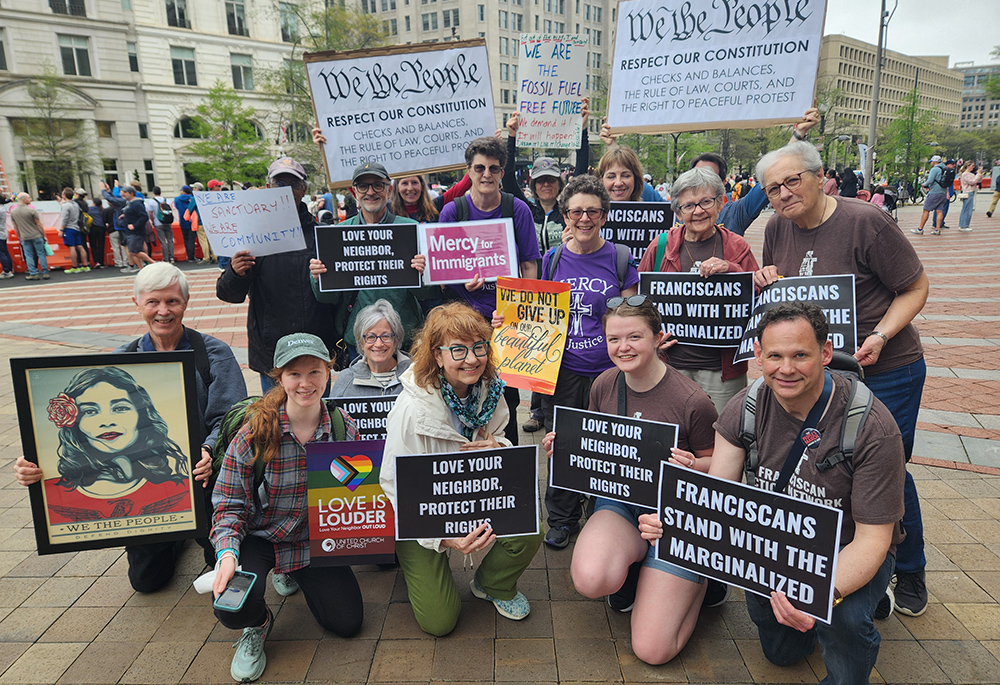
On the other side are the “No Kings 2.0” protests, organized by groups like The Women’s March and The People’s Union USA. Their message is one of boycott and dissent.
“Don’t wave a flag for a country that no longer waves it for you.” – John Schwarz, The People’s Union USA
Protesters argue that with the Constitution being “trampled on,” there is “no independence to celebrate.” They are marching to “Free America,” as they put it, from a “rigged system” of economic inequality, “authoritarian” policies, and social injustice.
The Patriotism Gap
This anecdotal divide is backed by startling data. A new Fox News poll reveals a massive chasm in national sentiment.
While a commanding 85% of Republicans say they are proud of the United States today, that number plummets to just 36% among Democrats.
This isn’t just a slight partisan disagreement; it’s a statistical portrait of two vastly different American experiences, where pride in one’s country has become one of the most polarizing issues of our time.
A Constitutional Tradition of Dissent
While a July 4th protest may seem jarring to some, it is part of a long and powerful American tradition. The act of using the nation’s birthday to highlight its failures and call it to account is as old as the republic itself.
The most famous example is Frederick Douglass, the escaped slave and abolitionist leader. In 1852, he delivered his searing speech, “What to the Slave Is the Fourth of July?” In it, he called the holiday’s celebrations a “sham” and a “mockery” while slavery persisted.
Douglass was not trying to tear down America; he was demanding that it live up to the magnificent promises of liberty and equality laid out in its own founding documents.
“The First Amendment protects not only the right to wave the flag in celebration, but also the right to raise a protest sign in dissent. Both are fundamentally American acts.”
Today’s protesters see themselves in this same tradition. They argue that true patriotism is not blind celebration, but the difficult work of holding the nation accountable to its highest ideals.
Two Definitions of Freedom
The conflict on display this weekend comes down to two competing definitions of freedom.
For those celebrating with the “America 250” initiative, freedom is a cherished heritage—something that was won, has been secured, and must now be honored and protected from threats.
For those protesting, freedom is an ongoing struggle—something that must still be won from what they see as internal threats of economic injustice, systemic inequality, and the erosion of democratic norms.
A Republic, If We Can Keep It
The deep divide on display this Fourth of July is not necessarily a sign that the American experiment has failed. Rather, it is proof that it is still active—a messy, loud, and often painful grappling with our own contradictions, just as it has been since 1776.
The true test of the republic, as embodied by the Constitution, is not whether its citizens all agree on how to feel about their country. It is whether the nation is strong enough to contain both the joyous celebration and the searing critique within the same national holiday, recognizing both as a form of patriotism.