
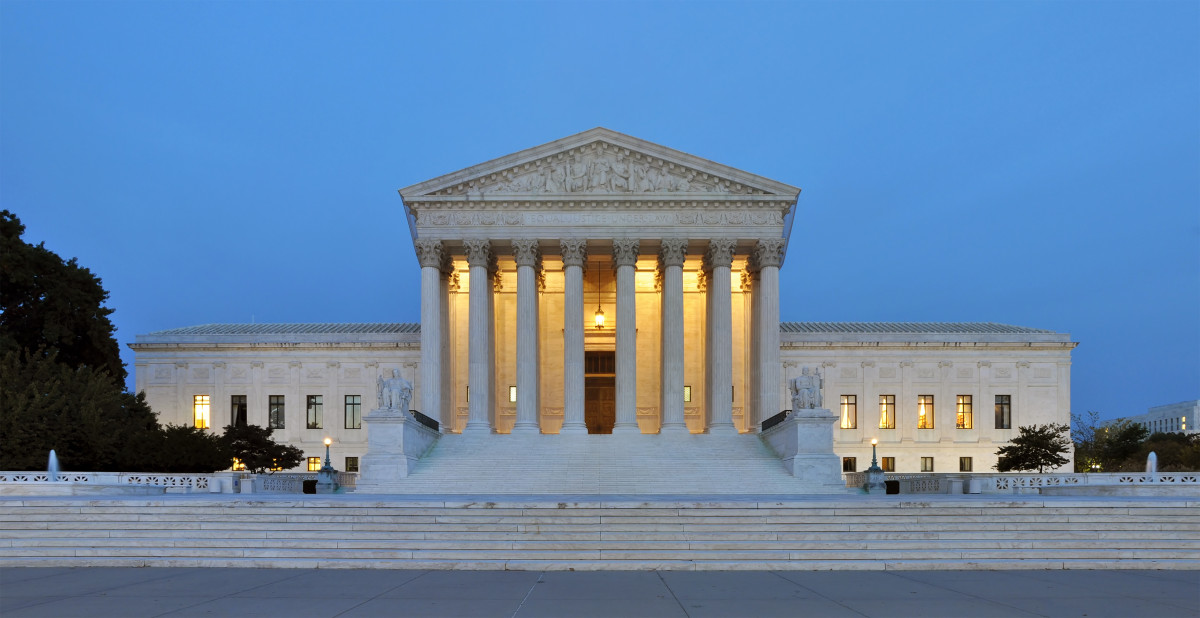
The Supreme Court is the final arbiter of American law. Its decisions are etched into the stone of legal precedent, shaping the nation for generations. But what happens when the guardian of our Constitution admits that it got the Constitution profoundly wrong?
While rare, these moments of self-correction are among the most powerful and important in our history. They humanize the Court, showing it not as an infallible institution, but as an evolving one capable of confronting and correcting its own gravest errors.
This is the story of three of those moments – a powerful narrative about the long and often difficult arc of American justice.
A Note on Precedent
Before we begin, it is crucial to understand the legal principle of stare decisis (Latin for “to stand by things decided”). This is the doctrine of precedent, which holds that courts should adhere to their prior rulings.
This principle ensures that the law is stable and predictable, which is why the Supreme Court is generally very reluctant to overturn its own past decisions, making the cases that follow all the more significant.
3. The Flag Salute Cases: A Rapid Reversal on Freedom of Conscience
The Wrong Turn: In 1940, in the case Minersville School District v. Gobitis, the Supreme Court ruled 8-1 that public school students could be compelled to salute the American flag and recite the Pledge of Allegiance, even if it violated their sincere religious beliefs as Jehovah’s Witnesses.

The Correction: The decision was met with a wave of patriotic fervor and, tragically, violent persecution of Jehovah’s Witnesses across the country. Just three years later, in the midst of World War II, the Court took the extraordinary step of reversing itself.
In the 1943 case West Virginia State Board of Education v. Barnette, the Court ruled that compelling a flag salute was an unconstitutional violation of the First Amendment.
“If there is any fixed star in our constitutional constellation,” Justice Robert H. Jackson wrote for the majority, “it is that no official, high or petty, can prescribe what shall be orthodox in politics, nationalism, religion, or other matters of opinion.”
2. The Right to Privacy: From Criminalization to Constitutional Protection
The Wrong Turn: In 1986, in the case Bowers v. Hardwick, the Supreme Court upheld a Georgia law that criminalized oral and anal sex between consenting adults, with a specific focus on homosexuals. The Court ruled that there was no fundamental constitutional right to engage in such conduct.
The Correction: Seventeen years later, the legal and social landscape had shifted dramatically. In the landmark 2003 case Lawrence v. Texas, the Court explicitly overturned Bowers.
The majority found that the Texas law criminalizing same-sex intimacy violated the Due Process Clause of the Fourteenth Amendment, which protects a fundamental right to liberty and personal privacy.
1. “Separate but Equal”: The Great Repudiation
The Wrong Turn: The most infamous and constitutionally damaging decision ever formally overturned was Plessy v. Ferguson in 1896. In this case, the Court created the legal doctrine of “separate but equal,” ruling that state-mandated racial segregation did not violate the 14th Amendment’s Equal Protection Clause.
This decision gave constitutional sanction to nearly 60 years of brutal Jim Crow laws across the American South.
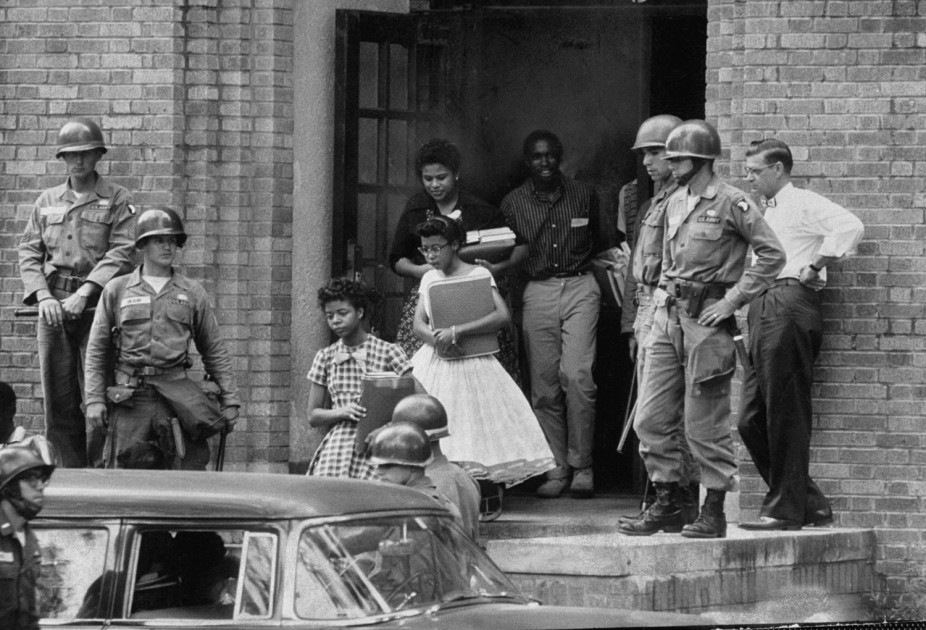
The Correction: After decades of tireless legal challenges led by the NAACP and figures like Thurgood Marshall, a unanimous Supreme Court, led by Chief Justice Earl Warren, finally dismantled this doctrine in the context of public education.
In the monumental 1954 decision Brown v. Board of Education of Topeka, the Court declared:
“We conclude that in the field of public education the doctrine of ‘separate but equal’ has no place. Separate educational facilities are inherently unequal.”
These stories are more than historical footnotes. They are a powerful and humbling reminder that the Supreme Court is a human institution. Its ability to admit its mistakes and reverse course is not a sign of weakness, but one of the greatest strengths of our constitutional system.
It is a testament to the belief that our republic is always on a journey toward a “more perfect Union,” and that even our highest law must be able to grow in its wisdom.